
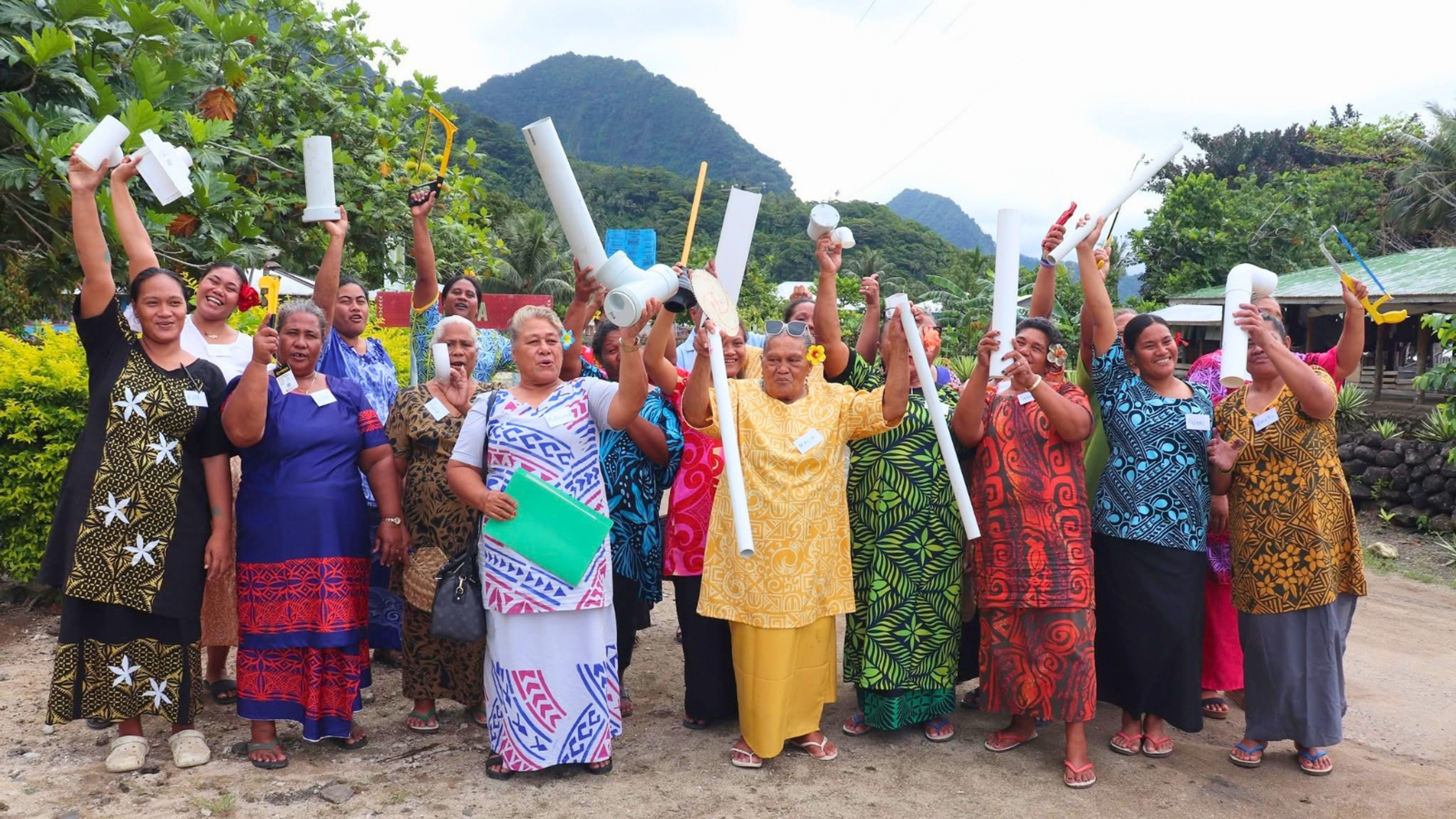
Women in Lona, Fagaloa, took part in ADRA Sāmoa’s first basic home plumbing course delivered specifically for women and girls.
Photo/ADRA Sāmoa
Community
Sāmoa women gain skills to manage household water
A women-focused course was introduced after participants said mixed training gave them less opportunity to take part in the practical work.
Renate Rivers
Published
29 September 2026, 6:07pm
Share
Copy Link
Top stories
'Very insulting': Pacific candidates lock horns over Ministry’s future
Thomas Tarurongo WynneWed, 21 Oct
Israel’s Pacific Forum breakthrough triggers political backlash in NZ
Kaya Selby, RNZ Pacific journalistWed, 21 Oct
Online vault aims to return Pacific research to the community
Aui'a Vaimaila Leatinu'uWed, 21 Oct
Top stories
'Very insulting': Pacific candidates lock horns over Ministry’s future
Thomas Tarurongo WynneWed, 21 Oct
Israel’s Pacific Forum breakthrough triggers political backlash in NZ
Kaya Selby, RNZ Pacific journalistWed, 21 Oct
Online vault aims to return Pacific research to the community
Aui'a Vaimaila Leatinu'uWed, 21 Oct
Women in Sāmoan villages are learning how to fix pipes, connect taps and toilets and manage household water supplies.
This comes after feedback showed they were not getting enough hands-on experience in previous mixed training sessions.
The Adventist Development and Relief Agency (ADRA) Sāmoa changed its approach after women involved in earlier programmes said men often took over the practical tasks.
Lona, Fagaloa, is the first community where ADRA has delivered its basic home plumbing course specifically for women and girls, with 20 participants taking part.
ADRA Sāmoa country director Emalaine Tuese-Masoe says the change followed interviews and focus groups with communities involved in earlier training.
“They feel intimidated, because there are men included and the men did the practical work while the women watched,” Tuese-Masoe told Auimatagi Lesa Lani Alo of HamoChats on PMN Sāmoa.
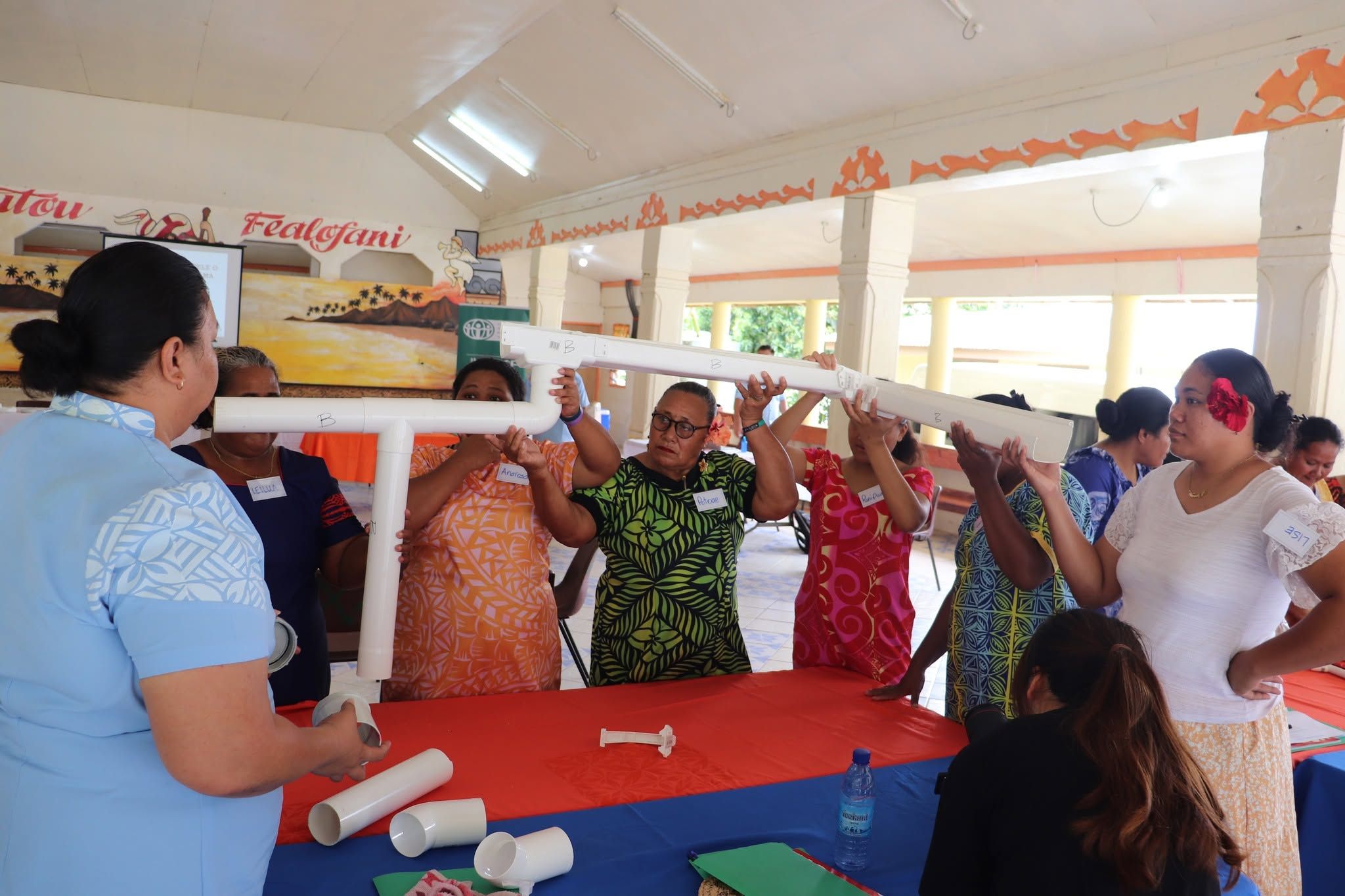
Women in Lona are shown the different pipes and fittings used during the basic home plumbing training. Photo/ADRA Sāmoa
The women learned how to connect pipes, taps and toilets, install guttering and downpipes and harvest water. They also learned about sanitation, hygiene and waterborne disease.
For 18-year-old mother Punipuao I'u, the training has given her skills she can now use at home and in her community.
“I’ve learned how to carry out plumbing work, and this project is a blessing for families and the community,” she said in a statement.
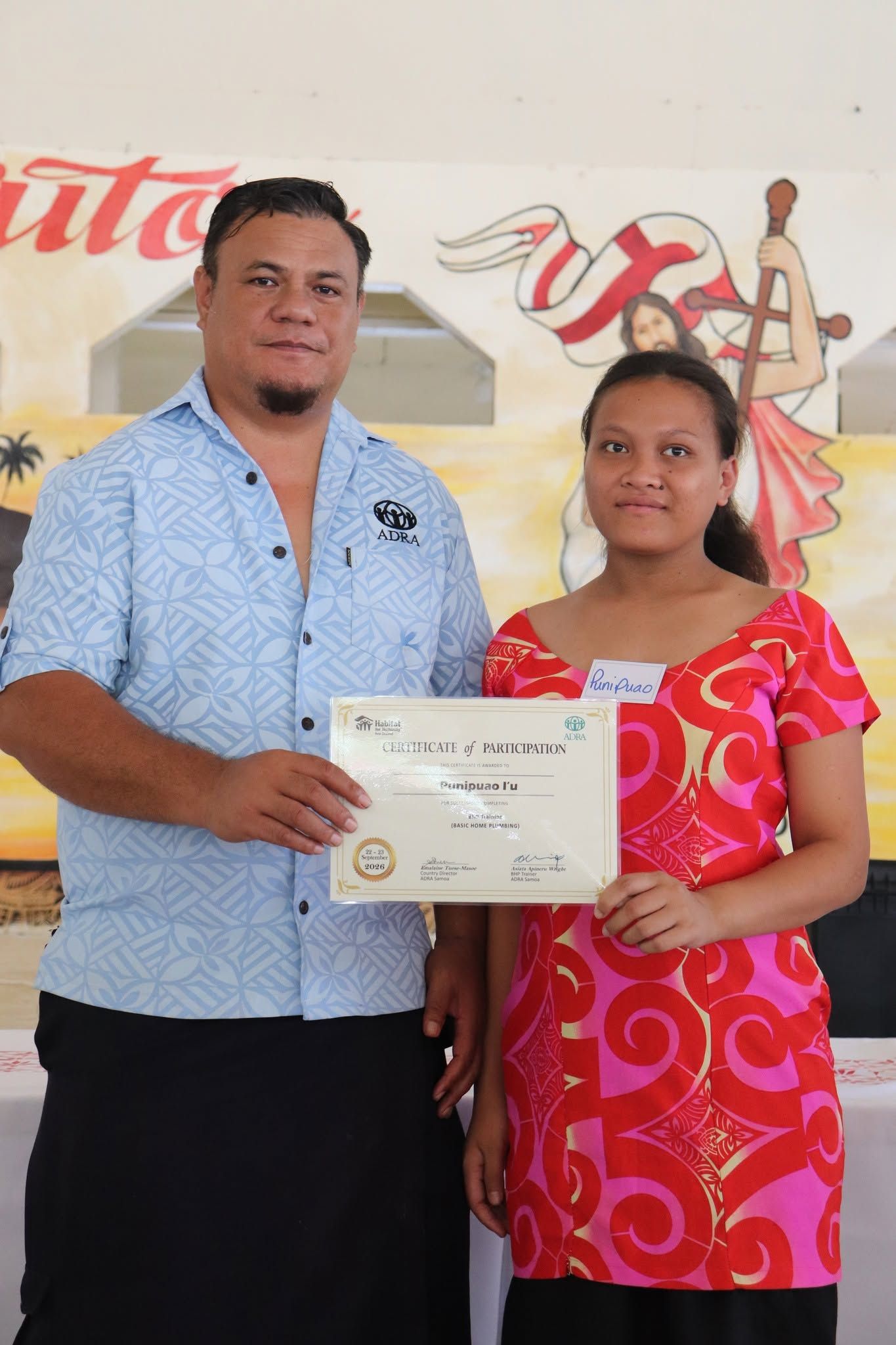
Punipuao I'u, 18, pictured here with the ADRA Sāmoa training officer, says the experience has given her practical plumbing skills she can use at home and in her community. Photo/ADRA Sāmoa
The training is now being followed by about ST25,000(NZ16,000) in funding for water tanks for households across Lona - a project created by the women participants.
ADRA selected Lona for the plumbing programme after assessing three communities in Fagaloa and identifying reliable water supply as the village's most critical everyday challenge.
The organisation says Lona's coastal and flood-prone location leaves it exposed to severe weather, while local water sources can dry up during El Niño periods.
Val Hayes of Habitat for Humanity New Zealand says the new plumbing skills can be particularly important when men are away from villages for work, including seasonal employment overseas.
“What do you do when the tap stops running, or the pipe breaks?” she told Auimatagi.
ADRA says seasonal work was one of several issues raised during its interviews and focus groups.
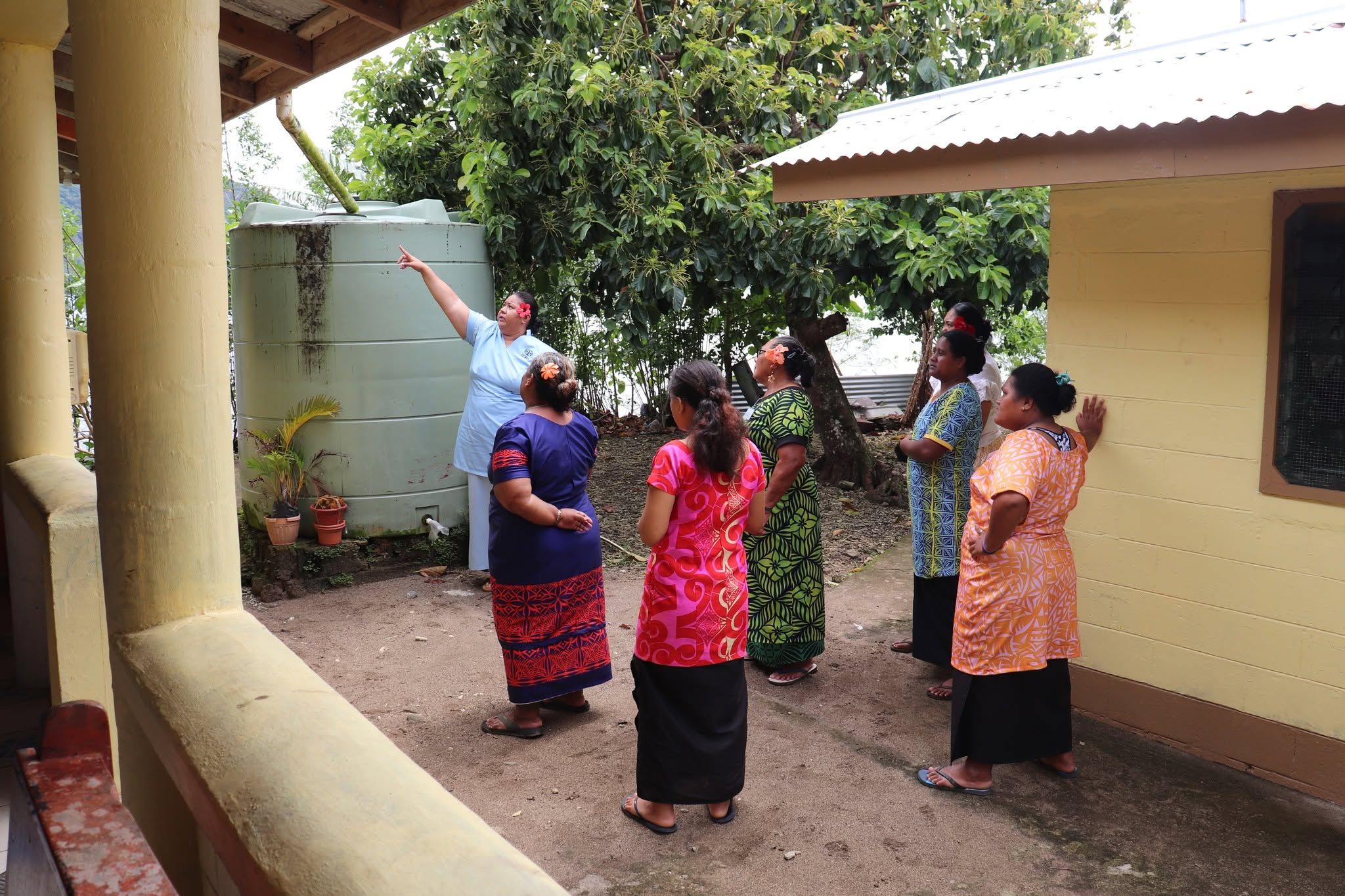
Women in Lona examine how roof guttering feeds into a water tank as part of the plumbing training. Photo/ADRA Sāmoa
Tuese-Masoe told PMN News that female-headed households, single mothers and families where women are caring for children while husbands are away for seasonal work could benefit from the approach.
The aim is to give women the skills to maintain household water supplies without having to wait or pay for outside help.
The course also included a gender and disability exercise looking at how different people in a community can face different needs and barriers.
Hayes says participants considered scenarios involving young mothers and people with disabilities, encouraging discussion about who is included in village decision-making.
Lona is the first of five communities due to receive the women-focused plumbing training under the next phase of the ADRA and Habitat for Humanity New Zealand partnership.
Watch the interview with Emalaine Tuese-Masoe and Val Hayes on PMN Samoa below.
The remaining four communities are yet to be identified, while a separate climate resilience programme will reach 15 communities.
For the women in Lona, the next step is putting their new skills to work as households receive water tanks and the community builds greater control over its water supply.