
Tofiga Fepulea’i brings the laughs while taking top honours at Arts Pasifika Awards
Aui'a Vaimaila Leatinu'uFri, 23 Oct
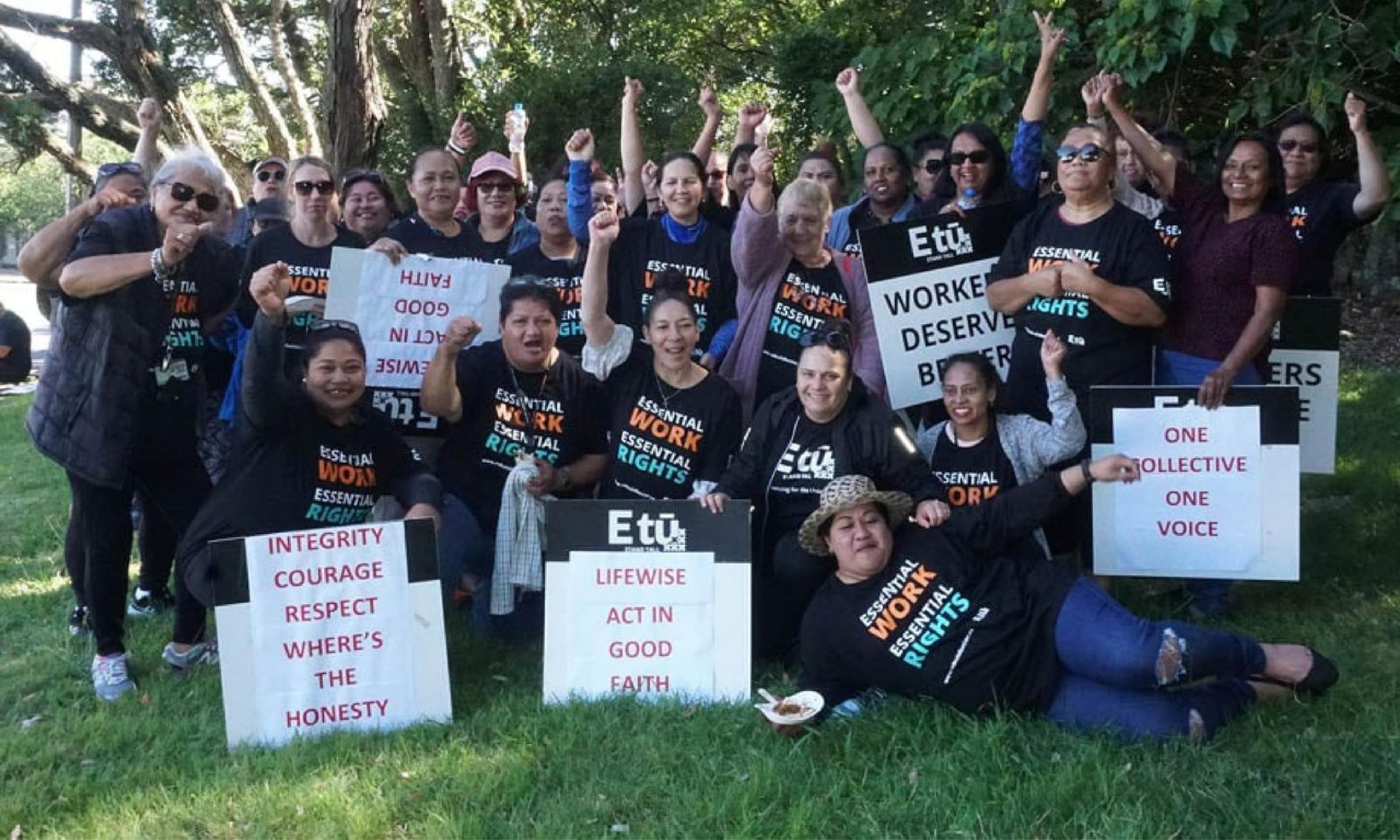
Home support workers rally across Aotearoa on 'April Fuels Day', saying rising fuel costs are pushing them to breaking point and making it harder to care for their communities.
Photo/Supplied/E tū/file
Low-paid carers say they are being pushed to breaking point as fuel costs rise, forcing some to choose between feeding their families and getting to clients.




Home support workers across Aotearoa are taking to the streets today, saying they simply can’t afford to keep doing their jobs.
From Auckland to Timaru, workers will rally on 1 April as part of “April Fuels Day”, calling on the Government to urgently lift the mileage rate paid to those using their own cars to care for others.
In a show of frustration, workers are bringing scooters, wheelbarrows, and toy cars to protests to highlight how unrealistic it has become to travel between clients as fuel prices climb.
Many of these workers are women, Māori and Pacific, and already among the lowest-paid in the country. They say the rising cost of petrol is hitting their communities hardest.
“Home support workers use their own vehicles to travel to their clients," Fleur Fitzsimons, National Secretary for the Public Service Association Te Pūkenga Here Tikanga Mahi, said in a statement.
"They fund their own vehicle cost and are paid an already inadequate mileage rate, and the rocketing cost of fuel means they are even worse off.
“These workers are providing an essential public service. They are among the lowest-paid workers in the country and already had their pay equity claim cancelled.
“The fuel crisis is hitting these workers hard. The Health Minister has the power to get the rate increased immediately and he should,” Fitzsimons says.
Watch a news report about unions filing legal action against Te Whatu Ora/Health New Zealand below.
New Zealand’s fuel supply remains stable. The Ministry of Business, Innovation and Employment reports there is “no indication of fuel supply disruption, and fuel continues to flow normally into New Zealand,” with enough petrol, diesel and jet fuel to last several weeks.
This highlights that the strain on home support workers is driven by costs, not shortages.
Workers say the pressure is no longer manageable. Some report having to decide between putting petrol in the car or food on the table for their whānau.

Many home support workers including Māori and Pacific carers say they are being forced to choose between putting fuel in the car for work or food on the table for their whānau. Photo/Geneva Health/file
Some say the situation has become so extreme they are effectively losing money just to stay in work. “You don’t get paid, you’re paying to have a job,” one home support worker told RNZ.
At the same time, unions say the issue has escalated beyond protest.
The PSA and E tū have now filed legal action against Te Whatu Ora/Health New Zealand, arguing workers are being unfairly and unlawfully forced to cover the cost of doing their jobs.
“These workers have been let down at every turn," Fitzsimons says. "This legal action is about making clear that what is being asked of them is unlawful, not just unfair.”
E tū Director Amy Hansen says the situation has now reached breaking point. “Home support workers are essential to keeping older and disabled people safe in their own homes.
"Their reimbursement rate was inadequate before this crisis. Now it is completely untenable,” she says.
Union leaders say the situation risks pushing workers out of a sector already under strain, with serious consequences for older people, disabled people and families who rely on in-home care.
Events are being held across the country: in Wellington, Auckland, Christchurch, Hamilton, Nelson, and Timaru, with more locations expected to join.
Workers also warn the pressure is starting to affect the care people receive. “We’re going to start seeing tragedies, we’re going to start seeing people not getting the care they need,” a home support worker told RNZ.
For many workers on the frontline, Wednesday afternoon’s rallies are about being seen and heard as the cost-of-living crisis deepens.