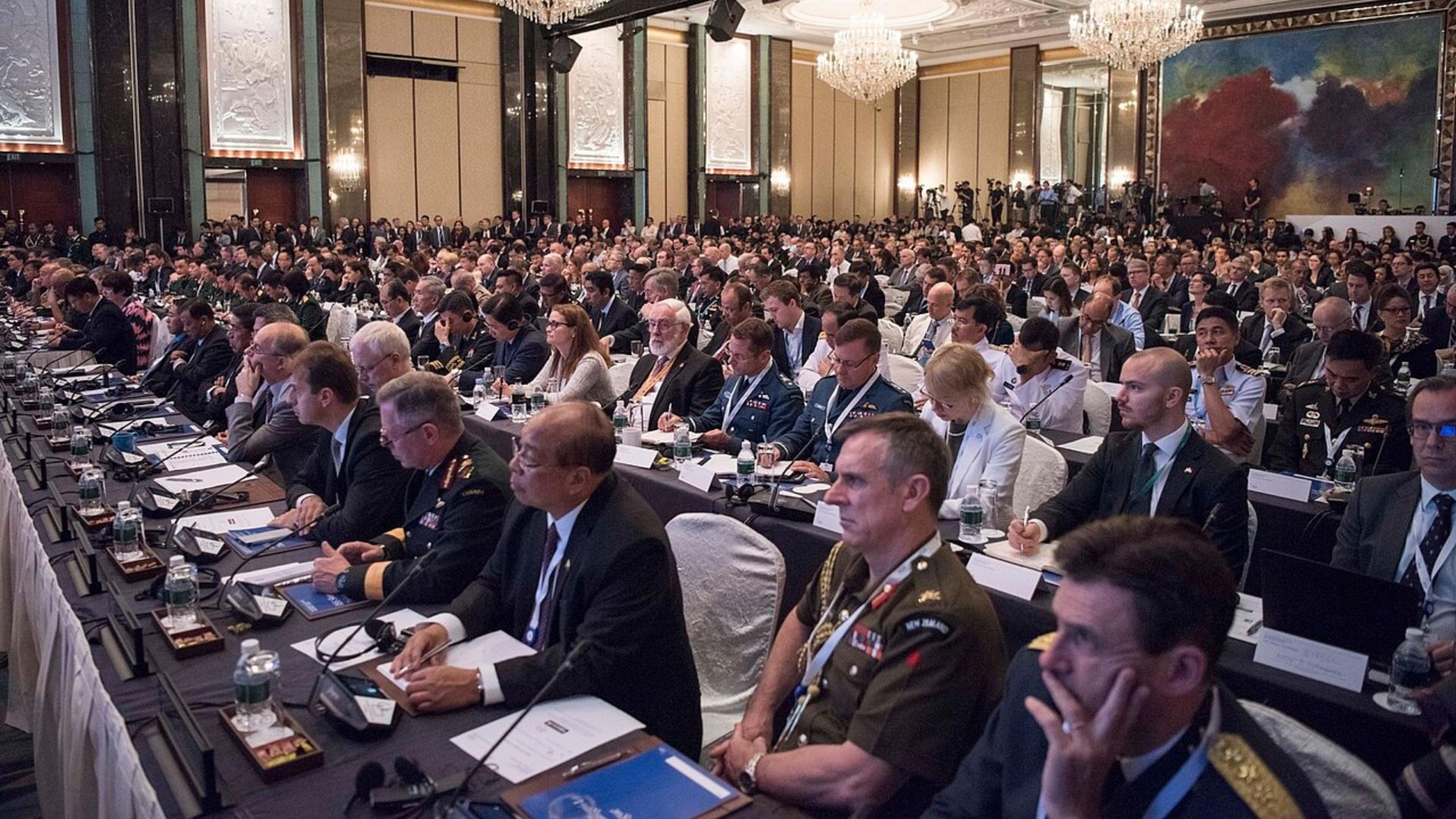
Pacific leaders and global defence officials gather at the Shangri-La Dialogue in Singapore as the United States signals a softer tone toward China while reaffirming its role in regional security.
Photo/Dept of Defence, Australia/Dominique A. Pineiro
Politics
United States softens China stance but warns allies: no single power will control the Pacific
Major powers at a Singapore summit laid out their views on the Indo-Pacific, with allies urged to spend more on defence and island nations watching how regional influence is shifting.

Christine Rovoi
Published
03 June 2026, 10:15am
Share
Copy Link
Top stories


Auckland teen turns a trip to Fiji into a mission to fight period poverty
Elenoa TuragaiviuThu, 15 Oct
Top stories
Auckland teen turns a trip to Fiji into a mission to fight period poverty
Elenoa TuragaiviuThu, 15 Oct
The United States has signalled a softer tone towards China while still warning Pacific allies that Washington will not accept any single power dominating the region.
Washington's message comes as strategic tensions and defence pressures continue to shape the Indo-Pacific.
US Defence Secretary Pete Hegseth used a major speech at the IISS Asia Security Summit: Shangri-La Dialogue in Singapore last week to reassure Pacific island nations of America’s continued commitment to regional stability while stepping back from earlier more forceful language on Beijing.
He told leaders and defence officials that the Pacific remains central to US security and economic interests, and said Washington’s priority is maintaining a balanced and stable power structure across the region.
The comments follow a recent meeting between US President Donald Trump and Chinese President Xi Jinping, where both sides reportedly agreed to pursue a more constructive relationship focused on strategic stability.
Hegseth, who attended that meeting, said both countries would continue to defend their interests but could still reach practical agreements where possible.
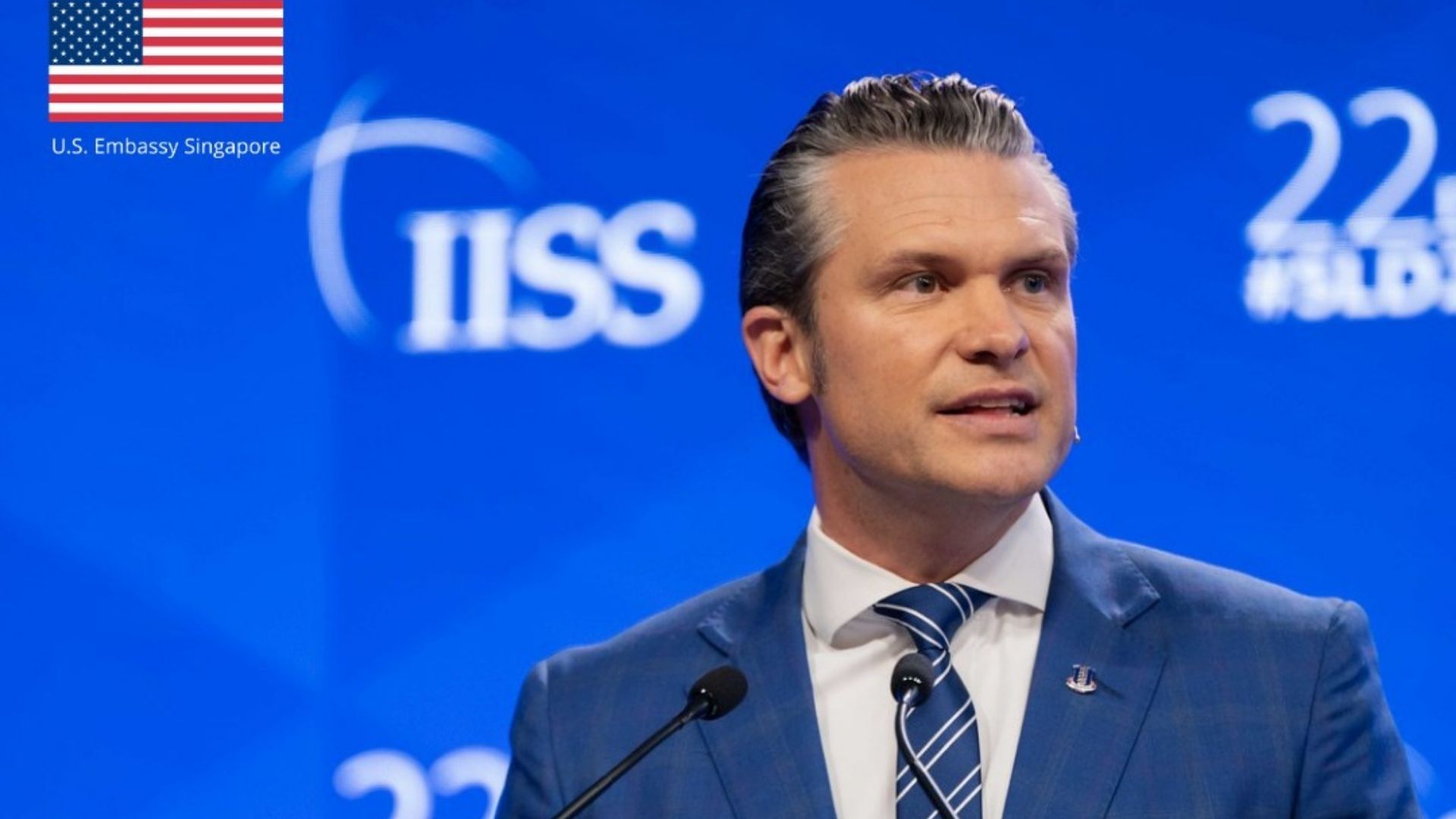
US Defence Secretary Pete Hegseth warns the Pacific cannot be dominated by any single power while he called for stronger defence commitments from allies. Photo/US Embassy, Singapore
Despite the softer tone, he warned that the United States would not accept a regional order dominated by any single power.
“We share a clear-eyed assessment of that security environment and a mutual understanding that a Pacific dominated by any hegemon would unravel the regional balance of power and undermine the equilibrium we all seek to preserve,” Hegseth said.
He also stressed defence spending among allies, saying long-term partnerships must be backed by capability, not rhetoric.
“We need partners, not protectorates,” he said. Hegseth added that US allies understood the need for pragmatic cooperation.
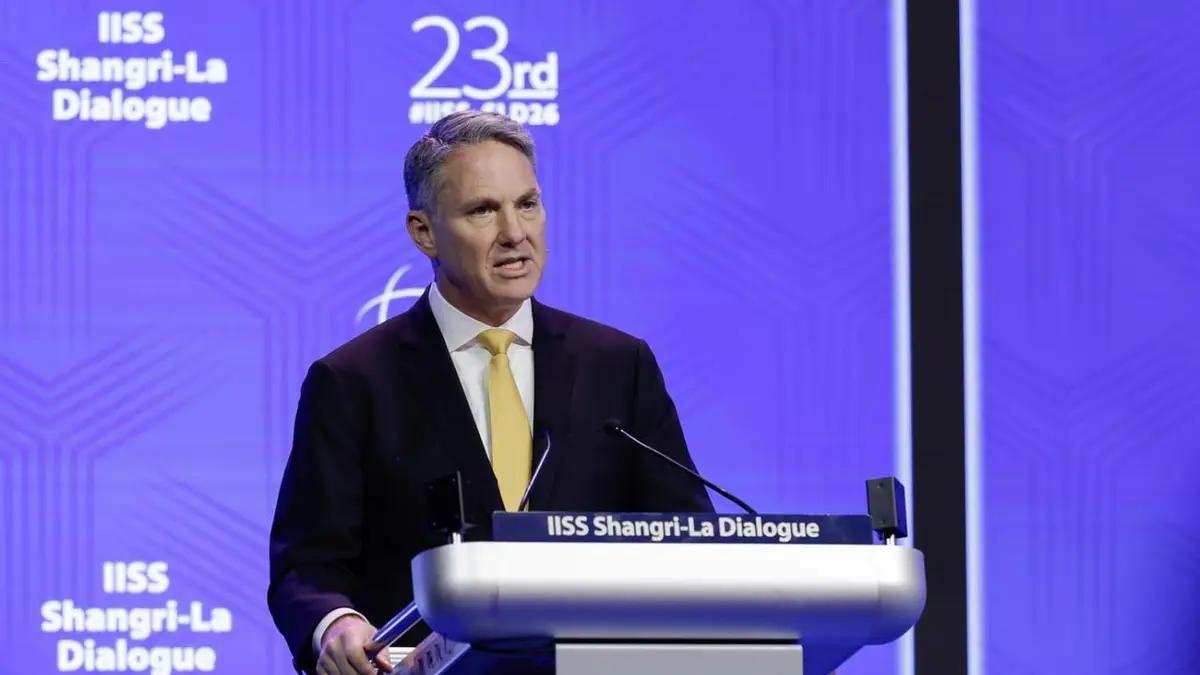
Australian Defence Minister Richard Marles tells the Shangri-La Dialogue that regional stability depends on rules that protect smaller states, warning that sovereignty is weakened when power overrides agreed frameworks. Photo/Lowy Institute
“When our interests diverge, we adjust pragmatically, without the drama or the moralising,” he said.
The shifting US-China dynamic is being closely watched across the Pacific, where smaller nations continue to balance economic ties with Beijing and security partnerships with Washington and its allies.
Australian Defence Minister Richard Marles, speaking at the same conference, warned that regional stability depends on rules that protect smaller states.
“When the rules apply, smaller states have agency,” Marles said. “When the rules yield to power, sovereignty becomes, as others have put it, the purview of the powerful, and no state in this room today, whatever its size, is well served by that outcome.”
Official summit records confirm New Zealand Defence Minister Chris Penk attended the Shangri-La Dialogue in Singapore, where he spoke on a major panel examining shifting security pressures in the Indo-Pacific.
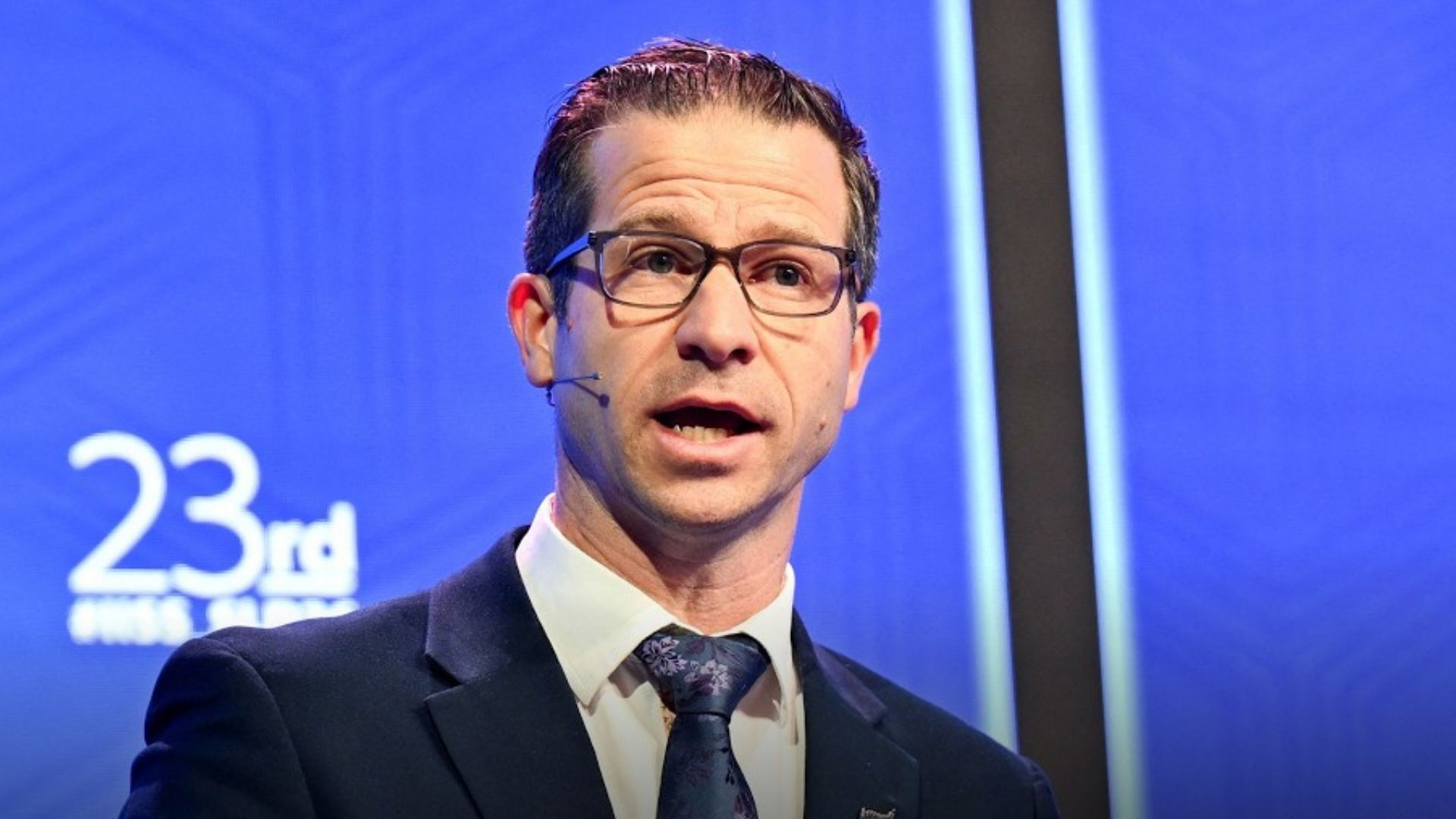
New Zealand Defence Minister Chris Penk outlined the Government’s plans to lift defence spending and strengthen cooperation with international partners amid growing Indo-Pacific security pressures. Photo/screengrab
Penk, fresh from a NZ$1.5 billion boost for maritime security in New Zealand’s recent Budget, used the forum to highlight how traditional assumptions about distance and isolation are no longer enough to shield the country from global instability, particularly across sea lanes and trade routes.
He said New Zealand is responding by significantly lifting long-term defence investment, with plans to more than double spending to build a more combat-ready force able to operate closely with international partners.
Penk said the goal is a military that can work in “lockstep” with allies as regional security challenges continue to evolve.
Pacific academics and commentators say the latest US-China security signals have renewed a long-running concern in the region: how smaller nations can retain control over their own future amid growing external influence.
They also warn that despite the diplomatic language at global security summits, key decisions are still being shaped behind closed doors by major powers.
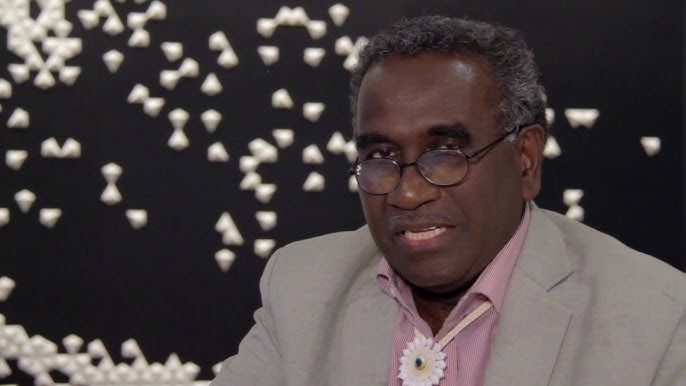
Solomon Islands National University Vice-Chancellor Dr Transform Aqorau says Pacific development decisions are too often shaped away from local communities, calling for stronger regional control over future planning. Photo/Pacnews
While Pacific Island nations have previously been invited to attend the Shangri-La Dialogue in various capacities, there was no formal Pacific Island state voice on the main stage panels this year.
Instead, discussions about the region were largely led by bigger powers including on maritime security and regional balance.
Dr Transform Aqorau, Vice-Chancellor of the Solomon Islands National University, says development decisions across the Pacific are too often shaped away from local communities, even when they directly affect them.
“Too often, those who are closest to the lived realities of our people are pushed to the margins, while external consultants and global companies are placed at the centre of decisions that shape our national future,” Aqorau said.
While his comments were made in the context of education policy, he said the issue reflects a wider regional challenge about sovereignty and influence.
Watch NZ Defence Minister Chris Penk's address (from 16:40) to the Shangri-la Dialogue in Singapore below.
“No country can outsource the formation of its next generation without losing something of itself."
Tensions over Taiwan also loomed over the discussions. While questions remain about future US policy, Hegseth said there was no change in Washington’s current position on the island.
He said the US remained committed to existing arrangements even as political debate continues over long-term strategy and military support.
Fijian-British political commentator Charlie Charters has compared modern geopolitical engagement in the Pacific with colonial-era decision-making.
As reported by journalist Michael Field for Devpolicy.org, Charters referred to the 1889 Berlin Conference and its impact on Sāmoa where global powers divided influence without Pacific representation.
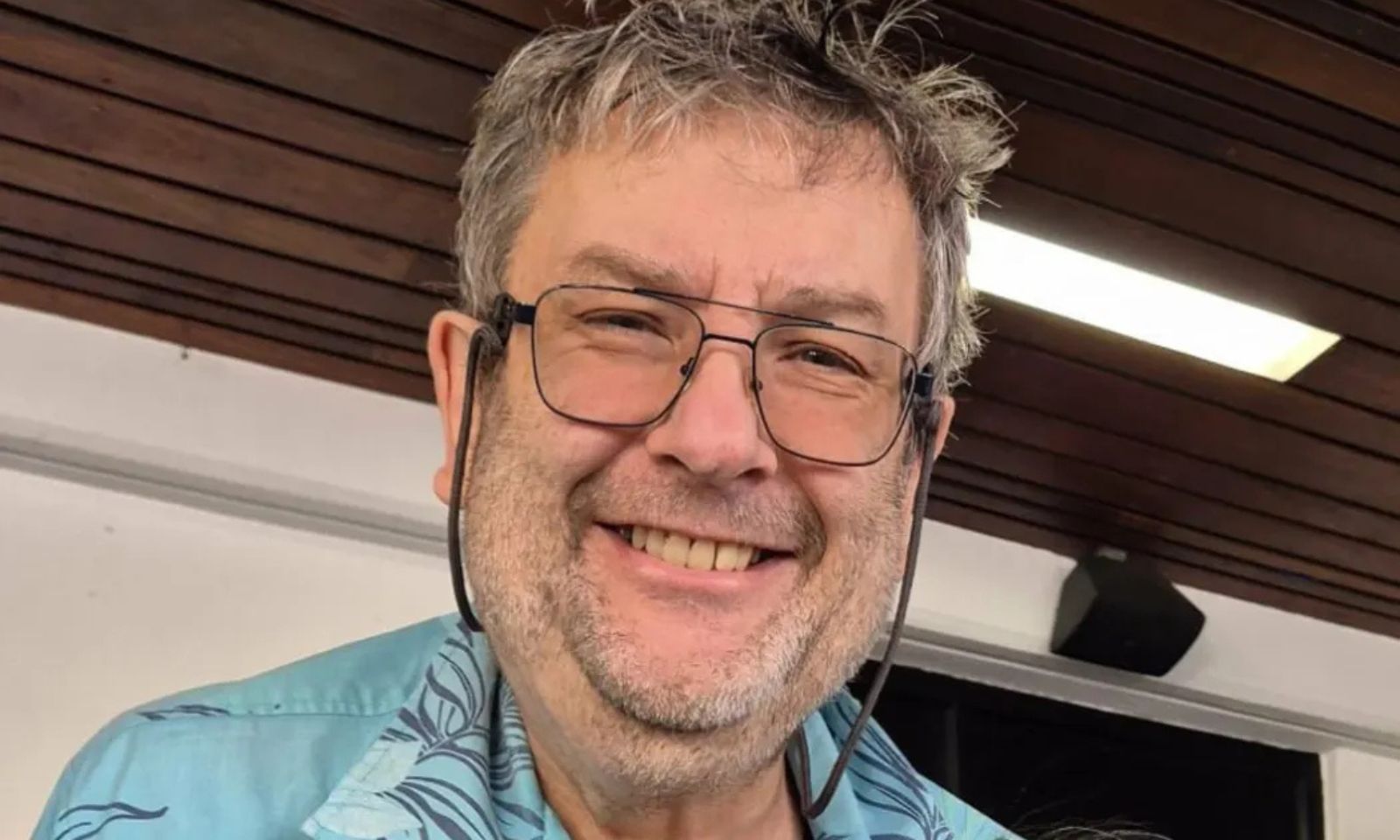
Fijian-British commentator Charlie Charters warns that modern geopolitical competition in the Pacific echoes historical patterns of external powers shaping the region without Pacific representation. Photo/Supplied
“The Berlin meeting produced the 1889 Tripartite Declaration, cleaving the Sāmoan islands into a German colony [now Sāmoa] and an American one [American Sāmoa]. A disfiguring that continues to this day. No actual Sāmoans were recorded as being present at either meeting,” Charters said, as quoted by Field.
He said this history remains relevant as Pacific states navigate renewed global interest and strategic competition in the region.
The geopolitical contest for influence in the Pacific continues to play out beyond the Shangri-La Dialogue.
Solomon Islands Prime Minister Matthew Wale is this week holding talks with Australian Prime Minister Anthony Albanese and Foreign Minister Penny Wong in Canberra where security, development and regional stability are expected to feature prominently.
The visit underscores Australia's ongoing efforts to strengthen ties with Pacific partners amid heightened strategic competition in the region.
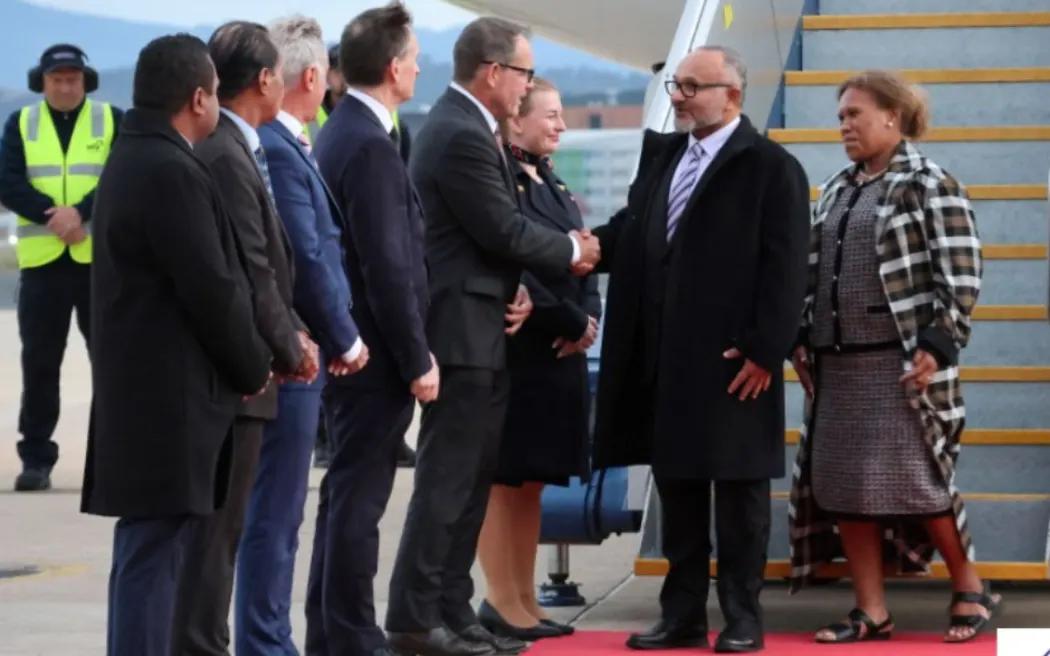
Solomon Islands Prime Minister Matthew Wale arrives in Canberra ahead of high-level talks with Australian Prime Minister Anthony Albanese and Foreign Minister Penny Wong on security, development and regional stability. Photo/Solomon Islands government
Wale will also travel to New Zealand for meetings with Prime Minister Christopher Luxon, with security, development and regional stability expected to feature prominently.
As Washington and Beijing reshape their relationship, Pacific leaders are watching closely and balancing the need for security cooperation with the economic realities of managing ties with both major powers.