

The first wave of seven charter schools have self-published their inaugural reports. Nathan Durie, pictured, the Co-Tumuaki of Tipene, attributes their 89 per cent regular attendance rate to practical design rather than ideology.
Photo/PMN compositie/Unsplash/Supplied
Education
Charter school results spark debate over equity, funding and Māori, Pacific education
New charter school reports show mixed results for attendance and achievement as critics argue that changes and double standards continue to impact mainstream schooling.

Aui'a Vaimaila Leatinu'u
Published
11 June 2026, 2:52pm
Share
Copy Link
Top stories

Full-circle homecoming as Isaako joins Kiwis' historic RLWC clash against Cook Islands
Brooke FonotiTue, 20 Oct


Free education pledge inspires Solomons students in Aotearoa
Lachlan EddieMon, 19 Oct
Top stories
Full-circle homecoming as Isaako joins Kiwis' historic RLWC clash against Cook Islands
Brooke FonotiTue, 20 Oct
Free education pledge inspires Solomons students in Aotearoa
Lachlan EddieMon, 19 Oct
The first published results from seven charter schools have sparked a fresh national debate over fairness in education, funding rules and how Māori and Pacific students are being served by the school system.
The self-published annual reports reveal five of the seven schools met or exceeded their targets while three fell short on at least one key measure.
Targets are adjusted using each school's Equity Index to account for socio-economic barriers. They include 80 per cent regular attendance and 80 per cent curriculum achievement.
At the centre of the debate is Tipene, a Māori and Pasifika boys’ boarding school that reopened last year under the charter model after originally operating from 1844 until its closure in 2000. The school reported strong attendance and literacy gains with an average attendance rate of 89 per cent.
Speaking with William Terite on Pacific Mornings, Chris Abercrombie, the President of the PPTA, argues the framework creates a regulatory double standard.
He says some charter schools face attendance targets as low as 60 per cent, while state schools face a strict 80 per cent threshold enforced by mandatory Attendance Management Plans from Term one 2026.
“This is all secret because it's private contracts, so we don't know what the expectations are. So this is sort of the first peek behind the curtain, seeing how the sausage is made.
Watch Chris Ambercrombie’s full interview below.
“There's a lot of flexibility for these schools that [Associate Education Minister David Seymour] doesn't want to give to state schools.”
He says Pacific attendance barriers stem from complex realities like uniform costs, travel, and family responsibilities.
Abercrombie argues state schools could replicate positive outcomes if resourced with small classes and favourable teacher-to-student ratios.
But Seymour counters that the model successfully unlocks the latent potential of young New Zealanders previously left behind.
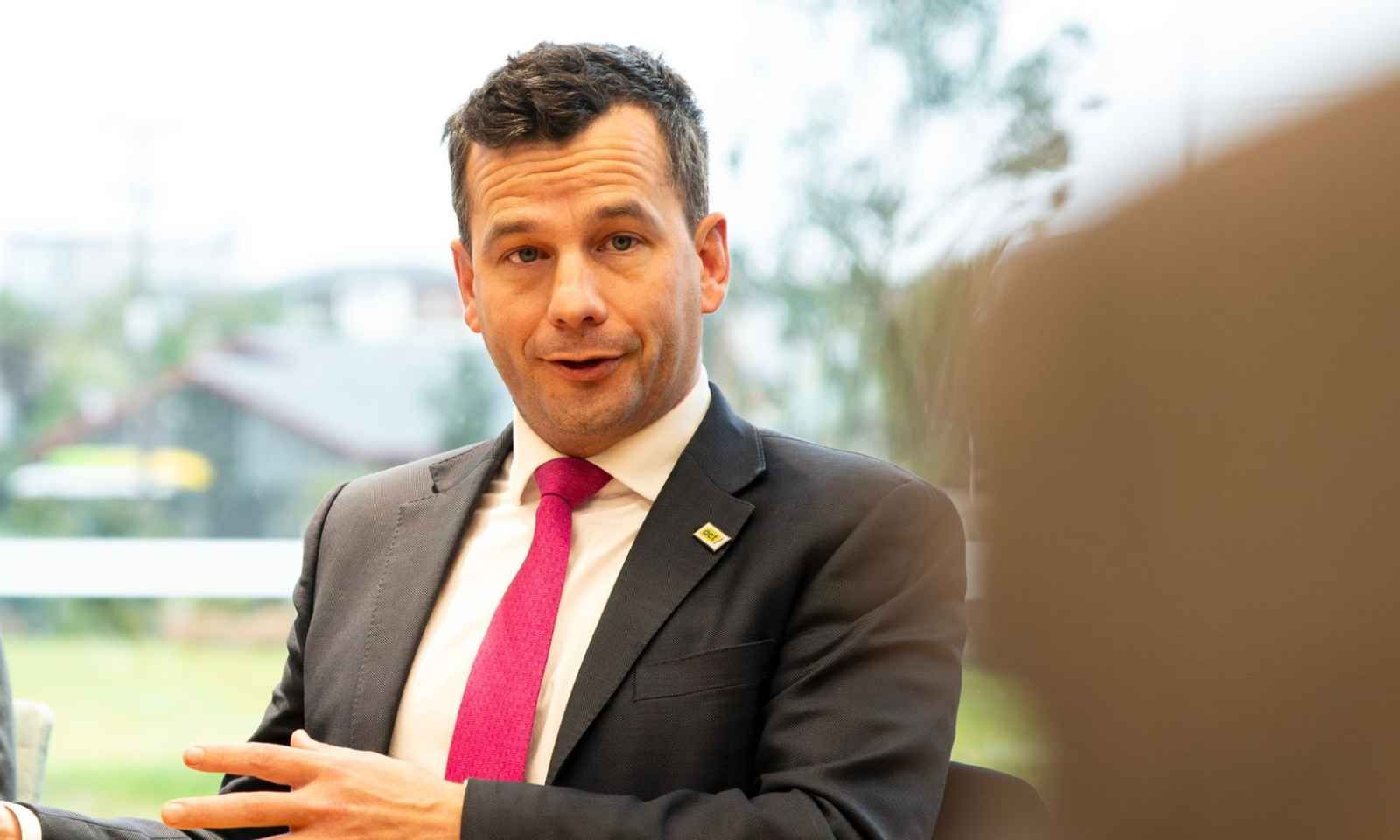
David Seymour. Photo/ACT/Facebook
Under official guidelines, regular attendance means a student is present for more than 90 per cent of the school term.
“Tipene took initial assessment data in February 2025. It showed more than half their students were below the expected levels in mathematics, reading, and writing.
“By the end of the year, 81 per cent of students were achieving at or above the expected level in mathematics, 79 per cent in reading, and 80 per cent in writing.”
Addressing lower attendance figures elsewhere, Seymour says alternative providers are set up for highly disengaged youth facing severe educational barriers.

Guidelines have determined regular attendance means a student is present for more than 90 per cent of the school term. Photo/File
Christchurch North College began with a regular attendance rate of 28 per cent but reached 42 per cent by Term four. At BUSY School New Zealand, prior average attendance was just 19 per cent, rising to 83 per cent.
Nathan Durie, the Co-Tumuaki of Tipene, tells Pacific Mornings that their school offers an indigenous defence of their model.
Durie attributes their 89 per cent regular attendance rate to practical design rather than ideology. As a 24-hour, seven-day boarding school, the model eliminates travel and living barriers while letting staff spread the curriculum effectively.
“The mainstream had an agenda right from the outset. It was to assimilate, it was to colonise, and they've done a great job of it.
Watch Nathan Durie’s full interview below.
“Ours is to recognise our own rangatiratanga [autonomy], our own Māoritanga [Māori culture], our own Pasifika-tanga [Pacific culture], and bring that to the fore.
“It’s not so much about the designation of a school, it's more about the determination of a school to achieve something. We've been really deliberate in coming to Tipene.”
The Ministry of Education's Attendance Action Plan aims to lift regular attendance so that 80 per cent of students are present for more than 90 per cent of the term by 2030.
Under the charter framework, schools are subject to performance monitoring with the Authorisation Board able to require improvement plans or terminate contracts if progress is not made.