‘Soul resuscitation’: Pioneering Vagahau Niue and cultural connection down South
Atutahi Potaka-DewesFri, 23 Oct
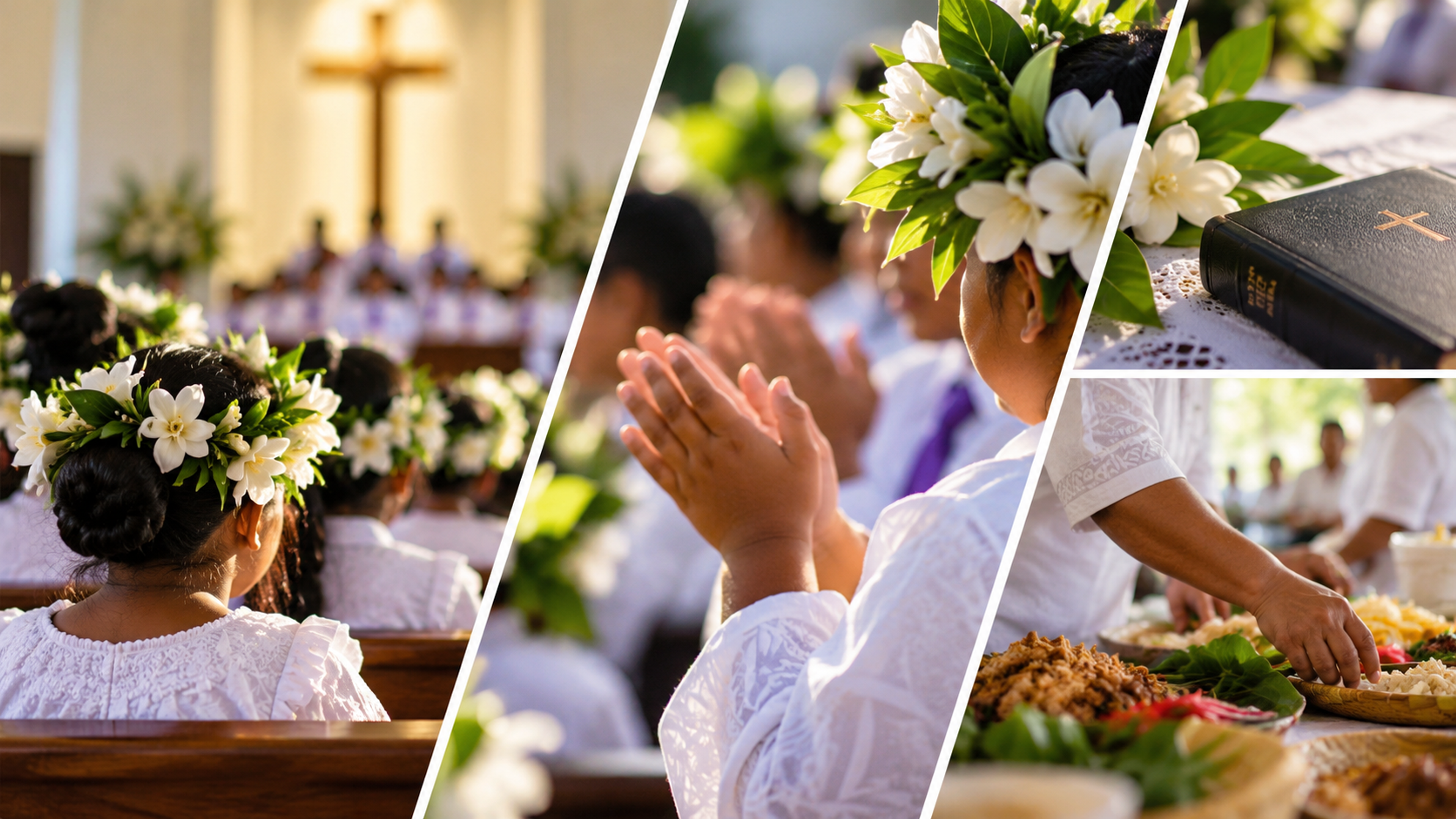
Pacific church traditions bring generations together through faith, family and community, offering lessons in encouraging young people to participate in democracy.
Photo/PMN News/AI-generated
As voter enrolment for the 2026 general election closes, Pacific church traditions offer a different perspective on political participation.


Pacific churches understand something about getting people involved that our politicians could learn.
Every year, families organise thousands of children for special church celebrations. Sāmoans have White Sunday, Tongans celebrate Fakame, while Tuvaluan, Tokelauan, Niuean and other Pacific communities have similar traditions.
Different names and dates, but familiar preparations: rehearsals, new clothes, memorised Bible verses, performances, feasts and the inevitable panic when someone forgets their lines.
Some churches are celebrating White Sunday, or Lotu a Tamaiti, today. The same day voter enrolment closes.
Pacific families pull off these elaborate productions and engaged involvement every year without expensive advertising campaigns.
Getting people to participate in an election is proving considerably harder. As of Thursday, just 69.3 per cent of eligible 18 to 24-year-olds were enrolled, compared with 92.2 per cent overall.
Young people are often accused of political apathy. They don't care, don't understand politics or can't be bothered. But perhaps some have learned that indifference from the adults around them.
Maybe some parents have never voted, struggle to understand our political system, consider voting unimportant or have become disillusioned with politicians and their promises.
At church, parents and grandparents pass on traditions they understand and value. Families spend weeks preparing children, teaching them their lines and encouraging those nervous about performing.
When the children speak, everyone listens.
Church celebrations and elections are different. One draws on faith, family and tradition. The other requires an independent political choice.
But one involves generations preparing young people to participate. The other often leaves them to work things out themselves.
Deuteronomy 1:13 tells the Israelites to choose wise and understanding leaders from among their tribes. In 1 Timothy 4:12, young believers are encouraged not to let others look down on them because of their youth.
We teach children these scriptures and prepare them to speak confidently before congregations. Yet when they turn 18, we largely expect them to navigate politics themselves.
The Electoral Commission works hard to reach communities, but enrolment campaigns cannot replace years of political education.
How often do we discuss politics at home, explain how Parliament works or listen when young people challenge our views?
Some may argue that participation in church events can involve parental pressure, and not every Pacific family belongs to one. But preparing young people to participate takes more than reminding them of a deadline.
We don't expect children to discover the importance of White Sunday on their own. We teach them.
Why should democracy be different?
The enrolment deadline is midnight but unlike White Sunday, the next event won't be for another three years.
Visit vote.nz to enrol or update your details online before midnight tonight, Sunday 25 October.