From Paris hope to COP31 doubts: New Zealand MPs split on climate change talks
Thomas Tarurongo WynneWed, 18 Nov
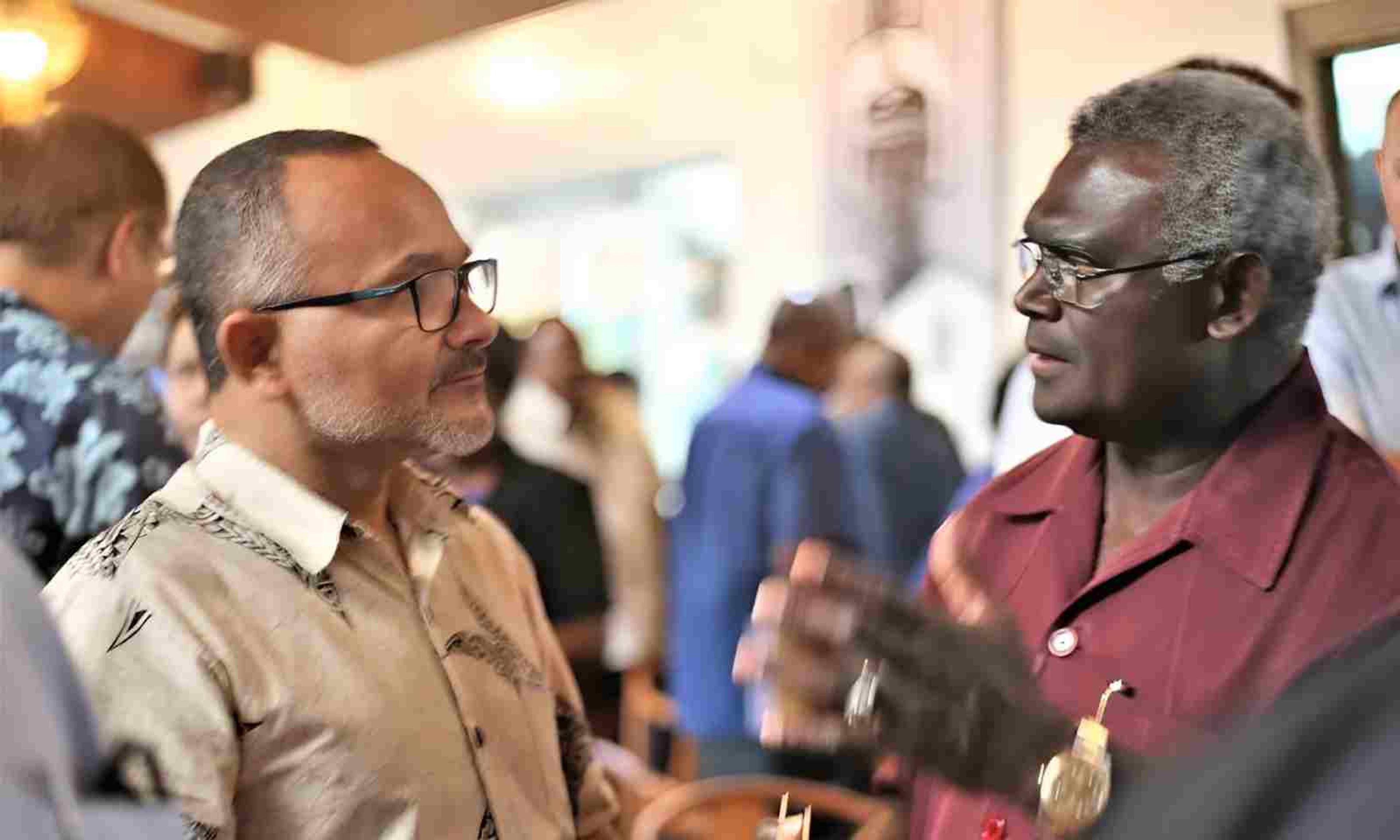
Solomon Islands Opposition leader Manasseh Sogavare, right, has accused Prime Minister Matthew Wale’s government of “chequebook diplomacy” over constituency grants to government MPs.
Photo/Facebook
Government MPs received up to NZ$220,000 each from constituency funds as Honiara and Canberra prepare to sign a major new treaty.

Solomon Islands Opposition leader Manasseh Sogavare has accused Australia of “chequebook diplomacy” after government MPs received constituency grants worth up to SBD$1 million each (NZ$220,000) just days before Prime Minister Matthew Wale is due in Canberra to sign a major new treaty with Anthony Albanese.
Documents seen by the ABC show multiple MPs in Wale’s 31-member GREAT Coalition received “discretionary grants” of up to NZ$220,000 in October and November.
The payments came from a Solomon Islands government bank account labelled AusAID, the former name of Australia’s aid agency, and not an Australian government account.
The money appears to have come from a SBD$200 million (NZ$44.76 million) budget support package announced by Australian Prime Minister Anthony Albanese in June when Wale visited Canberra.
At the time, Wale’s government said the funding would “assist Solomon Islands in responding to Tropical Cyclone Maila and addressing the impacts of global energy shocks”.
The issue has now become politically sensitive just nine days before Wale is expected to travel to Canberra to sign a new “comprehensive” treaty with Australia.

Solomon Islands Prime Minister Matthew Wale and Australian Prime Minister Anthony Albanese in Canberra in June during talks on bilateral support and the new treaty between the two countries. Photo/PM Press Secretariat, Australia
“It puts Australian aid at the centre of our domestic politics. Australia has rightly criticised other countries for doing exactly this in the Pacific," Sogavare said. “It should hold itself to the same standard.”
The former prime minister said Australian taxpayer money was being used to “reward political loyalty”, leaving Opposition-held constituencies out.
“The people who lose are not Opposition MPs. They are the villages, schools and clinics in the constituencies left out,” he said. “Aid should go to people according to need, not according to how their member votes.”
Wale’s office has declined to comment on the documents.
An Australian government spokesperson rejected any suggestion of wrongdoing, saying “all of Australia’s development assistance is based on the priorities of partner countries, subject to robust accountability and transparency guidelines, and complies with the OECD development guidelines.”
Australia says it has never paid money directly to Solomon Islands MPs. The budget support was transferred to the Ministry of Finance and Treasury in Honiara with Wale and his ministers making the decisions on how it was spent.
But the timing has raised questions because Australia is also planning to increase its support for constituency development funds under the new treaty. The ABC reported in September that none of that new treaty funding has yet been provided.
A leaked message from Australian High Commissioner Jeff Roach also outlined more than AU$980 million (NZ$1.2 billion) in proposed commitments under the agreement.
Sogavare has questioned whether the timing of those commitments was linked to a no-confidence vote Wale was facing at the time.
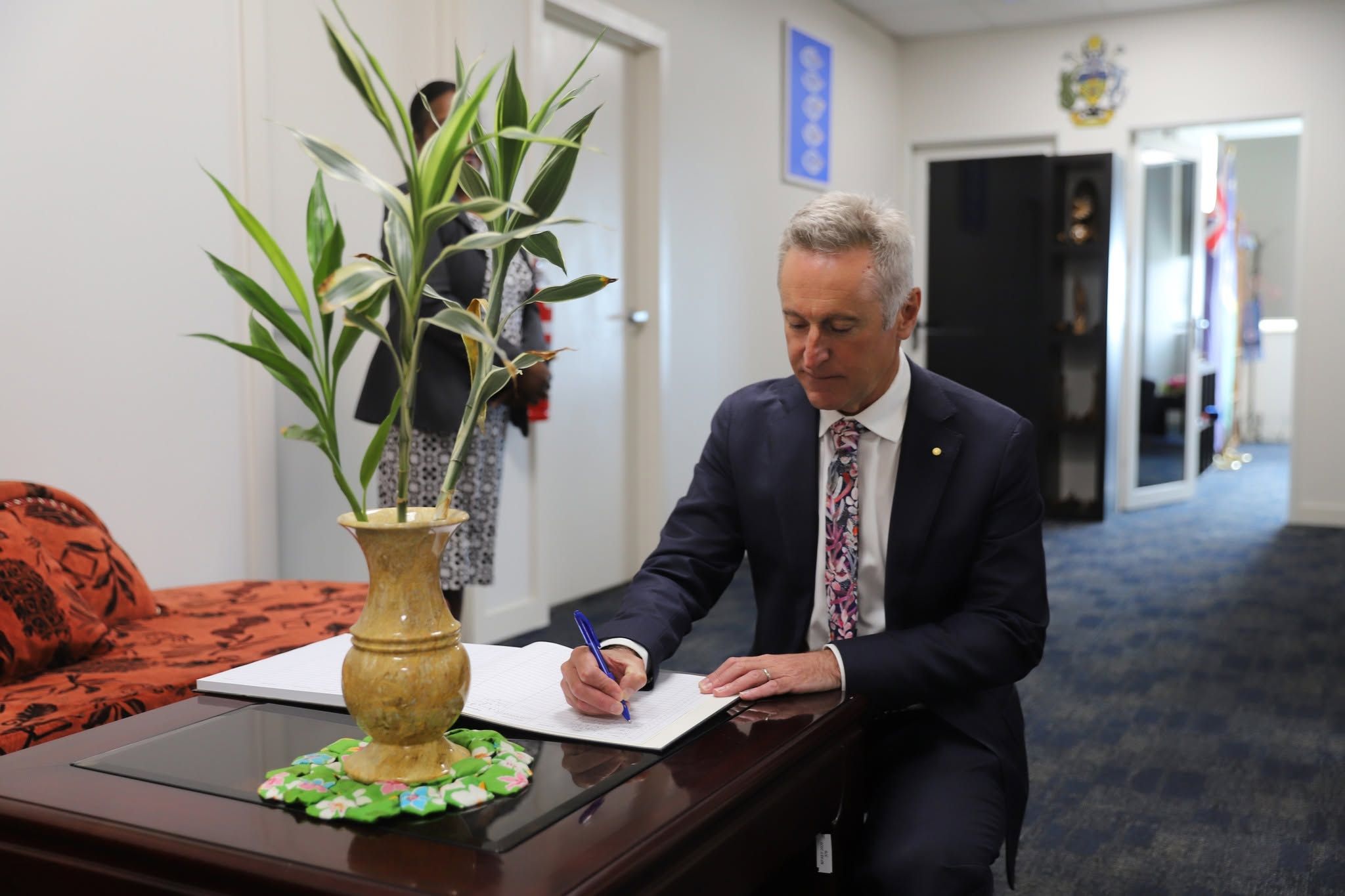
Australian High Commissioner to Solomon Islands Jeff Roach outlined proposed commitments under the new bilateral treaty in a leaked message. Photo/Facebook/Sunday Isles
“The motion was withdrawn days later. Solomon Islanders are entitled to ask whether that is a coincidence,” he said. “Both governments should answer openly.”
But the criticism also comes with political history. In 2021, Wale, then in Opposition, accused Sogavare of using Chinese funding for constituency development funds involving 39 government and crossbench MPs.
Dr Kerryn Baker, Australian National University Pacific Affairs researcher, says the latest payments may look politically uncomfortable, but the use of CDFs is not new.
“CDFs are hugely important for development. It’s a way to ensure funds reach the grassroots and can be spent on what communities need,” she told the ABC.
Baker said there was still a risk of political influence but rules around the latest grants require MPs to account for how the money is spent.

Solomon Islands Opposition leader Manasseh Sogavare, right, and China’s Foreign Minister during the countries’ bilateral engagement in 2022. Photo/Instagram
The documents prohibit the use of the funds for “private enrichment” or “political campaigning” and require projects to provide a clear development benefit.
“There’s been a lot of work in recent years to regulate CDFs and provide more transparency and accountability,” Baker said.
The debate now comes down to a question that will follow Wale to Canberra: can Australia provide major development support to Solomon Islands without that money becoming part of the country’s political contest?