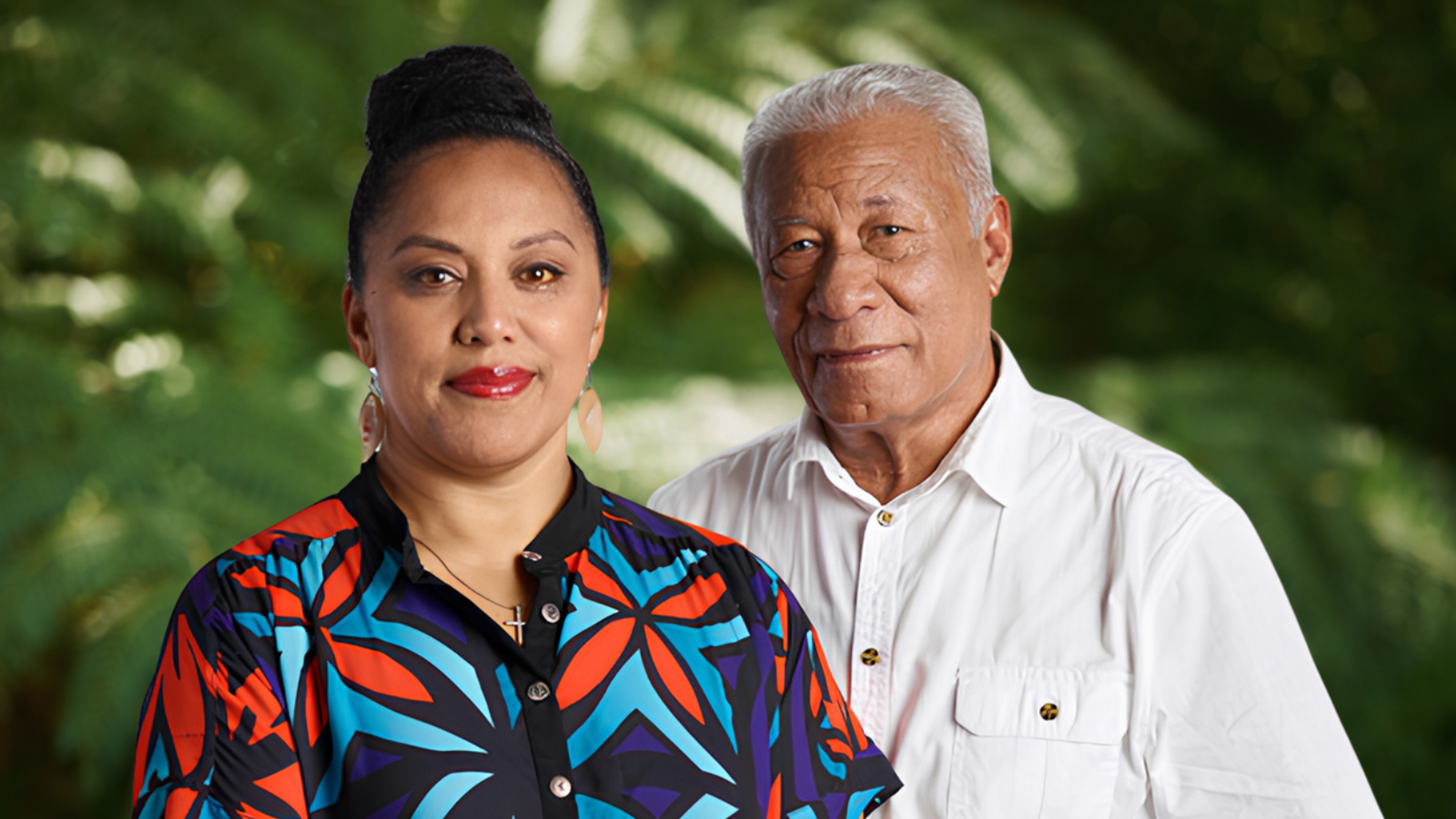
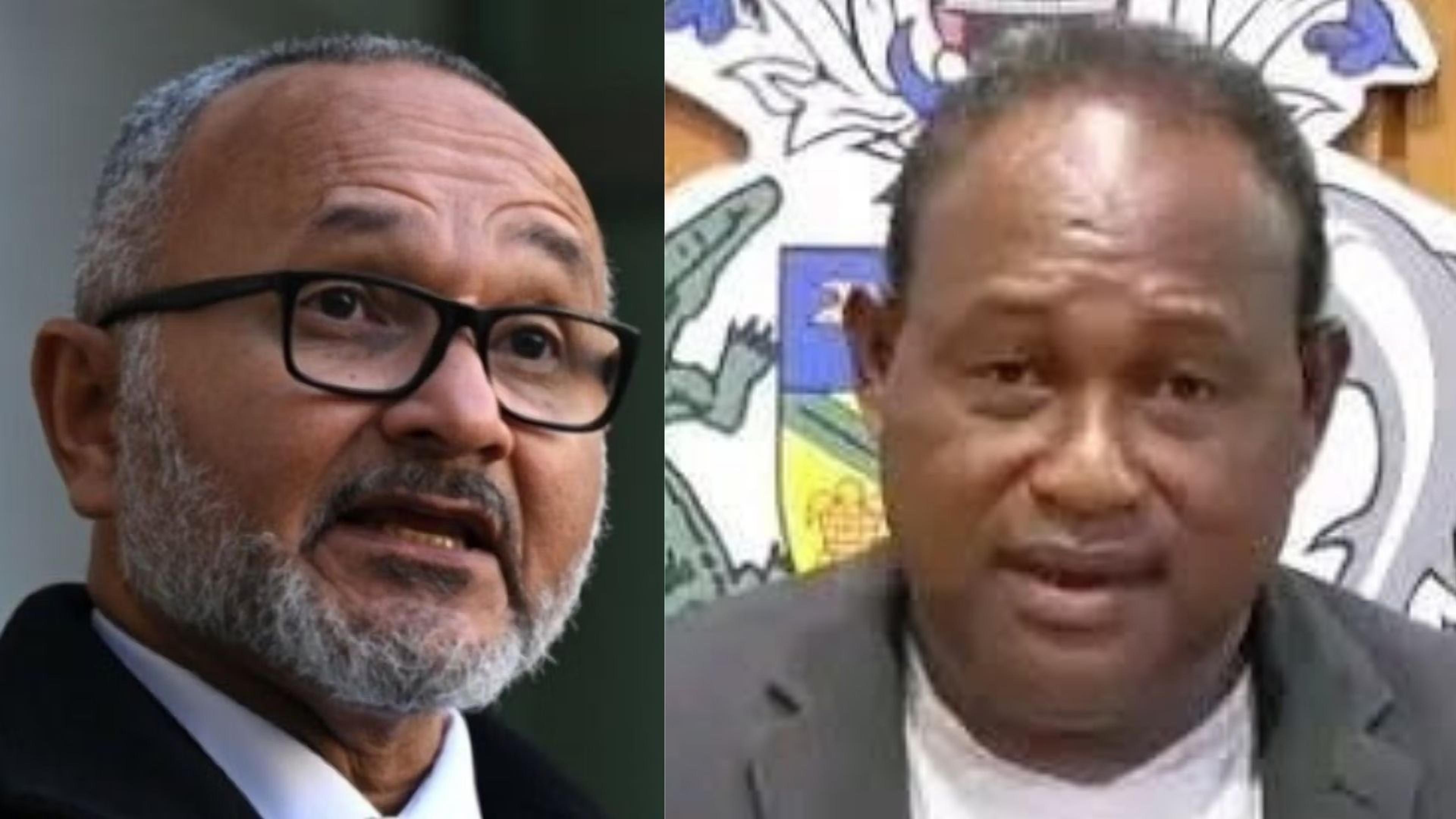
East Malaita MP Manasseh Maelanga, right, and Solomon Islands Prime Minister Matthew Wale. Maelanga has withdrawn his no-confidence motion against Wale, saying his support for the Prime Minister remains unchanged.
Photo/X/Solomon Islands government
Politics
MP withdraws no-confidence motion against Solomon Islands PM Wale
East Malaita MP Manasseh Maelanga says he has signed the withdrawal of the motion and his support for Matthew Wale as Prime Minister remains unchanged.

Christine Rovoi
Published
06 September 2026, 7:05pm
Share
Copy Link
Top stories
Top stories
Solomon Islands Prime Minister Matthew Wale has been spared a no-confidence vote after East Malaita MP Manasseh Maelanga announced he was withdrawing his motion against the government.
Maelanga made the announcement on Sunday evening (NZT), saying he had signed the withdrawal in accordance with Parliament’s Standing Orders.
“From the outset, we decided not to proceed with the motion,” Maelanga said. “I will withdraw the notice of the motion in accordance with the standing orders of Parliament. And I've signed the withdrawal of the motion.”
The motion, which had been due to be debated in Parliament on Monday, was filed by Maelanga after he raised concerns about Wale’s leadership and decision-making.
Maelanga said the decision to withdraw had not been taken lightly and was not about personal ambition or creating division.
“The motion was never about personal ambition, personal interests, or creating division in our country,” he said.
He said the motion came from concerns raised by other MPs who believed certain matters needed proper attention, discussion and consideration.
“As a member in whose name the motion stood, I accepted the responsibility of bringing those concerns forward because I believe that they deserve to be heard.”
But Maelanga made clear that his support for Wale as Prime Minister remains.
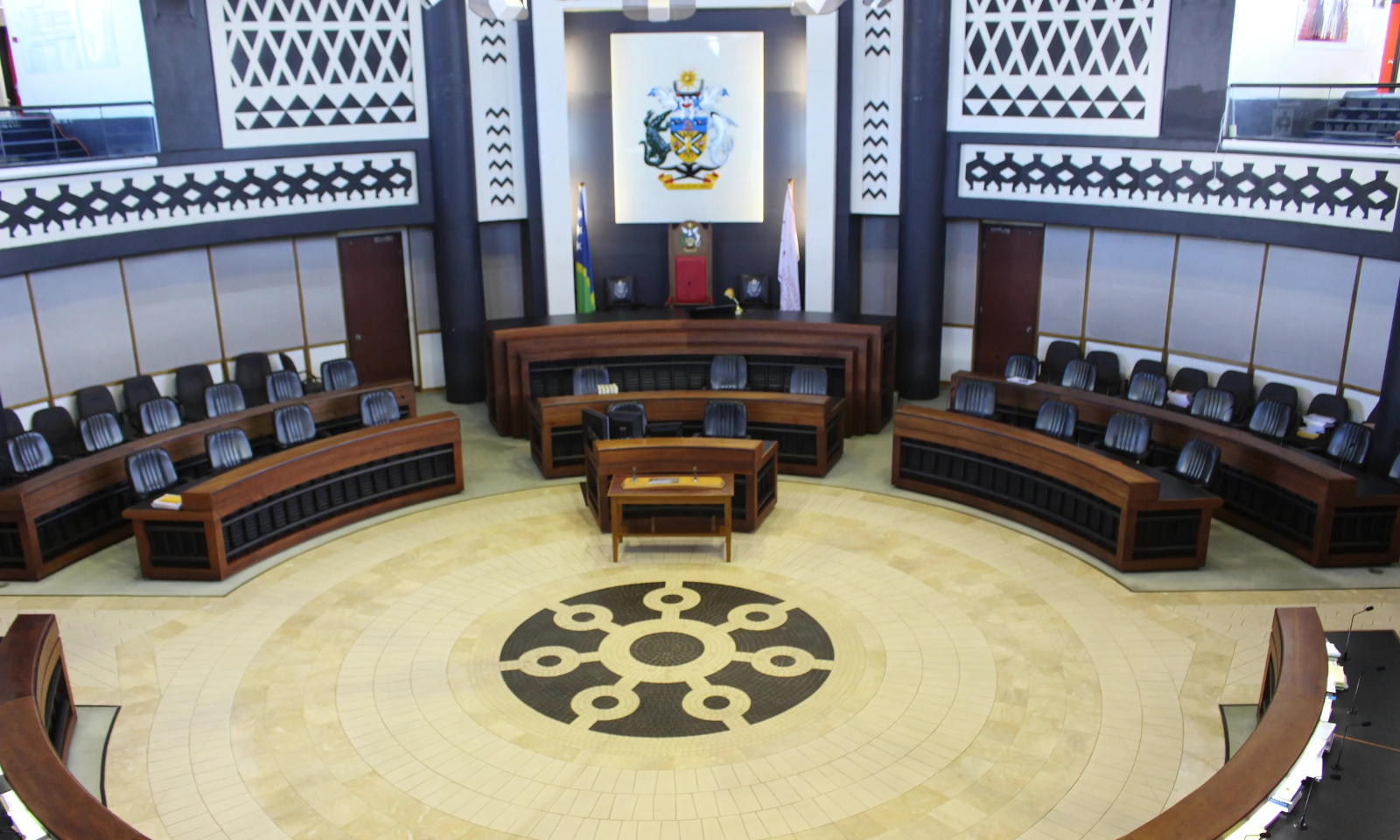
The Solomon Islands Parliament in Honiara, where a no-confidence motion against Prime Minister Matthew Wale had been scheduled for debate on Monday before East Malaita MP Manasseh Maelanga withdrew the motion. Photo/Solomon Islands government
“At the time when the current Prime Minister was seeking the support of Parliament, I gave my vote in support of him becoming Prime Minister,” he said. “I made that decision at a time in good faith.”
Maelanga said that while he later exercised his democratic right to raise concerns, his position had not changed after deciding to withdraw the motion.
“Now that I have decided to withdraw the motion, my vote in support of the Prime Minister, Honorable Matthew Waller, remains unchanged.”
Maelanga, who is also a priest, said he had sought guidance from church leaders before making his decision.
He said he had consulted with the Archbishop through his Bishop in the Diocese of Malaita and received pastoral guidance throughout the political dispute.
Maelanga said his faith had helped guide his decision. “My faith teaches me that leadership must be exercised with humility, peace, reconciliation and service to others. Those principles have guided my consideration of this matter.”
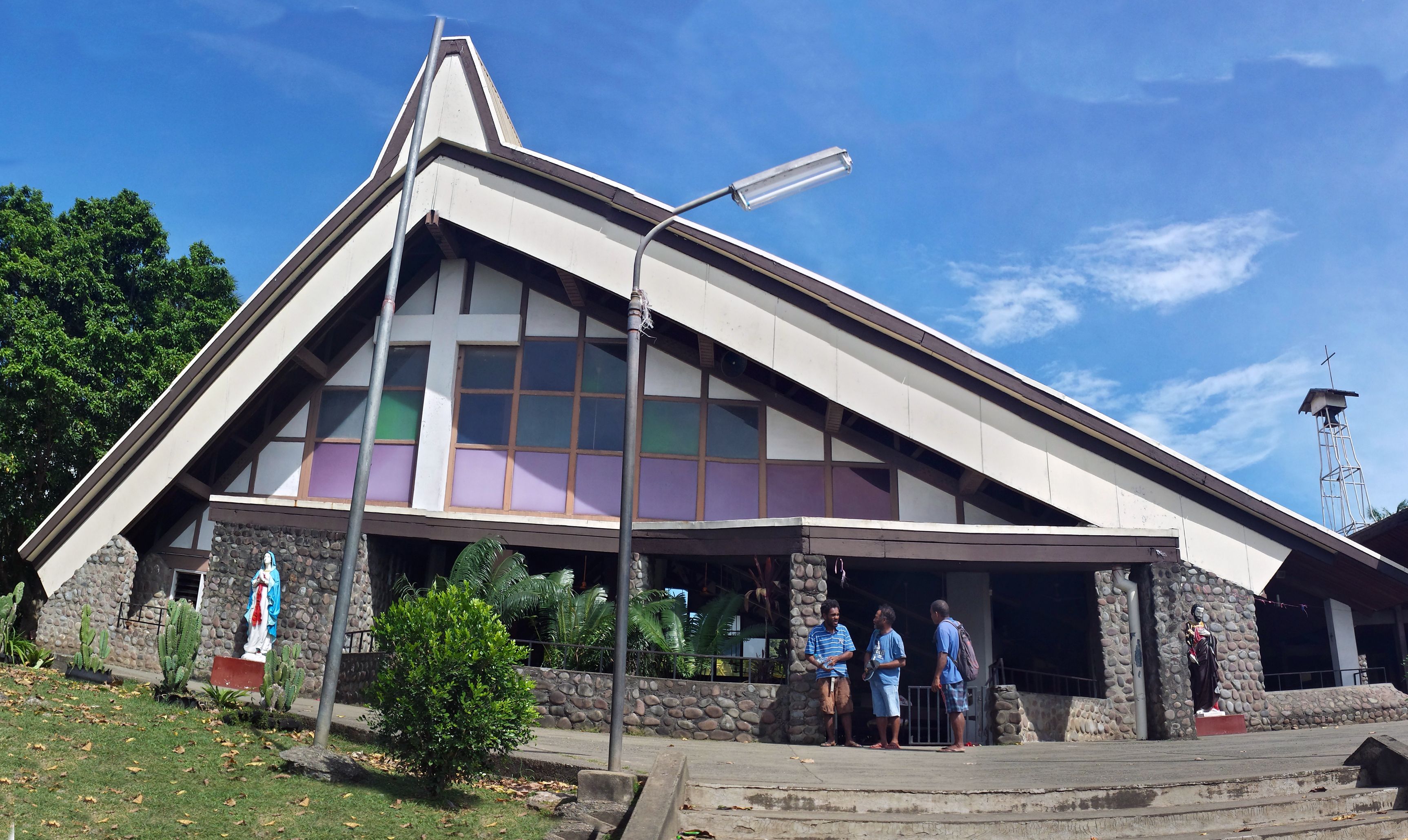
A church in Solomon Islands. Manasseh Maelanga, who is also a priest, says he sought guidance from Church leaders before deciding to withdraw his no-confidence motion against Prime Minister Matthew Wale. Photo/Holy Cross Cathedral, St Mary Catholic/file
The withdrawal comes after a week of political turmoil inside Wale’s Government for Reform, Empowerment, Accountability and Transformation (GREAT) Coalition, including a major Cabinet reshuffle.
Former Prime Minister Gordon Darcy Lilo was removed as Finance and Treasury Minister, with Fataleka MP Rexon Ramofafia taking over the portfolio.
Alfred Tuasulia was appointed Minister for Justice and Legal Affairs, while Nestor Ghiro was initially appointed Home Affairs before being moved to Agriculture and Livestock.
Isikeli Vave Jnr has since taken over Home Affairs, while Harry Kuma has returned to the Commerce, Industry, Labour and Immigration portfolio.
Wale had defended the reshuffle as part of his government’s push for stability and reform.
“Your choice to serve the people of our beloved Solomon Islands at this time is a choice for stability, reform and a better future. The GREAT Coalition remains focused on delivering real change for every Solomon Islander,” Wale said in a statement.
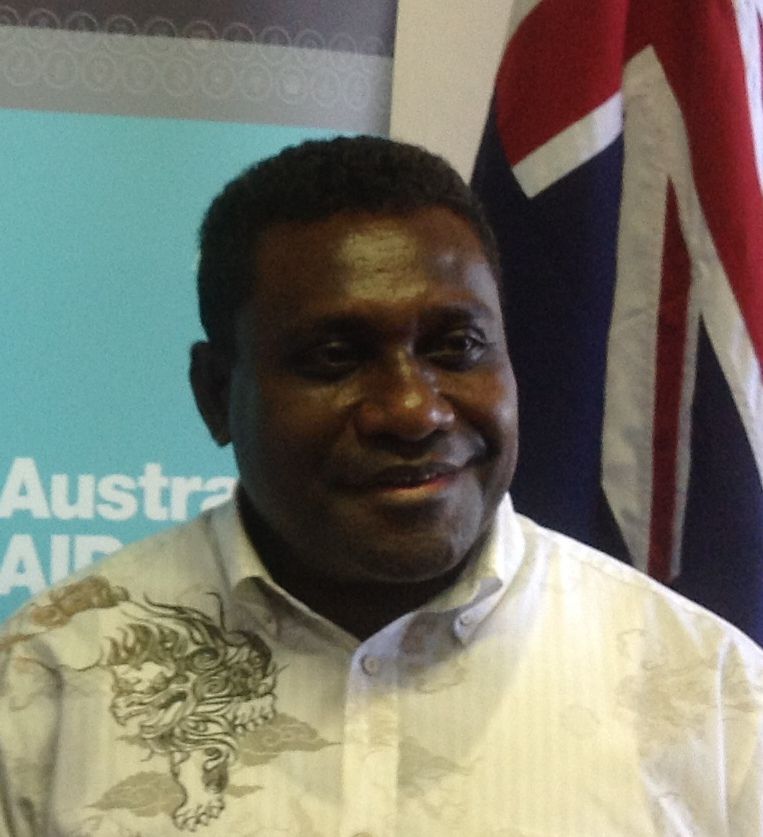
Former Solomon Islands Prime Minister Gordon Darcy Lilo, who was removed from the Finance and Treasury portfolio by Prime Minister Matthew Wale during last week’s Cabinet reshuffle. Photo/Department of Foreign Affairs and Trade, Australia
The political turmoil had forced Wale to cut short his attendance at the Pacific Islands Forum Leaders Meeting in Palau last week and return home to face the challenge to his leadership.
The sudden leadership challenge had raised wider questions about political stability in Solomon Islands.
Dr Transform Aqorau, Vice-Chancellor of Solomon Islands National University, questioned why the dispute had not been dealt with within Cabinet.
“Surely this is a matter that could first have been raised in Cabinet, with Matthew firmly reminded that he must learn to consult his colleagues,” Aqorau earlier told PINA.
He also questioned what another leadership challenge so soon after a change of government said about the country’s ability to govern.
“Another vote of no confidence, only months after a change of government - what does this say about us and our ability to govern with stability and maturity?” he said.
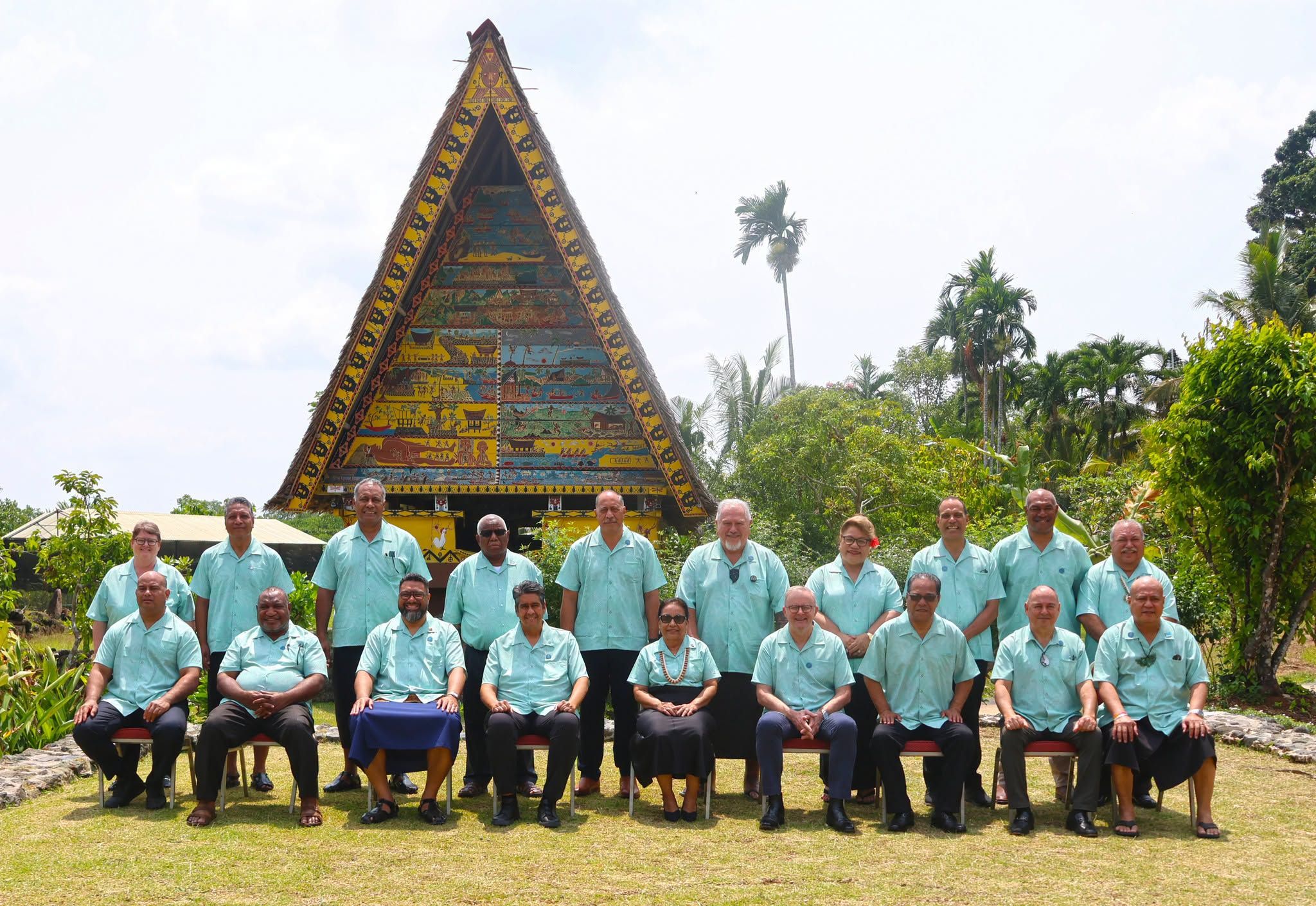
Pacific leaders at the Pacific Islands Forum Leaders Meeting in Palau last week. Solomon Islands Prime Minister Matthew Wale cut short his attendance and returned home as he faced a no-confidence motion. Photo/Pacific Islands Forum
The withdrawal means the no-confidence motion will not proceed as planned on Monday, although the political divisions exposed during the dispute remain.
Maelanga’s announcement also means Wale, who became Prime Minister in May, avoids another leadership vote only months after replacing Jeremiah Manele.
Aqorau said the immediate challenge to Wale’s leadership may be over but the events of the past week have exposed the pressure inside the GREAT Coalition and the need for the government to rebuild political stability.