
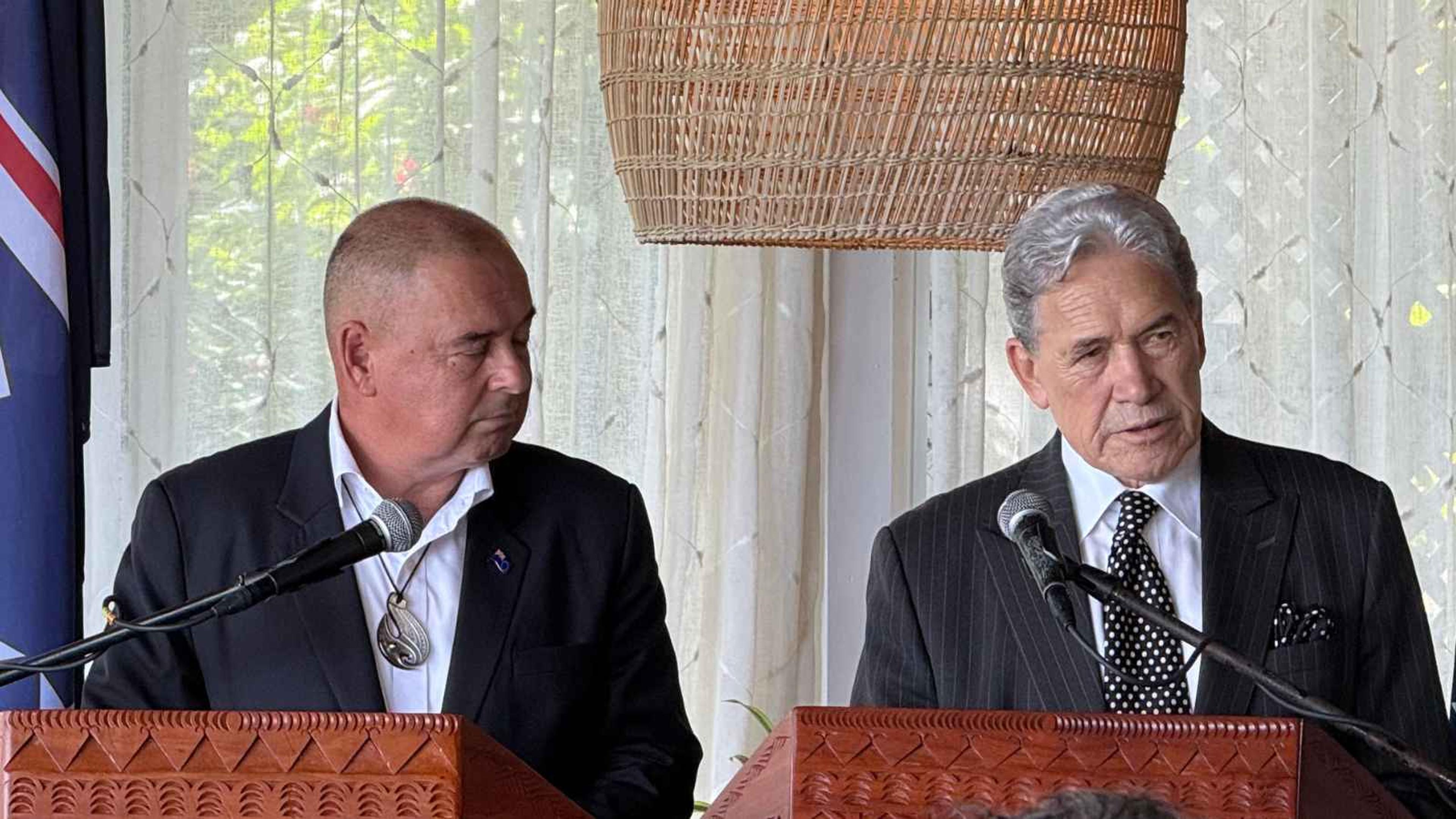
Cook Islands Prime Minister Mark Brown, left, listens as New Zealand Foreign Affairs Minister Winston Peters speaks to media following discussions on the Defence and Security Declaration in Auckland.
Photo/PMN News/Ala Vailala
Opinion
Resetting trust in the Pacific, not redrawing the lines of power
Cook Islands-NZ security deal marks a necessary reset but framing it as a win over China risks missing the point, writes political analyst William Numanga.

William Numanga, Political Analyst
Published
11 April 2026, 6:00am
Share
Copy Link
Top stories



Auckland teen turns a trip to Fiji into a mission to fight period poverty
Elenoa TuragaiviuThu, 15 Oct
Top stories
Auckland teen turns a trip to Fiji into a mission to fight period poverty
Elenoa TuragaiviuThu, 15 Oct
The new Defence and Security Declaration between the Cook Islands and New Zealand should be seen for what it is: a necessary reset between two constitutional partners whose relationship had drifted into distrust, tension, and highly public strain.
After months of diplomatic strain and the suspension of nearly NZ$30 million in support, both governments have now done what serious partners should do: return to the table, clarify expectations, and stabilise a relationship that had become dangerously uncertain.
That is worth welcoming.
But if this declaration is ultimately framed as a move to push China out of the Cook Islands, then both Wellington and Rarotonga risk drawing the wrong lesson from what went wrong.
The issue was never simply China. It was trust.
The breakdown between the two governments grew from a deeper mix of constitutional ambiguity, poor consultation, diverging diplomatic instincts, and increasingly hardened attitudes among foreign affairs officials.
New Zealand itself has acknowledged that one of the root causes of the dispute was the lack of a shared understanding about what the free association relationship actually required, especially in defence, security, and the extent of consultation between the two sides.
That is an important admission because it means this was not a one-sided failure.
Yes, the Cook Islands government made moves particularly in relation to its recent agreements with China. That clearly alarmed Wellington.

Political analyst William Numanga argues the Cook Islands-New Zealand Defence and Security Declaration represents a reset in trust rather than a geopolitical contest with China. Photo/Supplied
New Zealand had every reason to be concerned if it believed those arrangements touched on strategic or security interests tied to its constitutional responsibilities.
But Wellington’s response arguably carried the tone of a reprimand, rather than the discipline of a mature constitutional partnership. That may have protected New Zealand’s position, but it also deepened resentment in the Cook Islands and appeared to widen the political gap between the two governments.
A key reality is this: relationships like this are not held together by constitutional text alone. They are held together by trust, tone and consultation before suspicion hardens into confrontation.
The declaration matters because it now makes the obligations on both sides much clearer. The Cook Islands has committed to conducting its foreign policy within the constitutional limits of free association. It will also uphold shared defence and security interests, consult New Zealand in good faith on relevant matters, and engage Wellington before other partners on defence and security requests. In return, New Zealand has committed to remain the Cook Islands’ primary defence and security partner, strengthen defence cooperation, and deepen structured dialogue and information sharing.

Cook Islands Prime Minister Mark Brown and New Zealand Foreign Affairs Minister Winston Peters during Peters’ arrival in Rarotonga for talks on the bilateral relationship. Photo/PMN News/Ala Vailala
Both countries have also agreed not to enter into arrangements with third parties that would undermine those commitments.
That is not a minor clarification. It is a significant recalibration of the relationship.
Still, it will create unease in the Cook Islands and understandably so.
For many in Rarotonga, this declaration will reinforce a difficult political reality: that while the Cook Islands manages its own affairs and pursues its own international relationships, it does so within constitutional limits that are now being stated more explicitly. For a country that has in recent years sought to project a stronger international identity - through its own diplomacy, discussions around a passport, and a willingness to diversify partnerships - that can feel less like clarification and more like constraint.
That sentiment should not be dismissed or underestimated. Small island states naturally seek room to manoeuvre. They seek to diversify partnerships, expand options, and avoid overdependence on any one country. That is not disloyalty. It is a rational instinct of survival in a changing world.
Watch Mark Brown's full interview on Pacific Mornings below.
The challenge is not whether the Cook Islands can engage internationally. It can, and it should. The challenge is where those engagements begin to intersect with strategic infrastructure, maritime access, cyber systems, security arrangements and wider geopolitical competition.
That is the line this declaration now draws more firmly.
But drawing that line should not be confused with declaring a winner in a New Zealand-China contest.
That is where the public narrative now becomes risky. The suggestion that this declaration signals “China out, New Zealand back in” may make for a compelling headline, but it is too blunt to be a healthy long-term strategic message.
Because sidelining China should not be the reason for a declaration between two constitutional partners.
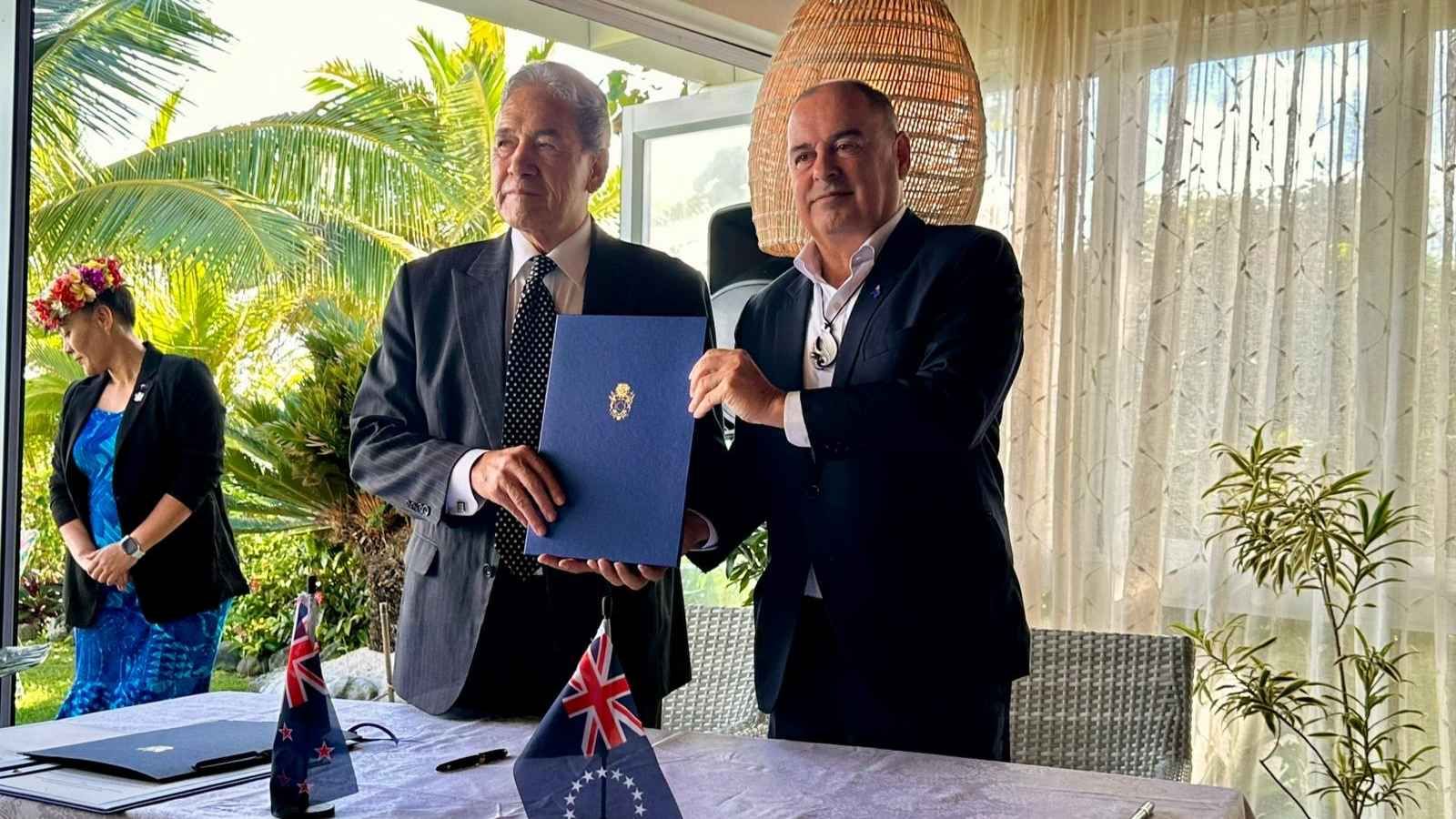
Winston Peters and Mark Brown following the signing of the Cook Islands-New Zealand Defence and Security Declaration, marking a reset in the bilateral relationship. Photo/Supplied/John Tulloch
If that becomes the dominant interpretation, then the declaration risks sending an unintended message across the Pacific: that constitutional clarity is merely a softer language for strategic containment. That would be a mistake.
New Zealand itself maintains a mature, pragmatic and ongoing relationship with China. It cannot reasonably expect the Cook Islands to operate in a world where engagement with China is treated as inherently suspect while Wellington continues to manage that same relationship on its own terms.
The Pacific deserves better than that kind of geopolitical theatre.
In fact, the Cook Islands has already shown that cooperation does not need to be zero-sum. Te Mato Vai remains one of the clearest examples of what practical trilateral cooperation between the Cook Islands, New Zealand and China can look like when the objective is development rather than strategic signalling. That model should not be forgotten now. It should be studied and improved.
And if this declaration is to endure politically in the Cook Islands, then New Zealand must now show that being the “primary partner” means more than being first in line to object.
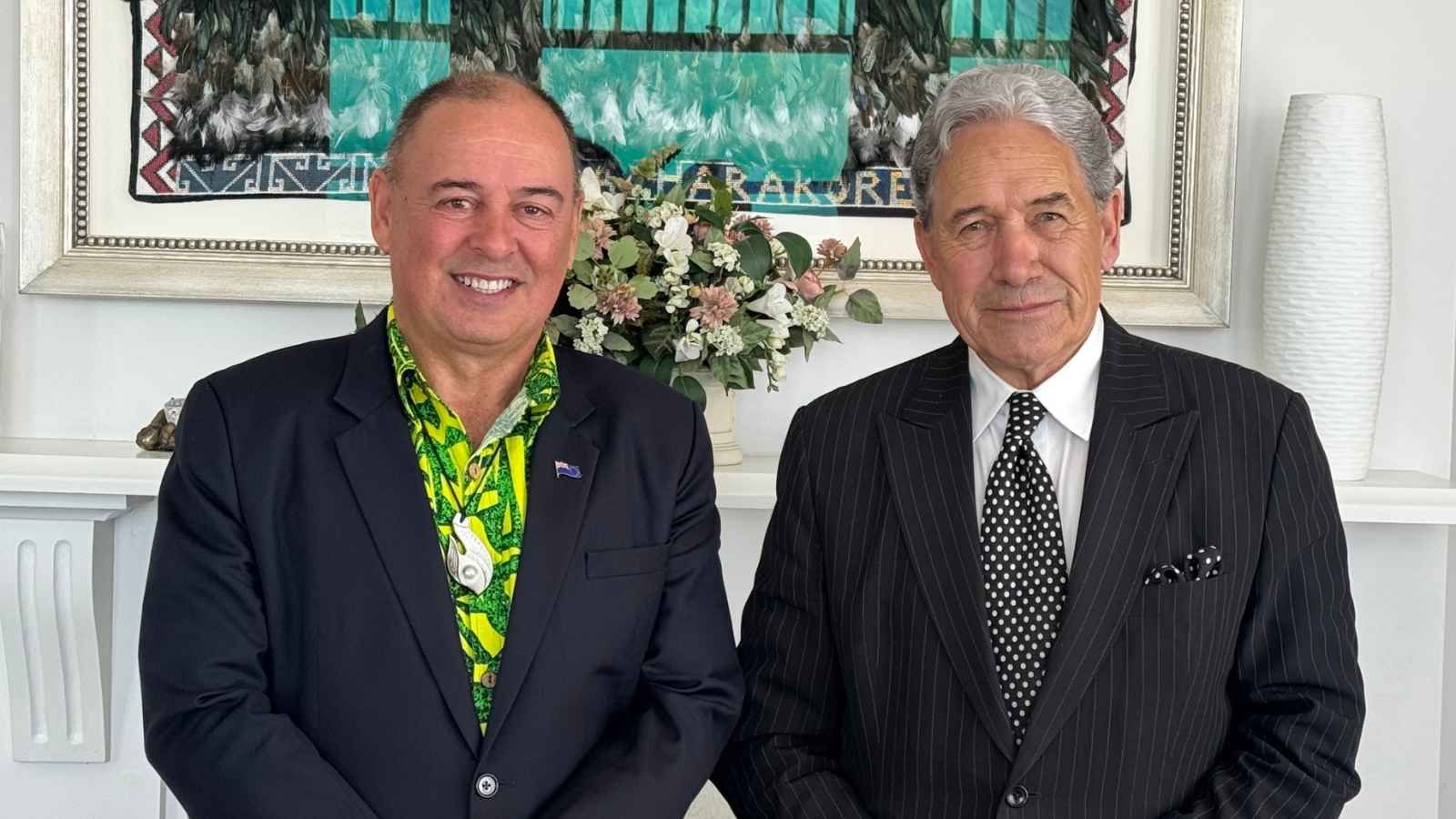
Mark Brown met Winston Peters at Peters’ Auckland home in March, weeks before the signing of the Defence and Security Declaration. Photo/Supplied/John Tulloch
It must mean stronger cooperation in maritime surveillance, cyber resilience, border protection, disaster preparedness, emergency response, infrastructure resilience, climate adaptation and public sector capability.
It must also mean deeper investment in the people-to-people foundations of the relationship: labour mobility, scholarships, secondments, institutional strengthening and the practical machinery that keeps constitutional partnership alive between moments of crisis.
That is what the Cook Islands should reasonably expect from New Zealand now.
This declaration should therefore be remembered not as a line drawn against China, but as a line drawn under a period of drift, misunderstanding and avoidable mistrust.
The Cook Islands and New Zealand are not simply neighbours. They are bound by history, citizenship, kinship and a constitutional relationship unlike any other in the Pacific.
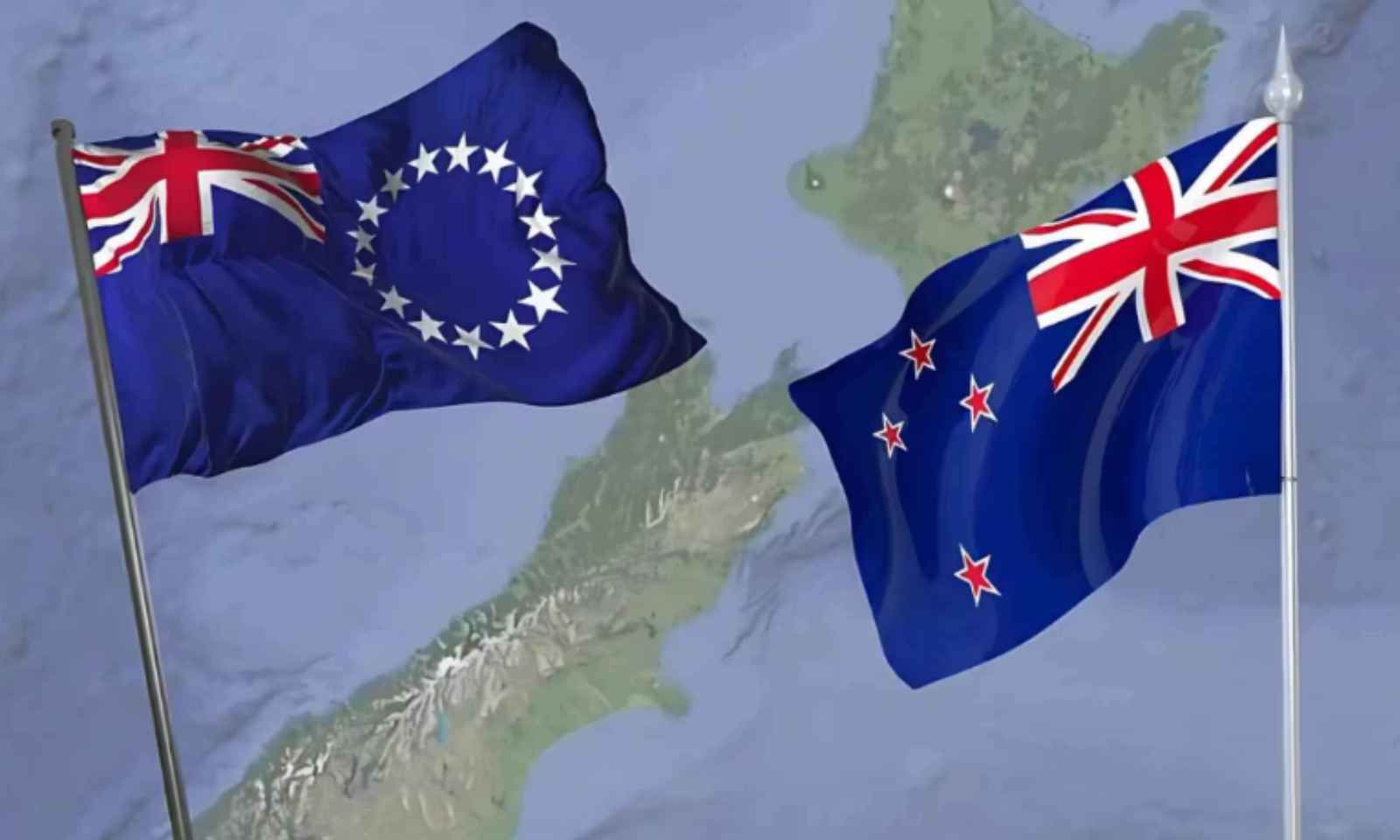
The flags of the Cook Islands and Aotearoa New Zealand, reflecting the close constitutional relationship between the two countries.Photo/Supplied
That relationship is too important to be reduced to a question of who won the argument.
If this declaration becomes a platform for better consultation, greater maturity and more practical cooperation, it will have served its purpose.
If it becomes a geopolitical signal disguised as constitutional clarity, then the region may hear a message neither country can fully control.
William Numanga is a Cook Islander, a political analyst, and an advocate for regional cooperation and development. The views expressed in this article are his own and do not reflect those of PMN.