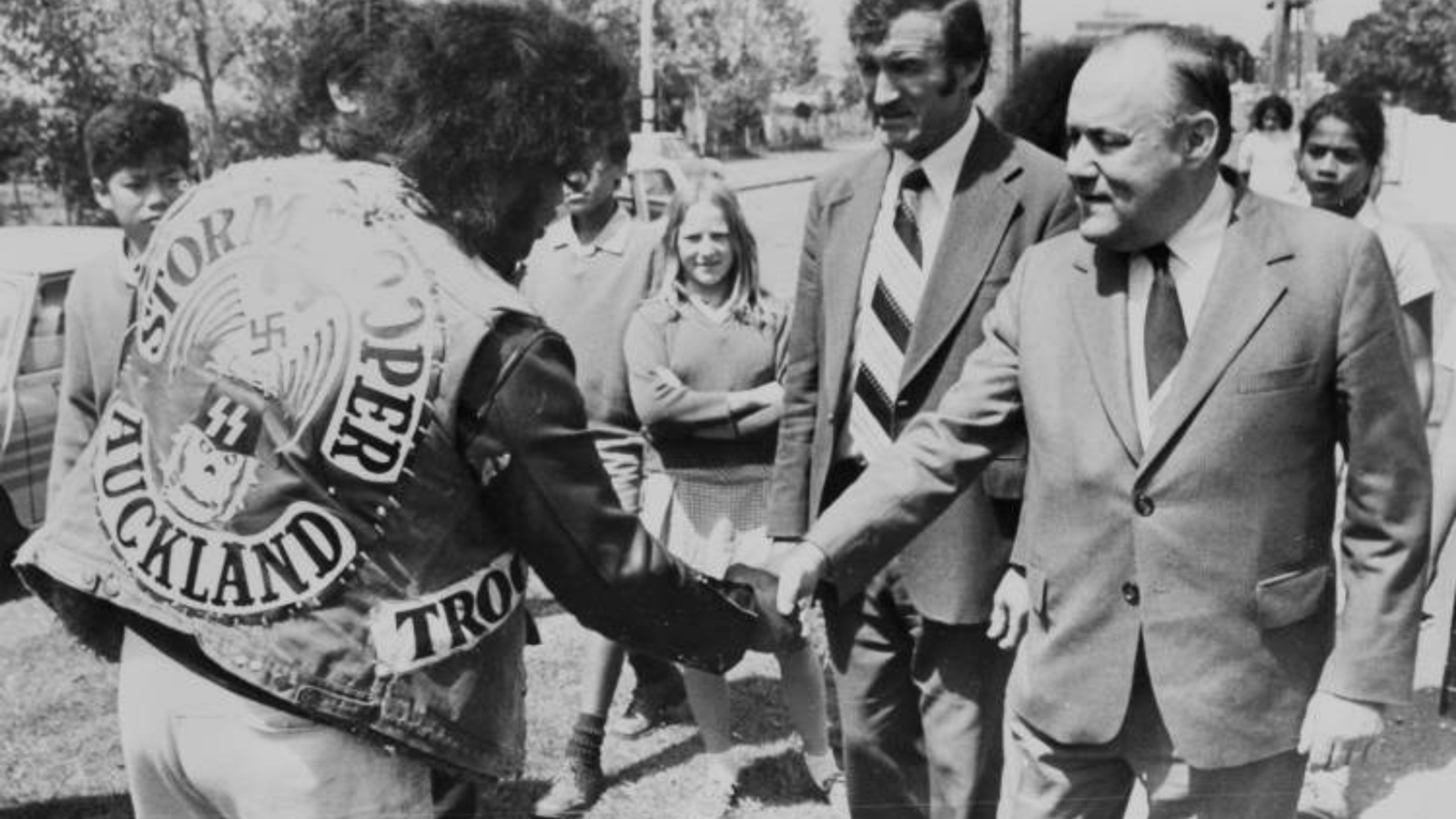
On 2 November 1979, then National Prime Minister Robert Muldoon was photographed shaking hands with Tim Paparoa, a gang member and organiser of a work scheme at Bairds Intermediate School.
Photo/Auckland library
Opinion
Are they togs or undies, gangs or whānau?
Two Māori political candidates, two encounters with gang whānau, two different consequences.

Thomas Tarurongo Wynne
Published
03 November 2026, 11:46am
Share
Copy Link
Top stories
Fiji military offers to give up coup immunity as the Prime Minister's remark raises questions
Christine RovoiTue, 03 Nov
Green Party makes fresh Pacific pitch as election day nears
PMN NewsMon, 02 Nov
Nine arrested as Tonga-Sāmoa celebrations spill into the streets
Christine RovoiMon, 02 Nov
Top stories
Fiji military offers to give up coup immunity as the Prime Minister's remark raises questions
Christine RovoiTue, 03 Nov
Green Party makes fresh Pacific pitch as election day nears
PMN NewsMon, 02 Nov
Nine arrested as Tonga-Sāmoa celebrations spill into the streets
Christine RovoiMon, 02 Nov
Put a pair of Speedos on a counter next to a pair of undies and you would struggle to tell them apart. Same cut, same shape. At the beach they are togs and no one looks twice. Walk the same pair down the main street and they are undies, and someone has called the police.
The garment didn’t change, only where it was worn and how it was perceived.
But turn either pair inside out and many of us would find a name. Faded felt pen, written by a caregiver at a kitchen table, late at night before school swimming or school camp. Togs or undies, they belong to someone. Someone wrote that name in the back, hoping the garment would be found if it ever got lost.
This month, two Māori women political candidates in Tāmaki Makaurau found out who gets to decide togs or undies.
On 14 October, Tāmaki Makaurau MP Oriini Kaipara posted photos from a Mongrel Mob pad after a health and wellbeing day there with Te Pāti Māori and Green colleagues. She later told RNZ: “You see Mongrel Mob, I see whānau.”
At a debate a week later, Labour’s Kerrin Leoni criticised the visit. Footage soon emerged of Leoni at a 3 October event in Papakura urging people to vote. She said it was a whānau function; media reported it had been advertised as a Mongrel Mob fundraiser.
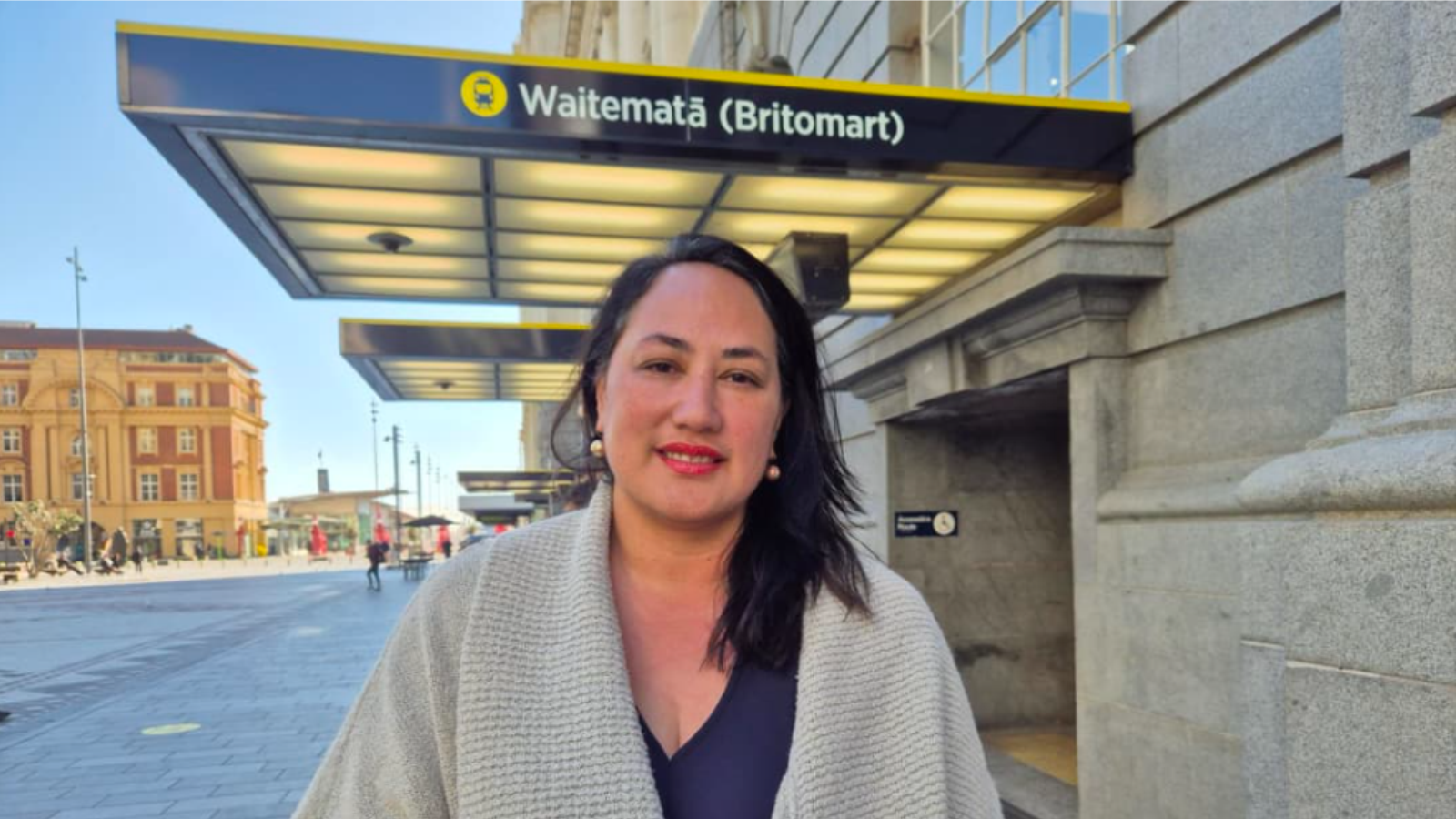
Kerrin Leoni said “I’ve been really open about my whānau, and that I also have whānau members who are gang members. Photo/RNZ/Jessica Hopkins
Leoni had already told the debate: “I’ve been really open about my whānau, and that I also have whānau members who are gang members.” Soon after, she resigned from Labour on 23 October and now runs as an independent.
One went to the pad as a sitting MP and posted the photos herself. The other went to a whānau gathering where she campaigned for votes. Yet it was Leoni who lost her party’s support. So who decides which is togs and which is undies?
For those who only ever see the undies, the choice looks simple. Justice Minister Paul Goldsmith said “We’re not sure whether it was the Labour Party fundraising for the Mongrel Mob or the Mongrel Mob fundraising for the Labour Party. Whichever way it was, it’s an appalling look.”
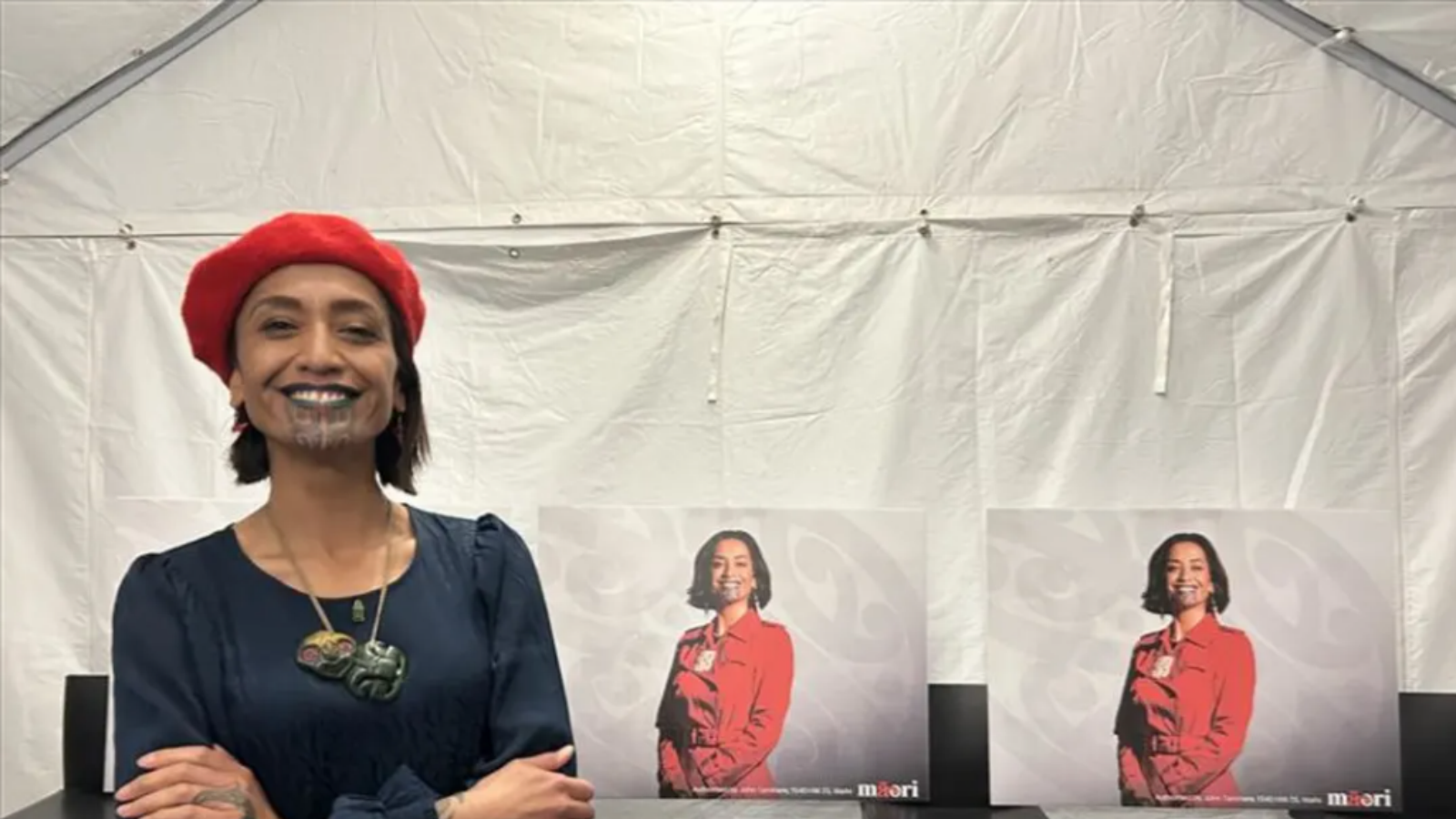
Tāmaki Makaurau MP Oriini Kaipara posted photos from a Mongrel Mob pad after a health and wellbeing day there with Te Pāti Māori and Green colleagues. Photo/RNZ/Liliian Hanly
Labour leader Chris Hipkins called the pad visit a “huge error of judgement”, while conceding: “Māori MPs are held to a different standard… I really regret that.”
Green co-leader Marama Davidson drew her own line: “Oriini Kaipara made those comments, not the Green Party, and that is for Te Pāti Māori to answer to.” Te Pāti Māori co-leader Rawiri Waititi said “Our whānau do not stop being our whānau because they wear a patch.”
Nor is any of this new. On 2 November 1979, Prime Minister Robert Muldoon was photographed in Ōtara shaking hands with Tim Paparoa, a gang member and organiser of a work scheme painting fences at Bairds Intermediate School. Would that same photograph be judged differently today?
Police’s National Gang List passed 10,000 people in July 2025. Earlier ethnicity data showed more than three in four were Māori and around one in 10 Pacific. It is not a complete measure of gang involvement, but behind those numbers sit a great many whānau and aiga, kainga and kōpū tangata.
None of this however, diminishes the extreme harm gangs have inflicted on women, children, whānau and communities. Nor does whakapapa excuse violence, intimidation or exploitation. Those harms are real, and accountability matters.
Prime Minister Christopher Luxon put it plainly “Gang members go get people hooked up on meth and drugs, that is their business model.” Criminologist Jarrod Gilbert described gang violence as: “One side is harmed, and then the other side has to get utu for that, and then it climbs from there.” Police Minister Mark Mitchell said “Gangs exist only to cause and perpetuate violence and misery in our communities.”
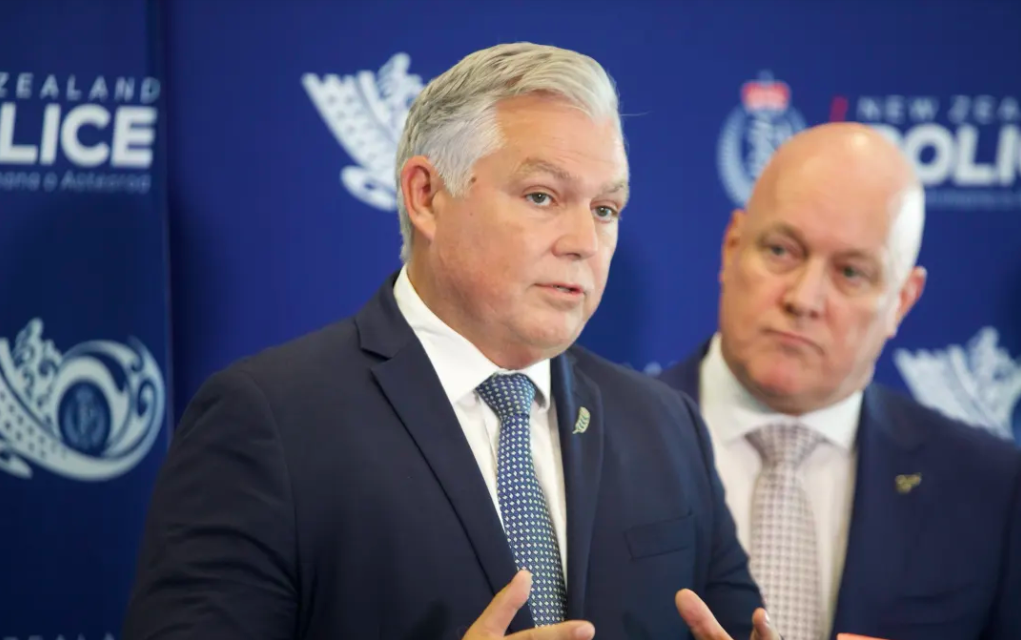
Police Minister Mark Mitchell said “Gangs exist only to cause and perpetuate violence and misery in our communities.” Photo/RNZ/Calvin Samuel
So can we condemn someone’s actions without denying whose whānau they connect to? Can a Māori or Pacific politician represent communities like ours without being asked to leave some whānau at the gate? And if we demand that candidates choose between family and party, do they bring all of themselves or just what is politically palatable.
Leoni herself asked “Is this really the kind of New Zealand we want to live in? Is this really the behaviour we want to model to our tamariki and mokopuna” as she stepped down from her party candidacy and now contests the seat as an independent.
Long before a patch was stitched on a back, a caregiver wrote a name in those togs or undies. That name does not wash out in the churn of election cycles, nor does it disappear because of political expediency. Togs or undies, sometimes in Pasifika and Māori families they are both.
On 7 November, Tāmaki Makaurau gets to decide what they see.