Online vault aims to return Pacific research to the community
Aui'a Vaimaila Leatinu'uWed, 21 Oct
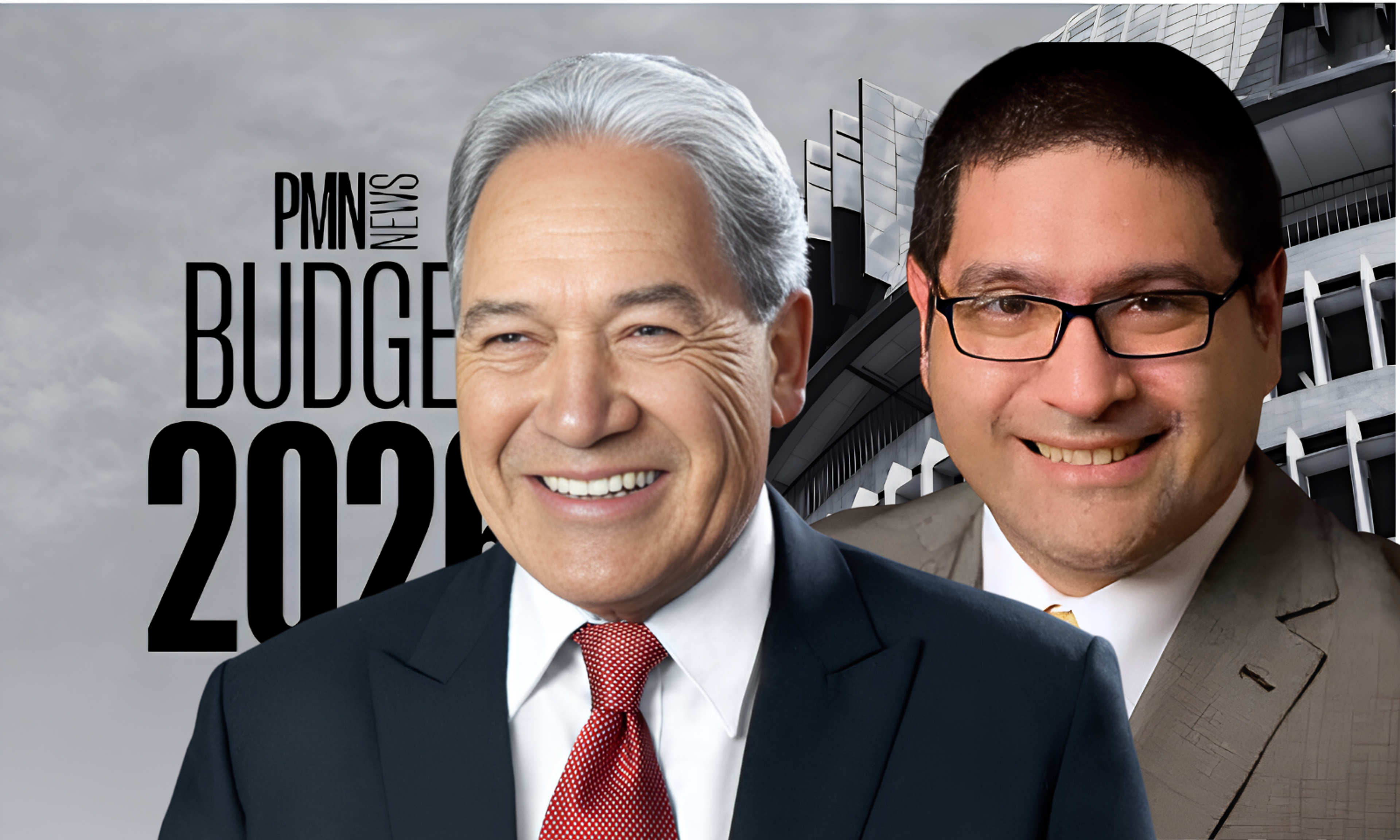
New Zealand First leader Winston Peter, left, and economist Filipo Katavake-McGrath.
Photo/PMN News composite
Winston Peters also takes aim at his Coalition Government partners for dismissing New Zealand First’s warnings over tax cuts and spending promises.

Winston Peters says Budget 2026 is “as good as it gets”, but blames National and ACT for misreading the economy and ignoring New Zealand First’s advice to delay tax cuts and other commitments.
Speaking to William Terite on Pacific Mornings, the New Zealand First leader and Foreign Affairs Minister gave the Budget a qualified endorsement
Yesterday, Finance Minister Nicola Willis delivered what she describes as a “responsible Budget” aimed at securing New Zealand’s future, promising more investment in health, education, and frontline services.
But Peters says while the package is “better than some people thought”, he takes aim at his coalition partners for creating the impression the country's economic crises could be fixed quickly.
“Given the decisions that the National Party and the ACT Party made coming to the 2023 elections and post the elections, this is as good as it gets,” he says.
“It's (Budget 2026) better than some people thought, but the reality is, if you look at the growth rate, it's very, very, very low. If you look at the possibility of inflation coming soon, it's very, very high.
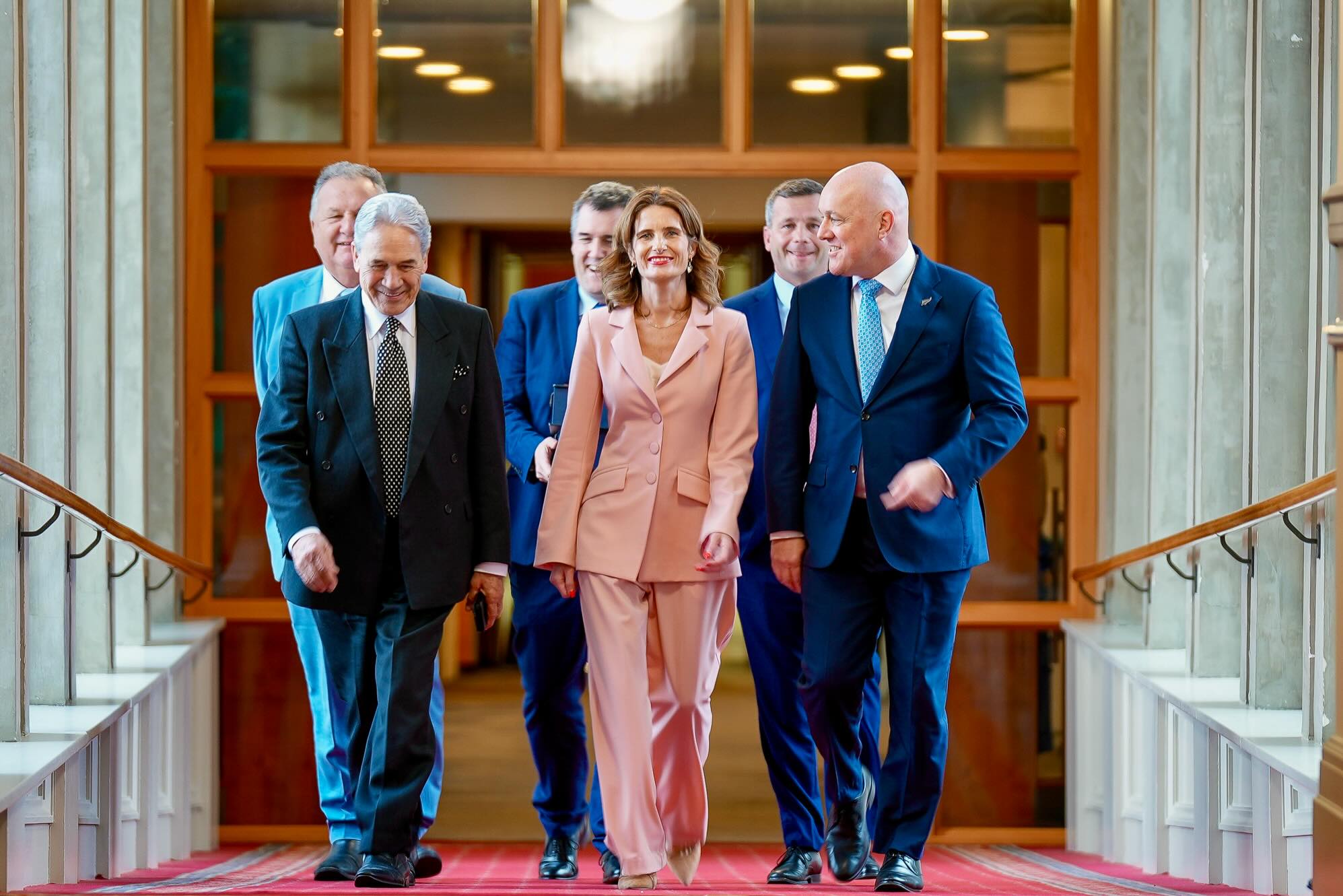
Coalition cabinet ministers at Parliament on Budget day but NZ First Leader Winston Peters, front left, says National and ACT misread the economy and ignored their advice to delay tax cuts and other commitments. Photo/Facebook.
“And if you look at the fact that we (will) not get back into the surplus until 2029/30, that's far, far too late,” Peters says.
Peters says New Zealand First advised its coalition partners after the 2023 election that they had misread the economy and should delay tax cuts and other commitments.
He says voters would have understood if the Government had deferred those promises for a few years, given the scale of the economic pressures facing the country. But he adds the Government created the impression the economy could be fixed quickly.
Watch NZ First Leader Winston Peters' full interview below.
“The moment you say, don't worry, I can fix it, everybody thinks, oh, well, the problem can't be that serious, can it?”
Peters says that was a "great mistake they made and I put it down to their inexperience".
Pacific Economist Filipo Katavake-McGrath also questions whether the Budget will deliver the growth the Government is promising.
Speaking earlier on Pacific Mornings, Katavake-McGrath says economic growth depends on access to capital, customers, product development and research opportunities.
He says, as a business owner, there is little in the Budget that helps him fund product development or better connect with Pacific markets in New Zealand.
But both Peters and Katavake-McGrath point to one area of opportunity for Pacific young people: trades, infrastructure and practical training.
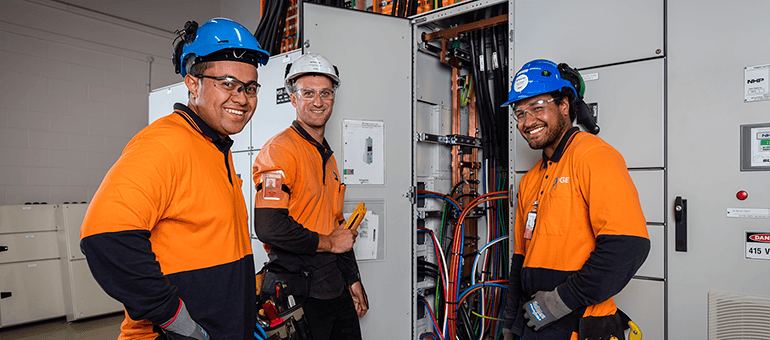
Economist Filipo Katavake-McGrath says Government’s investment pipeline sends a signal to young people that there will be “actual jobs and work” they can train for, particularly in building, infrastructure and resource-related industries. Photo/Māori and Pasifika Trades Training.
Peters says New Zealand First is proud of the shift of fees-free support toward trades training.
He says the change will be of “enormous assistance” to Māori and Pacific young people, because many have the ability but lack access to practical training.
Katavake-McGrath says that is where he also sees hope in the Budget.
He says the Government’s investment pipeline signals to young people that there will be “actual jobs and work” they can train for, particularly in building, infrastructure, and resource-related industries.
Peters says the change was pushed by New Zealand First and argues the previous model did not sufficiently support poorer students.
He says final-year fees-free was going to too many students from wealthier households, rather than those most in need.
Watch Filipo Katavake-McGrath's full interview below.
The Budget also includes a significant lift for foreign affairs and Pacific engagement, including funding for the Pacific Islands Forum, international development cooperation in the Pacific, and New Zealand’s offshore diplomatic network.
Peters says the Pacific must be treated as central to New Zealand’s future.
“The Pacific is our front yard. It's not our backyard, it's our front yard and we're meant to show it. Not with talk, talk, talk, but real action.”
He says New Zealand needs to do far more offshore if it wants to become a successful trading nation, pointing to countries such as Singapore, Ireland and Croatia as examples of smaller nations with stronger international networks.
Katavake-McGrath says it is fair to say defence, security and foreign affairs are receiving major investment at the expense of social spending.
He says that is “sad, but not surprising”, given the Government’s stated focus on international and business relations.
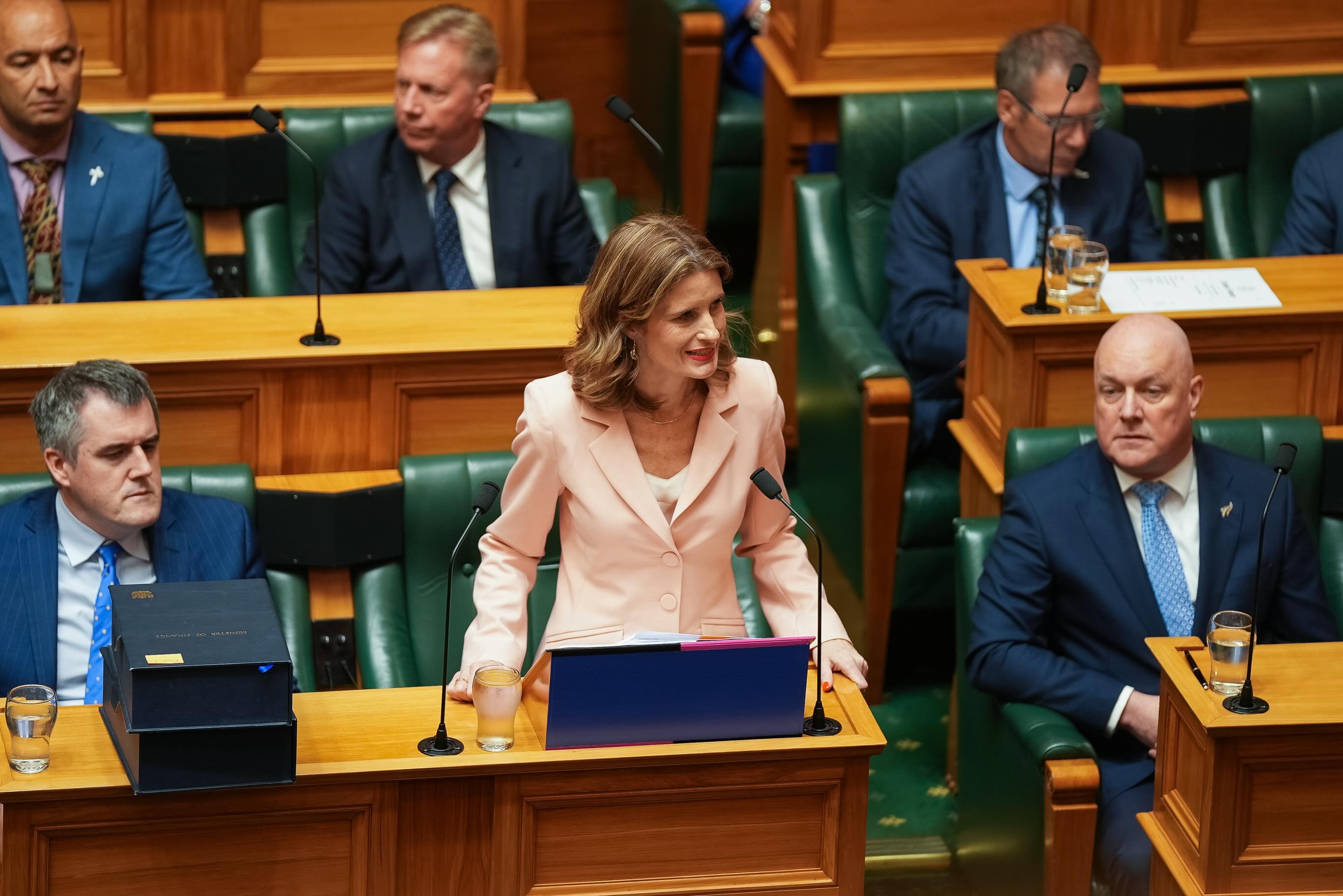
Finance Minister Nicola Willis presenting Budget 2026 at Parliament. Photo/Facebook.
But the increase in Pacific regional spending comes as the Ministry for Pacific Peoples faces funding cuts of about $2.8 million over four years.
Peters defends the regional investment when asked whether that suggests the Government is prioritising Pacific engagement offshore over Pacific communities at home.
He says New Zealand needs to bring more international partners into the Pacific such Scandinavia, the Middle East, Saudi Arabia and the United Arab Emirates, who are all showing interest in supporting Pacific resilience.