
Opinion: From the Apology Mat to the Welcome Mat, it's repairing the Vā
Thomas Tarurongo WynneFri, 18 Sep

Despite national improvements, Ministry of Education data show Pacific students were the only group to record a drop in regular attendance in term four 2025.
Photo/Supplied/Ministry of Education
An Auckland principal says attendance challenges for Pacific learners are complex and deeply rooted, as new data shows they are the only group to decline in the overall school attendance rates.



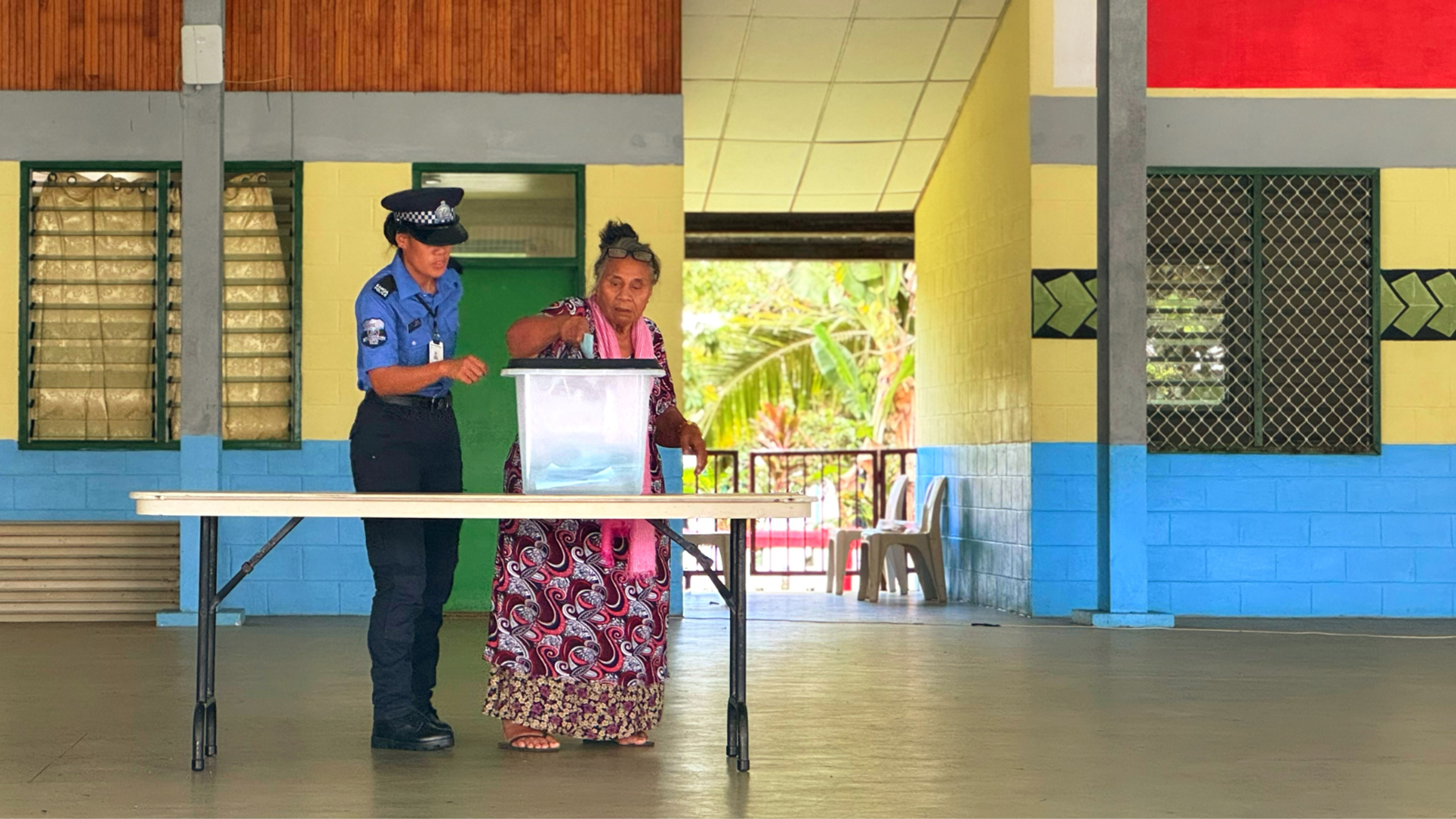
Pacific students are falling further behind in school attendance even as national rates edge higher, new figures show.
Lyndy Watkinson, principal of Avondale College, says the issues are deeply rooted and not easy to fix.
“In terms of that attendance space, we were successful in becoming a school that provides an in-service provision of attendance,” Watkinson told PMN News.
“It's enabled us to bring in people from our own community to work with us around improving those attendance rates.
“We see for our students that where there are issues with attendance, they're not simple issues to solve, that they are complex.”
Avondale College, the country’s third largest school, has almost 30 per cent of its students identifying as Pacific.

Avondale College principal, Lyndy Watkinson. Photo/Supplied
Despite national improvements, Ministry of Education data show Pacific students were the only group to record a drop in regular attendance in term four 2025.
Just 39.6 per cent attended more than 90 per cent of the term, down 1.4 percentage points from the previous year. Nationally, the figure rose to 57.3 per cent, widening the gap.
The drop is concentrated in South and West Auckland, where many Pacific families live. These regions recorded the lowest attendance rates nationally and were the only areas to fall year-on-year.
Watch Karl Vasau and Oliana Eniata's Talanoa Ako episonde on prioritising school attendance below.
Watkinson says most parents want their children at school, but face barriers that take time and investment to overcome.
“Most parents want their kids to be at school, they want their kids to be at school and they want their kids to be achieving, certainly at Avondale College, that's our experience.
“It's just working through whatever it is that's creating those barriers or those difficulties so that we can get the kids attending every day, because attendance and achievement are so closely linked.”
The government has tried to improve attendance with stricter measures, introduced last May. Schools must now implement attendance plans and parents of persistently absent students face fines of up to $300 for a first offence and up to $3000 for repeat cases.
Budget 2025 included $140 million to lift attendance over four years.
In a statement to PMN News, Labour’s education spokesperson Ginny Andersen says the figures show deeper challenges for Pacific communities.

Labour's Education spokesperson, Ginny Andersen. Photo/Supplied
“This is greatly concerning for our Pacific communities and reinforces the need for the Government to target the root causes of attendance instead of punitive measures,” Andersen says. “With the cost of living soaring, the focus must be on the key factors leading to truancy like poverty, poor health, and harsh living conditions.
“The reality is one in three Pacific children live in hardship and gutting school lunches and slapping on more fines isn’t going to fix that. With Pacific unemployment being the highest of any group, some kids will also be choosing to support their families over going to school. This should never be a choice for any child.”
“Pacific communities deserve the relief they were promised, not a government that makes things worse.”
Associate Education Minister David Seymour acknowledged the drop but said new measures should help.
“I expect those numbers to increase this year as more of our attendance initiatives come into force,” Seymour says. “Frontline attendance services are now more accountable, better at effectively managing cases, and data-driven in their responses.
“I’m already hearing good things from schools in Northland and South Auckland about the revised attendance service system.”