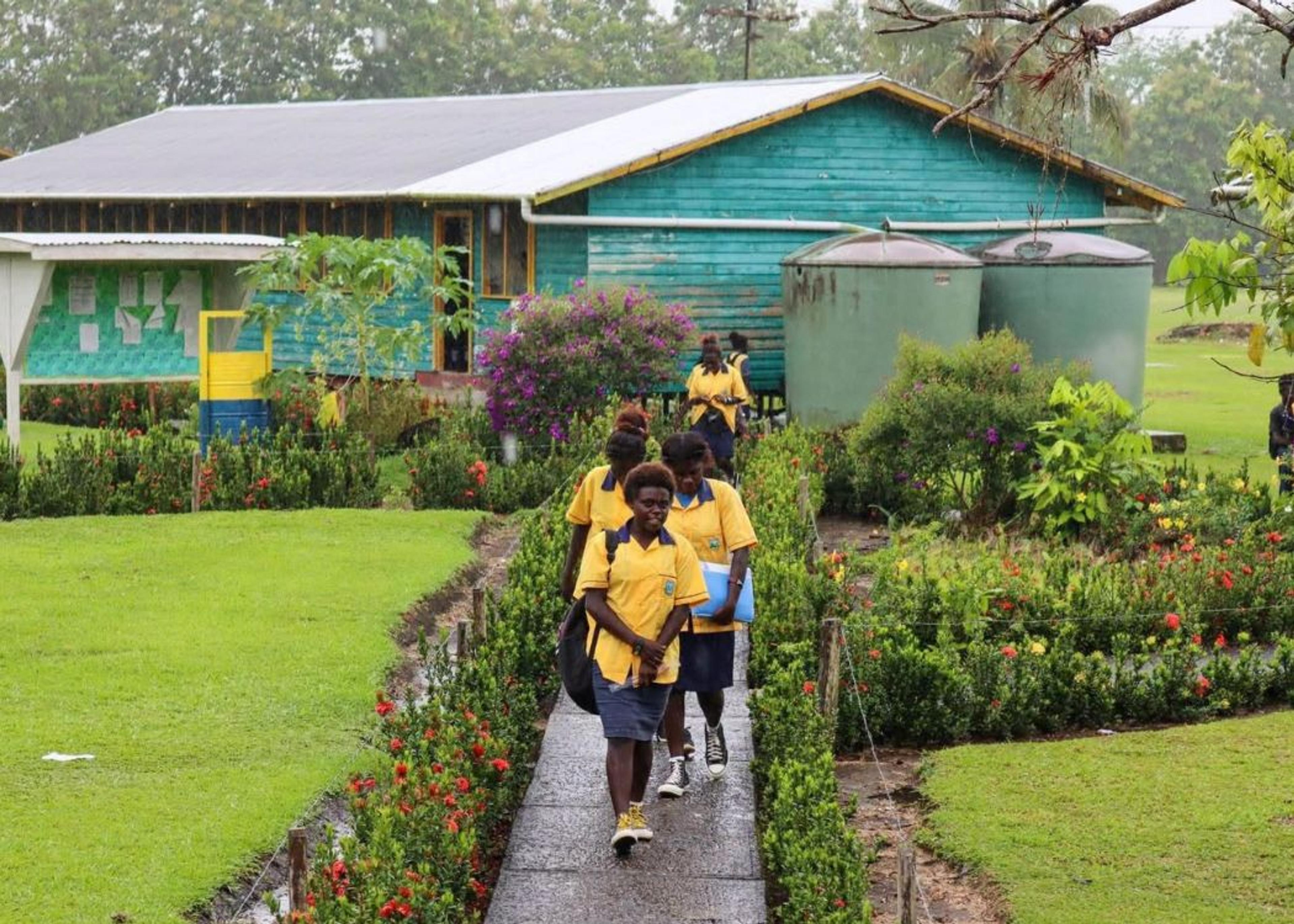

According to the Ministry for Women, Pacific women continue to face inequity in pay, while Stats NZ found Pacific children suffer higher rates of material hardship.
Photo/File
Politics
Pacific pay gap in focus as the race relations commissioner calls for action beyond words
New data shows Pacific women and children in Aotearoa continue to face financial inequality as Race Relations Commissioner Dr Melissa Derby pushes for real change after Race Relations Day.

Aui'a Vaimaila Leatinu'u
Published
26 March 2026, 7:49pm
Share
Copy Link
Top stories
From Ōtara, NZ to Los Angeles: David Liti lifts up the next generation
Elton Lonaratha JnrMon, 19 Oct
Top stories
From Ōtara, NZ to Los Angeles: David Liti lifts up the next generation
Elton Lonaratha JnrMon, 19 Oct
Pacific families in Aotearoa New Zealand are still facing stark financial inequality with new data showing ongoing gaps in pay and rising hardships among children.
According to Stats NZ, 31 per cent of Pacific children were living in households experiencing material hardship in the year to June 2025, with no major improvement since reporting started in 2019.
At the same time, the Ministry for Women (MFW), using Stats NZ data, reported Pacific women continue to face one of the widest pay gaps in the country, at 15.8 per cent.
Race Relations Commissioner Dr Melissa Derby says addressing these gaps requires more than awareness.
Speaking after Race Relations Day on 21 March, she said her focus is on building real change, including expanding on the previous Human Rights Commission’s Pacific pay gap inquiry.
Race Relations Day is celebrated annually to highlight New Zealand’s diverse communities and promote understanding. But for Pacific families, race relations are closely tied to economic realities.
Listen to Dr Melissa Derby’s full interview below.
While New Zealand’s overall gender pay gap has fallen to a record low of 5.2 per cent, progress has not been shared equally.
Data from the Ministry for Women shows Pacific women continue to earn significantly less than others.
Research from Still Minding the Gap also shows Pacific women on median wages lose more than $76 each week due to the pay gap, compared to around $25 for women overall.
Derby said improving outcomes for Pacific communities means looking at the wider factors behind inequality, including education, employment, and opportunity.
“It's my hope to have better engagement in my role with Pacific communities so that we can continue to build on the good work that was done in that inquiry,” Derby says.
“We need to have better conversations about the different aspects that contribute to the outcomes we experience.”
Race Relations Day also coincides with the United Nations International Day for the Elimination of Racial Discrimination, marking the 1960 Sharpeville massacre.

Still Minding the Gap says women on the median wage lose about $25 each week due to the pay gap. Wāhine Māori lose nearly $60 weekly and Pacific women lose over $76. Photo/AI generated image
In New Zealand, it has grown into a national platform celebrating more than 200 ethnic groups. But Derby says challenges remain.
“There's anti-migrant rhetoric among other tensions, both here and overseas. Last night I spent a lovely evening with the Iranian and wider Persian community at Nauru,” Derby says.
“They're facing immense challenges both here in New Zealand and overseas. We have domestically different attacks on religious communities and their right to practise their faith and cultural traditions free from discrimination and harassment.”

The 2025 Security Threat Environment report concluded that New Zealand is facing the most challenging national security environment of recent times. Photo/NZSIS
A recent Security Intelligence Service’s (NZSIS) 2025 Security Threat Environment report, also warned that New Zealand is facing one of its most challenging security environments in recent times including rising online extremism.
Despite this, Derby pointed to the role of communities in building connection and trust.
She praised organisations such as Multicultural New Zealand, marae, and faith groups that “bring people together”.
In a December 2025 press release, Multicultural New Zealand said: “Rapid demographic change, global uncertainty, and visible social polarisation are testing trust, belonging, and everyday relationships.

Multicultural New Zealand says social cohesion requires community connection and government support. Photo/Unsplash
“What has become clear is that cohesion cannot be centrally designed or imposed. It grows through communities themselves in the shape of shared spaces, local leadership, and everyday interactions.
“While government policy recognises this reality and supports it with consistency, respect, and adequate resourcing.”
For Pacific communities, Derby’s message is clear: real progress will depend not just on recognising inequality, but acting on it.