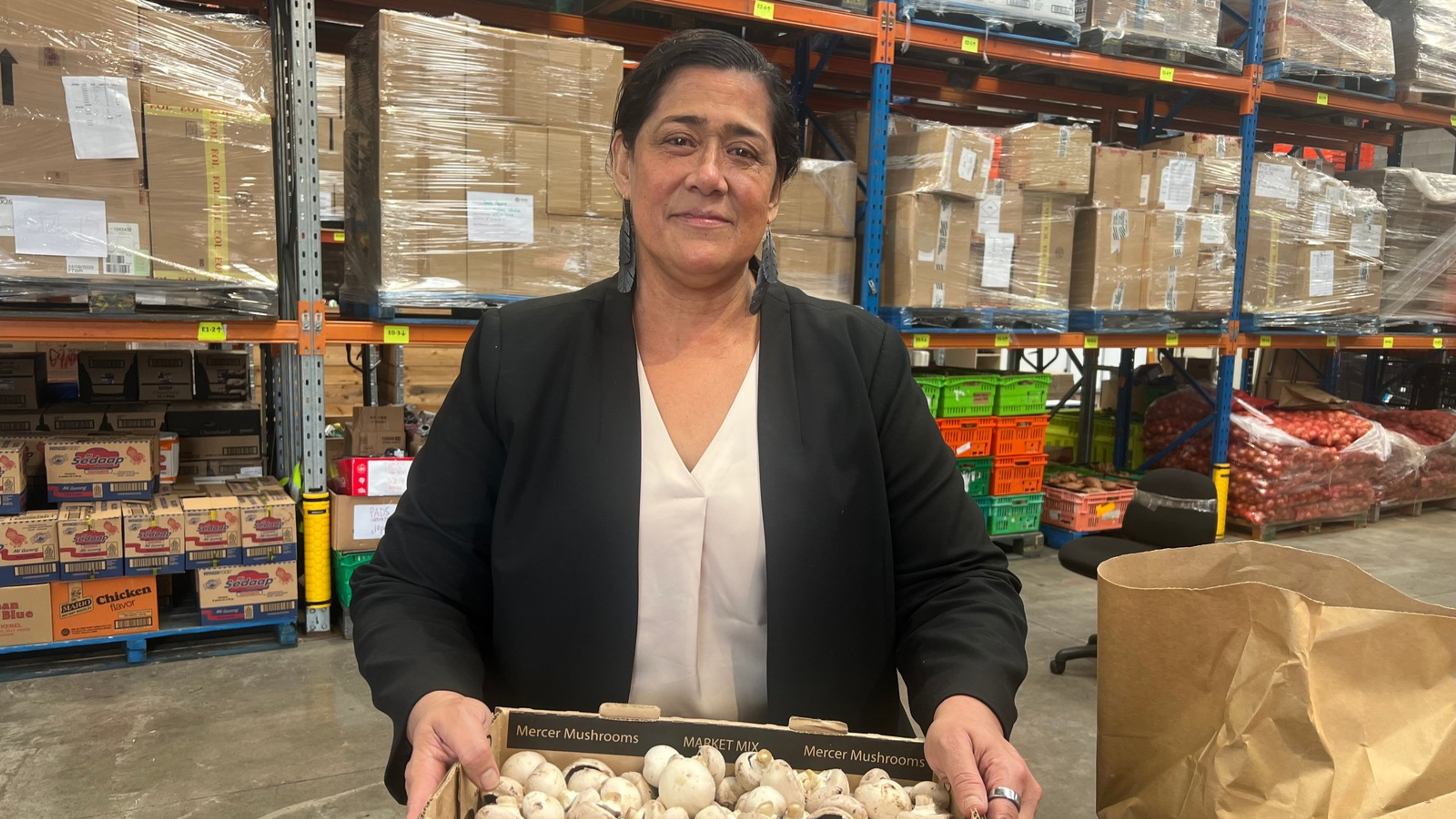
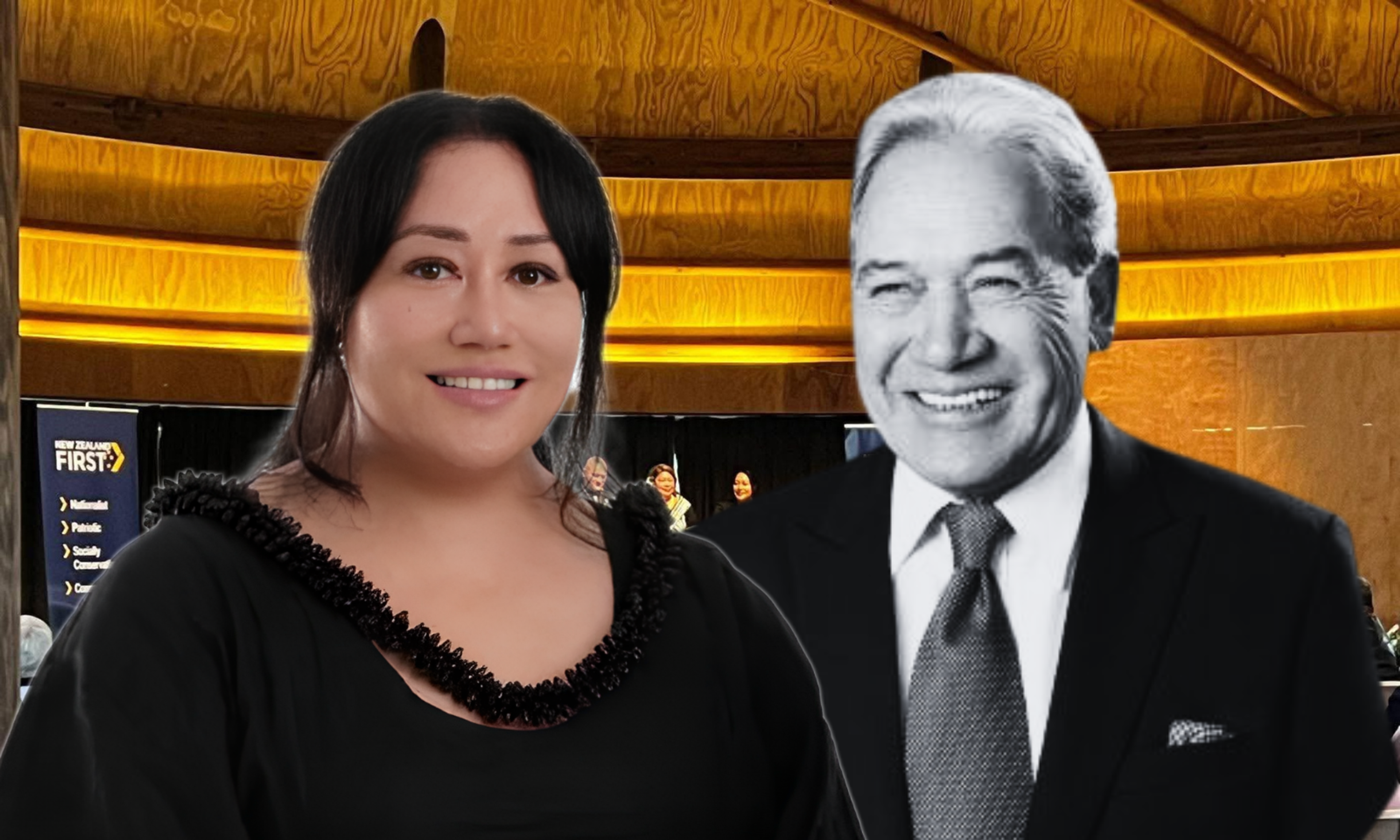
Vicky Hau is the Māngere candidate for New Zealand First, led by Vaovasamanaia Winston Peters.
Photo/Composite/X/File
Politics
NZ First targets Pacific vote with Māngere candidate Vicky Hau
Despite Labour’s long dominance in Māngere, a new candidate believes growing Pacific political influence under MMP could reshape the electorate’s future.

Khalia Strong
Published
23 June 2026, 9:47am
Share
Copy Link
Top stories

World Vision warns children will pay for aid cuts beyond the Pacific
Thomas Tarurongo WynneMon, 12 Oct
Mate Ma’a Tonga’s 40-year legacy lives on through generations
Elton Lonaratha JnrMon, 12 Oct
Top stories
World Vision warns children will pay for aid cuts beyond the Pacific
Thomas Tarurongo WynneMon, 12 Oct
Mate Ma’a Tonga’s 40-year legacy lives on through generations
Elton Lonaratha JnrMon, 12 Oct
New Zealand First candidate Vicky Hau says Pacific voters in Māngere should not feel locked into voting for Labour, as the party ramps up its bid to win support in South Auckland.
Hau was unveiled at Fale o Sāmoa in Māngere on the weekend alongside fellow Pacific candidates Elliot Ikelei for Takānini and Esther Tofilau-Tevaga for Manurewa.
Hau says Pacific voters should feel empowered to consider other parties.
“People need to understand there are other parties and other policies that may align better with us as Pasifika,” she tells William Terite on Pacific Mornings.
“Pacific people are also CEOs, we’re business owners, doctors, lawyers. We need to reward hardworking New Zealanders and ensure equal opportunity, while making sure those at the bottom get the help they need.”
Born and raised in Māngere, Hau spent nearly 12 years at the Ministry of Social Development before becoming manager of Māngere Town Centre in 2024, overseeing community safety and economic development.
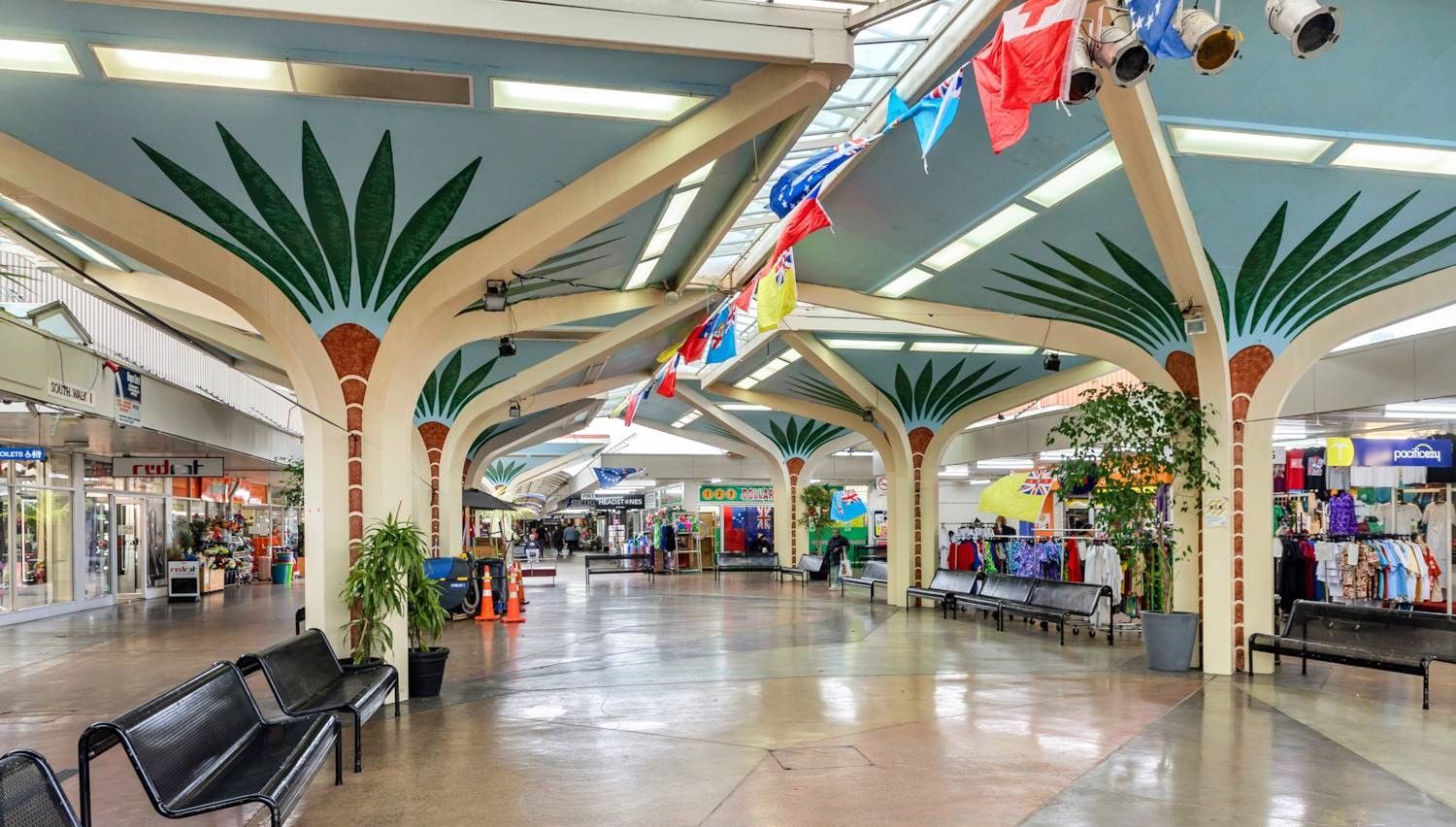
Māngere Town Centre is a hub for Pacific communities and cultural events. Photo/File
Hau says her upbringing shaped her decision to enter politics.
“I grew up in a very traditional, conservative Tongan family. Our beliefs were faith, family and personal responsibility,” she says.
“We didn’t have that safety net once our parents landed here. It was straight into working hard to take care of your family.”
Watch Vicky Hau's full interview below.
Hau says the biggest issue facing Pacific families in Māngere is the cost of living, highlighting New Zealand First policies aimed at lowering power and grocery costs, including reforms to electricity pricing and supermarket competition.
“For us in Māngere at the moment, especially in winter, you will be choosing between two things, heating your home or putting food on the table.”
Speaking at Saturday’s launch, NZ First MP Casey Costello described Hau as a candidate with “strong local knowledge and practical leadership” who understands poverty and the solutions needed to address it.
The launch forms part of a wider New Zealand First push into Pacific communities, with former National MP Alfred Ngaro also joining the party earlier this year.
Shifting loyalties in a Labour stronghold
Labour has comfortably led Māngere since its creation in 1969, but its electorate vote fell by more than 5800 votes, or roughly a quarter, between 2020 and 2023.
Hau believes that shift creates an opening, with her role focused on building visibility for the party and sparking discussion around policy.
“Under MMP, the more votes we get, the more MPs we can get into Parliament. There’s potentially a gap, and that’s where I come through with New Zealand First.”
While NZ First remains a long shot in Māngere, analysts say the party may not need to win the seat outright for its Pacific strategy to pay off.
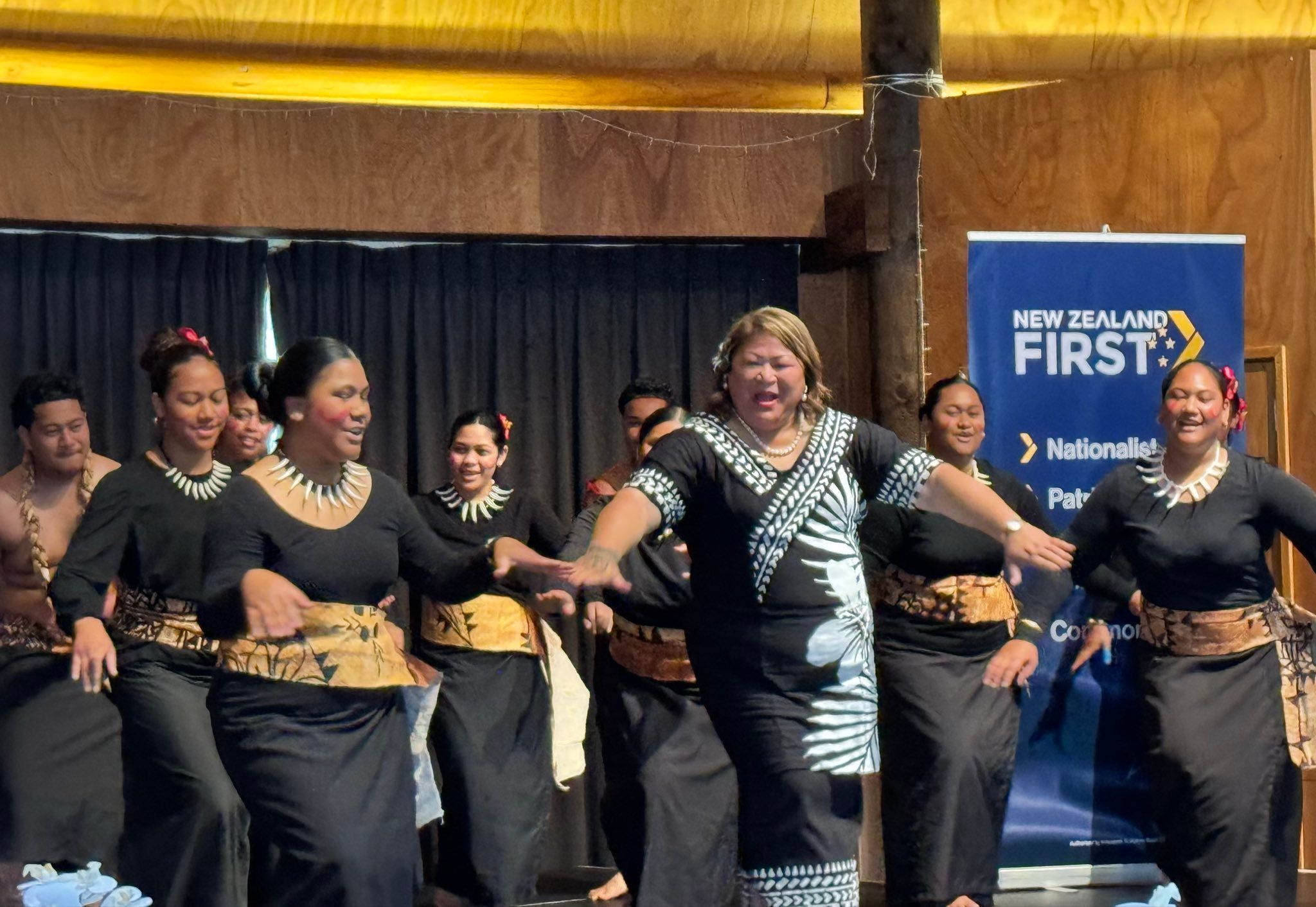
NZ First's Manurewa candidate Esther Tofilau-Tevaga leads a cultural performance at the announcement in Māngere. Photo/X/Prof Marewa Glover
Sione Tekiteki, AUT law lecturer, says Pacific communities remain an underutilised political force under New Zealand’s MMP system, with tens of thousands of new voters coming of age each election cycle.
“It’s not inconceivable that a Pacific bloc could one day hold the balance of power in New Zealand politics,” he writes in E-Tangata.
“Even a small share of the vote, if strategically organised, would be enough to reach the 5 per cent threshold needed for parliamentary representation.”
Tekiteki says political influence can include strengthening the party vote and increasing leverage during coalition negotiations.
With less than five months until election day, New Zealand First is betting that a message centred on faith, social conservatism and cost-of-living relief can carve out a new political lane among Pacific voters in South Auckland.