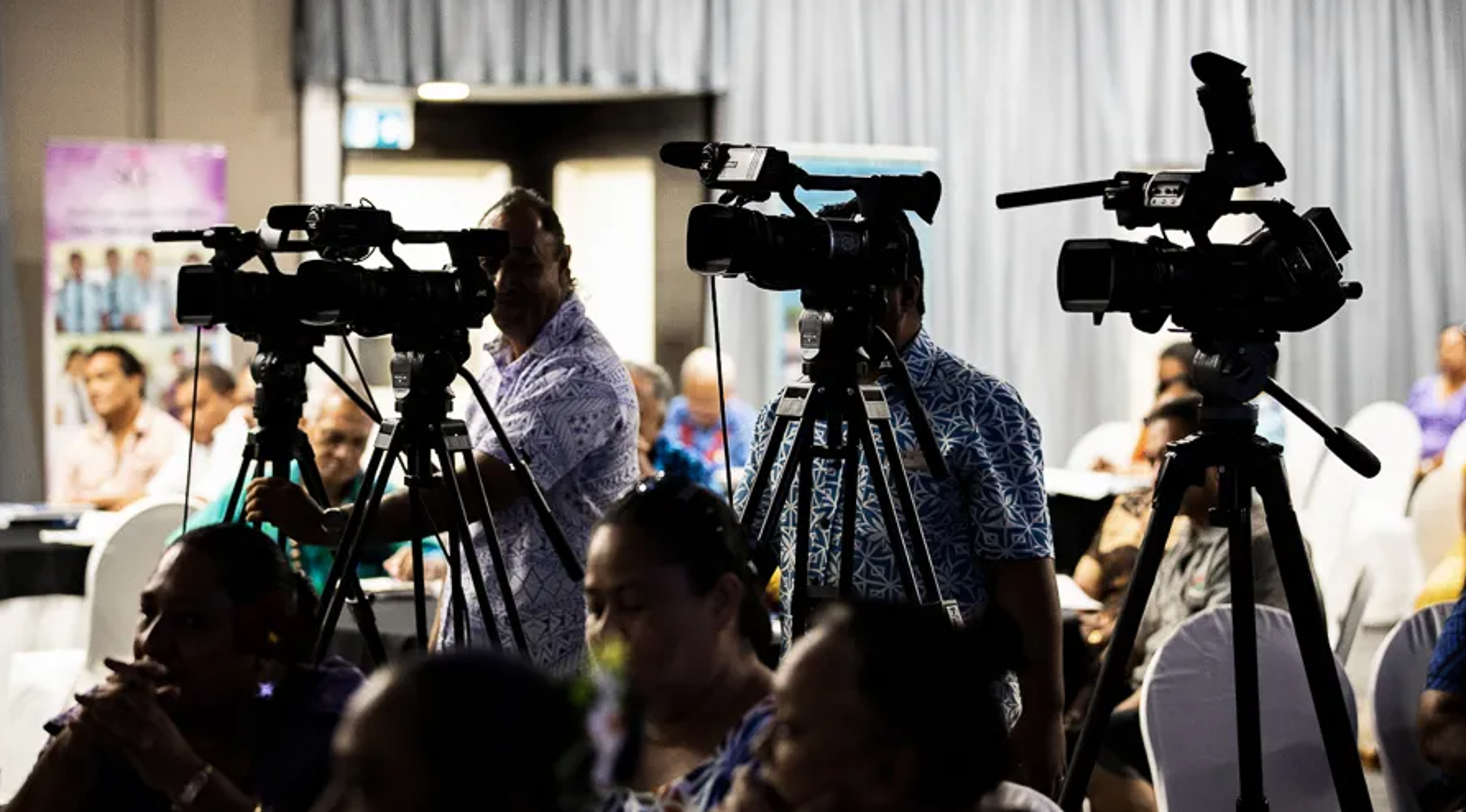
Media advocates say proposed measures could limit journalists’ abilities to ask follow-up or unscripted questions.
Photo/Samoa Observer/Vaitogi Asuisui Matafeo
Politics
Leaked rules spark concern over press freedom in Sāmoa
Proposed media rules in Sāmoa, which the government says are not intended to restrict the media, have reignited press freedom concerns.
Renate Rivers
Published
17 December 2025, 11:31am
Share
Copy Link
Top stories
World Vision warns children will pay for aid cuts beyond the Pacific
Thomas Tarurongo WynneMon, 12 Oct
Mate Ma’a Tonga’s 40-year legacy lives on through generations
Elton Lonaratha JnrMon, 12 Oct

David Seymour wants tougher welfare rule as Labour targets hidden costs in 2026 election
Thomas Tarurongo WynneFri, 09 Oct
Top stories
World Vision warns children will pay for aid cuts beyond the Pacific
Thomas Tarurongo WynneMon, 12 Oct
Mate Ma’a Tonga’s 40-year legacy lives on through generations
Elton Lonaratha JnrMon, 12 Oct
David Seymour wants tougher welfare rule as Labour targets hidden costs in 2026 election
Thomas Tarurongo WynneFri, 09 Oct
A leaked draft of Sāmoa's proposed media protocols, published by the Sāmoa Observer on 7 December, has raised fresh questions about how the government interacts with journalists.
The documents appear to introduce new rules for covering official press conferences, prompting concern from media advocates.
The following day, the Government Press Secretariat announced that the rules were not censorship.
The issue comes amid an ongoing ban on the Sāmoa Observer from ministerial press events, a move criticised by regional and international media organisations.
According to the Observer, the leaked draft includes background checks on reporters for political alignment, vetting of foreign media, and a requirement to submit questions 24 hours in advance of press conferences.
Media advocates say these measures could limit journalists’ ability to ask follow-up or unscripted questions.
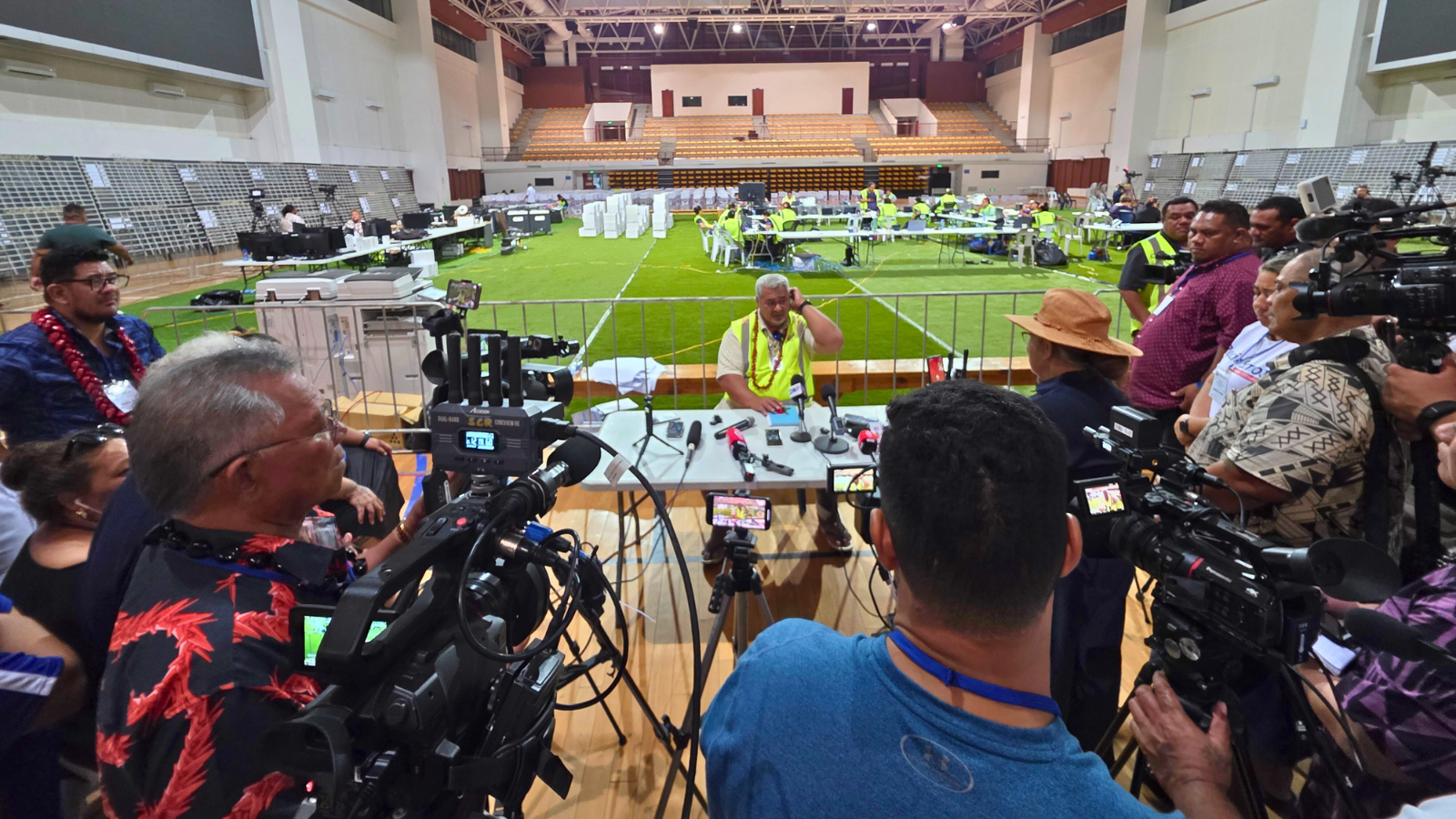
Media access to cover the 29 August General Election was developed in consultation with JAWS. Media accreditation was mandatory to access Election Commission sites across the country, with many media organisations livestreaming, updating and watching the election process freely. Photo/PMN News
The Observer described the draft under the headline, Gagged: Leaked media rules emerge.
The Press Secretariat, under the Ministry of the Prime Minister and Cabinet, rejected claims that the draft restricted journalists.
The Secretariat stated that the proposals were intended to help ministers and officials respond accurately to media enquiries, especially on complex issues involving multiple departments.
The Secretariat added that the draft did not seek to “gag the media” and described the Observer’s reporting as “provoking and misleading”.
The advance-question requirement, it says, would give officials time to prepare “factual information”.
Autagavaia Tipi Autagavaia, one of Sāmoa’s longest-serving reporters, told the Observer the leaked draft raised questions about media-government relations.
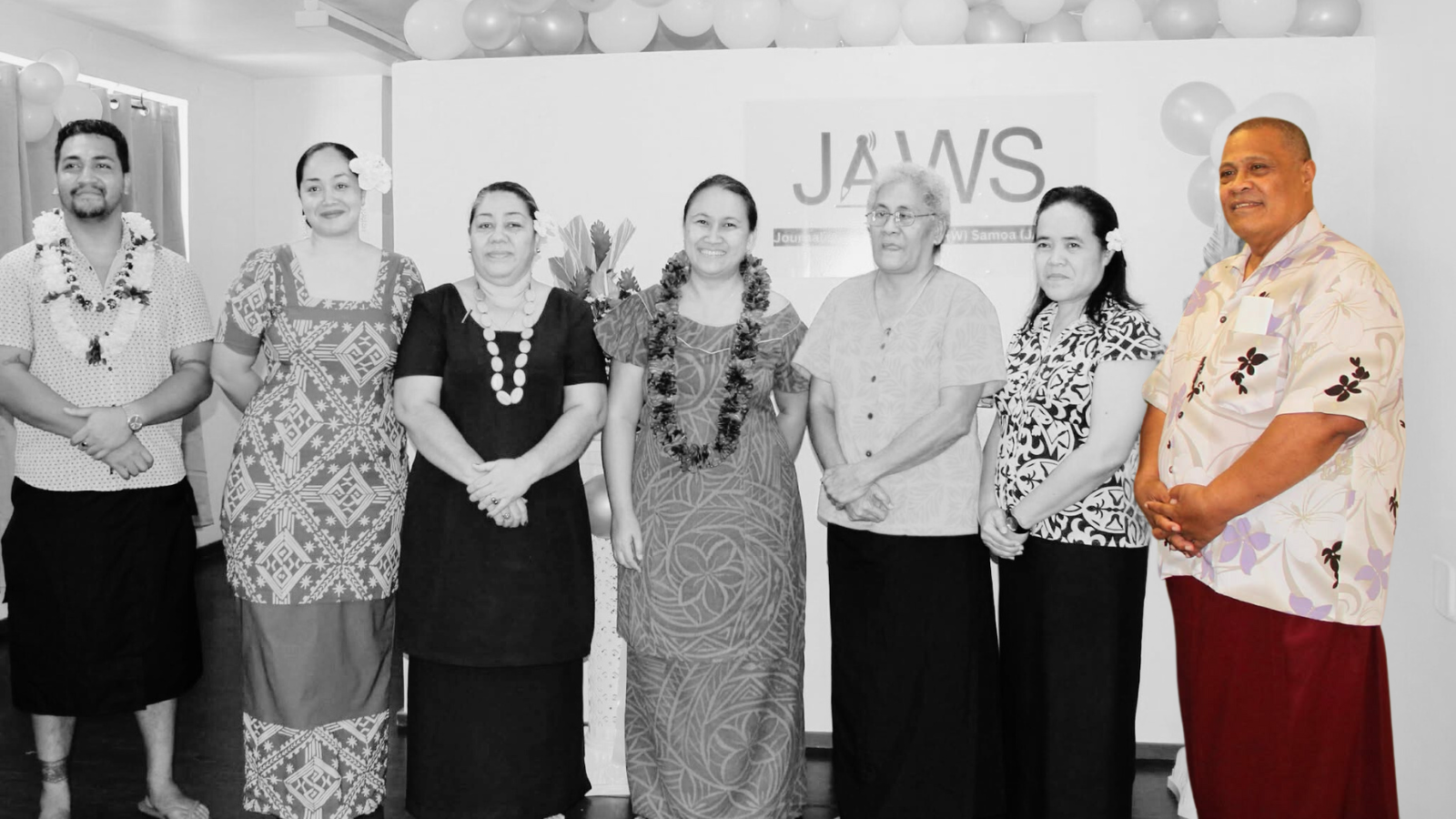
Autagavaia Tipi Autagavaia (R) has called for clarity on how proposed media rules will be applied. Photo/JAWS/Facebook
He called for clarity on how the rules would be applied and what impact they might have on journalists’ ability to ask unscripted questions.
Autagavaia says only a few journalists, mostly individuals rather than organisations, have spoken publicly about the proposals.
He suggested the subdued response might reflect legal uncertainty, internal newsroom pressures, or a reluctance to escalate tensions with the government.
He urged media organisations to discuss the draft openly and engage with the Journalists Association of (Western) Sāmoa (JAWS), which the government says has been consulted.
The local media’s limited response contrasts with stronger reactions from regional press groups. The Pacific Islands News Association (PINA) and the Sāmoa Association of Media Professionals for Development (SAMPOD) have criticised the suspension of the Observer from official press events.
International press freedom organisations, such as the International Federation of Journalists and Reporters Without Borders, have also raised concern over the ban, which remains in place.
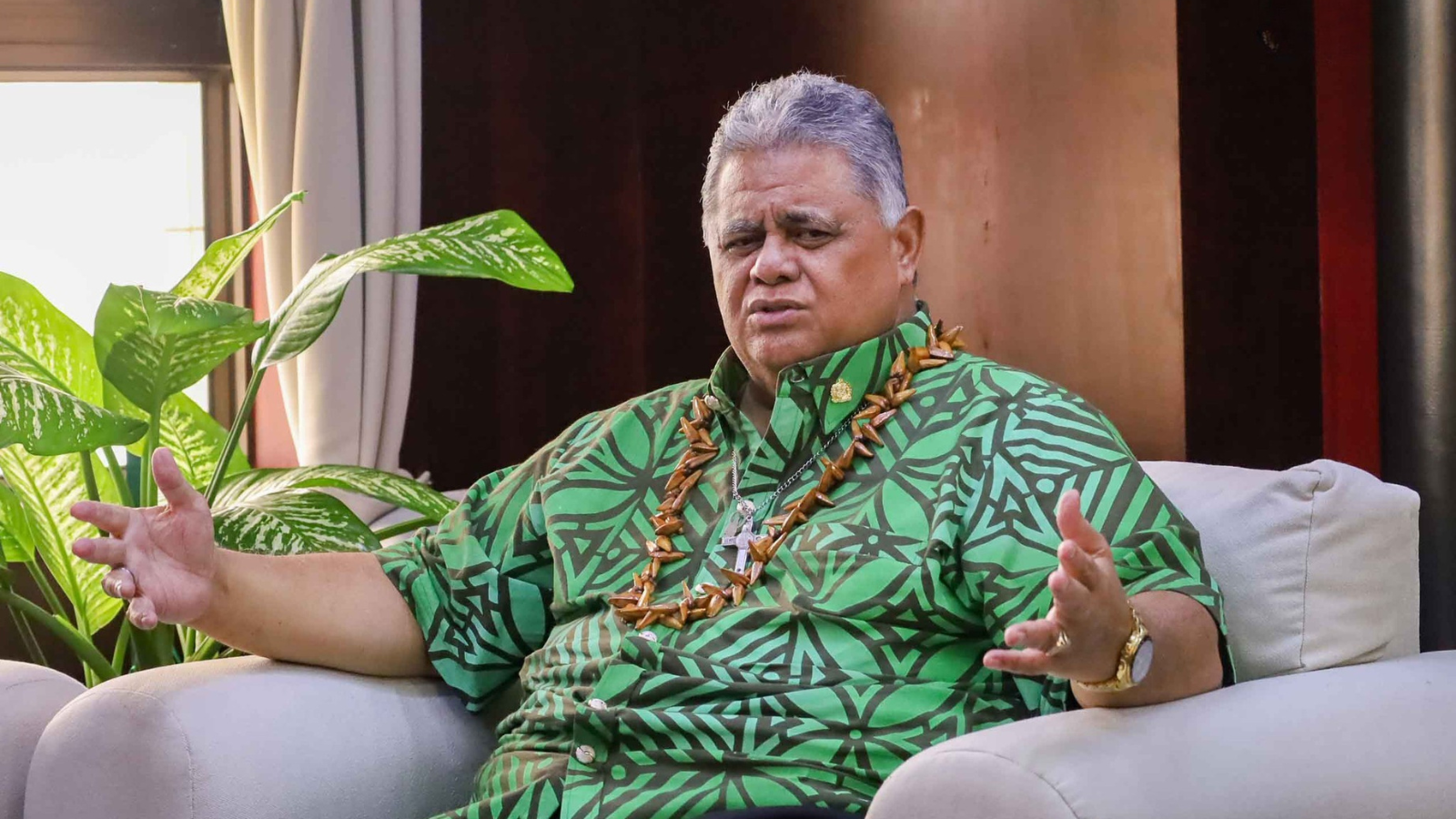
Prime Minister Laaulialemalietoa defended his ban on the Sāmoa Observer after accusing the newspaper of publishing inaccuracies. Photo/Government of Samoa/Facebook
Prime Minister Laaulialemalietoa Leuatea Polataivao Schmidt says the suspension followed disputes with the newspaper. He accused the Observer of publishing inaccuracies, failing to run requested corrections, and breaching his privacy after reporters tried to photograph him at home.
When he announced the ban in November, he stated that he hoped the Sāmoa Media Council would review the issues and consider how journalism standards could be strengthened.
The standoff is significant given the Sāmoa Observer’s long history of tension with successive governments. Over more than four decades, it has faced legal action, advertising boycotts, attempts to revoke its licence, and the destruction of its offices in a suspicious fire, as documented by Pacific Journalism Review.
PMN News asked the Press Secretariat and JAWS for comment on the draft protocols, including their impact on foreign journalists. Neither responded before publication.
While the government maintains the draft is only a proposal to improve organisation and accuracy, journalists say the situation highlights the need for clear, transparent rules developed in consultation with the media.
As the sector waits for the final version, senior journalists say the real test will be whether the new rules safeguard reporters’ ability to hold power to account.