
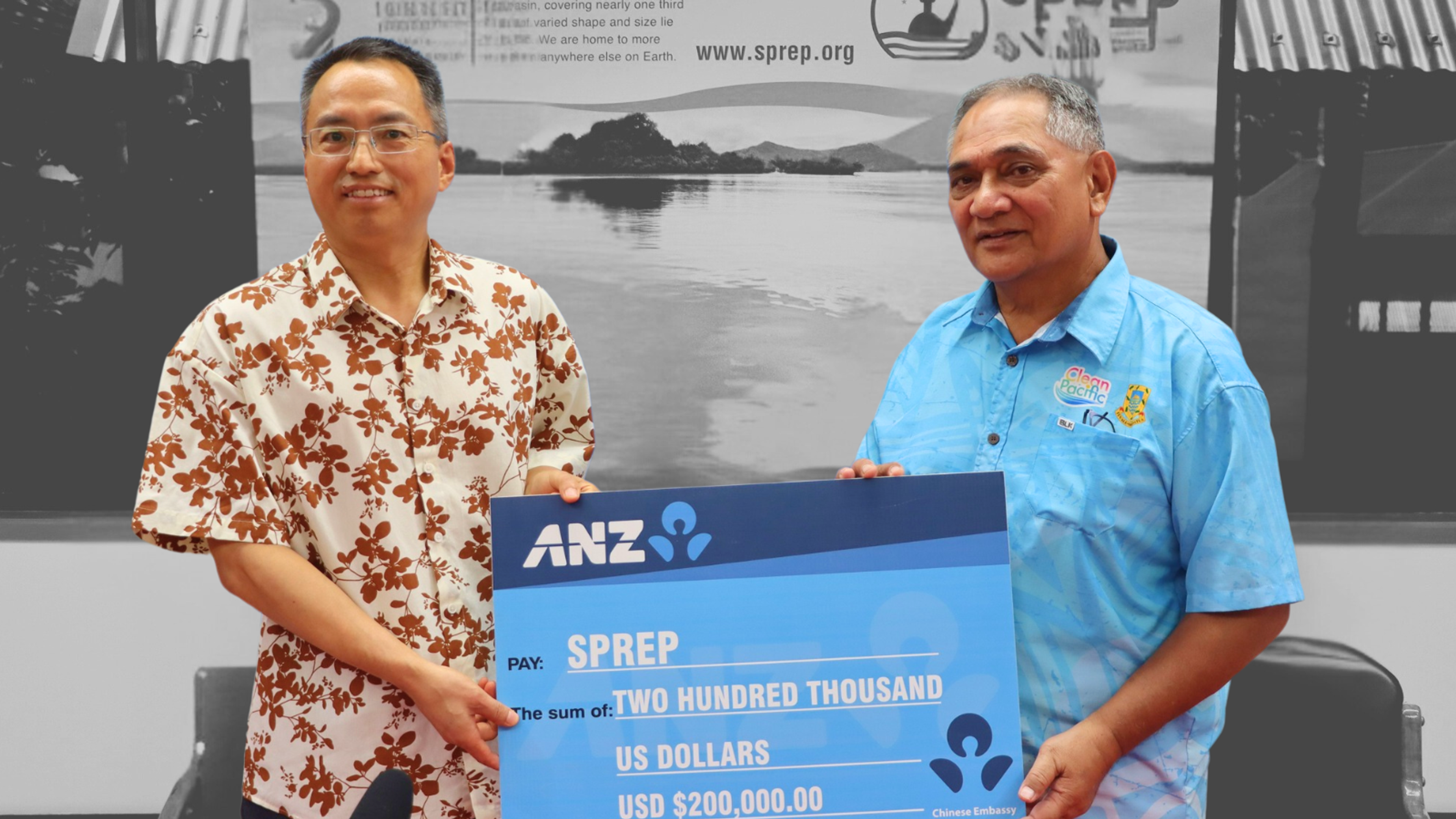
China presented financial assistance to SPREP for climate change resilience and environmental protection. Chinese Ambassador Fei Mingxing and Clark Peteru of SPREP are pictured at the presentation in Apia. Photo/SPREP
Politics
China maintains Pacific climate support as US labels SPREP ‘wasteful’
Beijing has pledged new funding to the Pacific’s main environmental body as uncertainty grows over future donor support.
Renate Rivers
Published
16 January 2026, 11:45pm
Share
Copy Link
Top stories



Top stories
China has reaffirmed its support for Pacific climate and environmental programmes, committing new funding to a key regional agency at a time of growing uncertainty over international donor backing.
At a handover ceremony in Apia on Wednesday, China provided US$200,000 (NZ$348,000) in voluntary funding to the Secretariat of the Pacific Regional Environment Programme (SPREP), extending a partnership that has been in place since 1998.
SPREP supports Pacific Island countries on climate change adaptation, environmental protection, and regional advocacy, including representing Pacific priorities at major international climate forums.
For many island nations on the frontlines of climate change, the organisation plays a critical role in securing technical support and coordinated regional action.
China’s representative in Sāmoa, Fei Mingxing, said the contribution formed part of Beijing’s ongoing support for Pacific countries confronting the impacts of climate change.
He said Pacific island states were among the most vulnerable regions globally and highlighted the importance of South-South cooperation.
Watch the presentation of financial assistance from China to SPREP below:
Fei also referenced broader regional commitments announced following the China-Pacific foreign ministers’ meeting in May 2025, including a US$2 million (NZ$3.4m) allocation to support cooperation with Pacific countries on climate change.
He said China remained on track to meet its climate targets, including carbon neutrality by 2060, and would continue contributing to global climate action.
In a statement to PMN News, the Chinese Embassy in Sāmoa said the international community had an obligation to “faithfully fulfil all its commitments, including those on climate finance".
The embassy reaffirmed the Chinese government’s readiness to work with Pacific Island countries to bridge “technological and capacity gaps”.
Clark Peteru, SPREP’s Acting Officer-in-Charge, said the funding strengthened the organisation’s core capacity at a time when regional environmental institutions face increasing uncertainty.
The uncertainty follows a directive issued on 7 January by United States President Donald Trump, instructing US agencies to end funding for a broad range of international and United Nations-affiliated organisations.
Trump argued that many of the institutions were “redundant in their scope, mismanaged, unnecessary, wasteful, poorly run, [and] captured by the interests of actors advancing their own agendas contrary to our own,” according to a statement issued by US Secretary of State Marco Rubio.
The directive does not automatically end US membership in more than 60 international organisations identified by Trump, but agencies have been instructed to withdraw where permitted by law.
SPREP has previously stated that the US will remain a member until the formal withdrawal process is completed.
The organisation has not yet received official notice outlining the timing or scope of any withdrawal, and any impact will depend on how the process unfolds.
Responding to concerns that a US withdrawal could create space for other powers to expand influence in Pacific regional institutions, the US Embassy in Sāmoa said the Trump administration had assessed that “no risk to national security will occur as a result of these or subsequent withdrawals, even if our adversaries scale their involvement”.
China’s renewed contribution has also prompted broader discussion about Beijing’s role during a period of donor transition.
Addressing concerns that increased support could be viewed as expanding geopolitical influence, the Chinese Embassy said Pacific island countries “are not an arena for geopolitical rivalry, but a grand stage for international cooperation”.
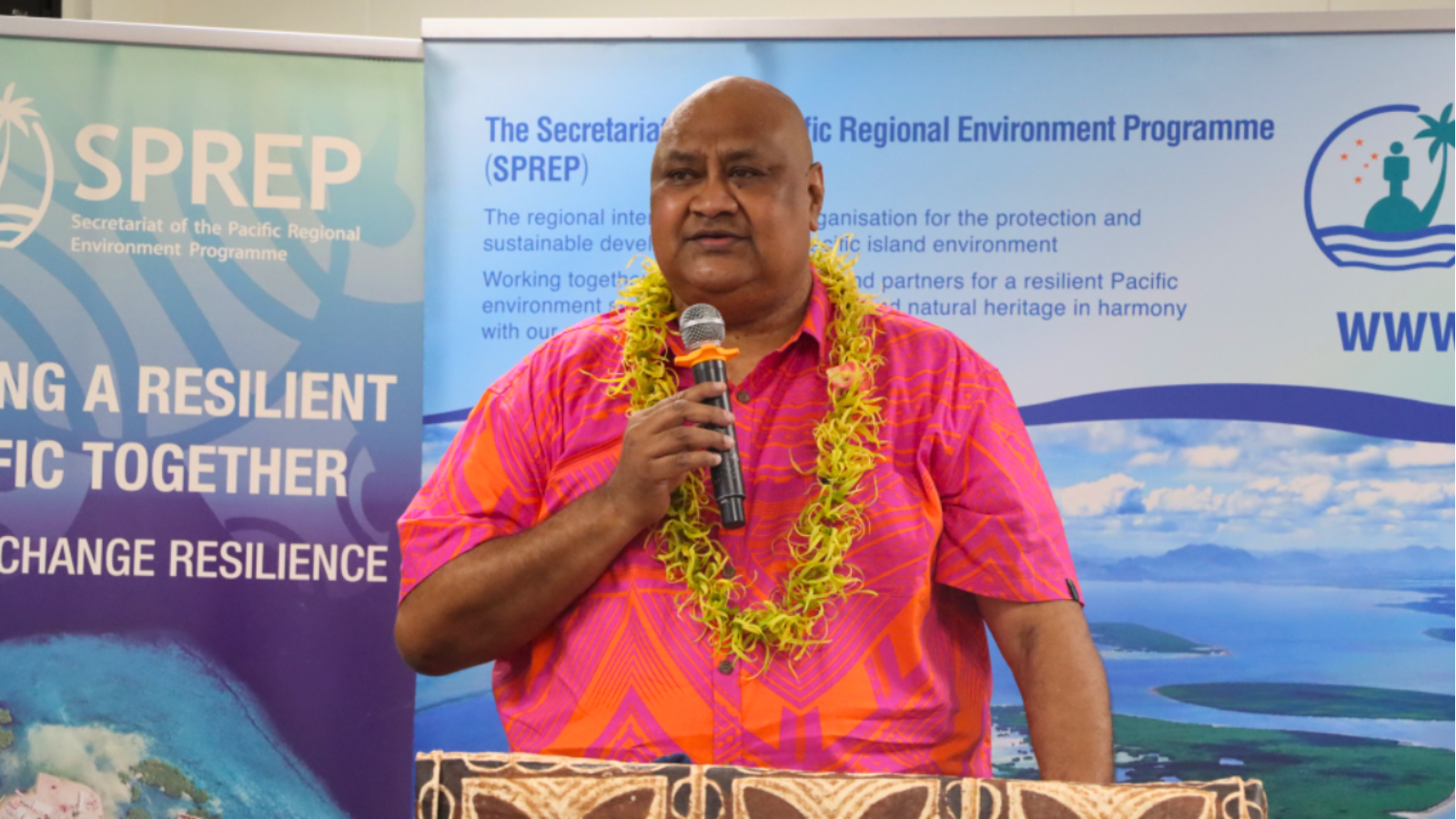
Sefanaia Nawadra, Director General of SPREP, at a pre-COP30 meeting in October 2025. Photo/SPREP
Sefanaia Nawadra, SPREP’s Director-General, has previously said the organisation expects continued support from its major partners, including Australia, New Zealand, the United Kingdom, and France.
Nawadra says the agency remains focused on delivering for Pacific communities despite shifting global dynamics.
For Pacific island countries facing rising seas, extreme weather, and environmental degradation, the coming months may prove critical in determining whether regional climate institutions can maintain momentum as the international funding landscape continues to change.