
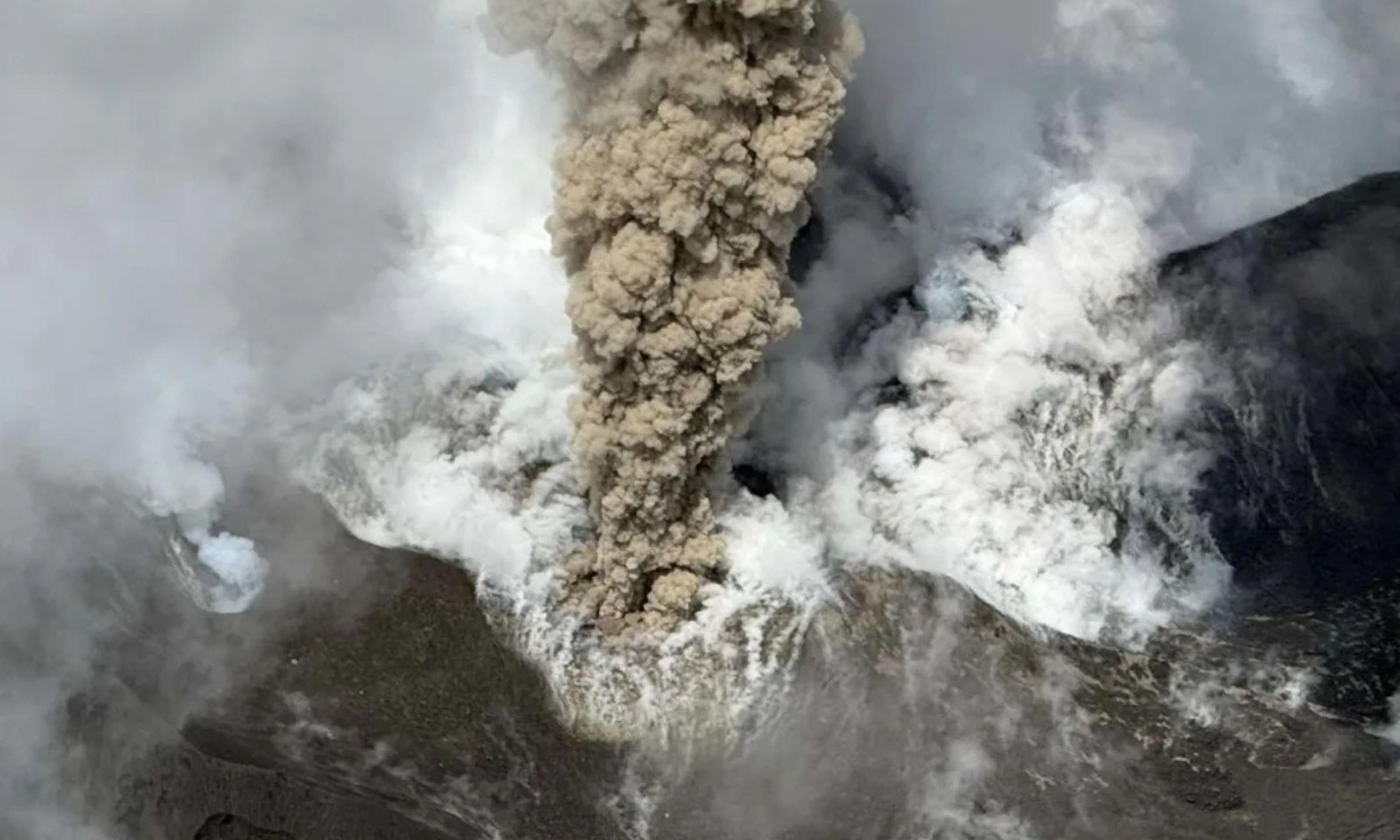
Mount Manaro on Ambae Island continues to rumble as ash, gas, and acid rain threaten crops, water supplies, and homes for about 11,000 residents living under the volcano. Authorities say evacuation plans are ready if activity worsens.
Photo/Sergei Kriukov/Unity Airlines
Pacific Region
Volcano in Vanuatu threatens residents on Ambae as ash, acid rain and toxic gas spread
The Manaro Voui volcano on Ambae Island continues to rumble, forcing authorities to prepare for a possible full-scale evacuation while 11,000 residents endure ash, acid rain and crop destruction.

PMN News
Published
10 March 2026, 8:00am
Share
Copy Link
Top stories


Auckland teen turns a trip to Fiji into a mission to fight period poverty
Elenoa TuragaiviuThu, 15 Oct
Top stories
Auckland teen turns a trip to Fiji into a mission to fight period poverty
Elenoa TuragaiviuThu, 15 Oct
The Manaro Voui volcano on Ambae Island, Vanuatu, continues to pose a growing threat to local communities, with authorities warning that a full-scale evacuation could be ordered at any moment.
For the island’s 11,000 residents, the danger is already tangible. Ash plumes have been reaching up to 4.6 kilometres, prompting aviation warnings while acid rain is burning crops, contaminating water supplies, and damaging homes.
Levu Antfalo, director of the Vanuatu Meteorology and Geo-Hazards Department, says the situation is a concern.
“It burns their crops, pretty much anything that it gets in contact with, water as well,” he told the Islands Business.
The department has maintained a level three alert, meaning a “minor eruption” is underway, with activity confined to the crater lake.
A three-kilometre no-go zone remains in place around the active vent. Teams from the National Disaster Management Office are assessing the most affected areas to declare them disaster zones if needed.
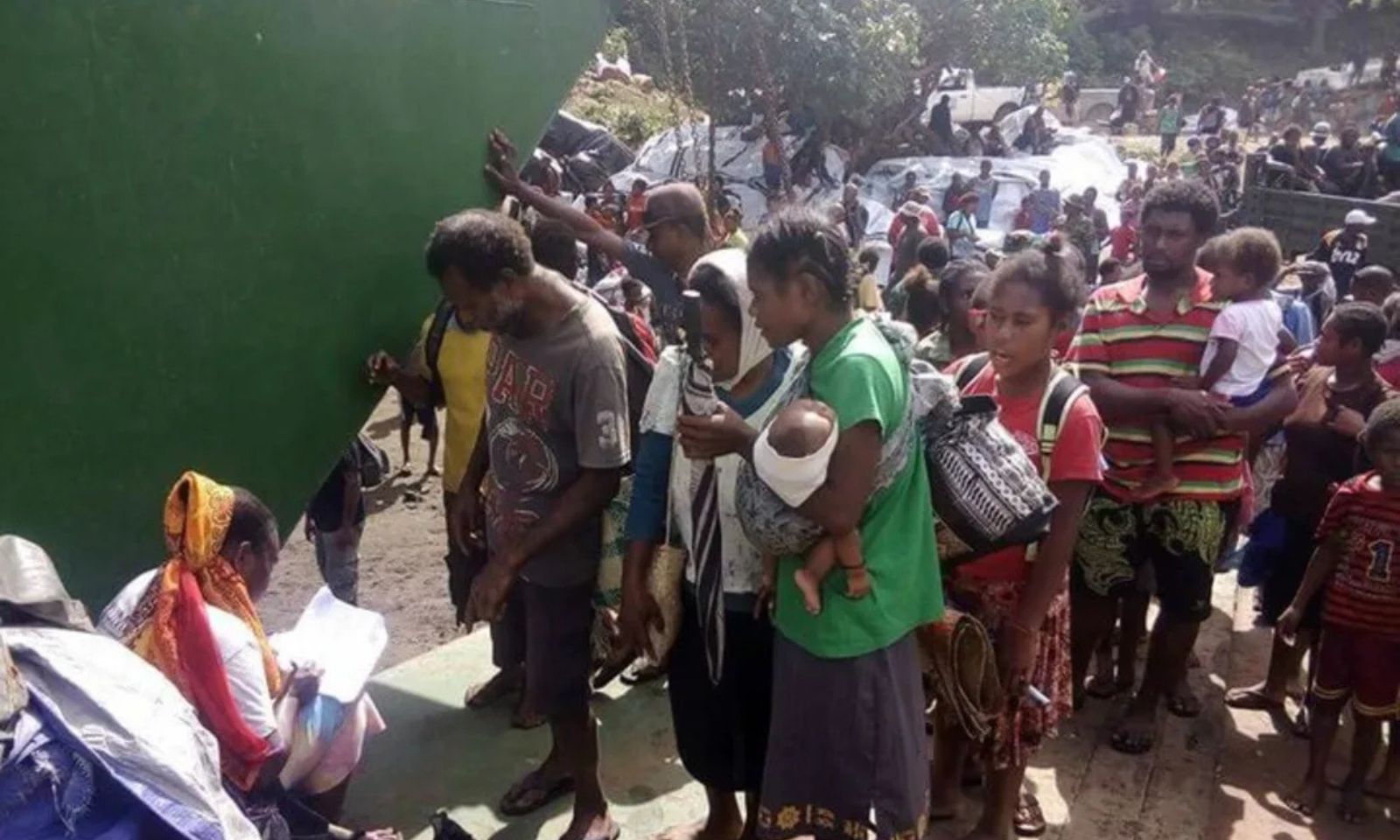
Residents on Ambae Island being evacuated following the March 2018 volcano eruption. This week, residents face ongoing disruption as the Manaro Voui volcano sends ash and corrosive emissions across parts of northern Vanuatu, damaging gardens and contaminating water sources. Photo/Nixon Garae Tambeana
Prime Minister Jotham Napat chaired a Council of Ministers meeting last Friday as volcanic activity intensified.
He acknowledged the fear caused by Mount Manaro, which remains at threat level three.
“The government has approved 20 million VAT… for monitoring assessment and preparedness,” Napat told the ABC's Pacific Beat.
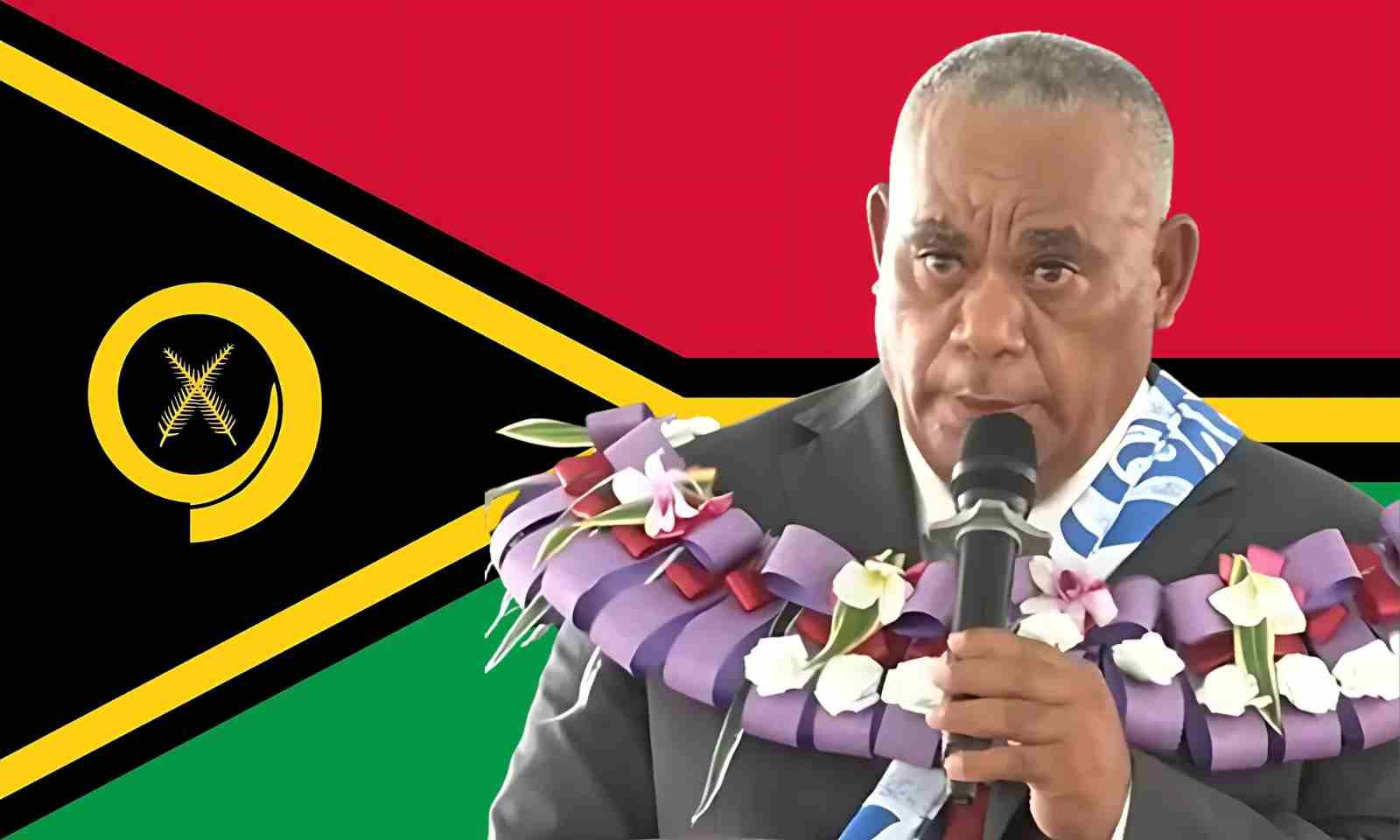
Vanuatu Prime Minister Jotham Napat chaired an emergency Council of Ministers meeting as volcanic activity on Ambae intensified and authorities prepared for possible evacuation plans. Photo/Supplied
The money is intended for emergency assessments and preparedness planning.
Climate Change Minister Ralph Regenvanu says residents in the worst-hit areas are “encouraged to move to less affected parts of the island if they do not feel safe”.
But for many families, leaving is not an option. Local residents report the volcano’s roar is so loud it causes ear pain and prevents normal conversation.
One man told reporters, "When people are speaking, you can’t hear the other person talking. It is causing ear pain because it is very loud and heavy."
Villagers and elders describe the psychological toll as heavy as the physical dangers. One elder reflected that “the mountain speaks, and we must listen. But where do we go when the whole island is suffering?” (Islands Business).
The impact of the eruption is spreading beyond Ambae. Corrosive ash and acid rain have reached neighbouring islands, including Santo, Malakula, Pentecost, and Ambrym, threatening regional food security by destroying gardens and crops.
Authorities are preparing for all scenarios. If the alert level rises to four, the entire island population will be evacuated under emergency plans already approved by the cabinet.
For now, residents live under constant uncertainty. The Manaro Voui volcano is shaking the ground, spreading toxic emissions, and reminding Pacific communities of the delicate balance between life and nature.
“The hazards include burnt vegetation, damage to food crops, water contamination, mud flows, acid rain, and health impacts,” the ABC reports.
The government is monitoring the situation closely, but for those living in Ambae’s shadow, the waiting continues to be the hardest part.