Mate Ma’a Tonga’s 40-year legacy lives on through generations
Elton Lonaratha JnrMon, 12 Oct
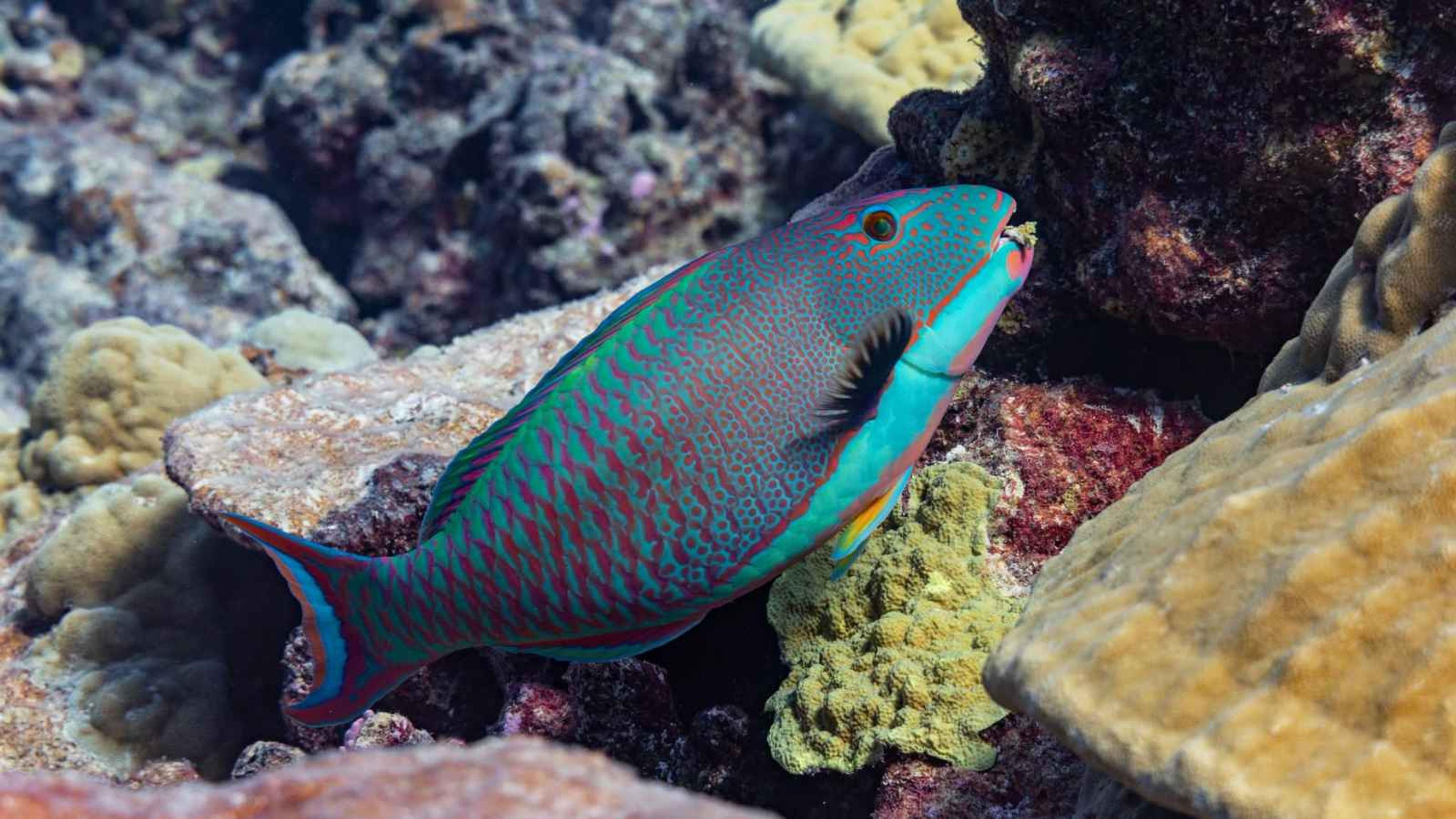
A spotted parrotfish (Cetoscarus ocellatus) captured by the National Geographic Pristine Seas expedition team in Tokelau.
Photo/National Geographic Pristine Seas/San Félix
Preliminary findings from a National Geographic expedition show the damage to Tokelau’s shallow reefs while deeper waters reveal signs of life and resilience.



Tokelau’s shallow reefs are showing widespread bleaching and signs of serious degradation.
This comes as a major scientific expedition reaches its final atoll.
The early findings are emerging as the National Geographic Pristine Seas (NGPS) team completes a four-week survey of Tokelau’s marine environment.
Kelly Moore, the expedition lead, says the team has seen some “pretty degraded reefs” during underwater survey around Nukunonu, Atafu, with the crew now working in Fakaofo.
Moore says the findings also reflect the impact of recent ocean warming with much of the coral appearing dead or bleached.
“Corals, for the most part, appear either dead or mostly bleached. We're also seeing very little recruitment in the reef areas with few predators like sharks and large fish,” she says.
But Moore says the findings should not be seen as a reason to give up on Tokelau’s reefs.
“I don't want to come across as sounding doom and gloom because it's not. There is hope and it's important that we all recognise that this is the reality.
“These are the observations we're making and there are steps that we can now take. This really points to why protecting what's healthy and giving reefs time and space to recover really matters.
Listen to Kelly Moore's full interview below.
“We've seen this happen in other degraded reef systems where marine protected areas have worked to support the recovery of coral reefs, the return of invertebrates like clams and sea cucumbers.
“It’s clear to us that the future of Tokelau's oceans will depend on these kinds of management decisions going forward. So we hope that the information we're collecting, able to show with the data, becomes useful in informing those discussions going forward.”
The expedition is being carried out by NGPS in partnership with Tokelau’s Ministry of Climate, Ocean & Resilience, known as MiCORe.
Scientists, filmmakers and local officials are working aboard the research vessel Argo, collecting baseline information across nearshore reefs, mid-ocean sites and deep-sea environments.
While the shallow reefs are showing the impacts of warming, researchers say the deeper ocean is revealing a different picture.
Using the state-of-the-art Argonauta submersible to reach depths of 1000 metres and deep sea drop cameras beyond 2000 metres, researchers have captured footage of sixgill sharks, chimaeras, rare crabs, and eels.
Experts say the findings are closely tied to how Tokelauans live and move between the atolls.
In a media release, Paula Faiva, the Director of MiCORe, says the ocean is central to Tokelau’s identity, food and future.
"For Tokelau, the moana is more than a resource; it is our identity. As Tagata Tokelau, we are ocean people,” Faiva says.
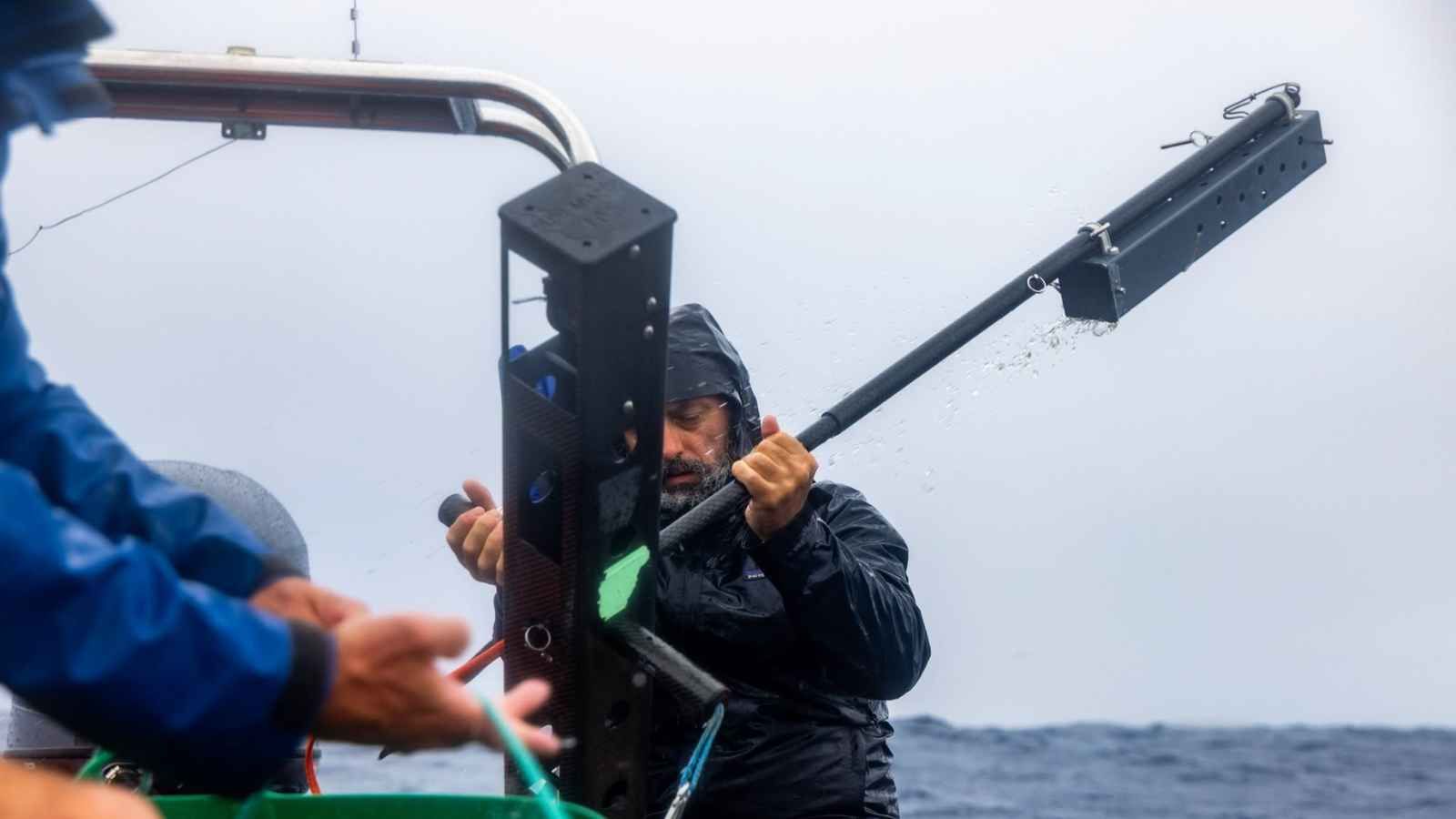
The National Geographic Pristine Seas team are over three weeks into their Tokelau expedition. Photo/National Geographic Pristine Seas/David Taylor
“It is our pathway between our atolls and outer islets, connecting our communities and linking us to the wider world.”
“The ocean has sustained our ancestors for generations and remains fundamental to our future. Its health and resilience are inseparable from our own wellbeing and prosperity.”
Tokelau’s Exclusive Economic Zone covers about 319,000 square kilometres, more than 25,000 times the size of its roughly 12 square kilometres of land. The territory declared its entire marine zone a shark sanctuary in 2011.
The baseline data gathered during the expedition will help inform Tokelau’s future national ocean policy and marine spatial planning.
Kevin Chand, the Senior Director of Pacific Ocean Policy for Pristine Seas, says the work also supports international biodiversity commitments.
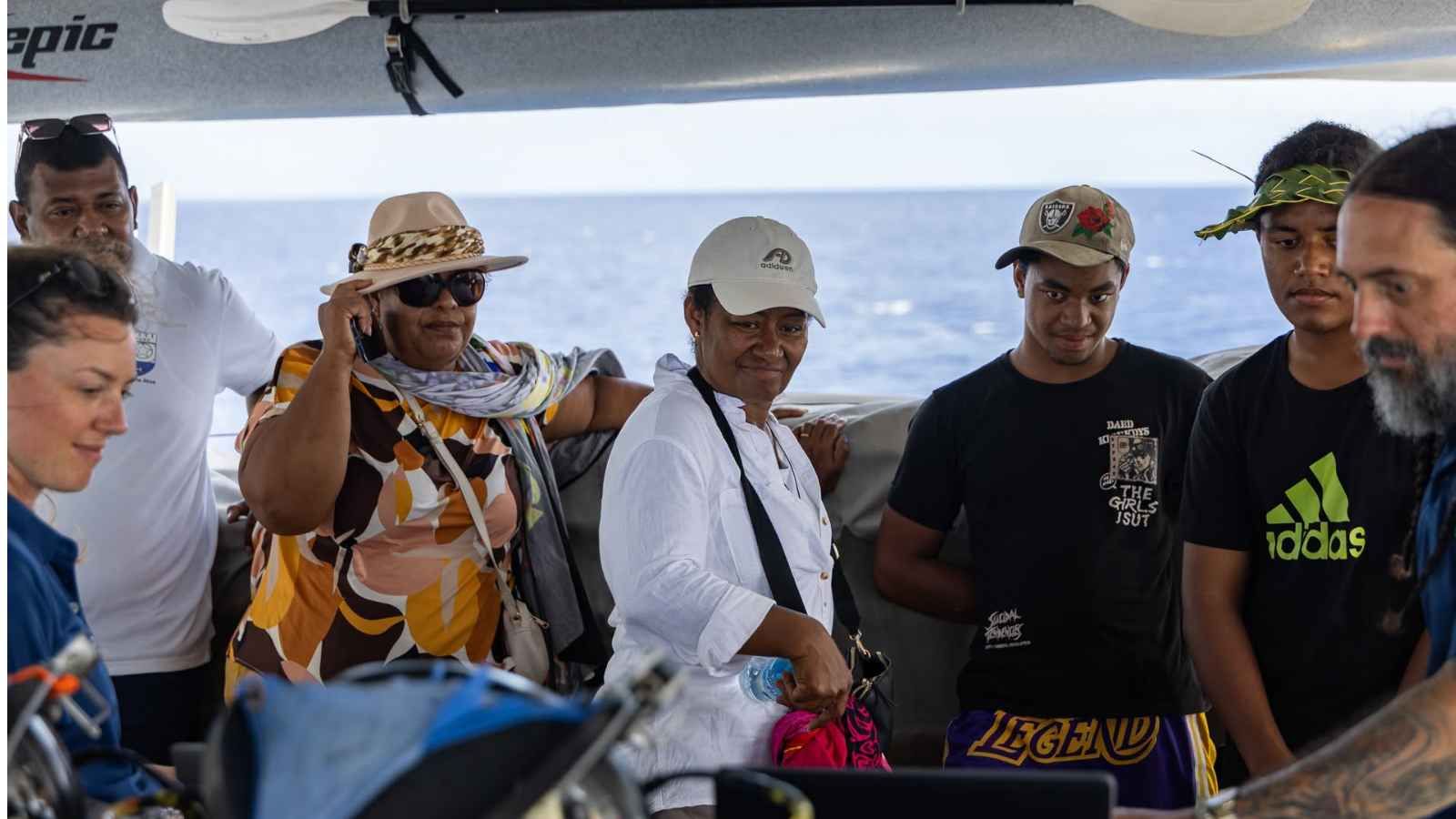
Students from Nukunonu Tokelau came on board for the National Geographic Pristine Seas’ ship day. Photo/National Geographic Pristine Seas/David Taylor
The expedition has included a strong education focus. Students from across Tokelau were invited aboard the Argo for ship tours and hands-on science activities.
Tupa'i Nicki Perese, the Curriculum and Assessment Coordinator for Tokelau’s Department of Education, says the visits offer students a rare chance to take part in scientific work.
The NGPS team spends their final week in Fakaofo sharing initial findings, photos and educational resources with the local community before sailing to Apia, Sāmoa.
The expedition team will then begin analysing the data collected and producing a documentary about Tokelau’s ocean and its relationship with the moana.