‘Soul resuscitation’: Pioneering Vagahau Niue and cultural connection down South
Atutahi Potaka-DewesFri, 23 Oct
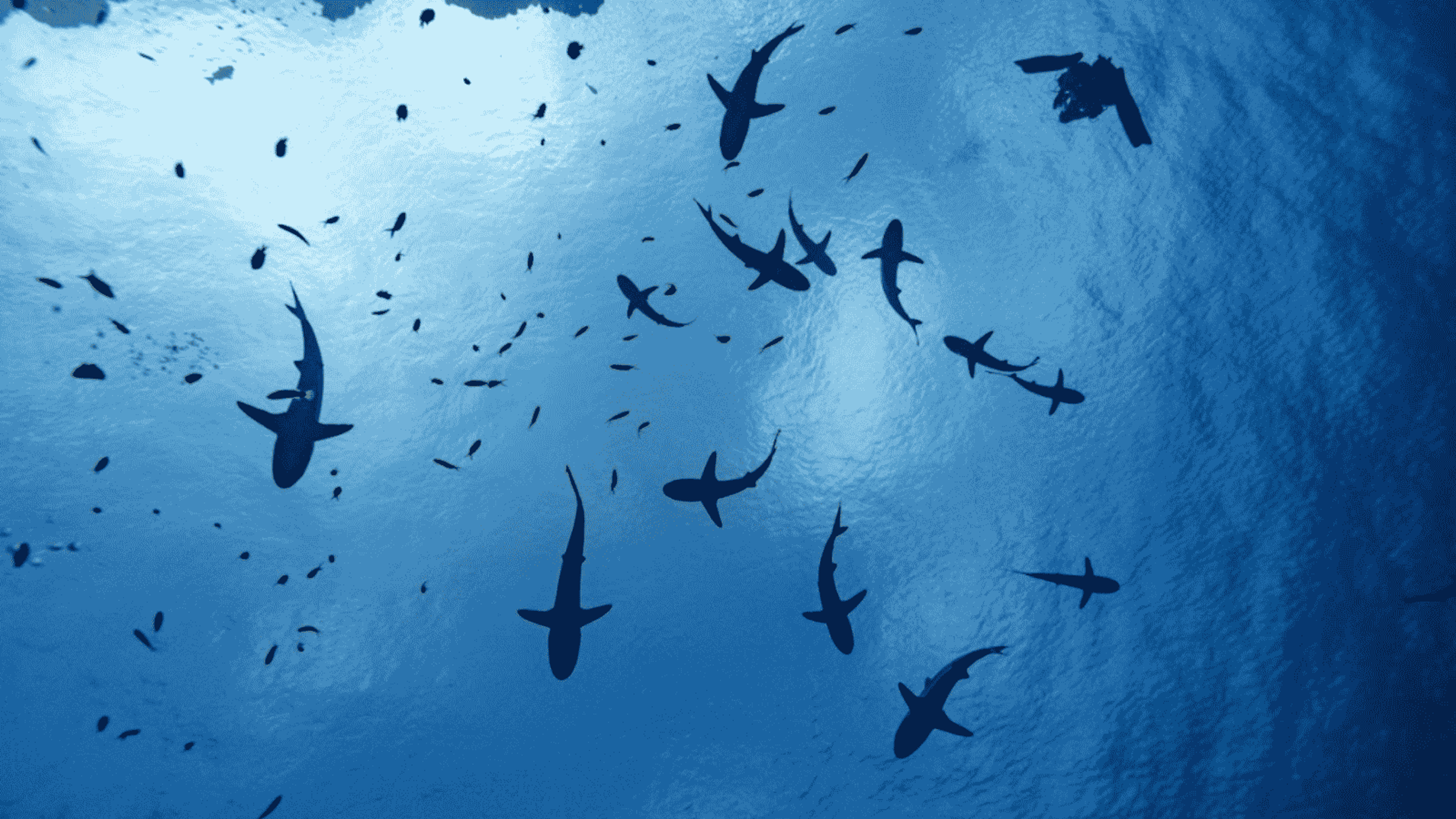
National Geographic Pristine Seas underwater cinematographer Iñigo San Felix and gray reef sharks.
Photo/National Geographic Pristine Seas/Manu San Félix
International researchers from National Geographic Pristine Seas are preparing to share findings with the Enewetak community in the Marshall Islands, ahead of their final stop at remote Ujelang Atoll.


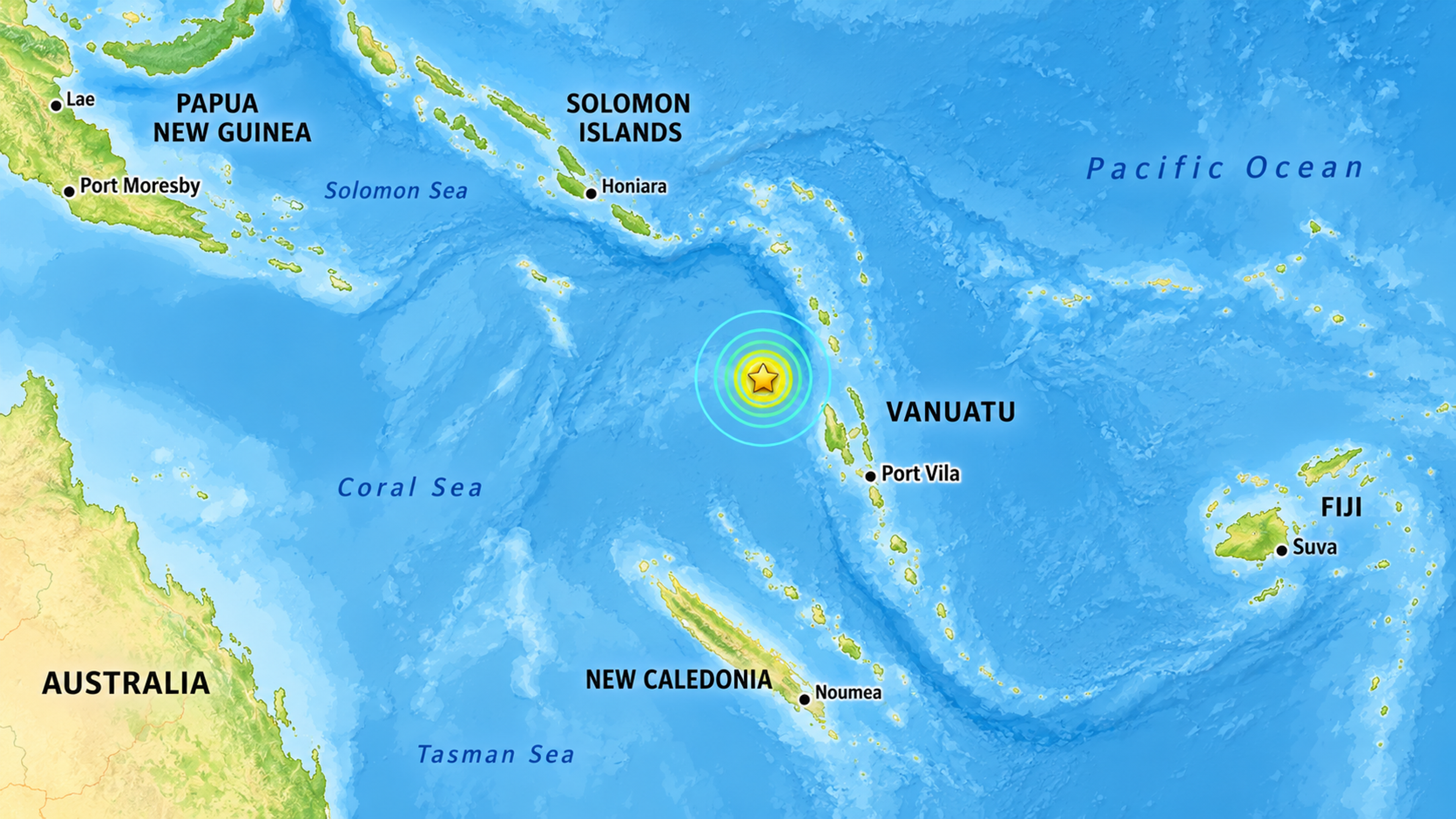

Under sunny skies in the northern Marshall Islands, the Enewetak community is preparing for a rare exchange.
The locals will receive the first results of a two-week ocean expedition exploring their surrounding waters.
Visiting researchers from National Geographic Pristine Seas (NGPS) have spent a week studying Ailinginae Atoll and a second week working at Enewetak, studying reefs from shallow waters to the deep sea.
Kelly Moore, the Expedition Leader for this second leg in the Republic of Marshall Island’s waters, says the Enewetak communities gave them “a beautiful warm welcome”.
“They came on board our ship. The women in the community made lei [flower adornments] for our team, and sang songs and danced with us,” Moore says.
“They brought this beautiful, inviting, welcoming energy into our first day here. What’s beautiful for us is we’ve been working really hard this whole week to gather as much data as we can for the Marshallese people.”
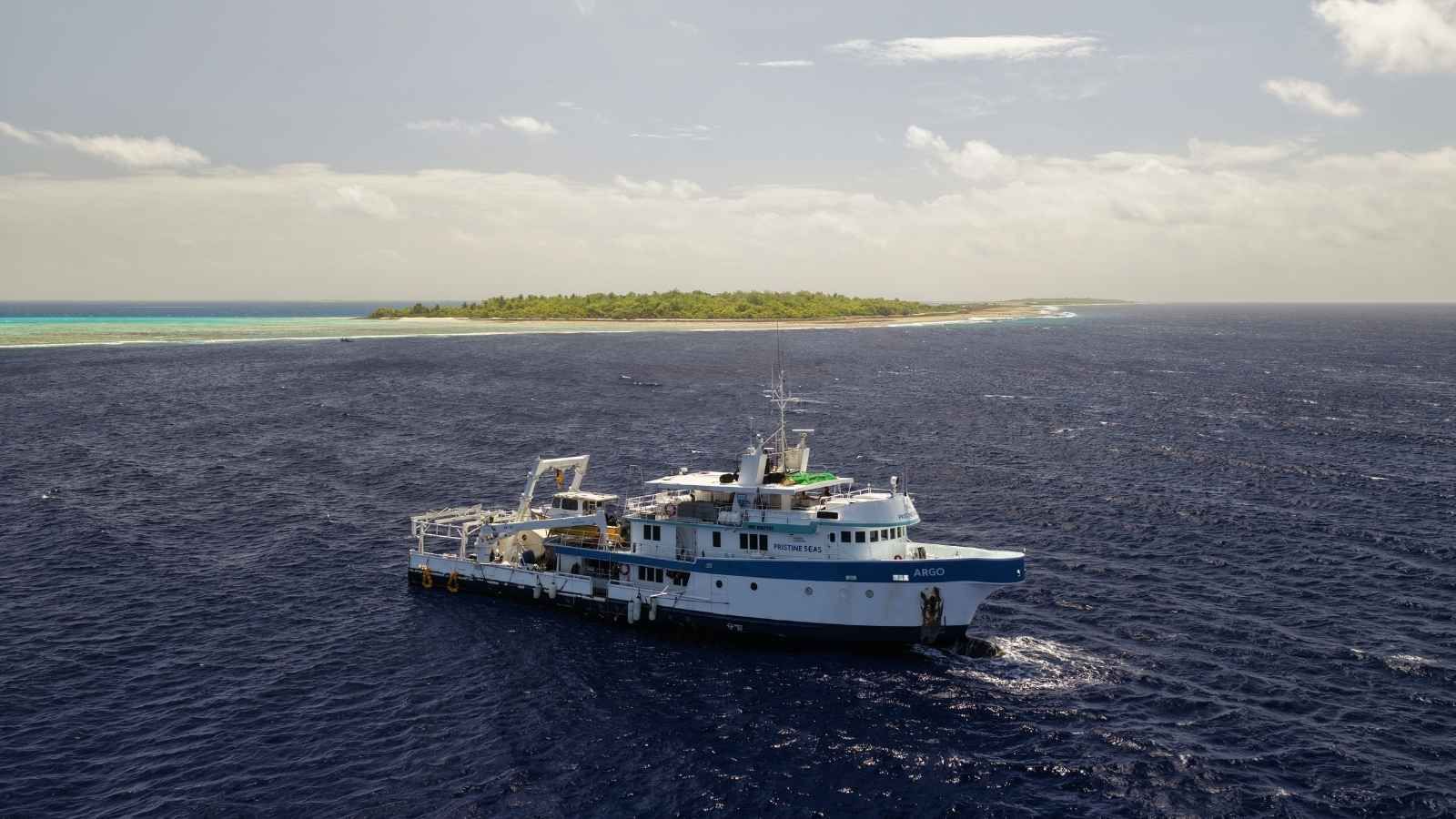
The National Geographic Pristine Seas expedition vessel the Argo at Ailinginae. Photo/National Geographic Pristine Seas/Steve Spence
She says the current work is unique because the team is replicating older ecosystem studies to understand long-term changes.
One of Moore’s highlights so far includes a deep sea discovery at nearby Ailinginae Atoll, where a local Marshallese researcher descended 800 metres in a small submersible called the Argonauta.
“They said the dive went by like the blink of an eye and they came out of the submersible and said, ‘we have to go back!’
“We can just feel the energy and enthusiasm and excitement from them. That's one of those moments I'll always remember: how special it is to get to experience something like that.”
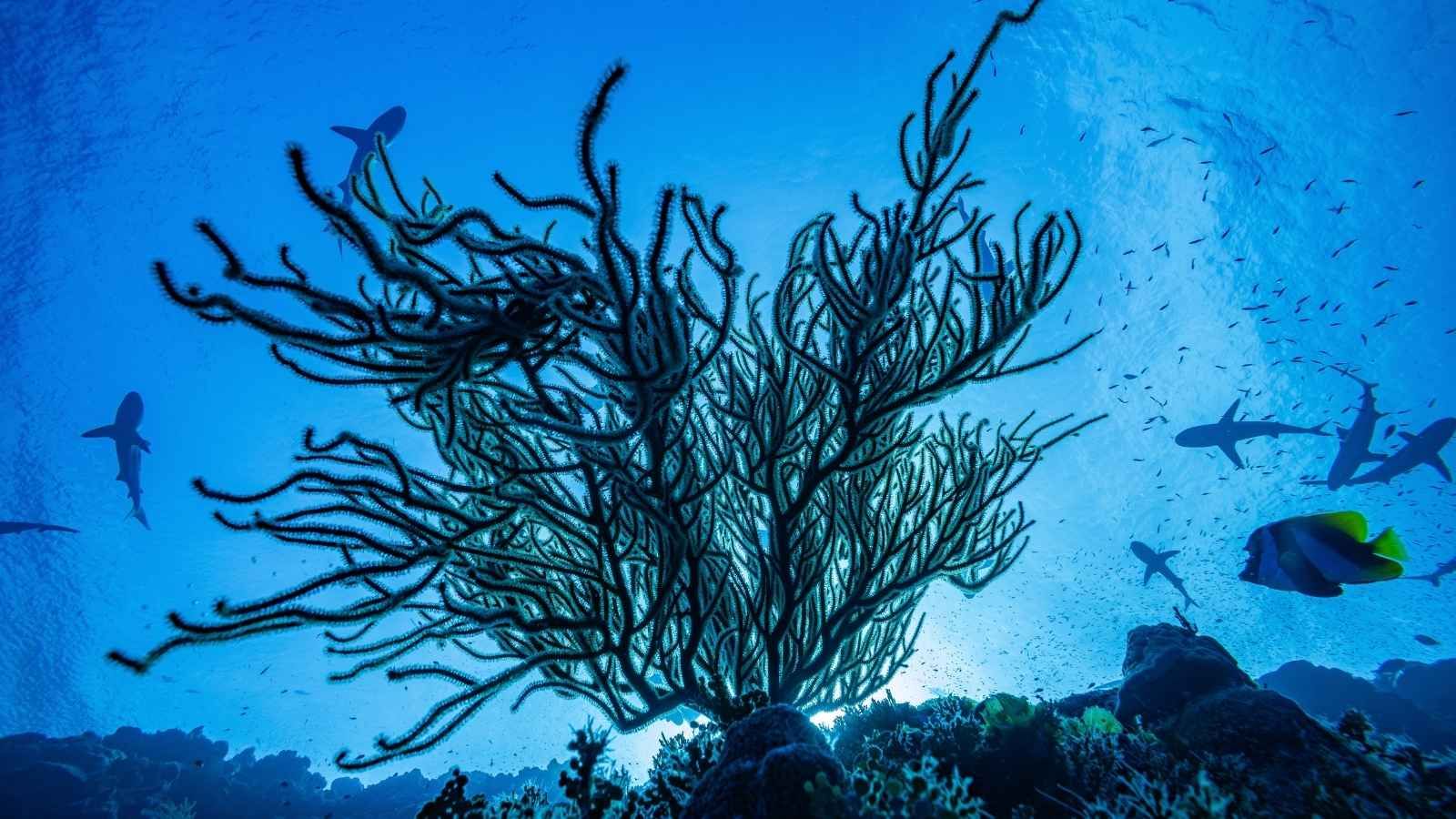
Sea fan and sharks, the beauty of Alinginae. Photo/National Geographic Pristine Seas/Manu San Félix
The dive successfully filmed a lantern shark, a ghost shark, and a deepwater cat shark, which is a new expedition record for NGPS.
Across these atolls, the team have documented healthy corals, a rare combination of thriving corals, large groupers, and sharks across the reef systems.
“It's such a rare thing to find a marine space like this, where all of these key species are showing up. Our team is absolutely thrilled to see it. It gives us a big sense of hope. We hope it also does for the community here.” Moore says.
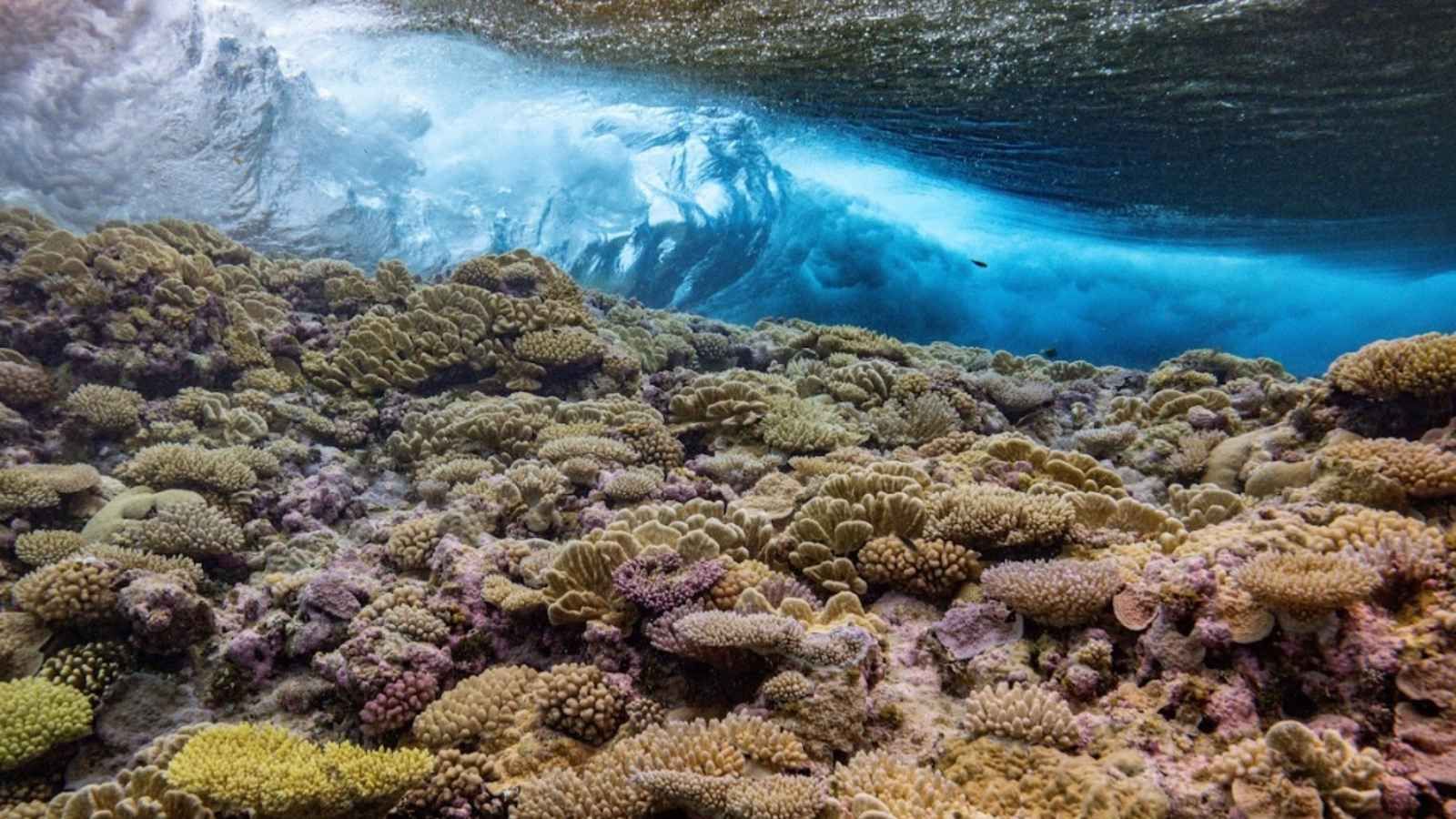
Ailinginae Atoll is built upon a living wall of healthy coral rising from the deep - a vast natural fortress that absorbs the relentless force of the Pacific and makes the existence of these fragile islands possible. Photo/National Geographic Pristine Seas/Manu San Félix
This beauty stands alongside a difficult history. The Enewetak people were forced to leave their home ahead of 43 US atmospheric nuclear tests conducted between 1948 and 1958.
The testing programme stripped the landscape and completely vaporised islands, including the 10.4-megaton "Mike" blast that destroyed Elugelab Island.
When the community left Ujelang Atoll in 1980, it left that isolated area untouched for over 40 years. This human absence turned the atoll into a sanctuary where seabirds returned and rare seagrass beds have healed and grown.
Although standard practice for NGPS, Moore says visiting Enewetak before surveying Ujelang was crucial in better informing their approach.
“Those conversations really inform where we go and what we do. It's such a critical part to our planning of the expedition. the final execution of how our route takes shape, the different places we have permission to visit and those places we may not have permission to visit
“That really comes out in a great way in those conversations. We've been told there's about 300 people on this atoll, in this community. There's a rich history of how they have survived over many decades through World War II and how that's impacted this community.
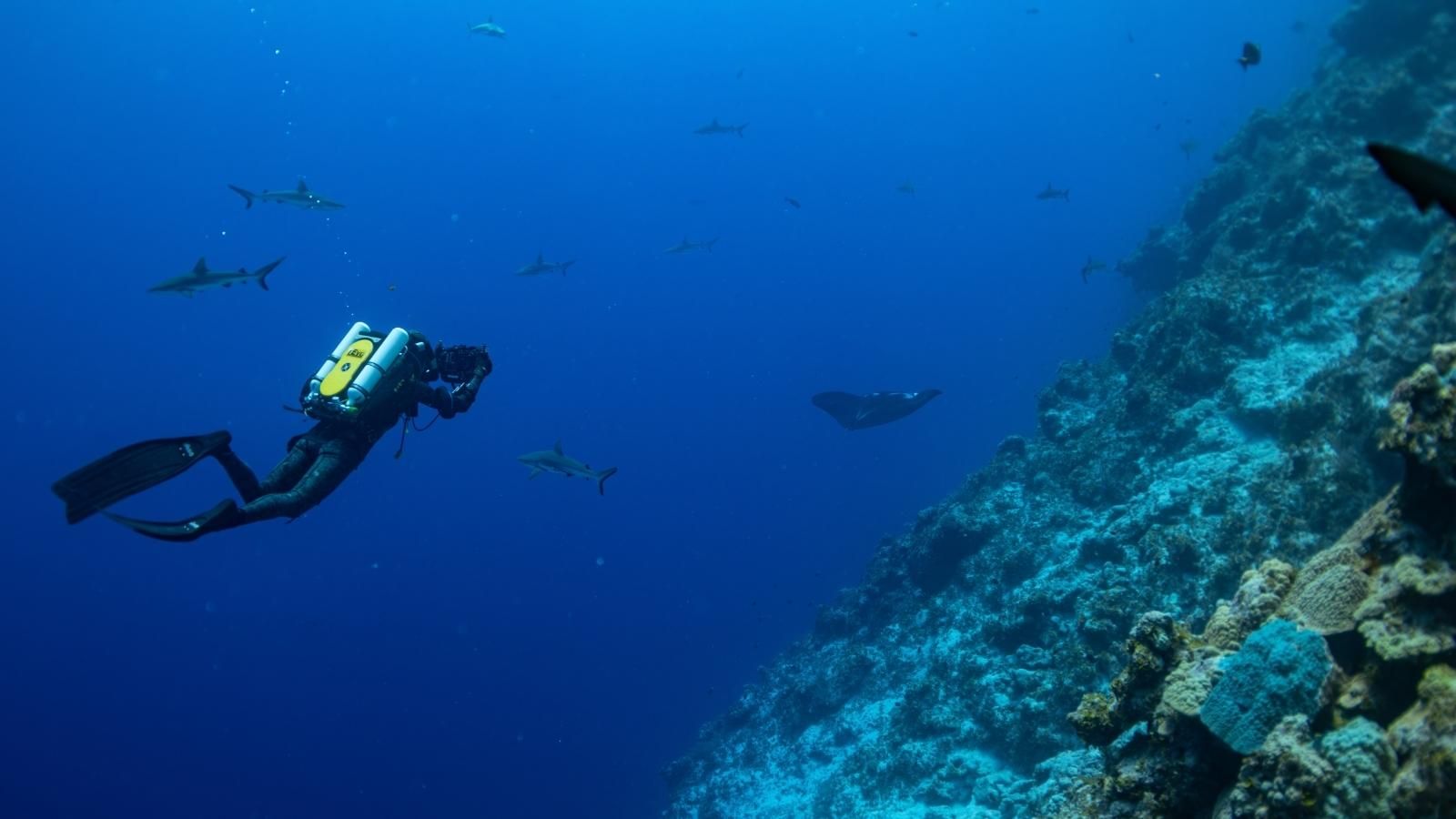
National Geographic Pristine Seas underwater cinematographer Iñigo San Felix following a giant manta ray while surrounded by grey reef sharks. Photo/National Geographic Pristine Seas/Manu San Félix
“There's an energy here of resilience, and it's in the community… it’s also in what we have observed in the reefs”
The expedition’s data will feed into Reimaanlok, a national framework that requires community approval so Marshallese leaders retain ownership over scientific information collected in their waters.
The 50th National Geographic Pristine Seas expedition will end with a final debrief with Marshallese partners in early June.