

Fiji's Minister of Finance Esrom Immanuel, centre holding document and pictured with Fiji Revenue & Customs Service and EU officials, says removal from EU blacklist will restore confidence with foreign investors, trading partners, and major development partners.
Photo/Supplied
Pacific Region
Sāmoa and Fiji removal from EU tax blacklist a major boost for their international standing
As two Pacific countries achieve a major milestone by exiting the EU list of non-cooperative jurisdictions for tax purposes, four are still listed and remain under scrutiny.

PMN News
Published
20 February 2026, 4:41pm
Share
Copy Link
Top stories
Calls growing to sack Winston Peters after his ‘go back to your own country’ remarks to MP
Elenoa TuragaiviuWed, 05 Aug

New Auckland Council budget chair outlines priorities for committee
Taelegalolo'u Mary AfemataWed, 05 Aug
Top stories
Calls growing to sack Winston Peters after his ‘go back to your own country’ remarks to MP
Elenoa TuragaiviuWed, 05 Aug
New Auckland Council budget chair outlines priorities for committee
Taelegalolo'u Mary AfemataWed, 05 Aug
Sāmoa and Fiji have described their removal from the European Union’s (EU) tax blacklist as a major boost to their international standing and economic credibility.
The decision to delist Sāmoa and Fiji was confirmed following the EU Council meeting in Brussels this week.
For small island economies, being listed can affect investor confidence, increase compliance costs, complicate cross-border financial transactions, and create uncertainty for businesses engaged in international trade.
But while Sāmoa and Fiji celebrate their removal, several Pacific countries remain on the EU’s list of non-cooperative jurisdictions for tax purposes. They include American Sāmoa, Palau, Guam and Vanuatu.
Sāmoa was first placed on the EU blacklist in 2017 and has since undertaken a comprehensive overhaul of its tax and regulatory regime.
Sāmoa’s International Finance Authority says in a statement that the reform process involved consultation with domestic stakeholders and sustained engagement with EU counterparts to ensure compliance with internationally accepted standards.
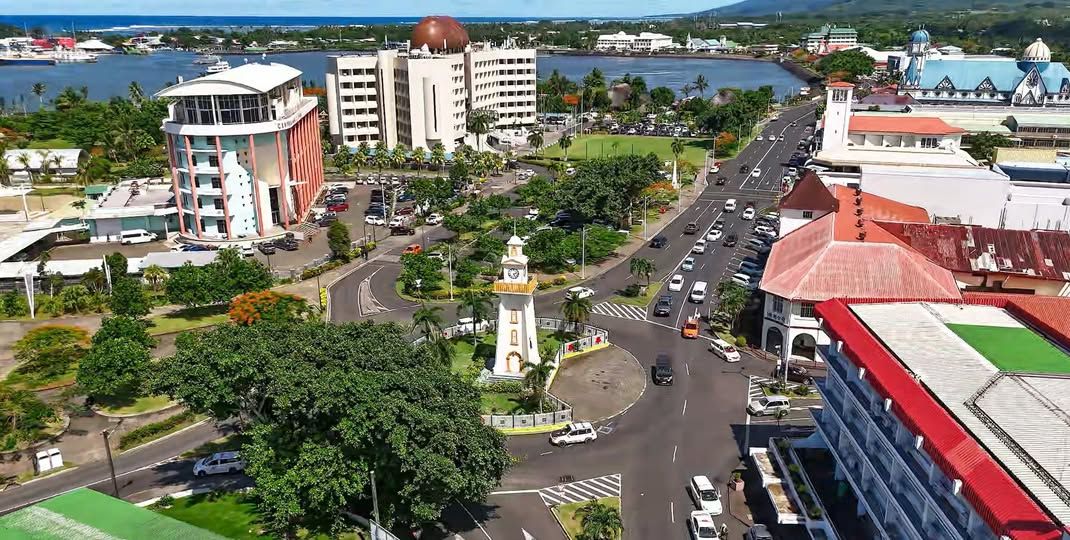
Sāmoa's central business district in Apia. Photo/Savali Newspaper
“Sāmoa has approached this process in good faith, with the clear objective of ensuring that its financial services sector continues to operator responsibly and transparently in line with global expectations, while supporting sustainable growth,” the statement says.
Fiji’s Finance Minister Esrom Immanuel welcomed his country’s removal, saying it reflects the Coalition Government’s commitment to transparency, good governance and alignment with international tax standards.
Immanuel says the move strengthens Fiji’s international reputation as a credible and trusted financial jurisdiction.
“The removal from the EU blacklist strengthens Fiji’s international reputation as a credible, responsible and trusted financial jurisdiction.
"It sends a positive signal to investors, development partners and the global business community that Fiji is committed to maintaining a transparent and robust financial and tax system,” he says.
Immanuel says over the past three years, the government has worked closely with international partners and relevant institutions to address outstanding concerns, strengthen legislative frameworks and enhance compliance mechanisms.
Economists say that delisting reduces reputational risk and may improve access to correspondent banking relationships, which are critical for Pacific economies that rely heavily on remittances, tourism and external trade.