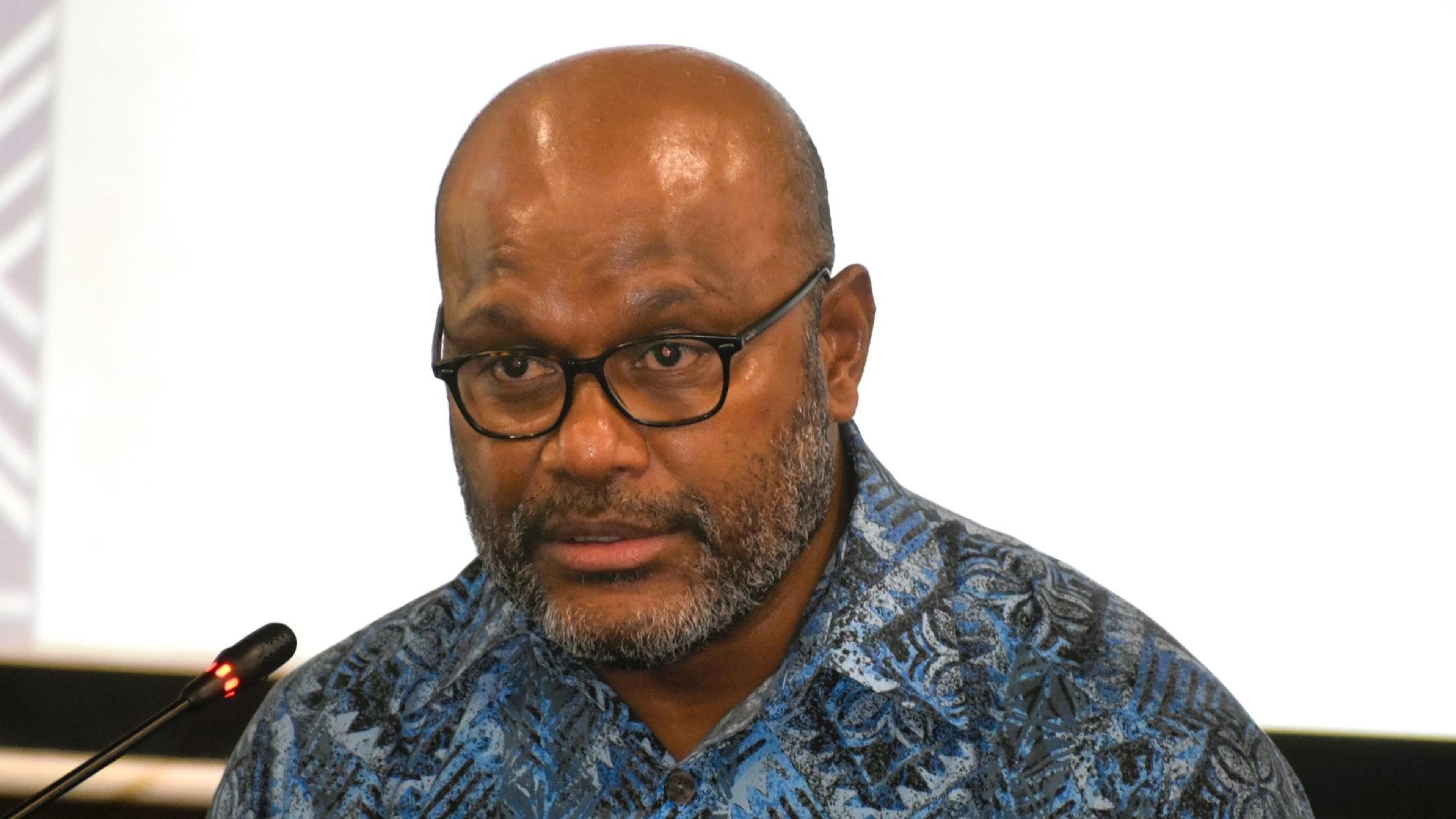
Pacific Islands Forum Deputy Secretary-General Esala Nayasi says the region is advancing its own climate solutions, including the proposed Pacific Resilience Facility, to better respond to growing climate impacts.
Photo/Pacific Islands Forum Secretariat
Pacific Region
Pacific leaders warn global rules under strain as climate and security pressures grow
They say rising climate impacts and global instability are testing international law, as they call for stronger cooperation with Caribbean and Asian partners to protect small island nations.

Christine Rovoi
Published
03 July 2026, 3:50pm
Share
Copy Link
Top stories
World Vision warns children will pay for aid cuts beyond the Pacific
Thomas Tarurongo WynneMon, 12 Oct
Top stories
World Vision warns children will pay for aid cuts beyond the Pacific
Thomas Tarurongo WynneMon, 12 Oct
Pacific leaders say small island nations are facing mounting pressure from both climate change and growing global instability and warn international rules designed to protect vulnerable countries are being put to the test.
At the recent 2026 Pacific Peace and Security Dialogue in Fiji, Pacific Islands Forum representatives said the region cannot respond to these challenges alone and must work more closely with partners in the Caribbean and Southeast Asia.
Esala Nayasi, Pacific Islands Forum Deputy Secretary General, said climate finance remains one of the biggest barriers for the region, even as Pacific countries push ahead with their own solutions.
“There’s a lot of regional initiatives that we’ve also been able to advance…but obviously we are limited by resources, and it continues to be a challenge in terms of access,” he said in a statement.
Nayasi said leaders have now agreed to establish the Pacific Resilience Facility as a region-led response to growing climate damage.
“But as a way to mitigate that, leaders have agreed on the establishment of the Pacific Resilience Facility, one that is owned by the Pacific, one that reflects our values, one that also defines the way that we would want to deal with the issue.”
While the Pacific focuses on building its own resilience tools, leaders at the dialogue warned that global instability is also reshaping the environment small island states operate in.
A senior ASEAN representative said climate impacts across Asia are already showing what could lie ahead for the Pacific, with rising seas threatening major cities and farmland.
“On one side we have the rise of the sea, so…Indonesia is building now more than 1000 kilometres [of] wall in the north of Indonesia, but you see also cities sinking; Bangkok is sinking, Jakarta is sinking, Ho Chi Minh City is sinking,” Dr Chem Widhya, ASEAN Inter-Parliamentary Assembly Secretary-General, said in a statement.
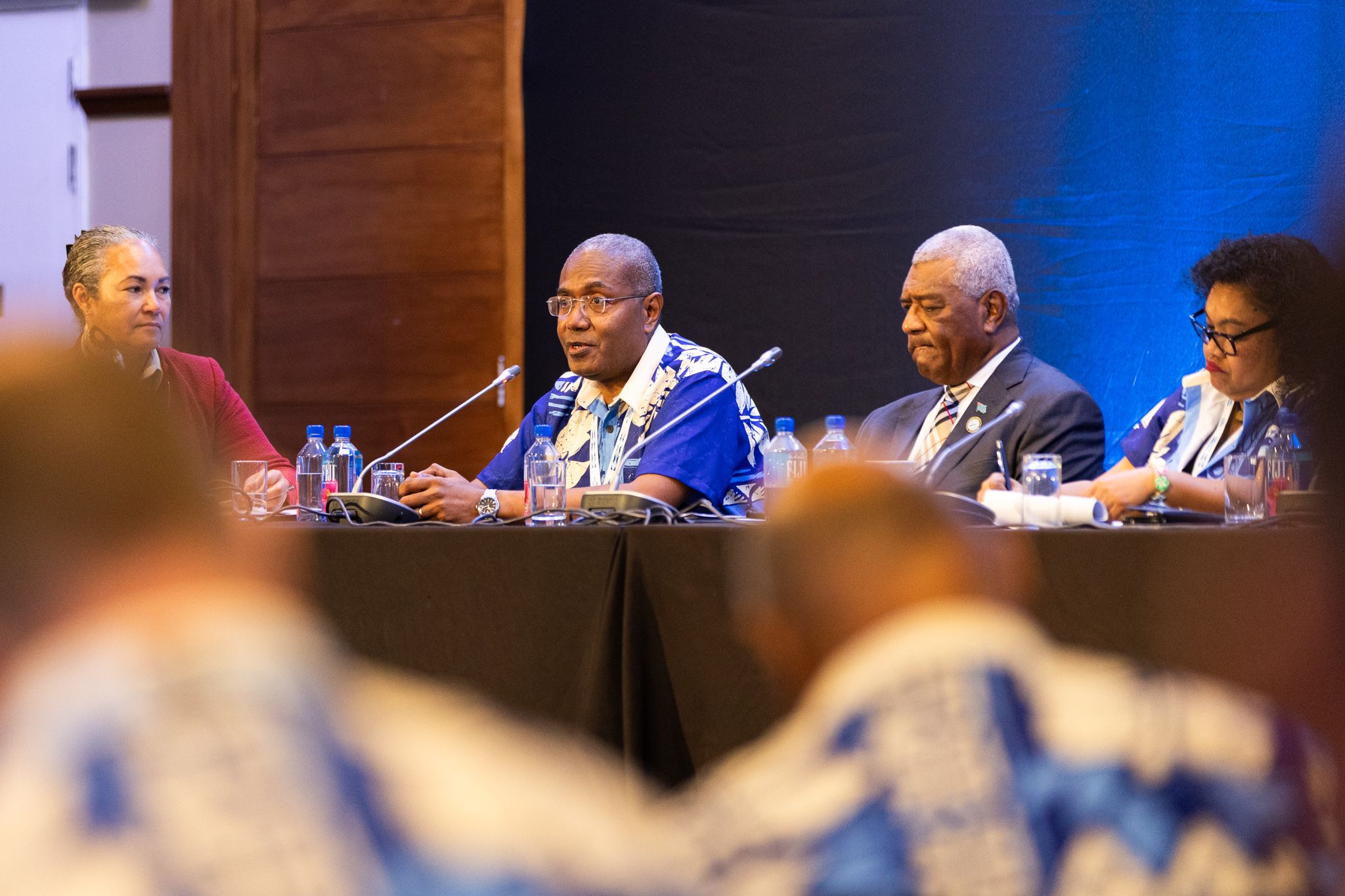
Pacific leaders at the Pacific Peace and Security Dialogue in Suva where discussions focused on rising climate impacts, global instability and the future of international law. Photo/Pacific Security College
He warned that climate change is directly linked to food and water security.
“When there’s no more ice, there’s no more water, we will see a lot of arid terrain. Food will become scarce. Potable water will become very scarce. So, we have to be very alert,” he said.
Pacific and Caribbean leaders also raised concerns about growing strain on international law and the rising pressure on small states within the global system.
Elizabeth Solomon, Assistant Secretary General of the Caribbean Community or CARICOM, said the Caribbean is already seeing increased militarisation and challenges in international waters.
“We have also had in the region, for the first time, military presence, like physical military presence of large warships, the bombing of boats out of the water in international waters. So, there is a complete attack on international rule of law,” her statement read.
She said the system depends on trust between nations, but that trust is weakening.
Watch highlights of day two at the 2026 Pacific Peace and Security Dialogue by Pacific Security Council below.
“International rule of law is based on trust between states and upholding agreements made donkeys years ago, and that we are having real challenges dealing with and have no pushback really, except to rally around and to become more visible within the international, multilateral spaces and more coordinated with CARICOM.”
Widhya said smaller states are increasingly forced to rely on rules-based systems for protection.
“Smaller states that do not have big armies, they do not have missiles and nuclear weapons, so therefore they would embrace right is might,” he said.
“When ‘might is right’, the big [states] take all, at all costs. This leaves the door open for many precedences near and far; when the bigger feel hungry and eat the smaller ones.”
Leaders from all three regions agreed that while cooperation is growing, small island states are now navigating a world where climate stress, security concerns and global power shifts are increasingly connected and increasingly difficult to manage alone.