
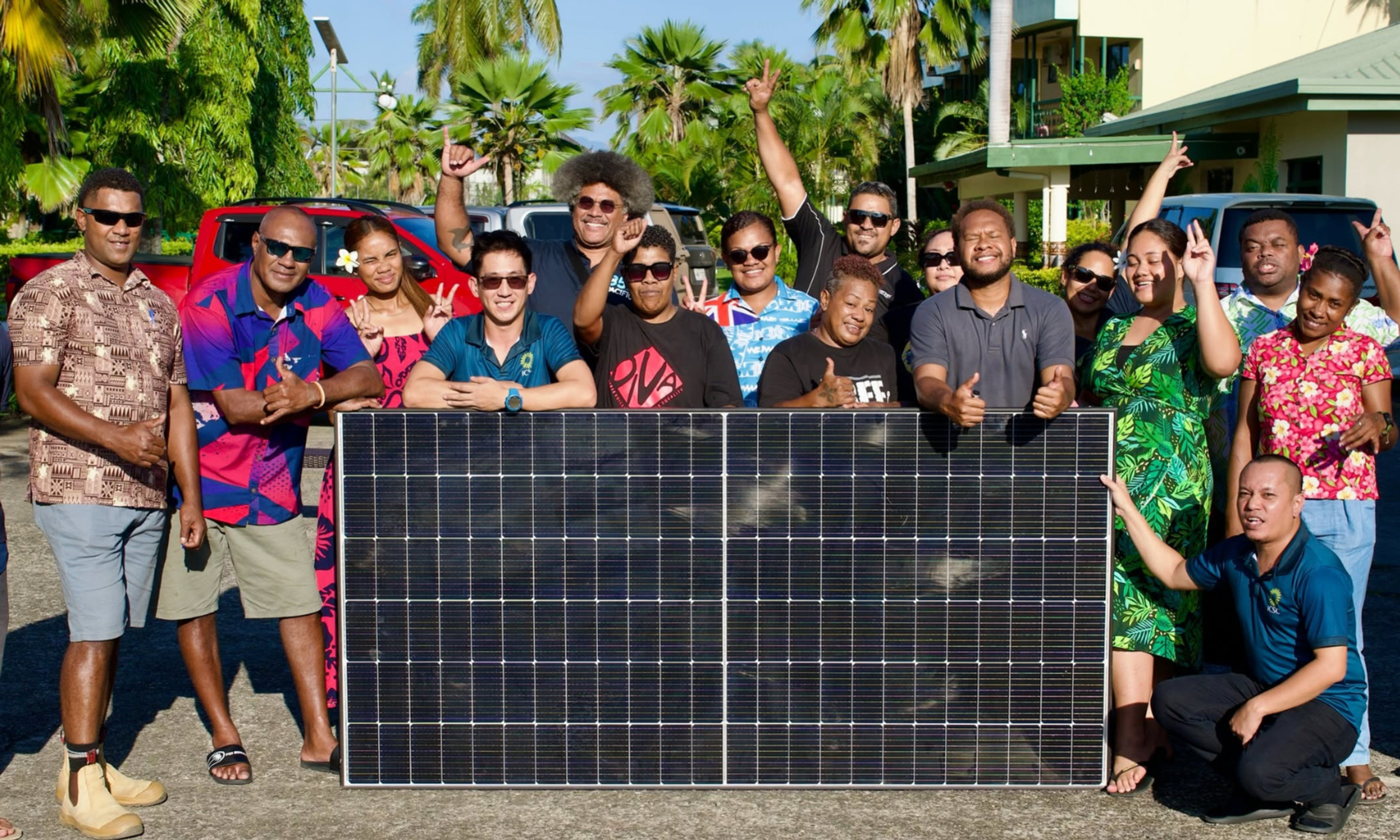
Trainees from Fiji, Tuvalu and Vanuatu learn to install and maintain solar panels.
Photo/350 Pacific
Pacific Region
Pacific leaders turn to solar power as fuel costs bite and energy pressure grows
Young Pacific leaders are being trained in Fiji to build and maintain solar systems.

Khalia Strong
Published
09 June 2026, 1:06pm
Share
Copy Link
Top stories

World Vision warns children will pay for aid cuts beyond the Pacific
Thomas Tarurongo WynneMon, 12 Oct

Mate Ma’a Tonga’s 40-year legacy lives on through generations
Elton Lonaratha JnrMon, 12 Oct
Top stories
World Vision warns children will pay for aid cuts beyond the Pacific
Thomas Tarurongo WynneMon, 12 Oct
Mate Ma’a Tonga’s 40-year legacy lives on through generations
Elton Lonaratha JnrMon, 12 Oct
Pacific communities are moving quickly to build their own solar energy future as rising fuel costs and unreliable power supplies put pressure on households, schools and small businesses across the region.
In Fiji, young leaders from across the Pacific have just completed hands-on training in solar power, learning how to design, install and maintain systems that are becoming more important in everyday life.
The Solar Scholars programme, run by 350 Pacific and partners in Nadi, brought together 14 community leaders for intensive training in solar photovoltaic systems, including a practical installation at a local kindergarten.
Among them was Mario Liunamel, project co-ordinator for the Vanuatu Climate Action Network.
Speaking with Tofiga Fepulea’i on Island Time, Liunamel says the shift to renewable energy is no longer just about the environment, it is about survival and stability.
"In the Pacific, we face high electricity costs. It will help us save money, increase access to electricity and become more resilient to fluctuating fuel prices."
Watch the full interview with Mario Liunamel and Susana Pita below.
He says the training also gave participants real-world skills they can take back to their communities.
"We understand our own causes, realities and we understand our community needs better than anyone else,” Liunamel said.
“We in the Pacific should lead this energy journey because though we are on the frontline of the impacts of climate change, we also face high costs of electricity."
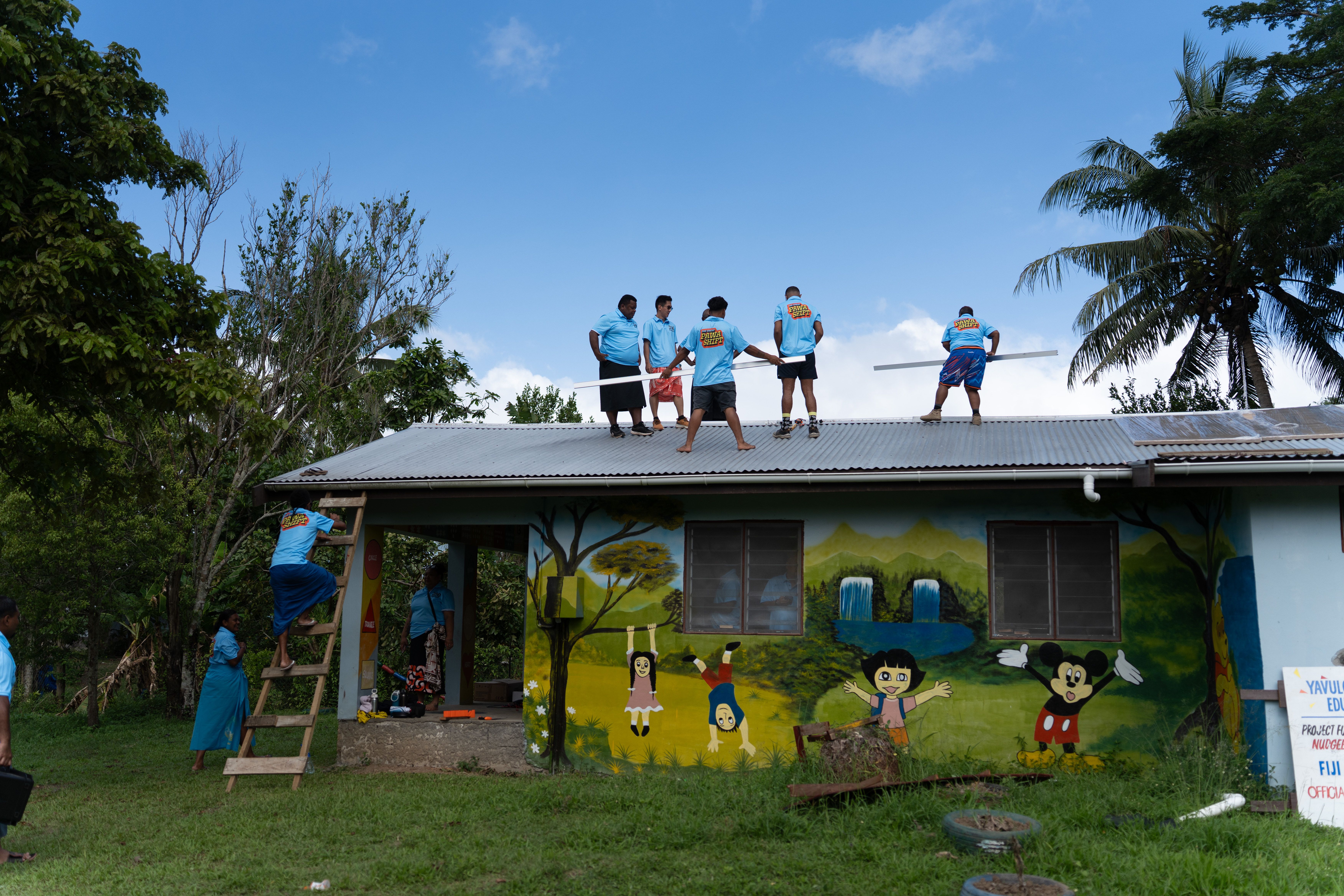
Trainees were able to put their newfound skills into action, installing solar panels at the Yavulo kindergarten in Sigatoka. Photo/Supplied
The urgency is clear. In Fiji, diesel prices reached FJ$4.58 per litre on 1 June, up 114 per cent on three months earlier, according to the country’s Competition and Consumer Commission (FCCC),
That spike has forced governments and households to look for alternatives.
Fiji Prime Minister Sitiveni Rabuka has urged people to conserve fuel and electricity and consider solar lighting to reduce pressure on supply.
International partners are also stepping in. Australia has announced a NZ$36 million package to help ease fuel pressures in Fiji while the Asian Development Bank has provided a NZ$344 million loan to support the country through the fuel crisis.
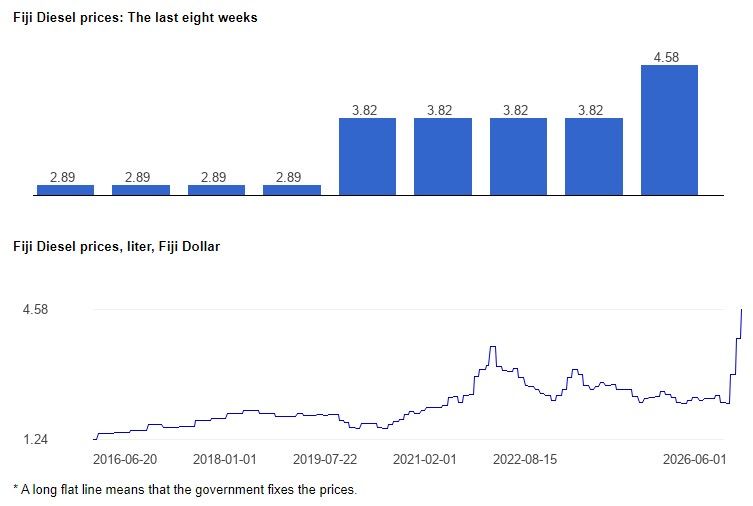
Fiji diesel prices have drastically climbed in the past few months. Image/Globalpetrolprices.com
But for many Pacific leaders, the focus is shifting away from short-term fixes towards long-term energy independence.
Susana Pita, co-ordinator of the Tuvalu Climate Warriors, tells Fepulea’i rising fuel costs are being felt across the region alongside global tensions (Middle East) affecting supply chains.
"Many Pacific communities still face expensive electricity or unstable power supplies. Renewable energy, especially solar power, provides an opportunity to improve energy access while reducing dependence on imported fossil fuels."
The training programme is also being used beyond classrooms and workshops.
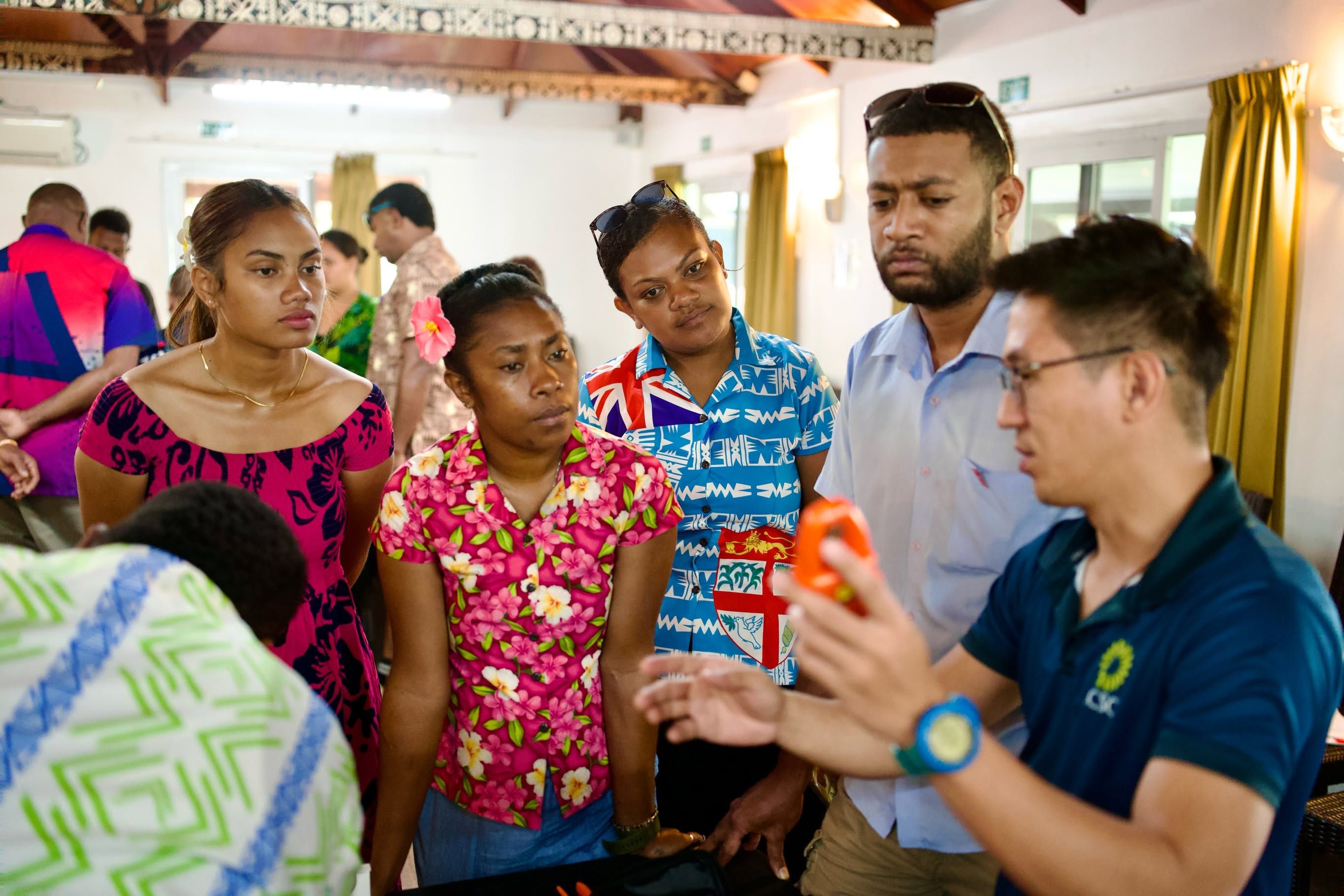
Trainees from Fiji, Tuvalu and Vanuatu are taught how to install solar panels. Photo/Supplied
Josaia Tokoni from the Fiji Council of Social Services says solar systems are already changing how organisations respond during emergencies.
“We are a major coordination hub for disaster response work, but during power outages we have to go to government offices to charge our emergency communications appliances because they have a diesel generator,” Tokoni says in a statement.
“This solar PV system is going to give us energy independence even during power outages.”
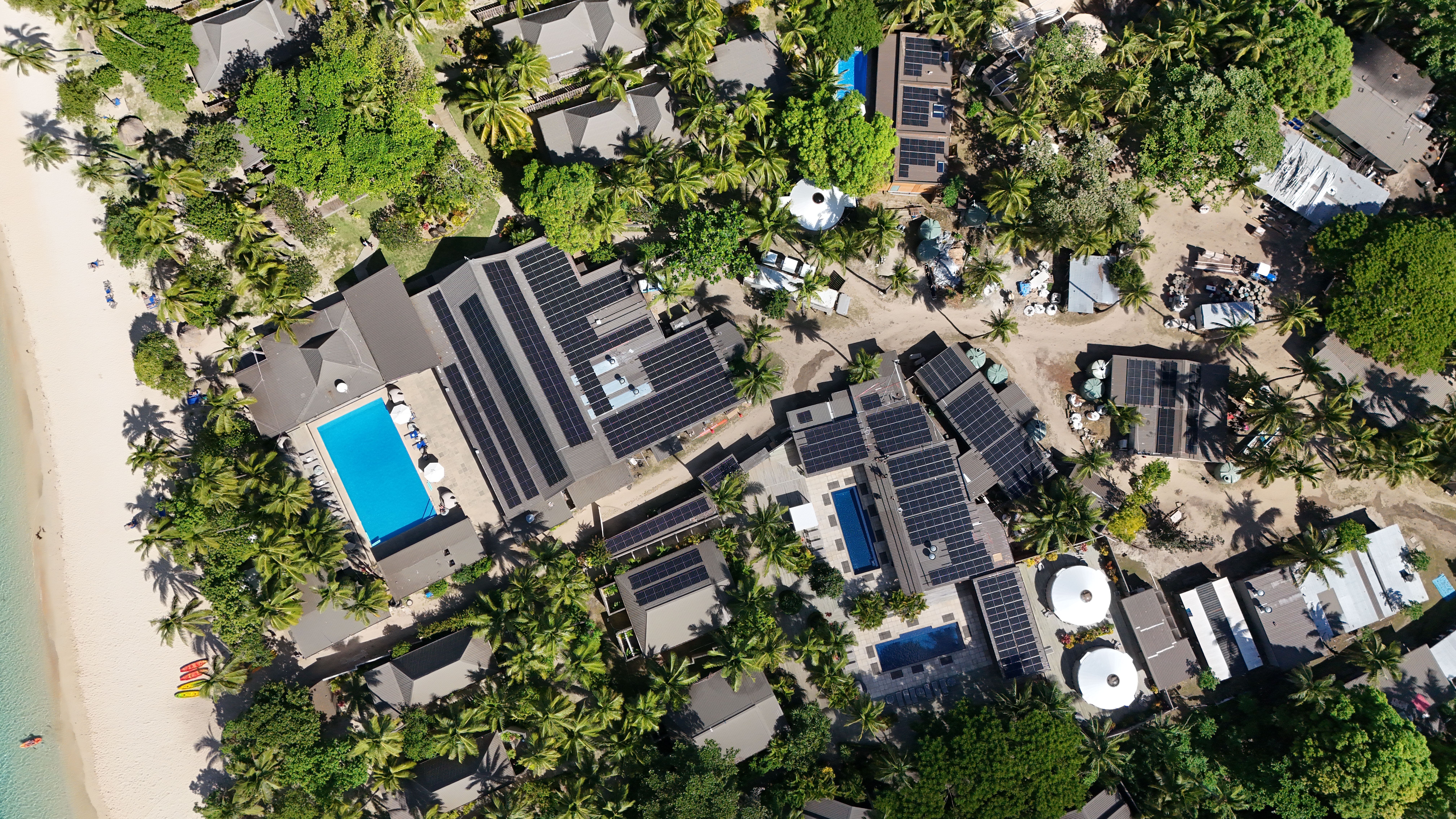
Future Energy project in Yasawa is bringing solar options to remote resorts. Photo/Supplied
Renewable energy emerging across the region
Across Fiji’s Yasawa Islands, some remote resorts have already moved from diesel to solar and battery systems, cutting fuel costs by around a third in the first six months, according to project figures from New Zealand energy company Future Energy.
But as solar use grows, so too do concerns about quality and regulation.
Fiji’s Finance Minister Esrom Immanuel has warned that parts of the solar market are vulnerable to low-quality imports, with gaps in national standards for equipment.
Speaking in Parliament last month, he said work is under way to strengthen oversight and certification of imported solar equipment.
As Pacific countries move faster towards renewable energy, the challenge is no longer just about switching systems. It is about building the skills, standards and local expertise to keep them running for the long term.