
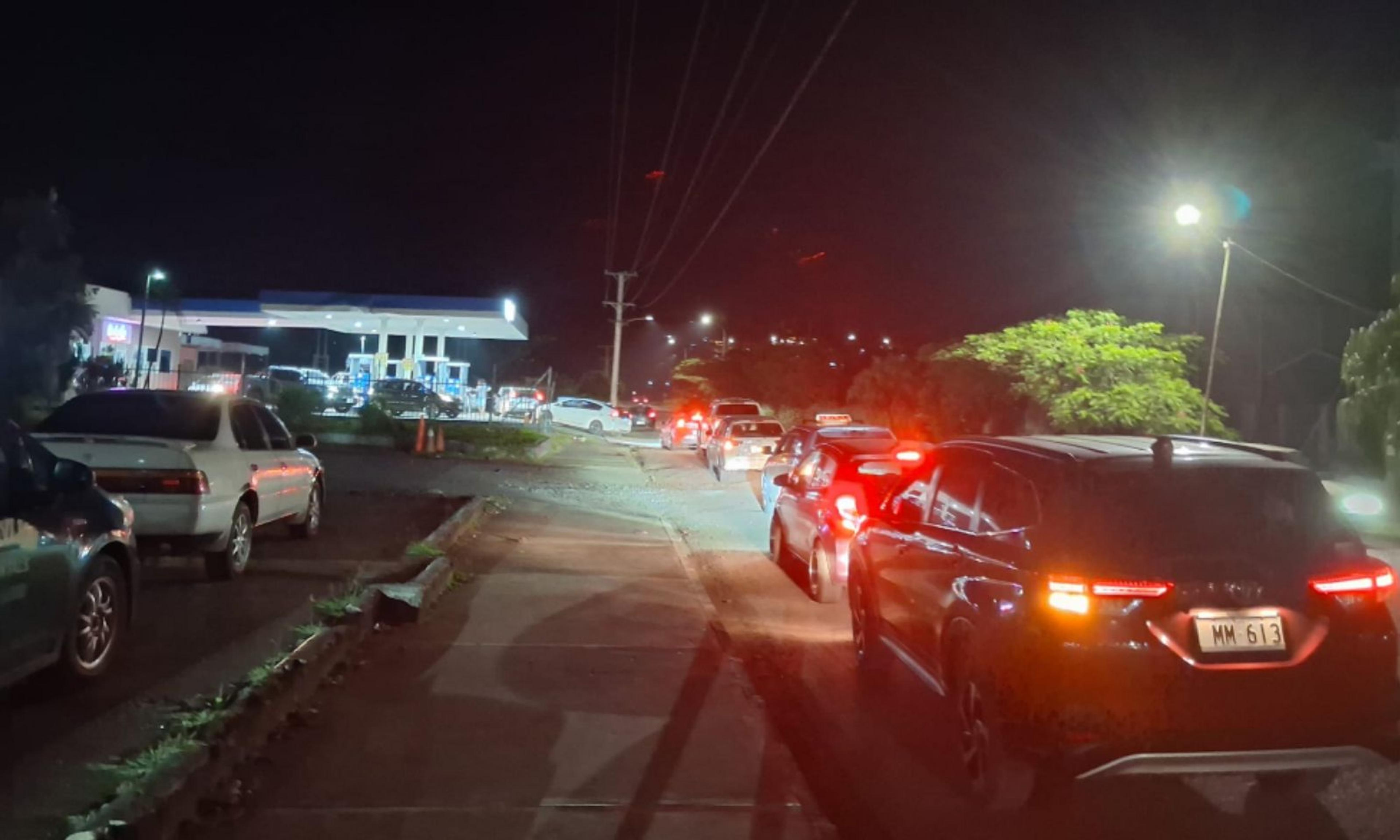
Vehicles queue at a petrol station in the northern town of Labasa, Fiji, on Tuesday night as commuters rushed to fill their tanks ahead of a surprise fuel price increase.
Photo/The Fiji Times/Nacanieli Tuilevuka
Pacific Region
Fijians rush to fill tanks as fuel prices spike overnight across nation
Families and commuters scrambled at petrol stations after a surprise price increase, highlighting how Pacific nations are exposed to global oil shocks.

PMN News
Published
01 April 2026, 11:33am
Share
Copy Link
Top stories



World Vision warns children will pay for aid cuts beyond the Pacific
Thomas Tarurongo WynneMon, 12 Oct
Top stories
World Vision warns children will pay for aid cuts beyond the Pacific
Thomas Tarurongo WynneMon, 12 Oct
Commuters in Fiji raced to petrol stations on Tuesday night as news of a sudden fuel price hike spread.
Photos and videos shared by local media and residents showed long queues, many for hours, as people tried to fill their tanks before the increases took effect from Wednesday, 1 April.
Experts say small Pacific nations are particularly exposed to sudden fuel shocks because they rely heavily on imported oil.
Countries like Sāmoa, Tonga, and Vanuatu could face similar pressures if global supply chains are disrupted.
The Fijian Competition and Consumer Commission (FCCC) announced that motor spirit (unleaded) and premix would rise by nearly 50 cents (NZ$0.38) per litre, and diesel by almost 80 cents (NZ$0.61).
The spike comes just two weeks after Prime Minister Sitiveni Rabuka assured the public there would be no rise in fuel costs.

Prime Minister Sitiveni Rabuka had assured Fijians there would be no fuel price rise, but the Fijian Competition and Consumer Commission confirmed higher costs late on Tuesday. Photo/Fiji govt/file
"There is no need for a price hike because there is no need to panic yet," Rabuka told reporters after a post-Cabinet meeting last month.
He added Fiji had “normal stock for three months in-country already landed,” while Finance Minister Esrom Immanuel was quoted in the Fiji Sun as saying: "There won't be a price increase between now and the order that will come probably after April."
Opposition MPs described the increase as a betrayal. "This is a midnight ambush on every family in Fiji," Vijay Nath said in a statement. "To release such shocking data with only four hours' notice is a cowardly way to treat the citizens you serve."
Premila Kumar added: "According to the FCCC's own pricing formula, Fiji uses a one-month lag system - meaning that April's prices should be based on international market conditions and exchange rates from February.
"The ongoing conflict in Iran only began in mid-March and therefore it cannot be used to justify April's exorbitant price hike," she said, calling the rise "unacceptable and raises serious questions."
Experts warn that small island nations are particularly exposed to global oil shocks.
"If it continues to be difficult to ship oil out of the Middle East, then shortages of oil might start to emerge," Stephen Howes and Rubayat Chowdhury wrote in the Devpolicy Blog.
"The countries that will do best in such a situation are those with large stockpiles or plenty of bargaining power. The Pacific Island countries have neither," it read.
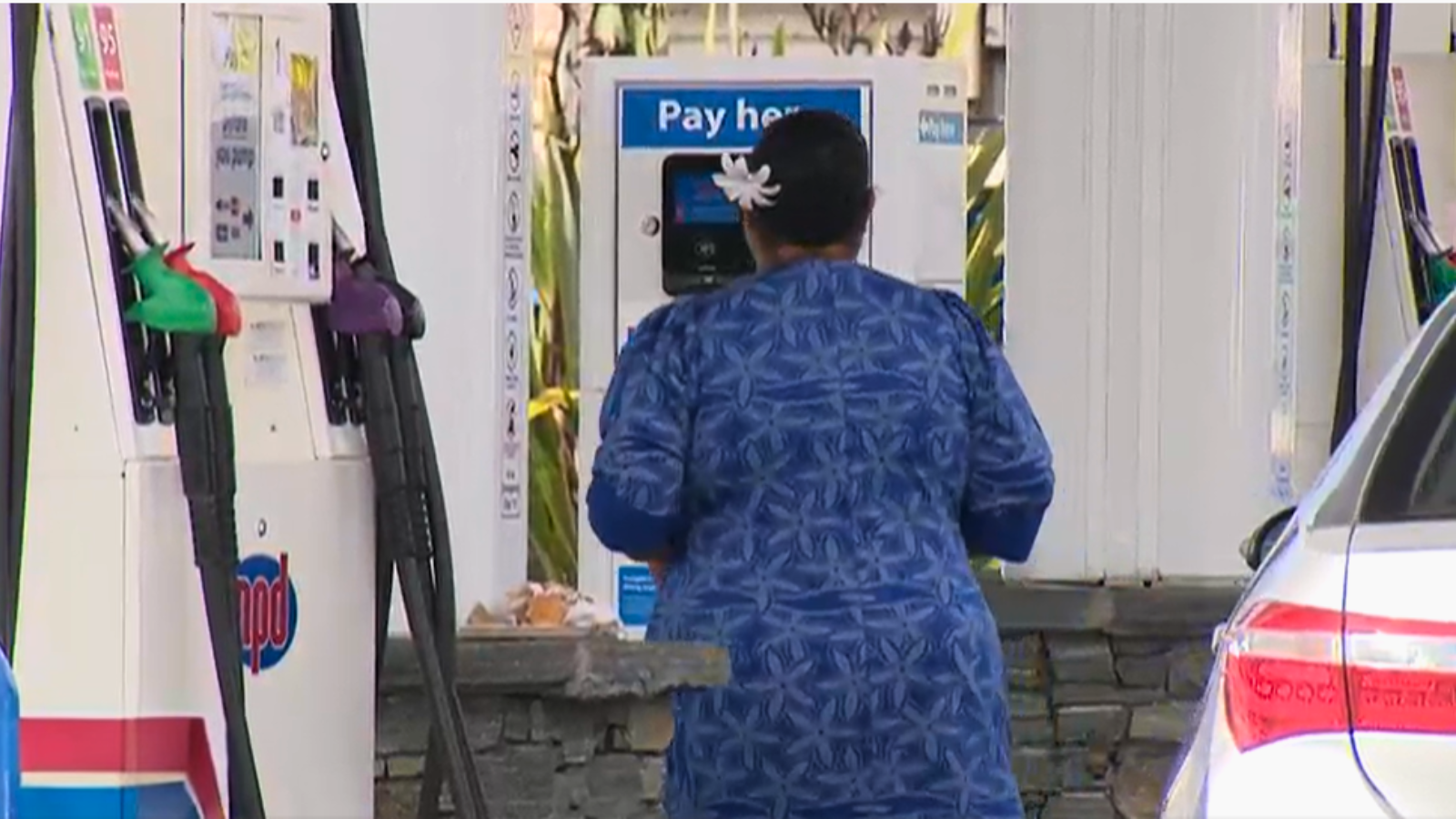
A woman pays for fuel at a petrol station in South Auckland, highlighting the everyday impact of rising fuel costs. Photo/LDR/Te Ao News
The Iran conflict, which began on 28 February, has disrupted global supply chains through the closure of the Strait of Hormuz, a key route for about a quarter of all maritime oil trade.
For Fijian families, the rise is more than numbers on a screen. Local media reports that commuters are already adjusting travel and school routines to cope with the extra cost.