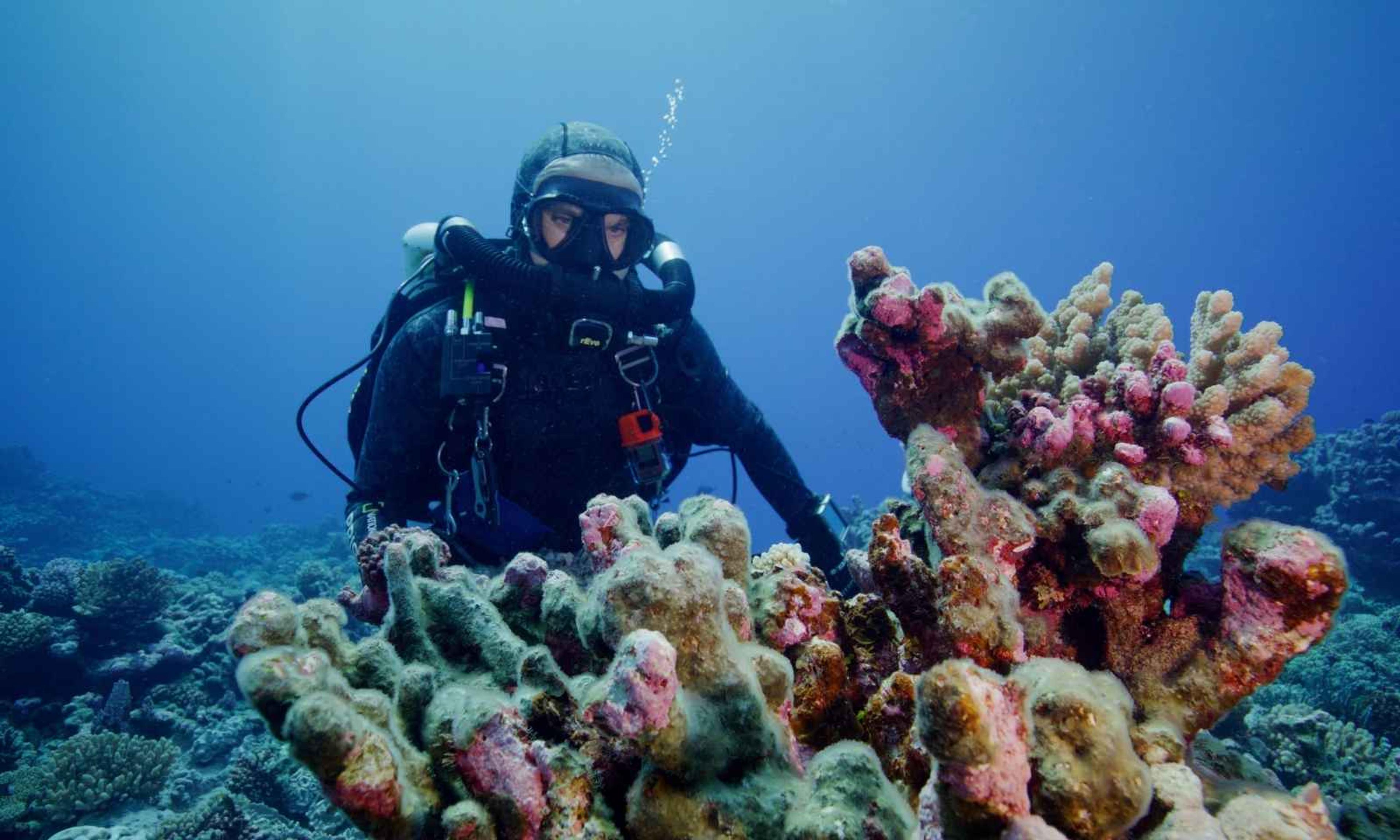
Enric Sala, National Geographic Explorer in Residence and founder of Pristine Seas, underwater at Bokak Atoll, Marshall Islands.
Photo/National Geographic Pristine Seas/Manu San Félix
Pacific Region
Marshall Islands leads ocean mission, blending ancestral knowledge with modern science
Local navigators and global scientists join forces to map and protect some of the Pacific’s most resilient reefs.

Aui'a Vaimaila Leatinu'u
Published
20 March 2026, 3:27pm
Share
Copy Link
Top stories
'Don't count yourself out': Porirua by-election candidate’s push for voter participation
Taelegalolo'u Mary AfemataFri, 09 Oct

Deep sea mining could give investors a legal route to challenge climate action - experts
Christine RovoiThu, 08 Oct
Top stories
'Don't count yourself out': Porirua by-election candidate’s push for voter participation
Taelegalolo'u Mary AfemataFri, 09 Oct
Deep sea mining could give investors a legal route to challenge climate action - experts
Christine RovoiThu, 08 Oct
In the Marshall Islands, the ocean has always been a teacher. Now, that knowledge is guiding a major global mission to protect it.
A National Geographic Pristine Seas (NGPS) expedition is underway in the Republic of the Marshall Islands (RMI), bringing together local navigators, scientists, and educators to study some of the Pacific’s most remote and resilient atolls.
It marks the programme’s 50th expedition since 2008. But this time, the focus is clear: to combine traditional knowledge with modern science to better understand and protect the ocean.
Over the next three months, the team will work alongside the Marshall Islands Marine Resources Authority (MIMRA) to survey seven atolls across the Ralik and Ratak chains including places where little scientific research has been done.
In a press release, Juan Mayorga, the lead scientist for the expedition, says the work starts with listening.
“Navigators from this region crossed open ocean reading how swells bounce off distant islands, weaving stick charts that mapped wave patterns, not coastlines,” Mayorga says. “That intimacy with the sea shaped how they managed their world, keeping uninhabited atolls as reserves, used only with permission and for special occasions.”
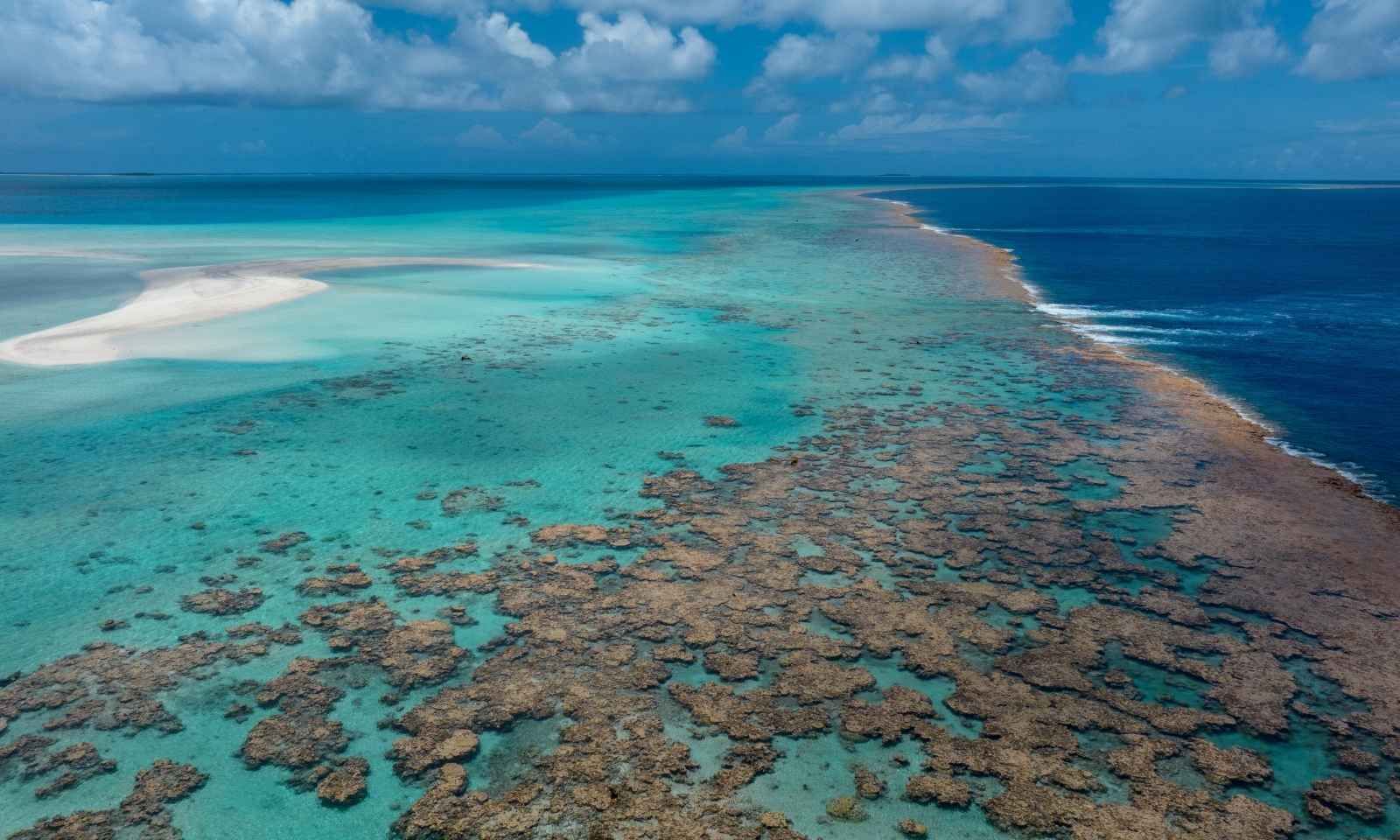
Bikar Atoll, Republic of the Marshall Islands. Photo/National Geographic Pristine Seas/Manu San Félix
That deep connection to the ocean is still central today. Mayorga says Reimaanlok, RMI’s resource management framework, builds on what communities already know: “the ocean provides, but only if we care for it”.
“That's what we hope to pass on, bringing this expedition into RMI classrooms to show how traditional knowledge and modern science work together to protect the ocean."
The expedition team plans to explore places for which little scientific data has been gathered, including Erikup, Ailuk, Taka, Ujelang, Ailinganea, Jemo, and Enewetak.
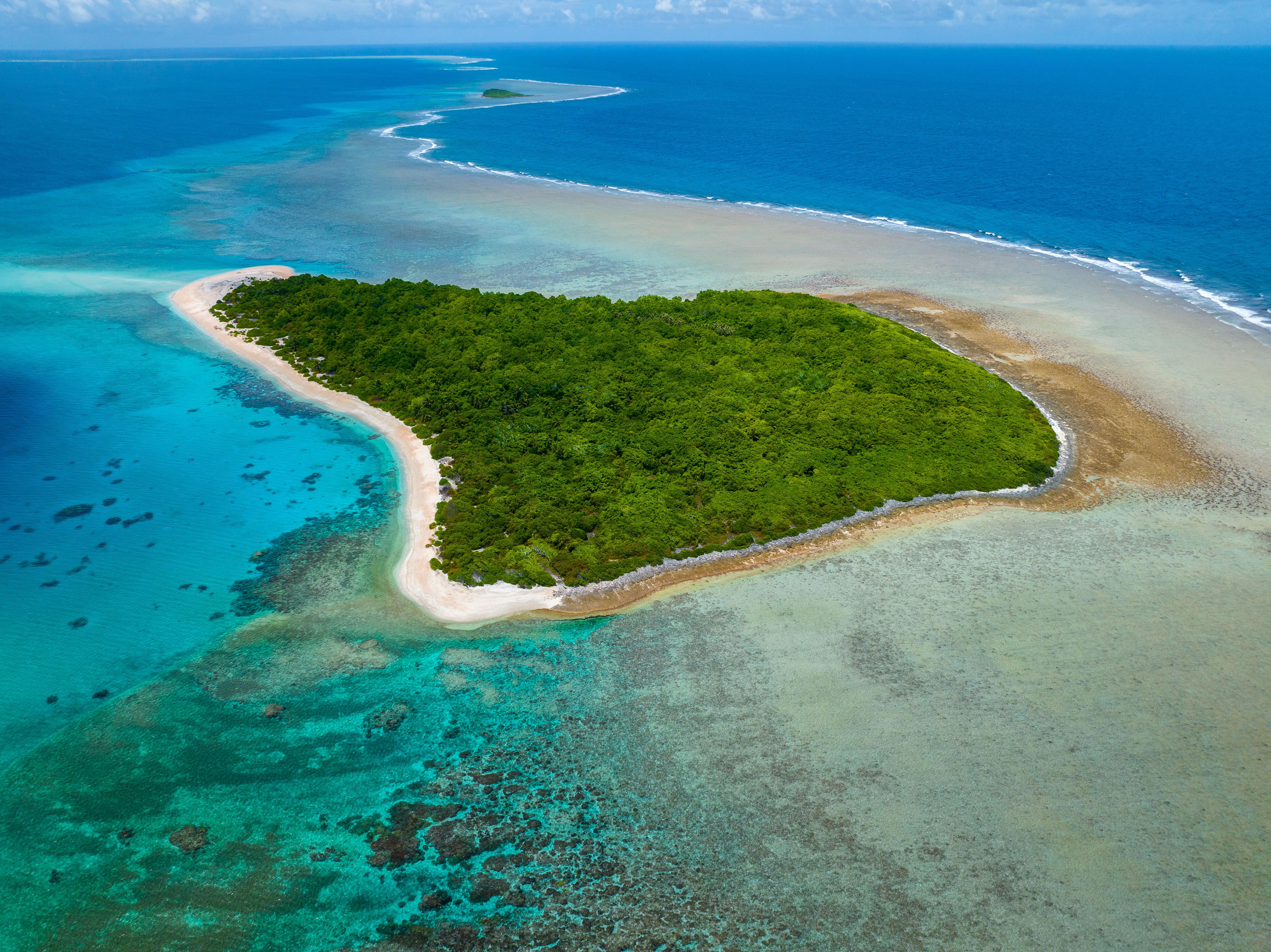
Aerial view of Rongerik Atoll, Marshall Islands. Photo/National Geographic Pristine Seas/Steve Spence
The team will study uninhabited sites like Enije Island, a critical nesting ground for green turtles, and the shark-rich Enije Channel to establish vital ecological baselines.
These environments help scientists understand how coral reefs survive pressures like climate change and bleaching.
"This expedition is an incredible opportunity to study some of the last wild places in the Pacific Ocean, surveying reefs across a full spectrum," says Mayorga.
Their previous mission concluded with the 2025 Vanuatu expedition, which scientists described as revealing some of the healthiest reefs they had ever seen.
Mayorga says the team will survey reefs and explore depths rarely or never seen, revisiting sites first studied 70 years ago.
Living and working aboard the research vessel Argo, the team will use deep sea cameras to collect footage from the seafloor.
Listen to Paul Rose, 2025 Vanuatu mission lead, speak on last year’s final mission below.
They will also use the state-of-the-art submersible, the Argonauta, to observe the "twilight zone", a frontier of deep-sea biodiversity filled with marine life.
The expedition includes an educational component, where educators and students will board the Argo to meet the crew and explore marine science careers.
Chris Hines, the Director of Education for National Geographic Pristine Seas, says they aim to inspire young people to take care of the ocean.
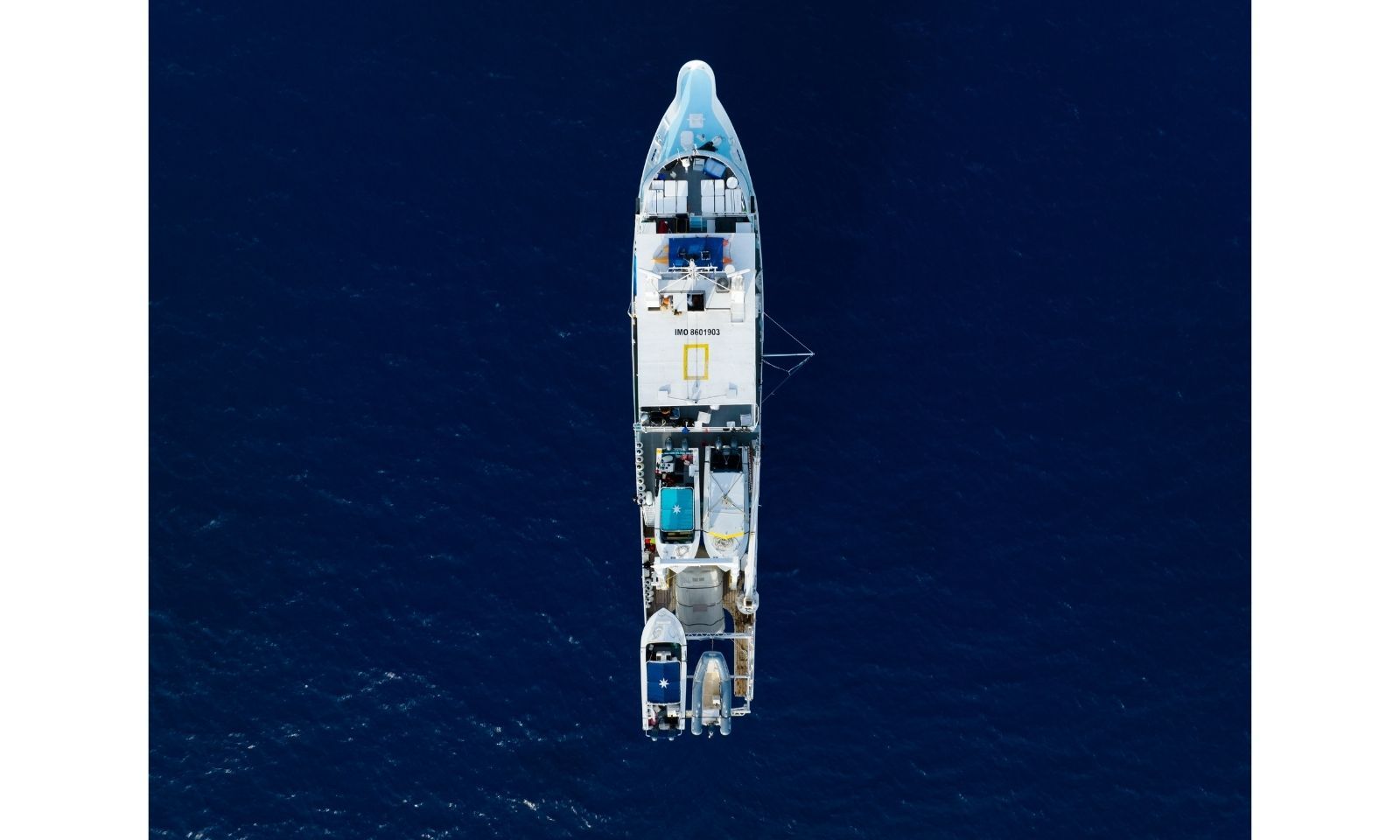
Top-down view of the National Geographic Pristine Seas research vessel, the Argo, while in the Marshall Islands in 2023. Photo/National Geographic Pristine Seas/Steve Spence
“We are thankful to collaborate and co-create with the RMI Public School System to extend the Pristine Seas expedition into classrooms and communities.
“By engaging educators on ocean literacy and inspiring students with media and experiential learning opportunities rooted in traditional knowledge.”