
Kiwis suffer last-gasp heartbreak as the Kangaroos snatch World Cup opener
Christine RovoiFri, 16 Oct
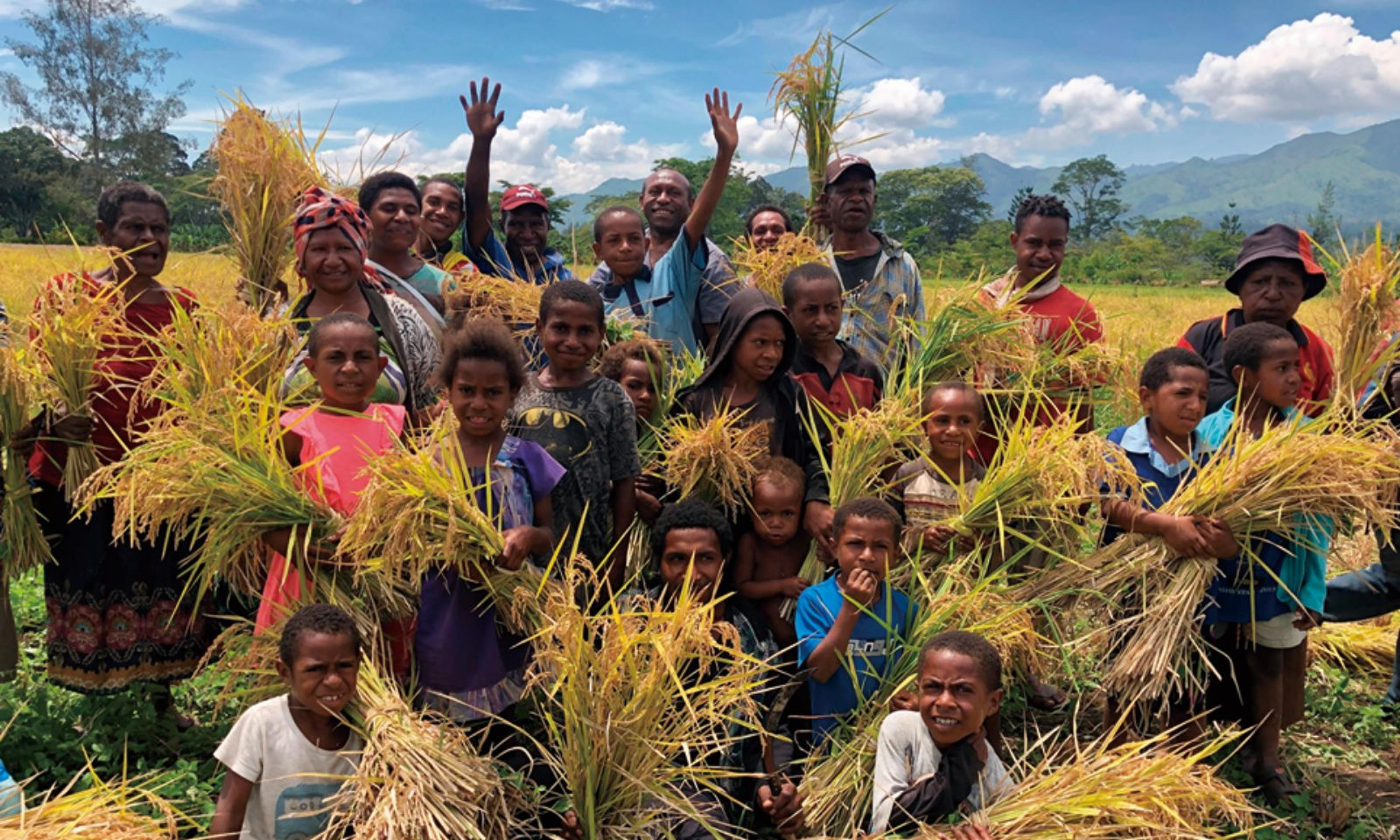
Juncao technology, introduced to PNG in the late 1990s, continues to support farmers by boosting crop yields and incomes across the Pacific island nation.
Photo/Fujian Agriculture and Forestry University
From a reunion with the inventor of Juncao to high-level trade talks in Guangdong, Papua New Guinea’s prime minister uses his China visit to push food security, investment, and stronger regional ties.




Papua New Guinea Prime Minister James Marape has used a key visit to southern China to highlight an unlikely symbol of the country’s future: a fast-growing grass that is helping feed communities and lift incomes.
In Guangzhou on Tuesday, Marape’s meeting with Professor Lin Zhanxi known as the “father of Juncao” became the defining moment of the trip.
The technology, first introduced to PNG in 1997, has transformed farming in parts of the country.
“In 1997, you introduced Juncao technology to my country, in the wonderful province of Eastern Highlands," Marape told Lin during the visit, which was broadcast live on Chinese state TV.
"Almost 30 years later, it is still flourishing and serving my people very well,” the prime minister said.
Reflecting on its impact, he added, “Your foresight in 1997 was spot on.”
Juncao, a method of growing mushrooms using specially cultivated grass, has spread across PNG with the upland rice farming. Together, the technologies have helped farmers boost production and incomes, with some seeing earnings double or even triple.
The partnership, formalised in 2000 between Fujian Province and the Eastern Highlands, has since reached 20 districts across 10 provinces, training thousands of farmers and benefiting tens of thousands of people.
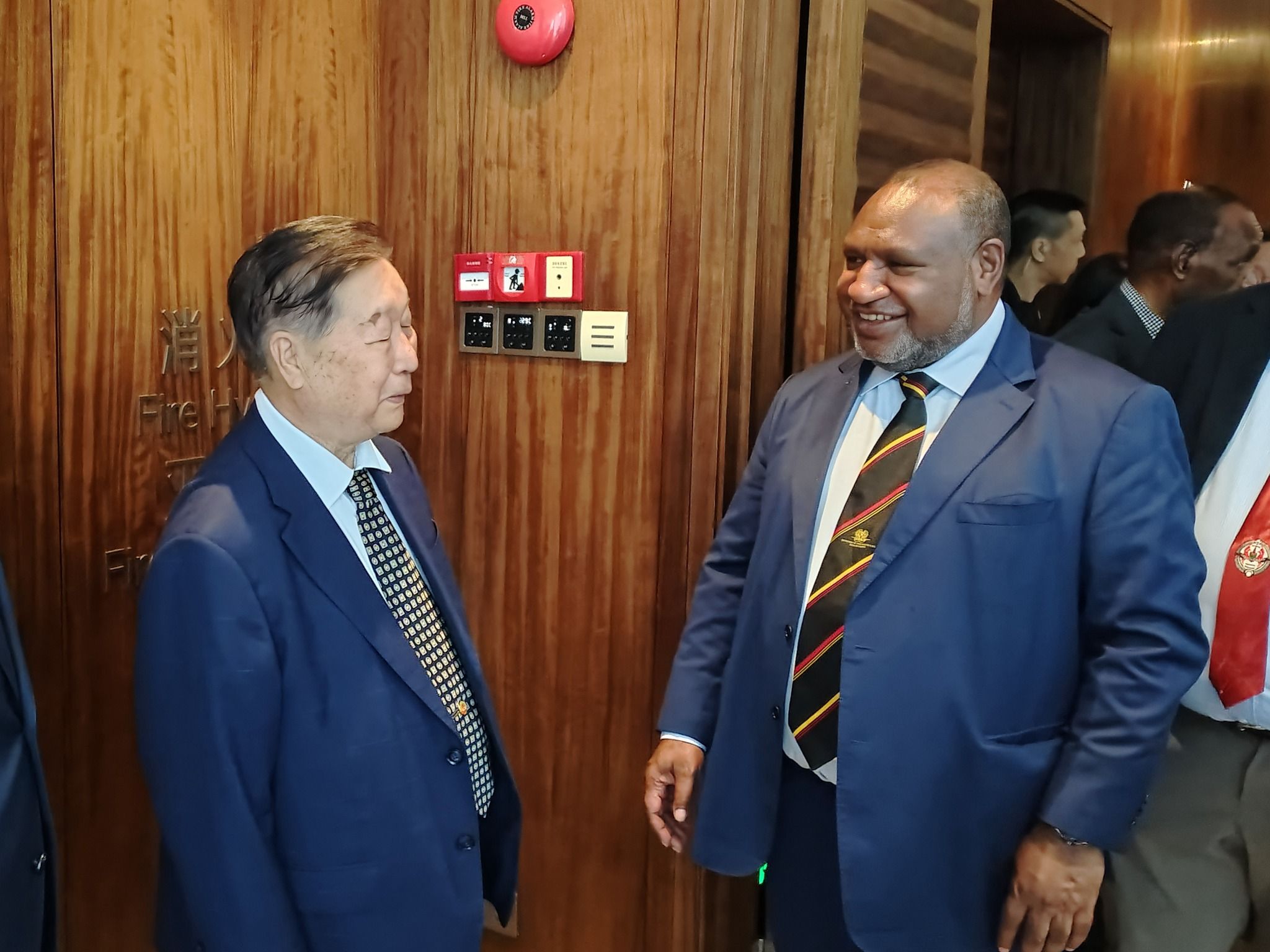
PNG Prime Minister James Marape meets Professor Lin Zhanxi in Guangzhou, highlighting the impact of Juncao technology on farming and food security in Papua New Guinea. Photo/Facebook/Chinese Embassy, PNG
Marape told journalists later that the need for such innovation was urgent. “By 2050, the world population will grow past 10 billion,” he said. “Our population is growing big and land remains small.”
He sees PNG’s natural conditions like abundant rain, sunshine, and land as a major advantage. “We could partner with Chinese technology, Juncao technology is already present in our country.
"We aim to embrace this and expand it for food production, to supply and support PNG, as well as to sell the surplus to our Asian marketplace: Indonesia, the Philippines, China, and more,” he said.
Beyond agriculture, the visit also focused heavily on trade and investment. According to PNG’s The National newspaper, Marape’s three-day trip aims to attract new investment opportunities and strengthen business links, particularly in energy and agriculture.
China is already PNG’s largest trading partner, with bilateral trade worth about US$8 billion (NZ$13.59 billion). PNG exports large volumes of gas and minerals but the government is now pushing to grow agricultural exports as well.
Speaking at a press conference during the visit, Marape pointed to improved standards that are opening doors for PNG produce in China and said he wants to see that access expand further.
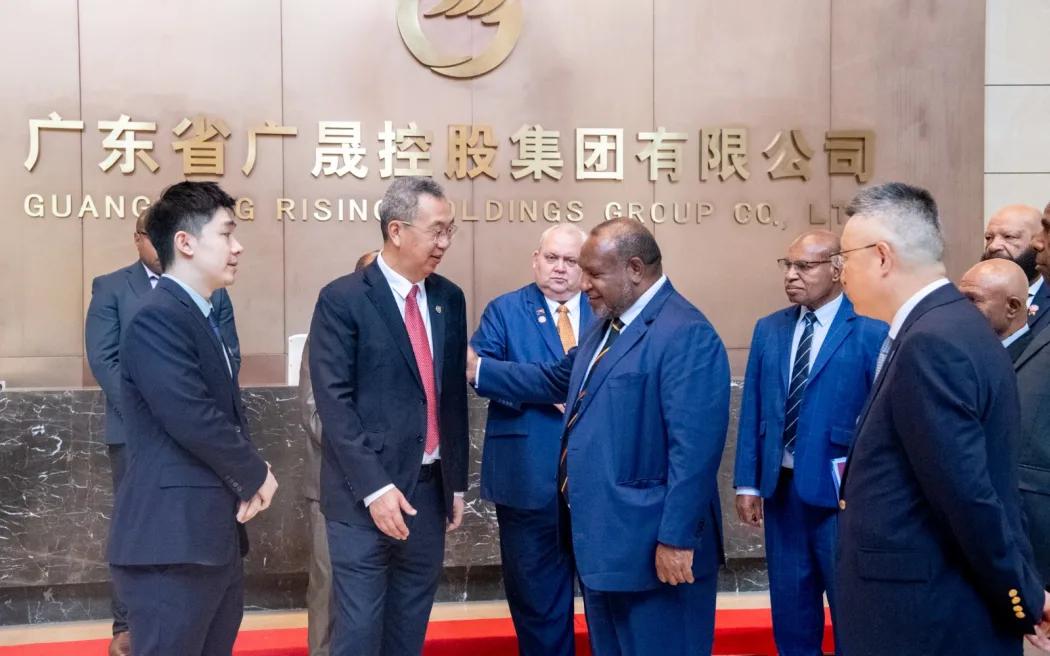
James Marape met with senior executives of several Chinese companies on Tuesday: Photo/Facebook/Chinese Embassy, PNG
Guangdong Province, a manufacturing hub with more than 120 million people, is central to that strategy.
Marape said earlier discussions with the Chinese leadership had identified Guangdong as a key partner for PNG’s economic ambitions.
During the visit, he also met executives from several Chinese companies and both sides discussed ways to deepen cooperation.
Chinese officials also signalled continued support for closer ties. “China is ready to work with Papua New Guinea to deepen practical cooperation in trade, investment and key development sectors for shared growth," a statement from the Chinese embassy in Port Moresby said.
Chinese firms signalled interest in PNG’s development potential and called for a safer and more inclusive business environment.
Back in Guangzhou, Marape’s reunion with Professor Lin also looked to the future. New plans are already underway to expand Juncao into energy development and to establish demonstration villages in PNG focused on mushroom production and upland rice.
Watch James Marape during a visit to China this week below.
Marape praised the long-term impact of the work, saying, “Professor Lin, you, in your entire life, have been committed to finding appropriate technology to create food for humanity.”
As the visit wraps up, the message from PNG is clear: stronger ties with China are not just about trade figures but about practical solutions - from grassroots farming to large-scale investment, that could shape the Pacific nation’s future.
“With your help, PNG could become a constant supply of food to our region and that will forever secure our friendship in the Pacific, in the Asia-Pacific,” Marape said.
For PNG, the challenge now is turning these opportunities into lasting results at home where food security, jobs and growth remain urgent priorities.