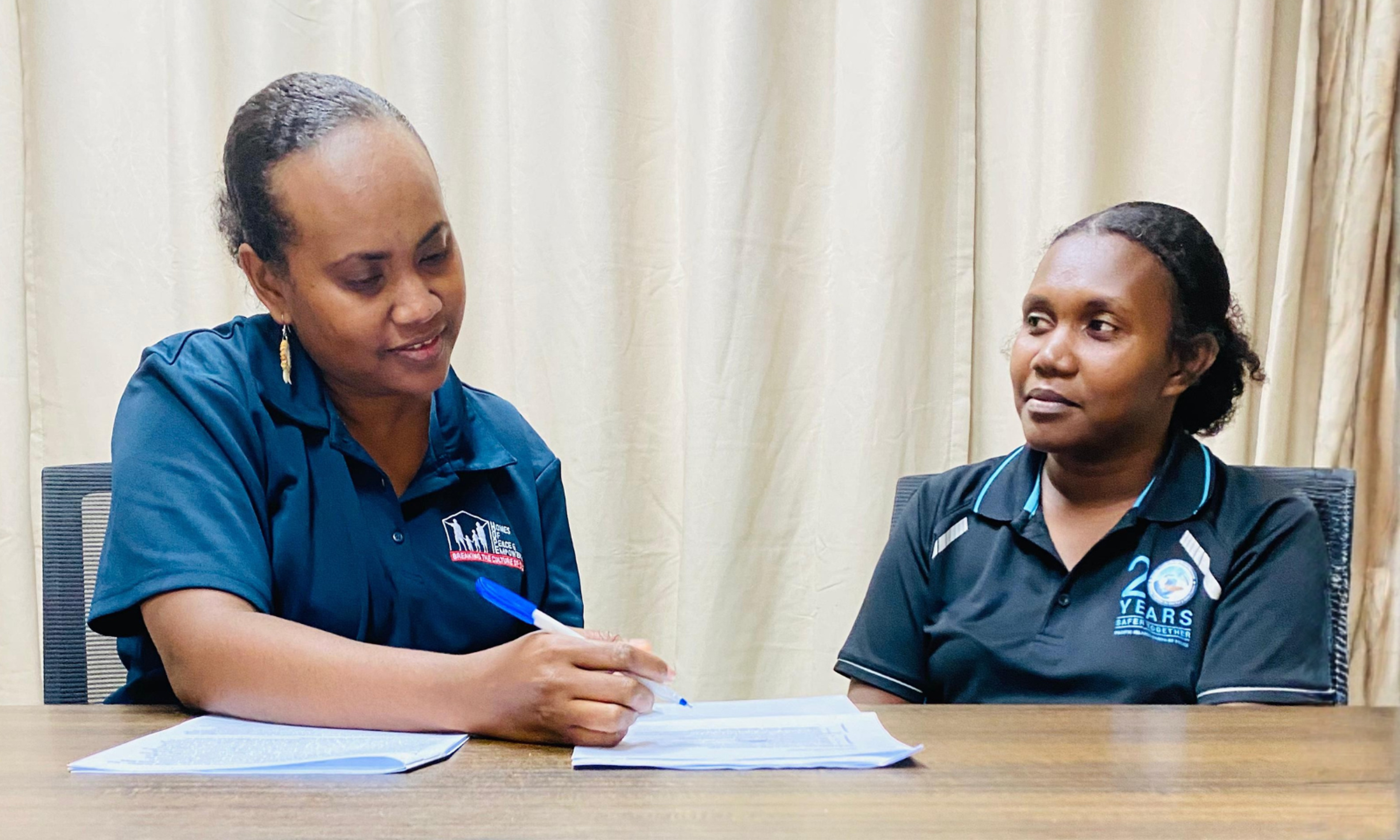
Judith Talai Kiriau from HOPE Trust with Constable Vivian Marehasi at the inaugural training.
Photo/Supplied
Pacific Region
Hidden in plain sight: New training lifts lid on human trafficking risks in the Solomon Islands
From logging camps to city streets, a new push is helping frontline workers spot and protect victims of one of the Pacific’s most hidden crimes.

Khalia Strong
Published
20 March 2026, 11:44am
Share
Copy Link
Top stories
'Nightmare': Why NZ govt declined visa for woman stranded in the Cook Islands
Shalveen Chand, Cook Islands NewsWed, 14 Oct
Kiwis’ forward pack holds key to World Cup opening clash against Australia, experts say
Elton Lonaratha JnrThu, 15 Oct
Niue wildfire burned for nine days as new truck arrives from Aotearoa
PMN NewsThu, 15 Oct
Top stories
'Nightmare': Why NZ govt declined visa for woman stranded in the Cook Islands
Shalveen Chand, Cook Islands NewsWed, 14 Oct
Kiwis’ forward pack holds key to World Cup opening clash against Australia, experts say
Elton Lonaratha JnrThu, 15 Oct
Niue wildfire burned for nine days as new truck arrives from Aotearoa
PMN NewsThu, 15 Oct
It’s late in Honiara. Teenagers, some as young as 14, pick through rubbish in the dark, collecting cans to sell.
“We are doing it to help our family. We need the money.”
Scenes like this are not always what they seem and may point to something deeper.
A new training, first-of- its-kind, in the Solomon Islands was hosted by Homes of Peace and Empowerment (HOPE) Trust, supported by Tearfund's modern slavery partners, helping police and community workers recognise the signs of human trafficking.
The four-day workshop brought together officers from immigration, police, health, and justice, as well as community groups, to improve how victims are identified, supported, and protected.
Judith Talai Kiriau, Project Manager and Legal Counsel for Home of Peace and Empowerment (HOPE) Trust, says exploitation can take many forms across the Solomons.
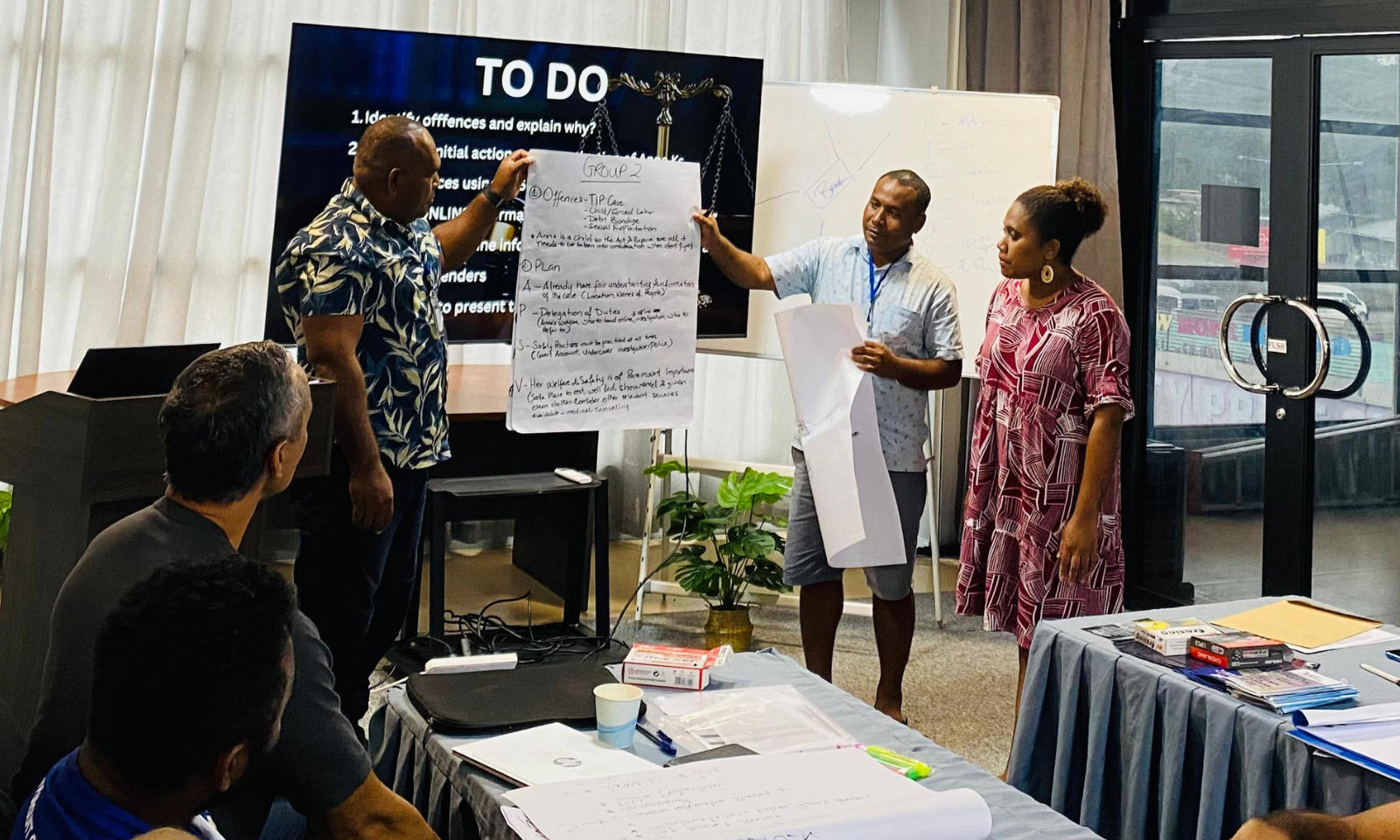
From left: Jayton Mae, security supervisor from the Solomon Islands Ports Authority, and social welfare divison officers Silas Muda and Lysess Niabo at the training. Photo/Supplied
“Within our logging camps, mining, even foreign fishing vessels coming in, they will send the girls out to them,” she tells PMN News.
“These children don’t know their rights. They have to find some way to earn money, and this is where they use their own bodies. Sometimes it is consensual … to support their families, and there are times this exploitation is facilitated by their families.”
She says cases are often hidden within families and communities, making them harder to detect.
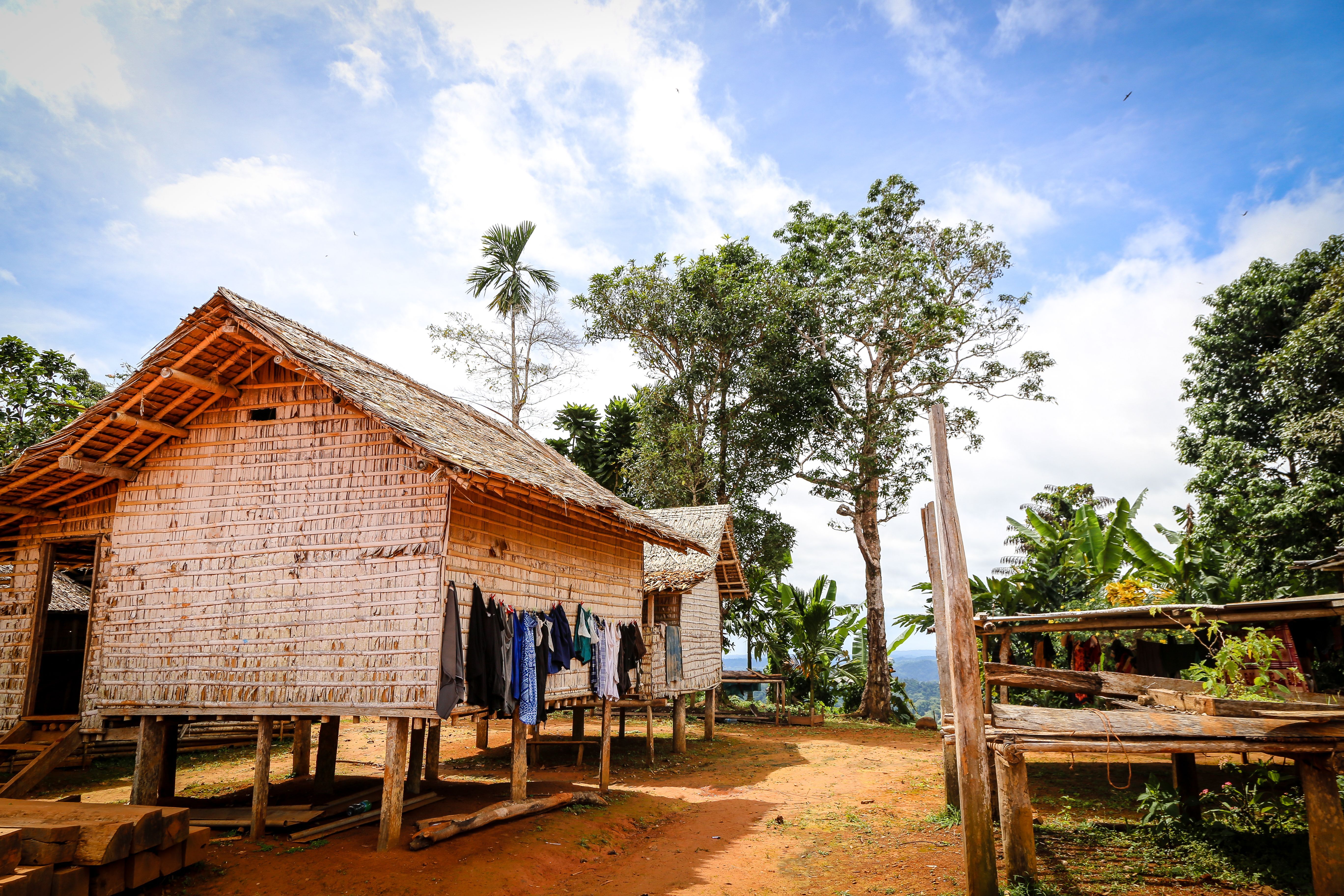
HOPE Trust and Ola Fou work with communities who have high rates of poverty and are near mining and logging camps in the Solomon Islands. Photo/Supplied
“Instead of going to school, their relatives put them on the street to sell food at night … some end up as house maids or forced to beg. People may hesitate to speak against chiefs or influential family members … community members might not believe the victim or keep issues internal.”
Despite the scale of the problem, few cases reach court.
The 2025 Trafficking in Persons report lists Fiji, Solomon Islands and Vanuatu on its Tier 2 watchlist, meaning governments are not fully meeting minimum standards despite some efforts to address the issue.
Since 2021, HOPE Trust has identified 51 cases, with just 16 prosecuted.
The United Nations Office on Drugs and Crime estimates five to 15 victims are identified each year in the Solomon Islands, but says this likely reflects limited awareness and reporting rather than the true scale of the problem.
Officials say this does not reflect reality. In 2017, a Malaysian logger was charged in what was considered the country’s first human trafficking case.
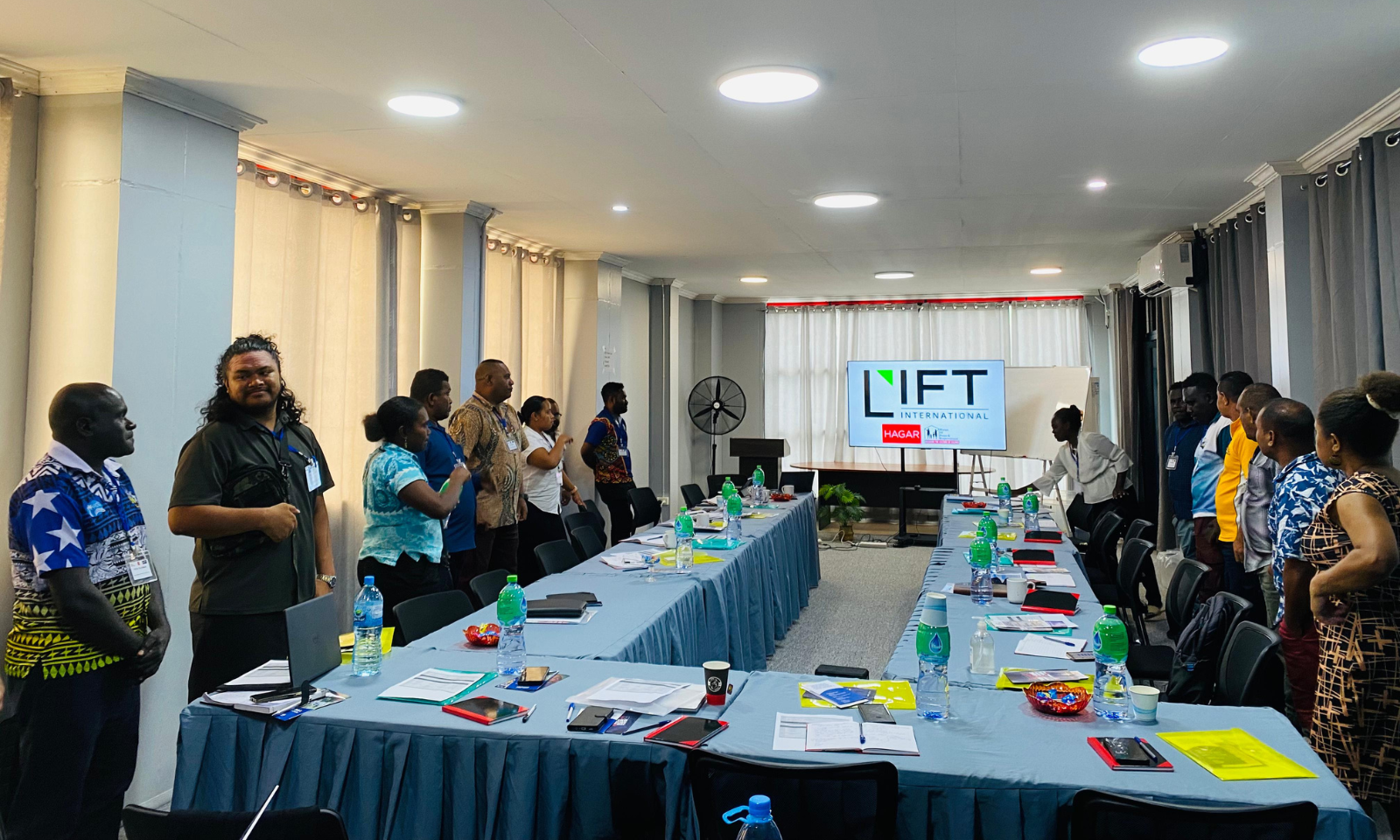
The training was delivered by LIFT International, in partnership with HOPE Trust and Tearfund New Zealand. Photo/Supplied
“Many cases show signs of human trafficking, but they also involve offences like rape, which carries a higher penalty,” Constable Vivian Marehasi, Operations Manager of the Transnational Crime Unit, tells PMN News. “As a result, prosecutors prioritise those charges over trafficking.”
She says the training is already shifting how police respond.
“When we take victims, the first thing we usually do is that we want to investigate, but these victims need special care. We have to see ourselves as protectors first and investigators second.”
For many, the issue is not just law enforcement but awareness.
“Many cases remain hidden simply because the indicators are not recognised,” Barbara Anne Stenson, Tearfund’s programme specialist in the modern slavery sector, says in a statement. “When officers understand the signs of trafficking and how to respond in a survivor-centred way, it strengthens the ability of communities and authorities to protect vulnerable people.”
Solomon Islands Minister for Women, Youth, Children and Family Affairs Cathy Nori says access to justice remains a challenge due to geographic isolation, limited legal services, and the need to balance formal and customary systems.
Speaking at the Commission on the Status of Women 70th Session in New York earlier this month, she said strengthening survivor-centred responses and investing in frontline services are key to supporting victims and improving outcomes.
Kiriau says responses must reflect Pacific realities.
“Human trafficking in the Pacific often intersects with traditional practices, extended family obligations, customary land systems and local labour migration patterns. Pacific organisations understand the context in a way overseas experts cannot.”
For those on the ground, spotting the signs earlier could mean the difference between abuse continuing unnoticed and someone finally getting help.