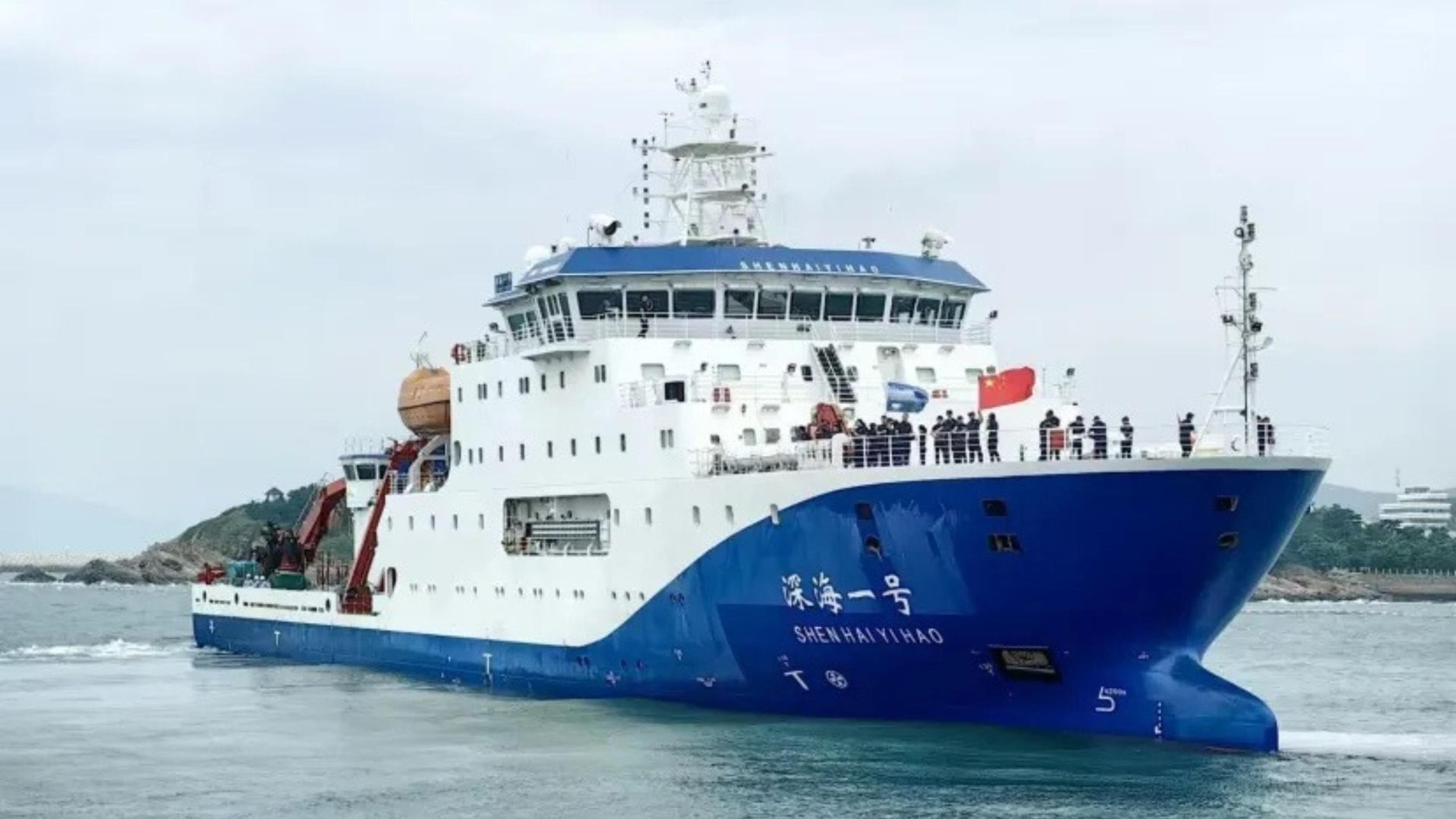
The research vessel RV Shen Hai Yi Hao carries the Jiaolong crewed submersible on a joint Cook Islands-China deep-sea research expedition in Cook Islands waters.
Photo/Google/SBMA
Pacific Region
Cook Islands scientists take their deep-ocean research to new depths
A joint expedition with China will send researchers into national waters aboard the Jiaolong sub to study the seabed, marine life and geology.
Losirene Lacanivalu, Cook Islands News
Published
23 November 2026, 1:23pm
Share
Copy Link
Top stories

Top stories
Cook Islands and Chinese scientists are partnering on a research cruise expedition aboard the Jiaolong submersible to conduct deep-sea geological and marine research in national waters.
The Plateau to Plain Research Cruise (P2PC) 2026 expedition organised by the Cook Islands Seabed Minerals Authority (SBMA) in partnership with the Second Institute of Oceanography (SIO), China, offers Cook Islands scientists a rare chance to witness and study the deep ocean first-hand, according to a SBMA statement.
The expedition is the first opportunity to descend into the deep aboard Jiaolong, a crewed submersible carried by the research vessel RV Shen Hai Yi Hao.
SBMA said the collaboration with the SIO, China builds on Cook Islands' existing scientific cooperation and the successful Suva-Rarotonga Transit Research Cruise undertaken in 2025.
The expedition would be managed by SIO, with Professor Fang Yinxia, director general of SIO, serving as cruise leader.
"Through this collaboration, Cook Islands scientists will have opportunities to exchange knowledge, gain practical research experience and work alongside their international counterparts," SBMA stated.
The RV Shen Hai Yi Hao was to depart Suva, Fiji, on 17 November, with scientific operations planned within Cook Islands waters before its anticipated return to Rarotonga around 30 November, "subject to weather and operational conditions".
The expedition will focus on:
The Manihiki Plateau - An enormous underwater geological feature where scientists will study ancient chalk deposits and deep-sea habitats.
The Eastern Fault Zone - An area of dramatic underwater escarpments where scientists hope to better understand the geology and marine environments along these steep slopes.
The Penrhyn Basin - A deep-ocean environment where scientists will investigate the seabed, ocean conditions and marine life living at extraordinary depths.
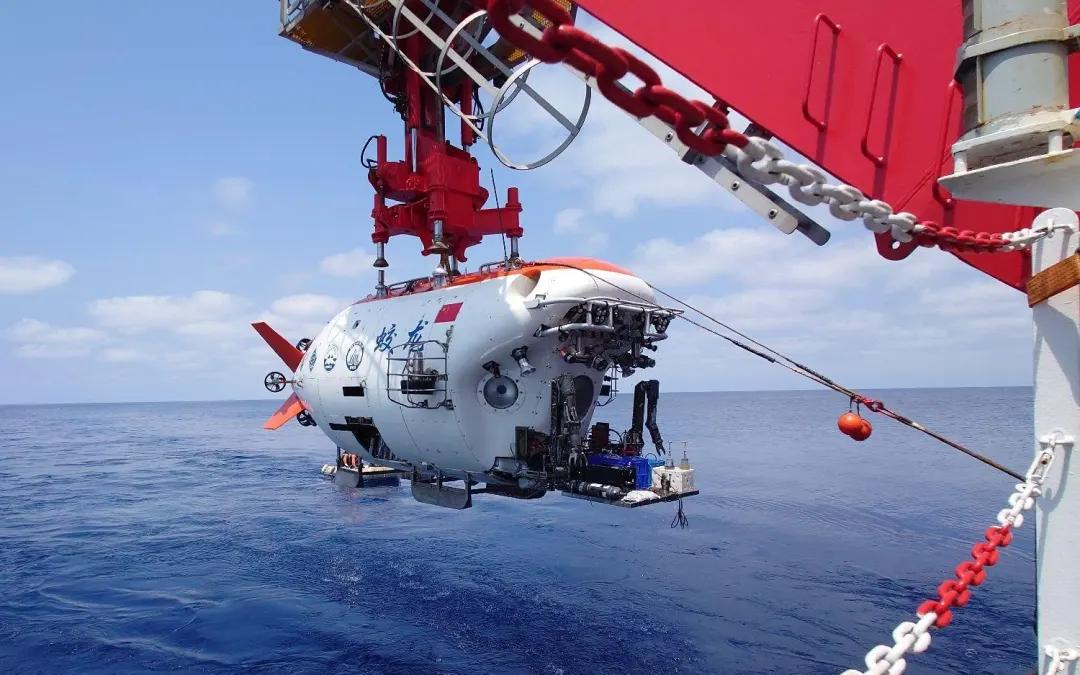
The Jiaolong crewed submersible will give Cook Islands scientists the chance to descend into the deep ocean and study its geology, habitats and marine life firsthand. Photo/Google
According to SBMA, one of the most exciting features of P2PC 2026 is Jialong - a crewed deep-sea submersible carried aboard the research vessel RV Shen Hai Yi Hao.
"Unlike remotely operated vehicles (ROV) controlled from the surface, Jiaolong allows scientists to descend into the deep ocean themselves, observing and studying their surroundings directly.
"Weather and operational conditions permitting, the research team hopes to undertake several dives at selected locations, providing an opportunity for Cook Islanders to experience the deep ocean firsthand."
SBMA said that by studying these different environments, researchers hope to better understand how marine habitats, geological features and ocean conditions vary across the country's deep ocean.
The expedition will also use scientific equipment to:
Map the seafloor using acoustic technology.
Measure ocean temperature, depth and other water conditions.
Collect selected biological and geological samples for scientific analysis.
Capture photographs and video of underwater environments.
Investigate different habitats and the marine life found within them.
"Every observation and sample can contribute to a better understanding of our deep-ocean environments."
SBMA has reiterated that the expedition is about scientific research, exploration and learning and "not commercial seabed minerals harvesting".
SBMA also collaborates with the United States on deep-ocean scientific research, environmental data and critical minerals cooperation.
The Authority partnered with the National Oceanic and Atmospheric Administration and the US Department of State during the 26-day expedition aboard NOAA ship Okeanos Explorer (July-August 2026), mapping over 52,000 square kilometres of seafloor and collecting nearly 500 samples with Cook Islands scientists involved in ROV operations and science planning.
SBMA has also worked with US partners on expeditions like E/V Nautilus Live.
This article was first published in the Cook Islands News.