
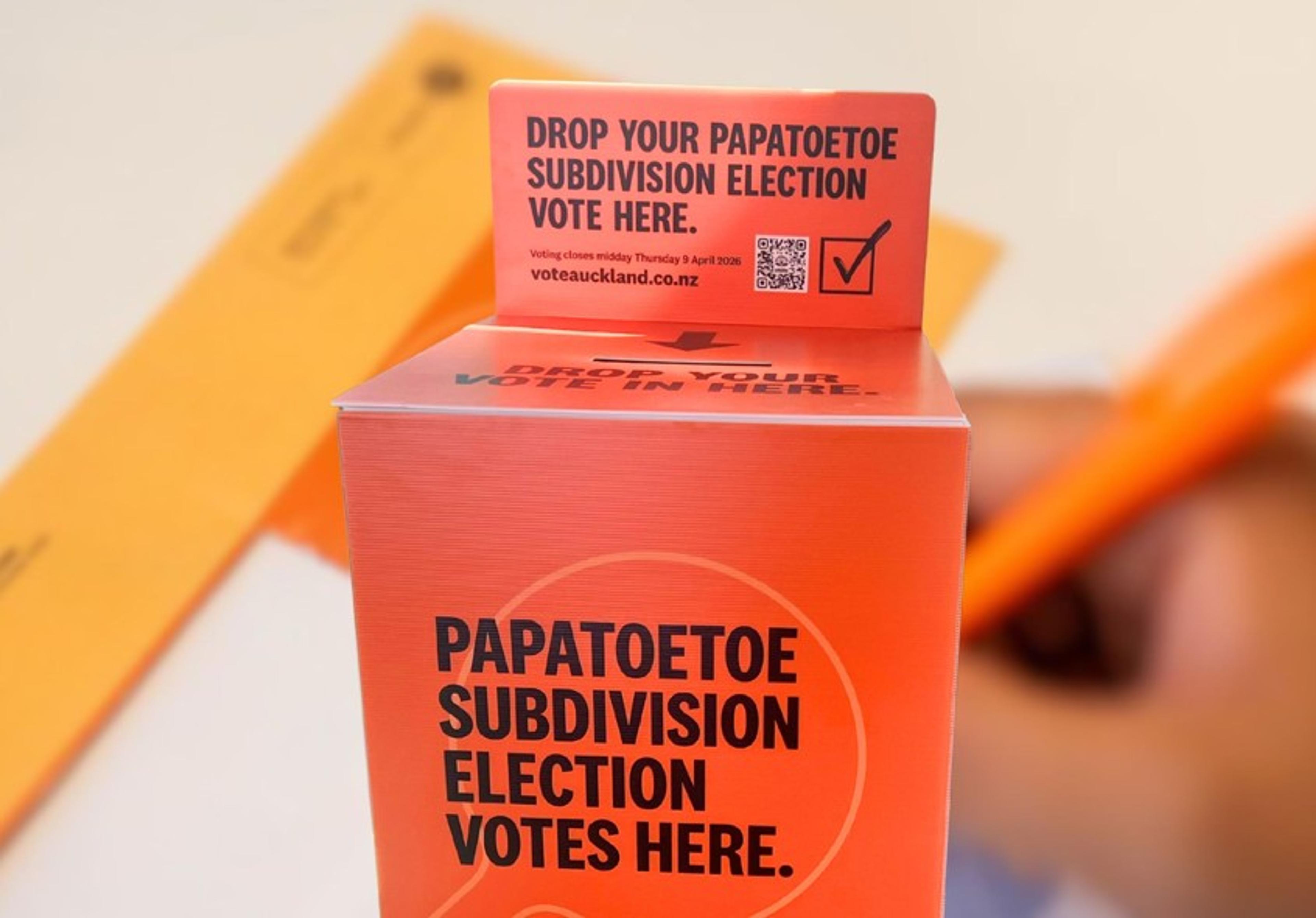
Voters are encouraged to return their votes by casting a special vote or returning their papers to ballot boxes.
Photo/PMN News Composite.
Local Democracy Reporting
Papatoetoe turnout rises, but there's still 28,000 missing voices
Participation in the Papatoetoe re-run election is climbing, but most voters are still sitting it out, raising questions about who is shaping decisions.

Taelegalolo'u Mary Afemata
Published
08 April 2026, 10:30am
Share
Copy Link
Top stories

‘When you are ready’: Safe pathway for survivors of abuse in care to share story
Aui'a Vaimaila Leatinu'uFri, 29 May
King’s Birthday 2026: What’s open, who gets honoured and why New Zealand has a day off
Christine RovoiSun, 31 May
Top stories
‘When you are ready’: Safe pathway for survivors of abuse in care to share story
Aui'a Vaimaila Leatinu'uFri, 29 May
King’s Birthday 2026: What’s open, who gets honoured and why New Zealand has a day off
Christine RovoiSun, 31 May
Turnout in the Papatoetoe local board re-run election is rising, but four out of five eligible voters have still not taken part.
The low turnout has raised questions about representation ahead of voting closing on Thursday at midday.
As of Wednesday 8 April, 7125 votes have been returned from 35,253 eligible voters, a turnout of 20.2 per cent, up from 16.81 per cent on April 1.
More than 28,000 people have not voted in an election that will decide four local board seats and influence key community services.
Papatoetoe resident Lawrence says he did not vote because he was unaware the election was happening.
While he was happy with the recent park upgrades his children use, he says he was not engaged with the election.
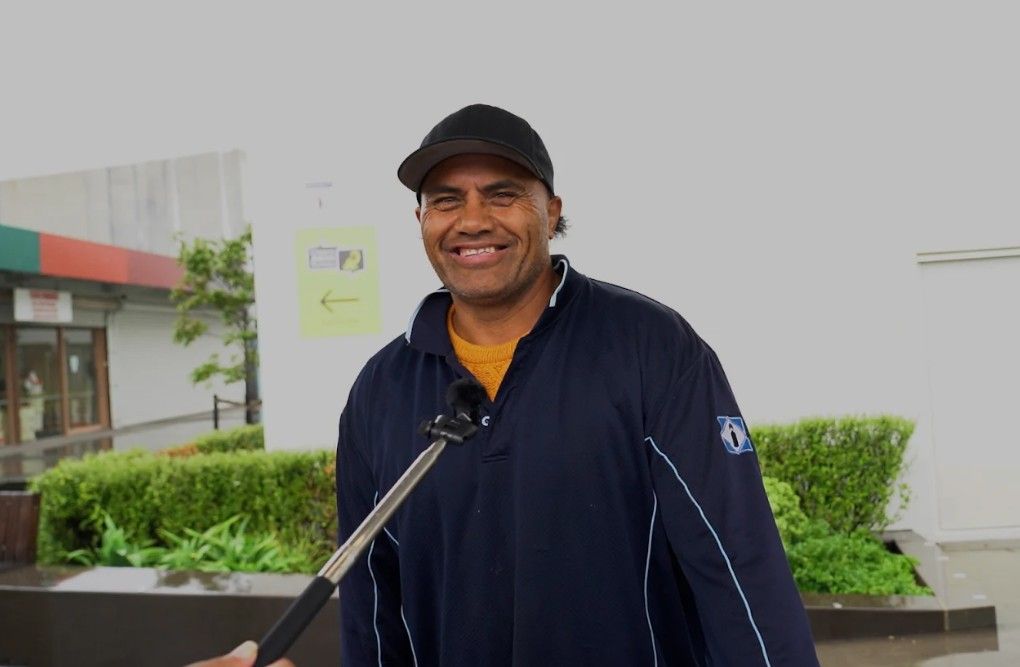
Papatoetoe resident Lawrence says he did not vote because he did not know the election was happening. Photo/PMN News/Candice Ama
The re-run follows a rare court decision to void the 2025 election after findings of electoral irregularities, forcing voters back to the polls less than a year later.
Earlier reporting showed turnout tracking below last year’s levels at the same stage.
Dr Julia Talbot-Jones, a senior lecturer at Victoria University of Wellington’s School of Government, says low turnout is not new, but has serious consequences.

Dr Julia Talbot-Jones, senior lecturer at Victoria University of Wellington’s School of Government. Photo/Victoria University of Wellington
'“New Zealand for decades now has struggled with low voter turnout at local elections and it's been a matter of concern because the implications are significant for community engagement, representativeness and basic functioning of democracy,” she says.
She says the issue is driven by a mix of factors, including lack of awareness, limited understanding of local government, and disconnection from candidates.
“Sometimes people don’t even know, so it’s an information problem. There’s not enough advertising. People don’t understand what local governments do, so they don’t think their vote is important,” she says.
“Another issue is people not feeling connected with the candidates, and general disengagement with politics.”
But the issue is not just how many people are voting, but who is not, she says.
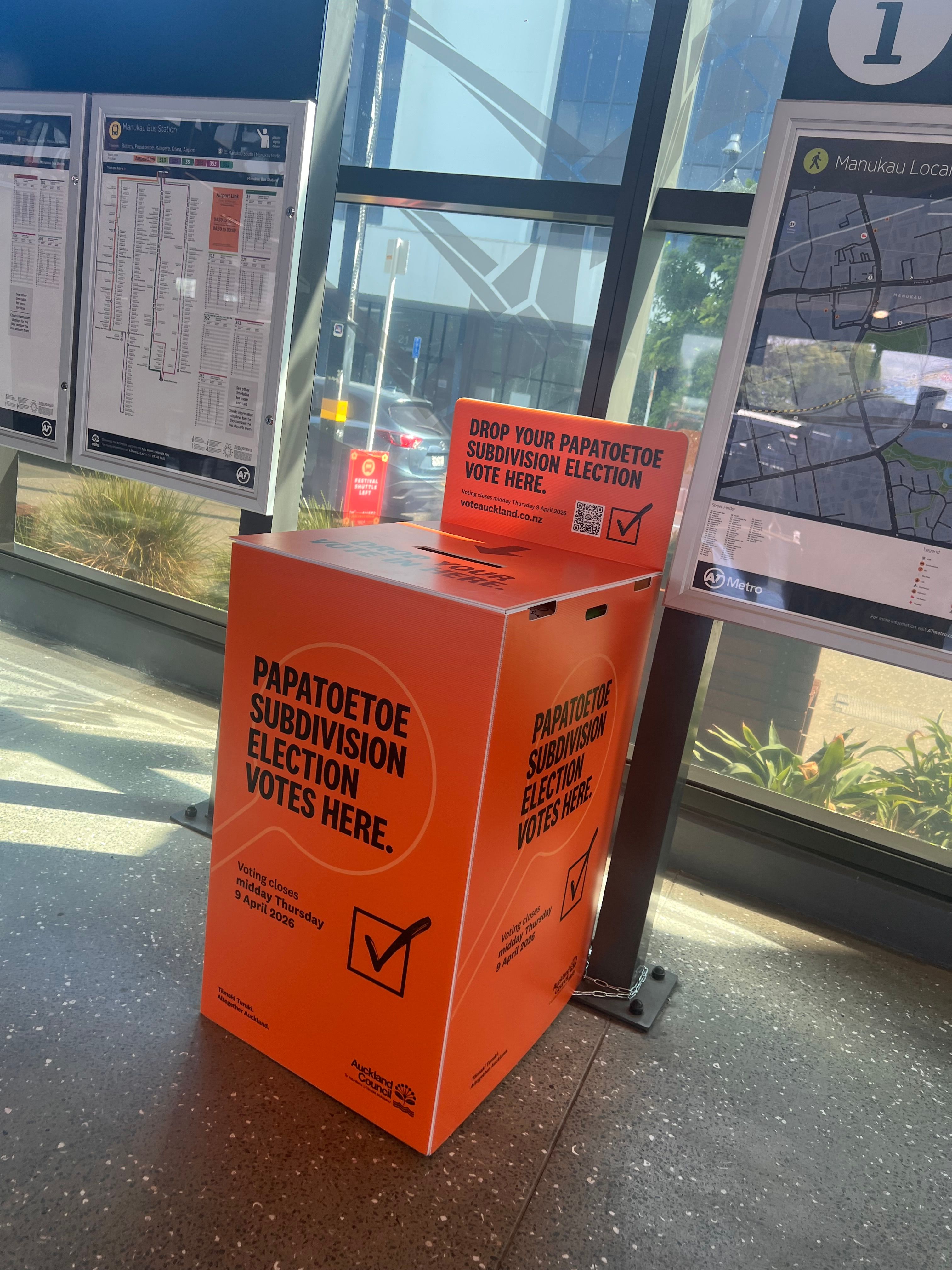
Ballot box available for voters to return completed papers in the Papatoetoe subdivision re-run election. Photo/PMN News/Taelegalolo'u Mary Afemata
“What we see in the data is that voters who do turn out are often demographically unrepresentative of the electorate,” she says.
"Voters tend to be more affluent, maybe have higher education levels than non-voters, are more likely to be working full-time, are consistently older, and so on."
In Papatoetoe, where Pacific peoples make up more than a third of the population, Māori make up a significant share, and nearly half of residents are under 30, low turnout raises questions about whether the voting population reflects the wider community.
Auckland Council says turnout is in line with expectations for elections outside the main three-year cycle and could still increase before voting closes.
Head of Governance Programmes and Policies Oliver Roberts says recent by-elections have averaged about 15 per cent turnout, and current participation is tracking above that.
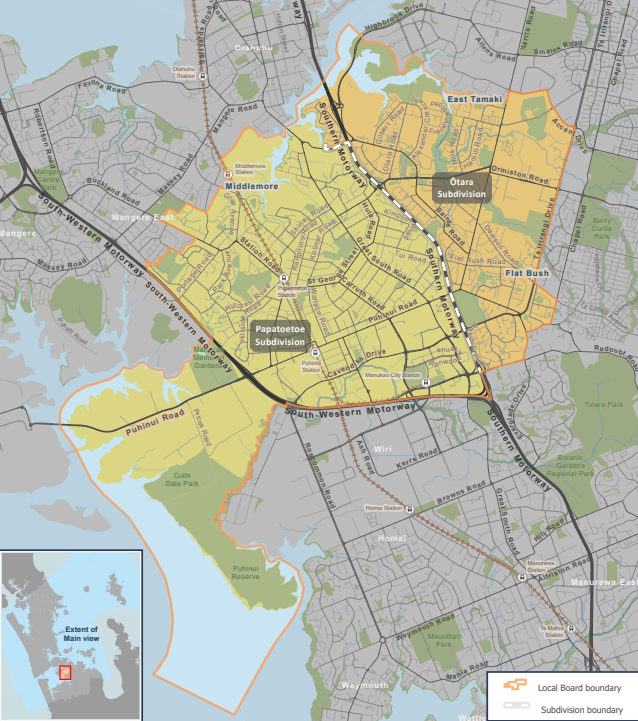
Papatoetoe subdivision map, where four local board seats are being contested in the re-run election. Photo/File.
But Talbot-Jones says the pattern points to a deeper issue with how the system engages communities.
“If we want people to be more engaged and involved in local democratic processes, we need to make sure that the system is speaking to them and supporting them in a way to do that.”
“Younger voters in particular get their information and their media from non-traditional sources,” she says.
“We need to make sure that we're using things like TikTok and social media, that we're engaging with those demographics where they're getting their information, rather than expecting them to come to the sources that we've traditionally used.”
“With Māori and Pacific communities, starting with a bottom-up approach, finding out what works for those communities, where they're getting their information from, and making sure that they understand what a local election means for them,” she says.
Local board decisions affect services such as libraries, pools, public transport and parks, shaping daily life in the community.
"This is a bit of an idealistic view, but the risk when we see low levels of engagement around local issues is that the well-being of some members of that community might be lessened in some way. And that's a worse-off situation for everyone.”
Voting closes at midday Thursday. Voting papers should not be returned by post, as they are unlikely to arrive in time. Ballots can be returned to boxes in public places, including Manukau and Papatoetoe libraries, or cast as a special vote.
LDR is local body journalism co-funded by RNZ and NZ On Air.