Online vault aims to return Pacific research to the community
Aui'a Vaimaila Leatinu'uWed, 21 Oct
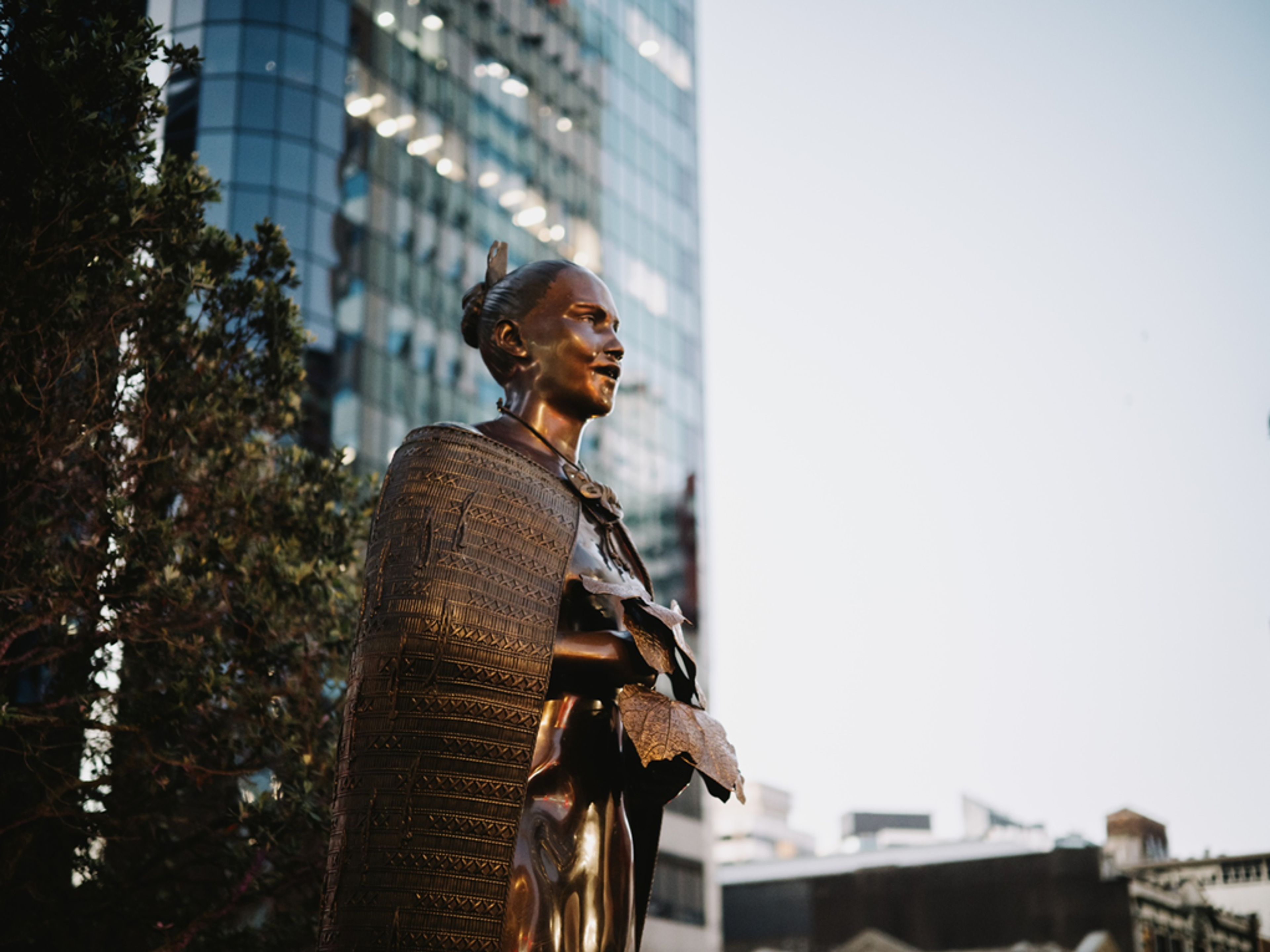
Wāhine, by artists Katz Maihi and Beronia Scott, welcomes visitors outside the future Te Waihorotiu City Rail Link station in central Auckland.
Photo/David St George
Auckland Council says the investment will help connect commuters with the city's Māori identity while creating a lasting civic legacy.

Two large-scale Māori sculptures have been unveiled outside what is expected to become New Zealand's busiest railway station, at a $1.38 million cost to Auckland ratepayers.
Auckland Council leaders have defended the million-dollar investment in two Māori artworks outside the future Te Waihorotiu City Rail Link (CRL) station, saying public art is an essential part of building a vibrant, connected city.
The bronze sculptures, Wāhine and Horotiu, were blessed by Ngāti Whātua Ōrākei at a dawn ceremony before being unveiled on Victoria Street West on Wednesday.
Council contributed $744,000 towards Wāhine and $632,000 towards Horotiu.
About 65.5 per cent of the cost of Wāhine and 72.2 per cent of Horotiu was funded through the city centre targeted rate, paid by businesses and property owners in central Auckland.
The remaining funding came from Auckland Council's public art budget and general rates.
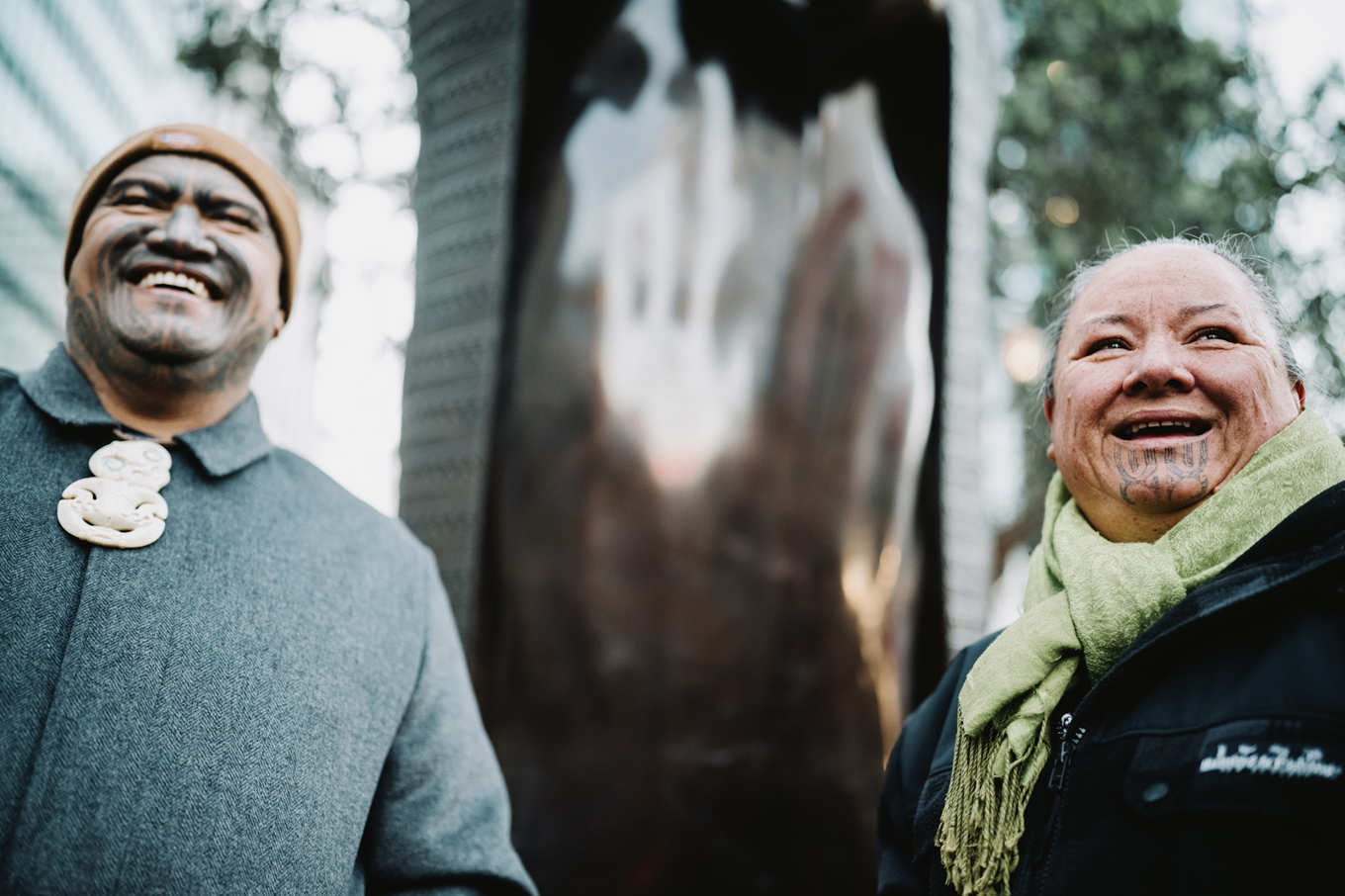
Artists Katz Maihi (left) and Beronia Scott beside their bronze sculpture Wāhine, unveiled outside the future Te Waihorotiu City Rail Link station. Photo/David St George.
The artworks form part of the public spaces surrounding the future Te Waihorotiu Station, expected to become New Zealand's busiest railway station when the City Rail Link opens.
Developed in partnership with mana whenua, the artworks are intended to embed Māori stories and identity within one of Auckland's busiest public places.
Deputy Mayor Desley Simpson said it was important people understood how the project had been funded.
The majority of the cost of the two public art pieces came from the city centre targeted rate, meaning they "weren't funded entirely" by general rates, Simpson said.
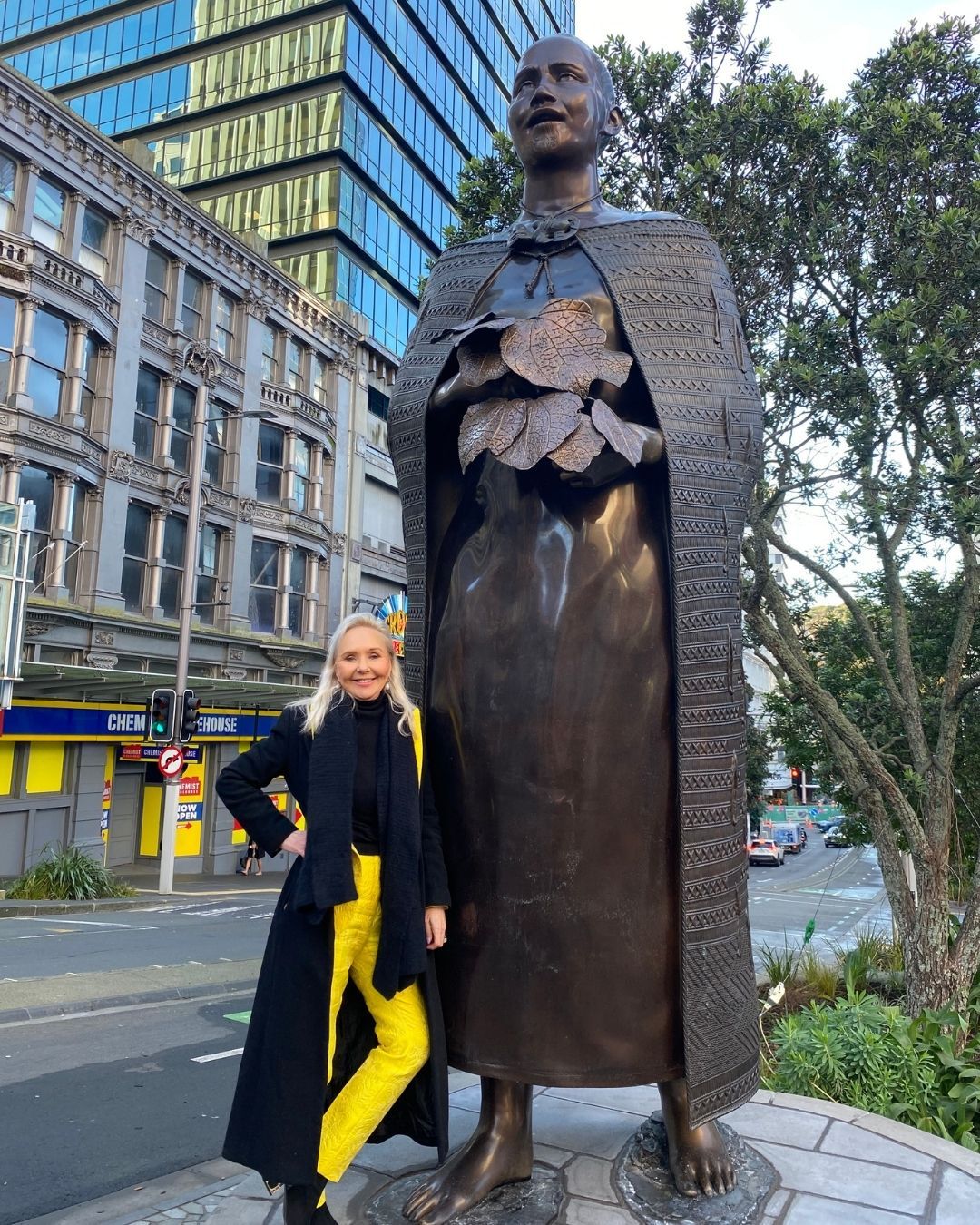
Deputy Mayor Desley Simpson beside Wāhine, a bronze sculpture welcoming visitors to the future Te Waihorotiu City Rail Link station. Photo/PMN News/Taelegalolo'u Mary Afemata.
"Why should we invest in public art? Because it's so important to cities. It's so important to who we are. It draws people into cities. It tells a story better than anything else can," Desley said.
"When people exit what will be our busiest train station, they will be greeted not just inside with wonderful public art, but public art outside of the station that represents who we are, our history, our culture and our storytelling.
"Great public art does more than beautify a space. It tells stories, creates a sense of belonging, and gives people a meaningful connection."
Wāhine, created by artists Katz Maihi and Beronia Scott, depicts a Māori woman performing a karanga, welcoming visitors as they emerge from Te Waihorotiu Station.
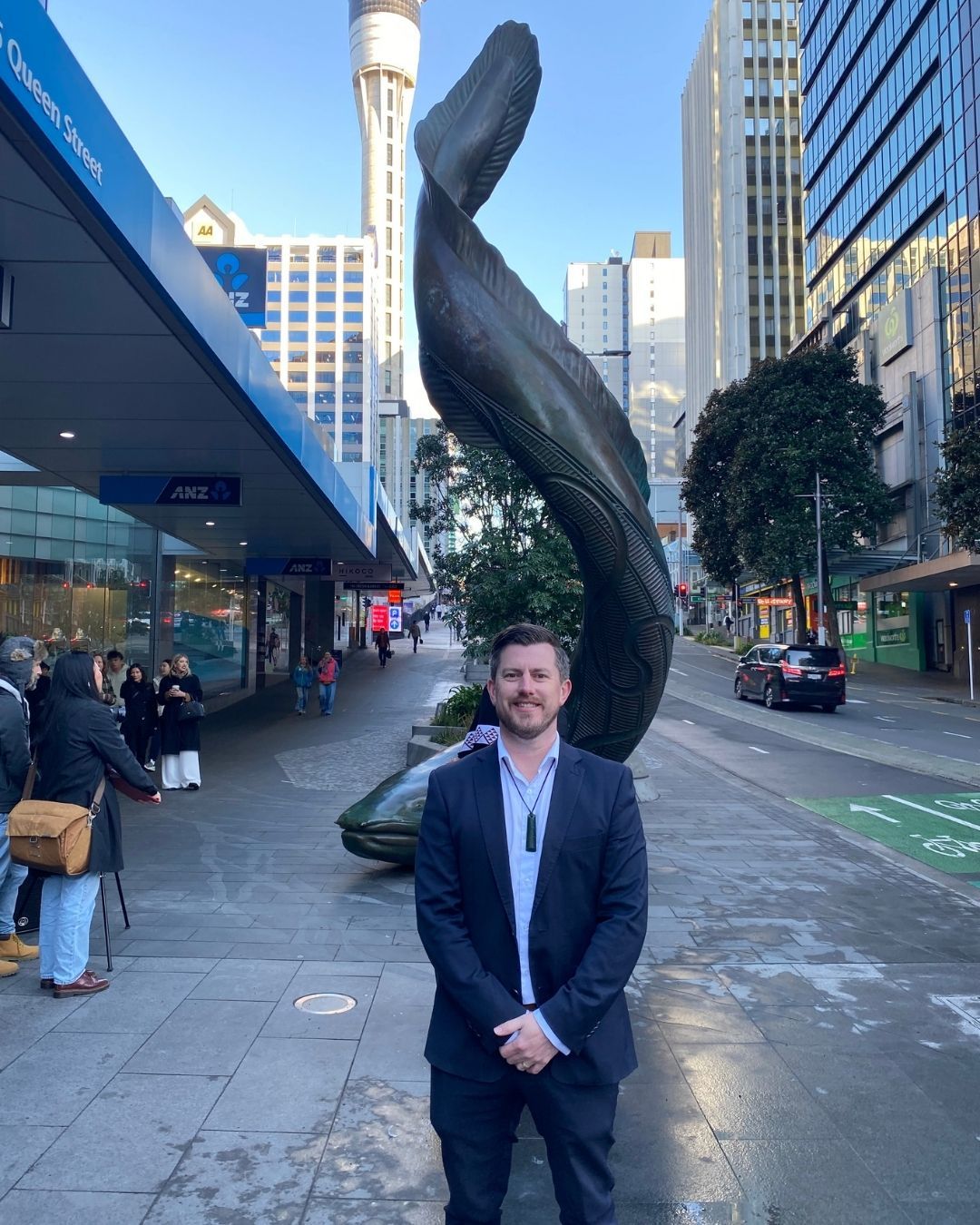
Auckland Councillor Richard Hills with Horotiu, a seven-metre bronze sculpture representing the legendary tuna kūwharuwharu (longfin eel), outside the future Te Waihorotiu City Rail Link station. Photo/PMN News/Taelegalolo'u Mary Afemata.
Further along Victoria Street West stands Horotiu, a seven-metre bronze sculpture by Chris Bailey and Sally Smith depicting the legendary tuna kūwharuwharu (longfin eel), the kaitiaki of the ancestral Waihorotiu Stream.
The stream, which flowed through central Auckland before being channelled into underground pipes that now carry its waters to the Waitematā Harbour, remains an important ancestral waterway for mana whenua and gives Te Waihorotiu Station its name.
Richard Hills, Auckland Councillor and chair of the Policy and Planning Committee, said the artworks reflected Auckland's unique identity.
"Our city is a Māori city, the only international city in the world that is uniquely Māori, and to have these amazing artworks sitting right in the middle of the city centre is just great," Hills said.
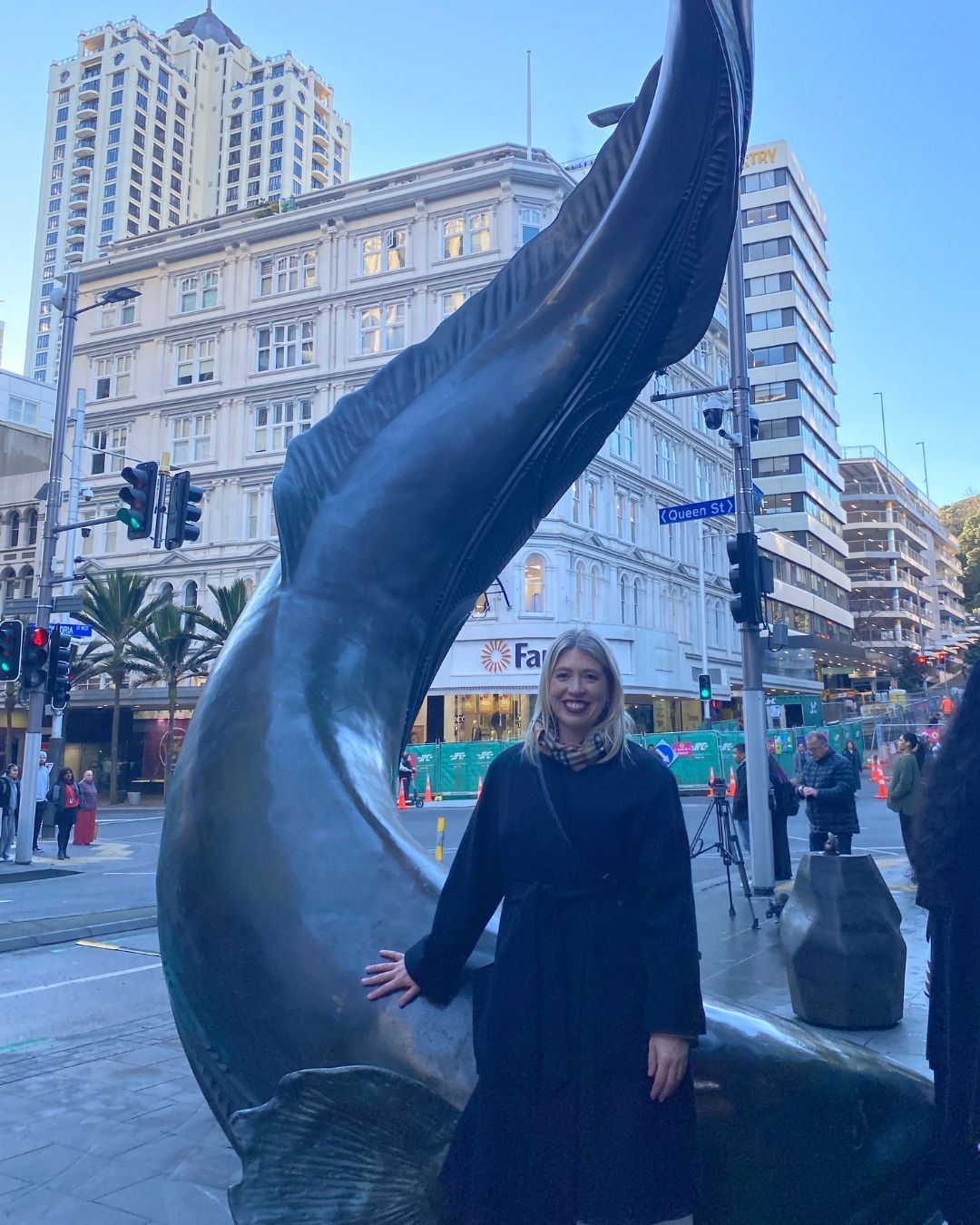
Auckland Council Head of Arts and Culture Emily Trent with Horotiu, one of two new bronze artworks unveiled outside the future Te Waihorotiu City Rail Link station. Photo/PMN News/Taelegalolo'u Mary Afemata.
"This is a city that's not just about pipes and roads and infrastructure. It also is about celebrating who we are. It's also about ensuring arts and culture is integral through our place."
Emily Trent, council's head of arts and culture, said the artworks were intended to strengthen people's connection with Tāmaki Makaurau.
"I'm hoping that people feel a sense of belonging and connection to place.
"Both of these works tell a story that can only be told in Tāmaki Makaurau and it's through this connection to place that people can feel more connected to one another and this place where they live, work and play."
Trent said the city's Māori identity was what made it unique, while its Pacific identity and overall diversity was a "really important part of what we want to elevate and showcase".
"It's through public art where we can commission works so that people can identify with themselves and their built environment and feel a sense of vibrancy in place," she said.
Artist Chris Bailey said public art created a lasting connection between people, history and place.
"The great thing about art and public art is that they tell stories for a long, long time. They lock in history so people can use them as visual prompts that let historical narrative flow."
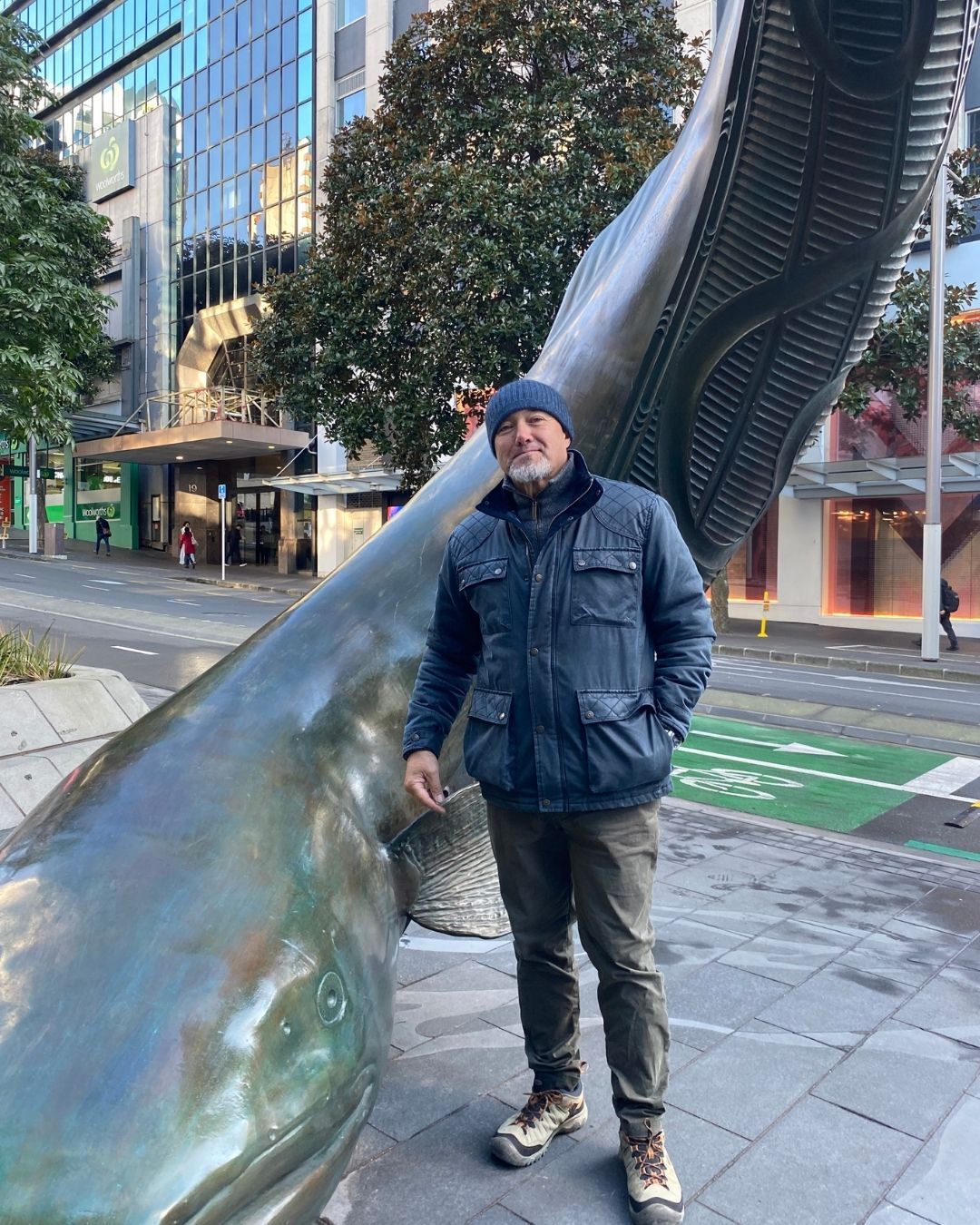
Artist Chris Bailey (Ngāti Hako, Ngāti Pāoa, Ngāti Porou, Te Aupōuri) with Horotiu, the seven-metre bronze sculpture depicting the legendary tuna kūwharuwharu (longfin eel). Photo/PMN News/Taelegalolo'u Mary Afemata
Bailey said the sculptures would leave a lasting legacy for future generations while bringing mana whenua narratives into everyday public life.
The artworks form part of Te Hā Noa, Auckland Council's $133 million midtown regeneration project, which is transforming the public spaces surrounding the City Rail Link ahead of the opening of Te Waihorotiu Station.
LDR is local body journalism co-funded by RNZ and NZ On Air.