
Battle lines drawn: NZ's Pacific candidates clash as voters demand swift action on cost of living
Thomas Tarurongo WynneWed, 21 Oct
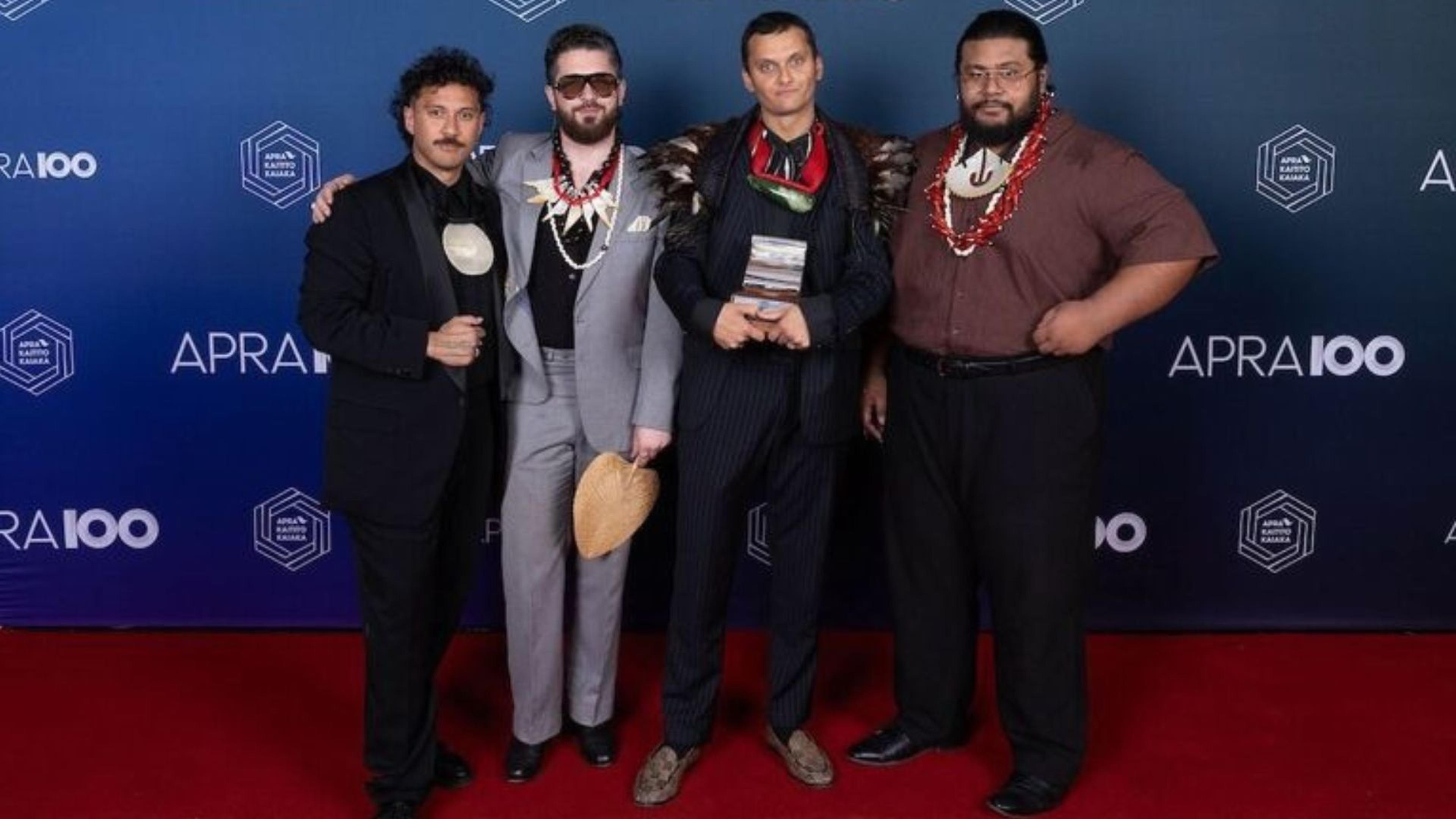
LEAO is the first group to win the APRA Silver Scroll Award with a song written entirely in Gagana Sāmoa.
Photo/apraamcos.co.nz
Frontman David Feauai-Afaese dedicates the groundbreaking APRA award to 3000 years of Pacific storytelling and ancestral music.


Aotearoa band LEAO has made history by winning the prestigious APRA Silver Scroll Award with LALELEI, becoming the first song written entirely in Gagana Sāmoa to claim the nation's top songwriting prize.
The groundbreaking win, announced during APRA’s 100th anniversary celebrations, marks a major milestone for Pacific music, proving that pure indigenous language tracks can conquer the highest levels of Aotearoa’s music industry.
LEAO joins an elite group of Pacific music royalty who have lifted the award, following in the footsteps of previous winners including King Kapisi, Scribe, and Joel Little.
Legendary Kiwi songwriter Neil Finn, who won the award himself 25 years ago, presented the trophy to LEAO, praising the peer-voted nature of Aotearoa’s top songwriting honour.
“It really means something this award because it is voted by you. And I know it is a big moment for anybody. So, for the inspiration and excellent writing everybody is a winner tonight,” Finn said.
Accepting the award alongside bandmates Navakatoa Tekela-Pule, Levi Gemmell, and Larsen Taylor, vocalist and guitarist David Feauai-Afaese dedicated the moment to generations of island voyagers and storytellers.
“Pacific people were there at the start of this industry. Pacific people will be there at the end of it. From 3000 years of songs, our people will keep singing ourselves into existence for another 3000 more,” Feauai-Afaese told the crowd.
LALELEI, which means beautiful, was released in May as a single on their album The Samoa Tapes. Blending Sāmoan garage rock with modern sounds, the song acts as an emotional love letter to 'aiga ma atunu’u' (family and homeland), tapping into the deep nostalgia and yearning felt by Sāmoans living away from their island roots.
Feauai-Afaese says receiving the award alongside his closest friends was an overwhelming moment. “It's extremely humbling for us to receive this award. It's pretty inexplicable. Even more inexplicable being on this stage with three of the people I love most in this life,” he says.
For LEAO, the track is deeply rooted in the concept of fa’asamoa (the Sāmoan way), serving as both a tribute to early Pacific pop pioneers and a bridge for diaspora youth exploring their cultural identity.
“The intent behind LALELEI initially was to write something closer to older classic Sāmoan pop songs,” Feauai-Afaese says. “LALELEI is a tribute to Sāmoa and to all the Sāmoan bands that contributed to what we know Sāmoan pop music today.”
Speaking about the wave of support following the win, Feauai-Afaese told RNZ that LALELEI has become a song of affirmation and reconciliation for listeners across the region.
“The fact that our peers really connected to it and felt the same emotion we did, it’s pretty magical,” he says.
His powerful acceptance speech paid homage to the musical traditions and cultural roots that continue to guide the band’s creative voyage.
“To pay homage, to invoke a past we yearn for, perhaps too we can rejoice in its beauty, rejoice in just being ourselves. The mast of our canoes we voyage in search of a dream only exist because of the people we love and are surrounded by.”

LEAO, winners of the 2026 APRA Silver Scroll Award. Photo/Supplied
The Silver Scroll victory caps off a massive rise for LEAO, who previously opened for Saharan rock band Tinariwen and had their track Musika Malie featured in Taika Waititi’s 2023 feature film Next Goal Wins.
APRA AMCOS New Zealand is a non-profit music rights management organization that represents songwriters, composers, and publishers in Aotearoa. It licenses public performances and broadcasts of music, collects royalties, and hosts the annual New Zealand APRA Silver Scroll Awards.
Brooke Fonoti, a journalism student at the University of Canterbury, is currently completing an internship at PMN News.