
Pacific women have waited long enough for equal pay in NZ, says former commissioner
Thomas Tarurongo WynneTue, 06 Oct
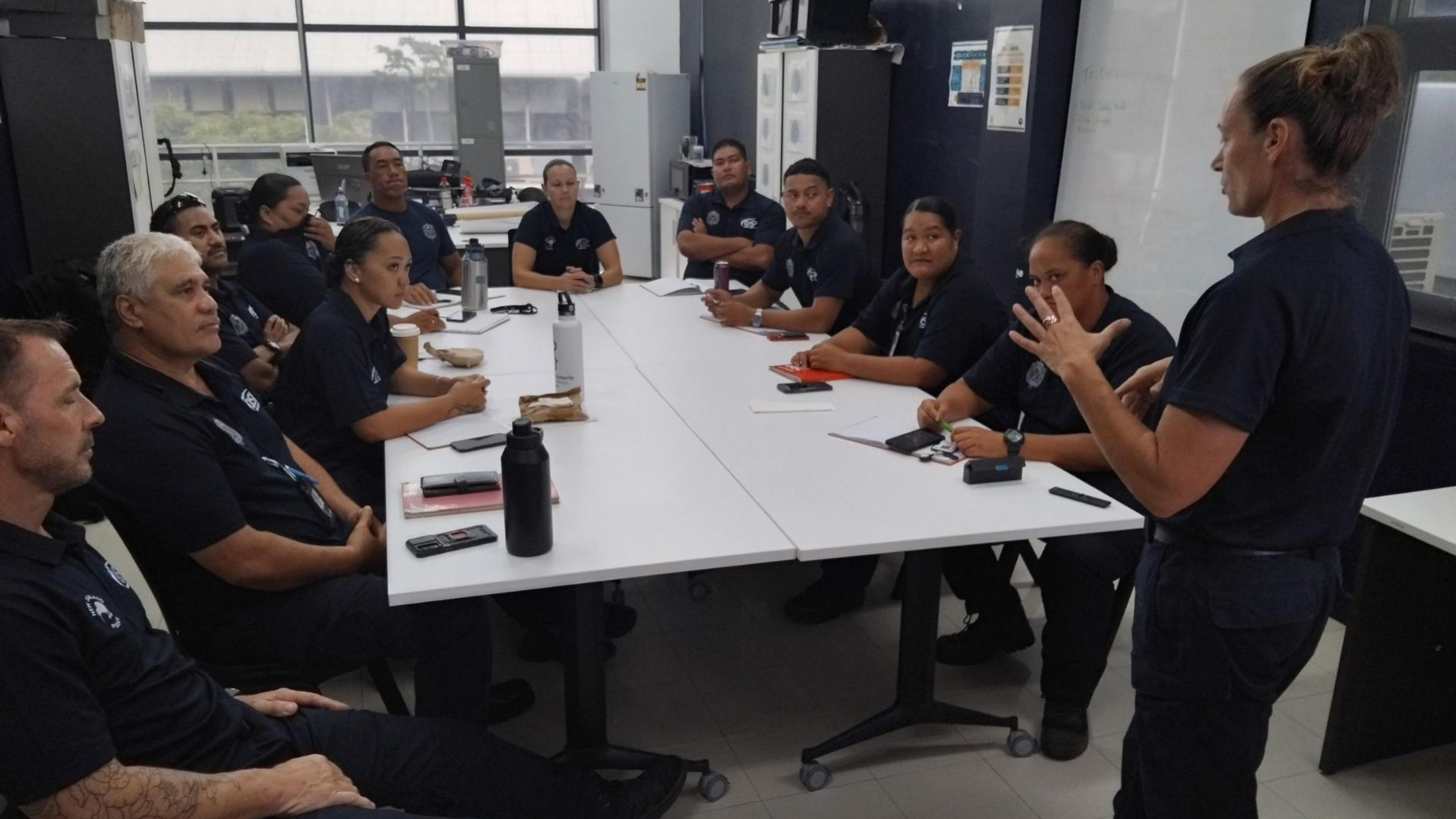
Cook Islands Police during a training session. Police say they are securing the 26.49kg cocaine haul found on a reef at Mitiaro while they seek legal advice on how to dispose of the drugs.
Photo/Cook Islands Police/file
Police are seeking legal advice on destroying nearly 27kg of cocaine found on a remote reef as the case adds to fresh concerns over how drugs move through the region

Cook Islands Police are seeking legal advice on how to destroy nearly 27 kilograms of cocaine found on a remote reef as questions grow over how major drug shipments are moving through the Pacific.
The 26.49kg haul was discovered by a fisherman on Mitiaro in July. The 19 cocaine bricks were tied with rope, caught on coral, and fitted with a light that acted as a beacon.
Police media adviser Trevor Pitt says the drugs remain secure while authorities work out how they can be safely disposed of.
“We are seeking legal advice to clarify the options available to us for disposal. That option has not yet been determined,” Pitt said.
The cocaine, labelled “888”, has an estimated street value of between NZ$9.2 million and NZ$12 million.
The beacon has raised questions about whether the package was deliberately left at sea to be collected later.
Watch an ABC Pacific report on the drug crisis in the region below.
Associate Professor Jose Sousa-Santos, head of the Pacific Regional Security Hub at the University of Canterbury, has previously said that the discovery could point to a “dump-and-collect” method.
But he says there is not enough evidence to say exactly how the drugs reached Mitiaro.
“There is no evidence yet that the 26 kilograms of cocaine discovered on Mitiaro reef was transported by submersibles,” Sousa-Santos told the Cook Islands News.
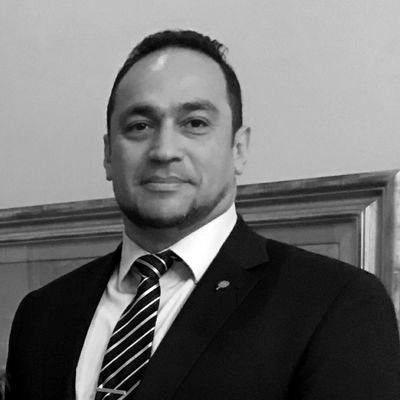
Associate Professor Jose Sousa-Santos says the beacon attached to the cocaine found on Mitiaro could point to a “dump-and-collect” method used to move drugs through the Pacific. Photo/Supplied
The Mitiaro discovery follows a separate South Pacific drug case involving the MV Raider. In January, the French Navy intercepted the vessel and seized nearly 4.8 tonnes of cocaine, which was later destroyed.
The vessel then stopped at Avatiu Port in Rarotonga after reporting engine trouble and was cleared by local authorities.
After reaching Sydney in March, the Australian Federal Police found custom-built secret compartments and alleged they had been used to carry another tonne of cocaine.
Police said the drugs may have been dumped or transferred at sea before the vessel reached Sydney Harbour.
“It could have been transported by pleasure craft or other vessels such as the MV Raider incident in early 2026," Sousa-Santos said.
"Drug cartels have many tactics to traffic drugs through the Pacific and narco-subs are one method in a suite of tactics.”
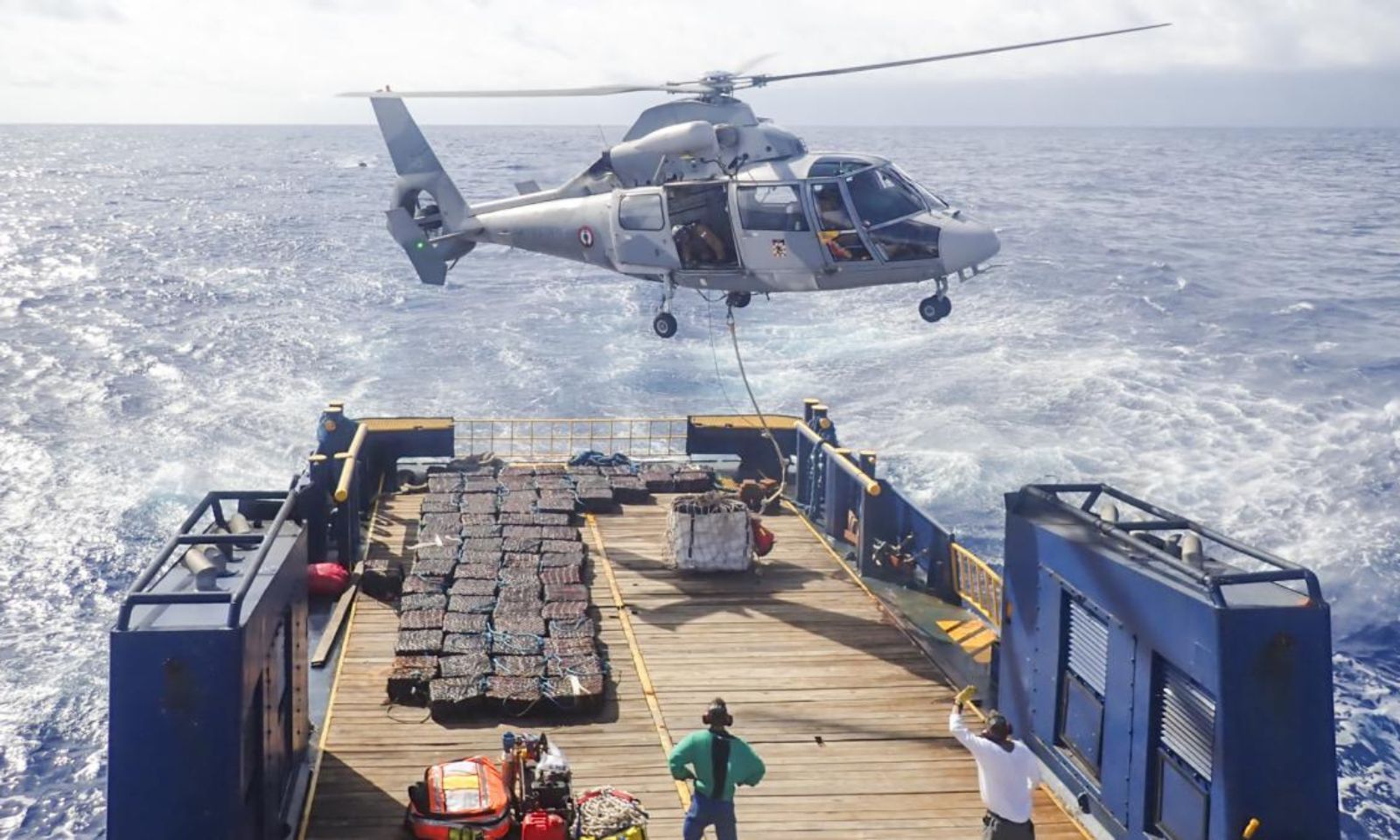
The French Navy intercepted the MV Raider in the South Pacific in January 2026, seizing nearly 4.8 tonnes of cocaine from the vessel. Photo/Facebook/Haut-commissaire de la République en Polynésie française
The MV Raider case comes as Pacific authorities continue to deal with the growing challenge of large drug seizures.
In Fiji, Police are investigating the disappearance of two batches of cocaine worth more than FJ$50m (NZ$39.7m) from a Suva court exhibit room. This includes alleged financial links involving a former senior judicial officer and her husband.
That investigation has included Police searching the couple’s home in Valelevu, Nasinu, where official sealing tapes believed to have been used on the drugs were reportedly found.
The husband was questioned by Police while the former judicial officer is believed to have left the country.
In the Cook Islands, the immediate challenge is what to do with the drugs now in Police custody.
Pitt says the department has never before had to deal with seized cocaine. “We've not had seized cocaine so this is new territory to deal with in terms of disposal.”
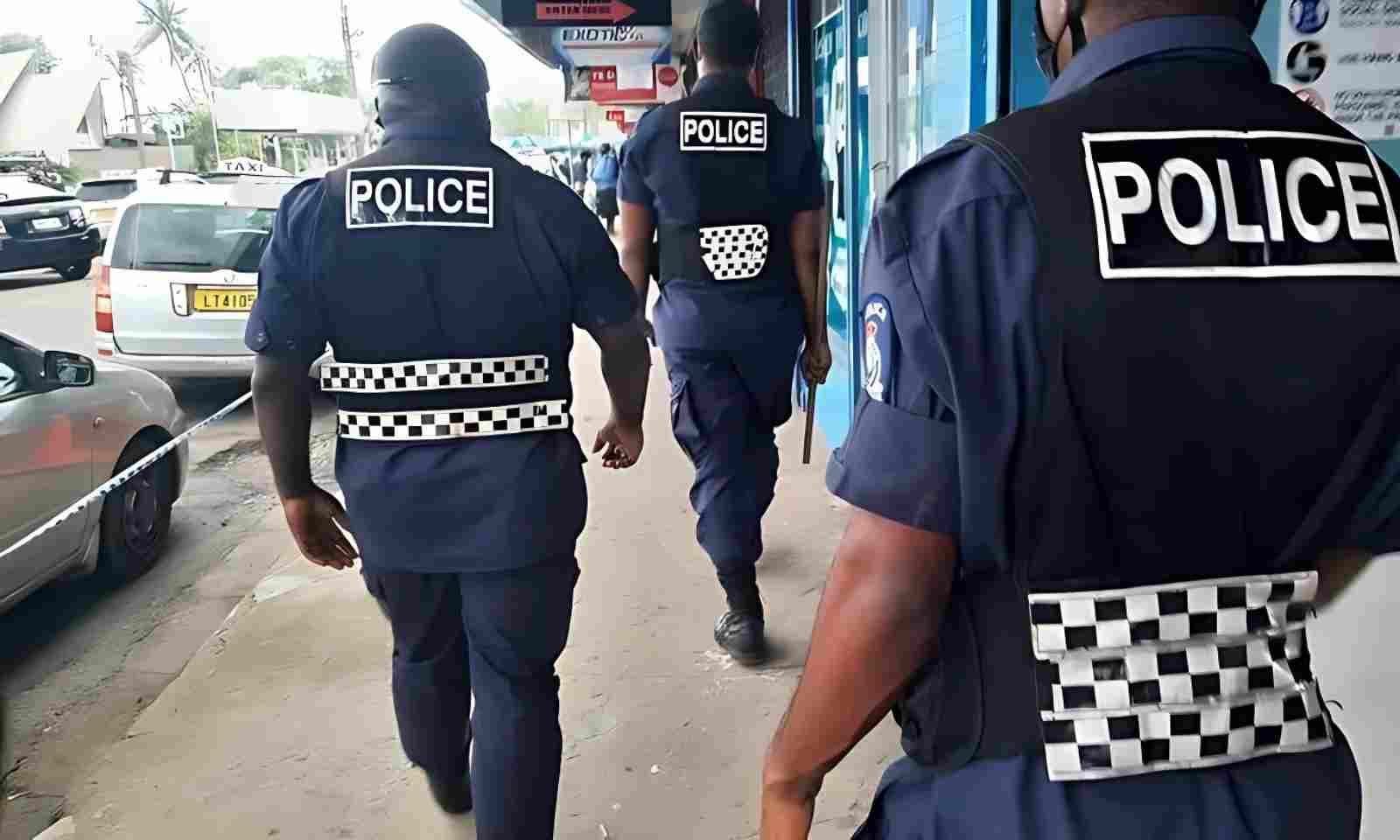
Fiji Police are investigating the disappearance of more than FJ$50 million worth of cocaine from a court exhibit room in Suva. Photo/Fiji Police/file
International practice includes destroying seized cocaine through high-temperature incineration after it has been forensically tested and documented.
The Cook Islands Police are also still holding narcotics believed to be heroin, which were found hidden inside a wooden pallet carrying imported goods in Rarotonga in 2024.
Pitt says say the cocaine will remain secured while they work through the legal process for its disposal.