

Photo/Composite/Simon Young/File
Health
Pacific health leaders say evidence is clear, action is lagging
A growing Pacific population, low workforce representation, and stark child health inequities are fuelling calls for urgent action.

Khalia Strong
Published
26 June 2026, 11:48am
Share
Copy Link
Top stories

PNG Chiefs win first round against New Zealand Rugby
Christine RovoiSat, 17 Oct
Pacific families must work four days to afford basic food: World Vision
Thomas Tarurongo WynneFri, 16 Oct

Sāmoa demolish France in record-breaking 78-4 RL World Cup opener
Christine RovoiFri, 16 Oct
Top stories
PNG Chiefs win first round against New Zealand Rugby
Christine RovoiSat, 17 Oct
Pacific families must work four days to afford basic food: World Vision
Thomas Tarurongo WynneFri, 16 Oct
Sāmoa demolish France in record-breaking 78-4 RL World Cup opener
Christine RovoiFri, 16 Oct
Pacific health leaders say longstanding inequities persist, despite growing evidence of what works.
That was a key message at this week’s annual Te Poutoko Ora a Kiwa Symposium in Auckland, where Pacific researchers, clinicians and community leaders gathered to discuss improving health outcomes across Aotearoa and the Pacific.
This year’s theme, Insights to Action, focused on turning research into practical solutions.
Sir Dr Collin Tukuitonga, Associate Dean Pacific at the University of Auckland, says the biggest barriers to improving Pacific health outcomes are political commitment and funding.
Speaking with William Terite on Pacific Mornings, Tukuitonga says research remains essential.
“Sometimes you have the political will, but there isn’t the money. Sometimes you have the resources, but political leaders aren’t committed,” he says.
Watch Sir Dr Collin Tukuitonga's full interview below.
“You can’t really make progress without the knowledge, that’s why appropriate research and applied research are really critical.”
In her plenary speech, Dr Corina Grey, Director of Public Health, says New Zealand’s health workforce is not keeping pace with the rapidly growing Pacific population.
According to the 2023 Census, Pacific peoples make up 8.9 per cent of New Zealand’s population and are one of the country’s youngest groups, with a median age of 25, compared with 42 for Europeans.

Stats NZ figures show Pacific life expectancy is still 4.9 years below the national average. Photo/File
“That means a growing proportion of our future workforce will be Māori and Pacific,” Grey says.
“At the same time, that workforce will be supporting an increasing number of older New Zealanders.”
Despite that growth, Grey says Pacific representation across the health workforce remains low.
Pacific peoples make up about 5 per cent of nurses and around 3 per cent of doctors, midwives and pharmacists.
Representation is lower still in psychology and dentistry, with only 83 Pacific psychologists and 49 Pacific dentists nationwide.
Grey says Pacific communities continue to face health inequities shaped by poverty, housing and unequal access to care.
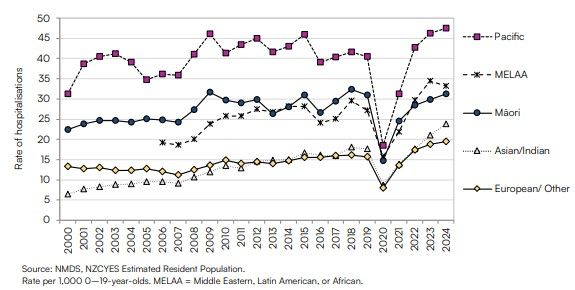
Pacific children have experienced the highest rate of hospitalisations for respiratory conditions. Image/Cure Kids 2026 Report
Pacific people also continue to have shorter life expectancy than the wider population. Between 2022 and 2024, life expectancy at birth for Pacific peoples was 76.9 years, compared with 81.8 years nationally.
“These differences are not inevitable.”
The inequities begin in childhood.
The 2026 State of Child Health report by Cure Kids found Pacific children were 43 times more likely than non-Māori, non-Pacific children to be hospitalised for acute rheumatic fever or rheumatic heart disease, conditions linked to overcrowded housing and deprivation.
Children in the most deprived communities accounted for 58 per cent of those hospitalisations in 2024.
The report found hospitalisations could be reduced by more than 85 per cent if inequities linked to ethnicity and deprivation were eliminated.
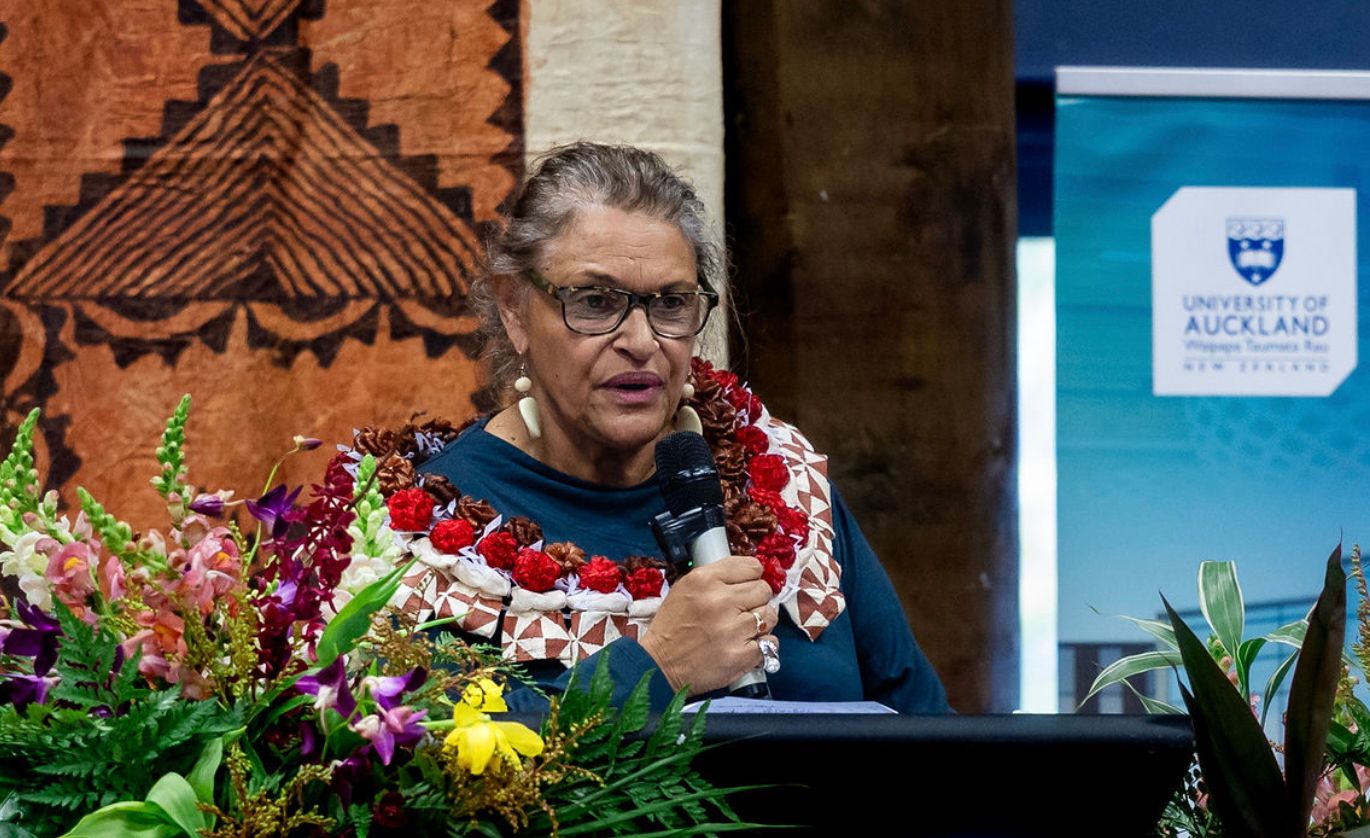
Dr Audrey Aumua, CEO of the Fred Hollows Foundation NZ, was part of a panel discussing cervical cancer in the Pacific. Photo/Supplied
Other symposium discussions highlighted progress in eliminating cervical cancer in the Pacific, with HPV self-testing helping reduce barriers to screening and improve early detection.
For Pacific health leaders, the message is clear: the evidence already exists, but closing the equity gap will depend on whether decision-makers are willing to act.