
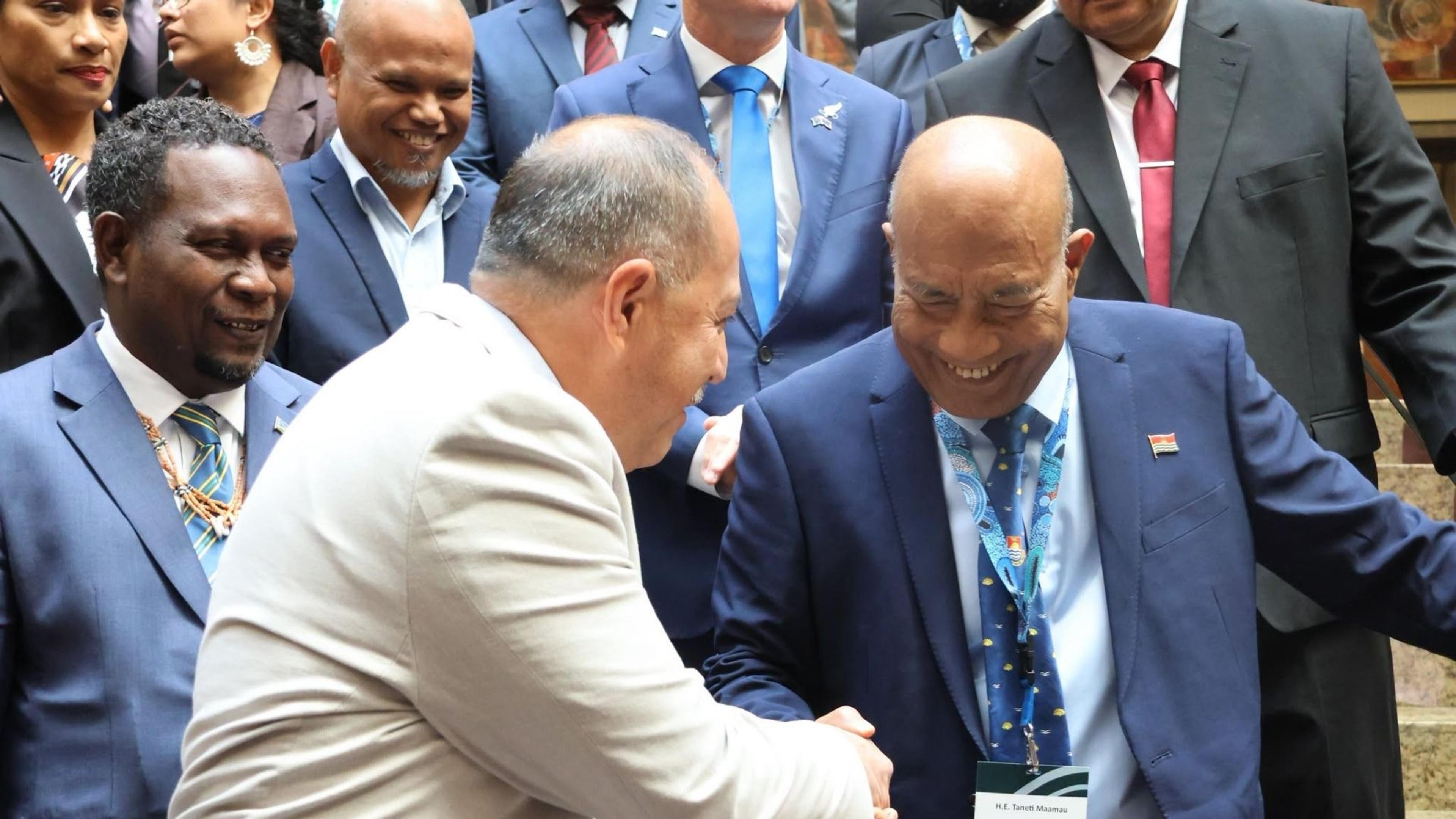
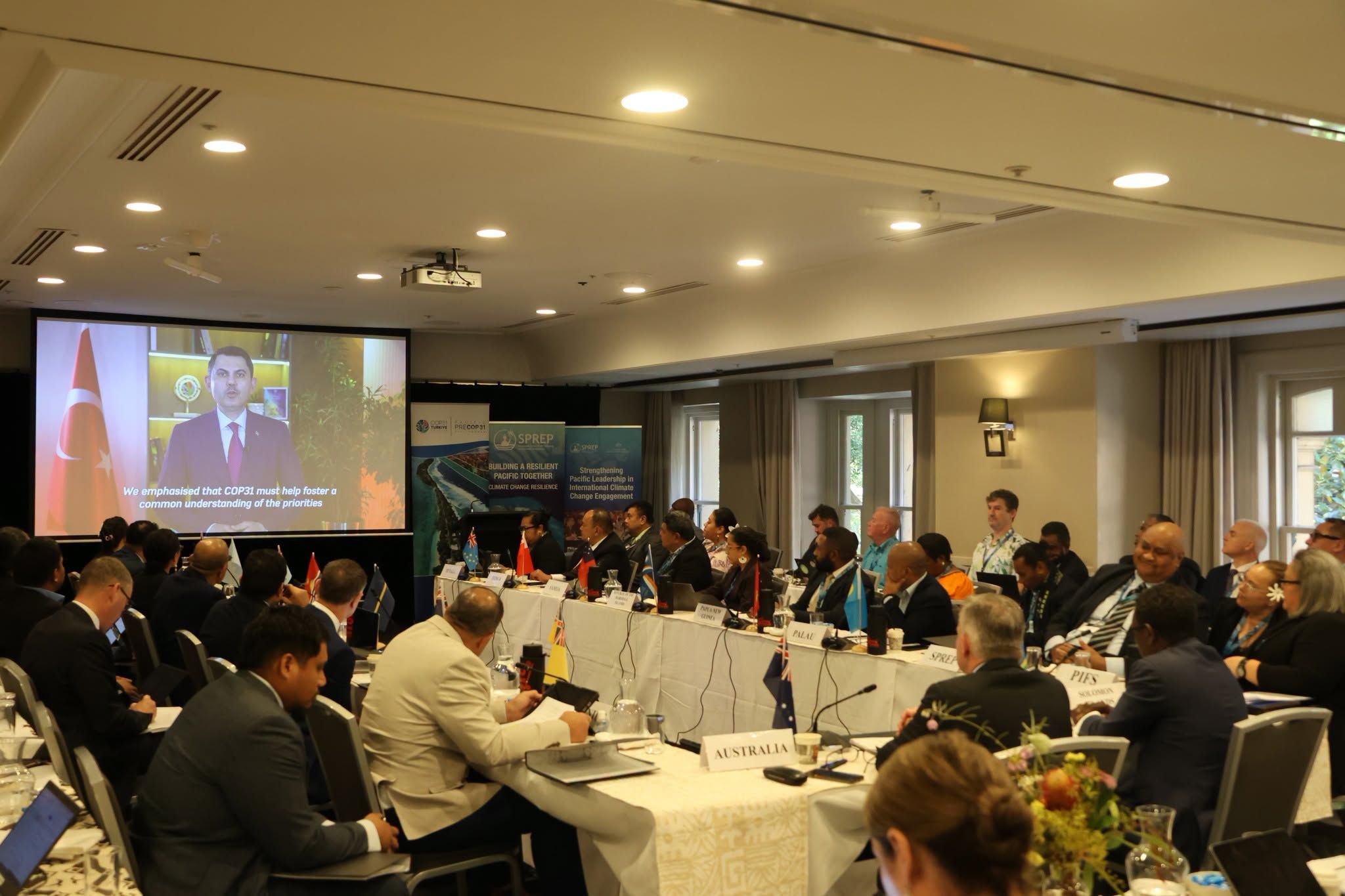
Pacific leaders and climate officials gather for the sixth Pacific Climate Change Ministers' Meeting in Suva, where leaders agreed the region must present a united voice ahead of key climate negotiations leading to COP31.
Photo/Pacific Islands Forum Secretariat (PIFS)
Environment
Pacific leaders unite as climate talks enter crucial run to COP31
Climate ministers meeting in Sydney this week say a united Pacific voice is more important than ever as they prepare for major global negotiations.

Christine Rovoi
Published
22 July 2026, 7:43pm
Share
Copy Link
Top stories

Fiji’s new tourism services tax eases pressure on travellers but airline costs remain
Elenoa TuragaiviuWed, 02 Sep
Pacific Forum leaders agree on regional action as Naoero breaks ranks over China missile test
Thomas Tarurongo Wynne in PalauFri, 04 Sep

All Blacks and Warriors face big tests against Springboks, Sea Eagles
Cedric TausingaFri, 04 Sep
Top stories
Fiji’s new tourism services tax eases pressure on travellers but airline costs remain
Elenoa TuragaiviuWed, 02 Sep
Pacific Forum leaders agree on regional action as Naoero breaks ranks over China missile test
Thomas Tarurongo Wynne in PalauFri, 04 Sep
All Blacks and Warriors face big tests against Springboks, Sea Eagles
Cedric TausingaFri, 04 Sep
Pacific climate leaders say regional unity will be critical as the region prepares for a series of high-stakes international climate talks that could shape the future of the Blue Pacific.
Meeting in Sydney this week for the sixth Pacific Climate Change Ministers' Meeting, ministers agreed the Pacific must speak with one voice ahead of negotiations leading to the United Nations climate summit, COP31, later this year.
Solomon Islands Minister for Environment, Climate Change, Disaster Management and Meteorology, Wayne Ghemu, said the Pacific's strength has always come from working together.
He said the timing was significant and told the ministers that regional cooperation was no longer simply a shared goal but a necessity as Pacific nations face growing climate threats while pushing for stronger international action.
"As the international system becomes increasingly fragmented and the effectiveness of multilateral institutions is tested, the Pacific must continue to demonstrate that regionalism remains one of our greatest strengths," Ghemu said.
"While global consensus may at times falter, our collective resolve must not."
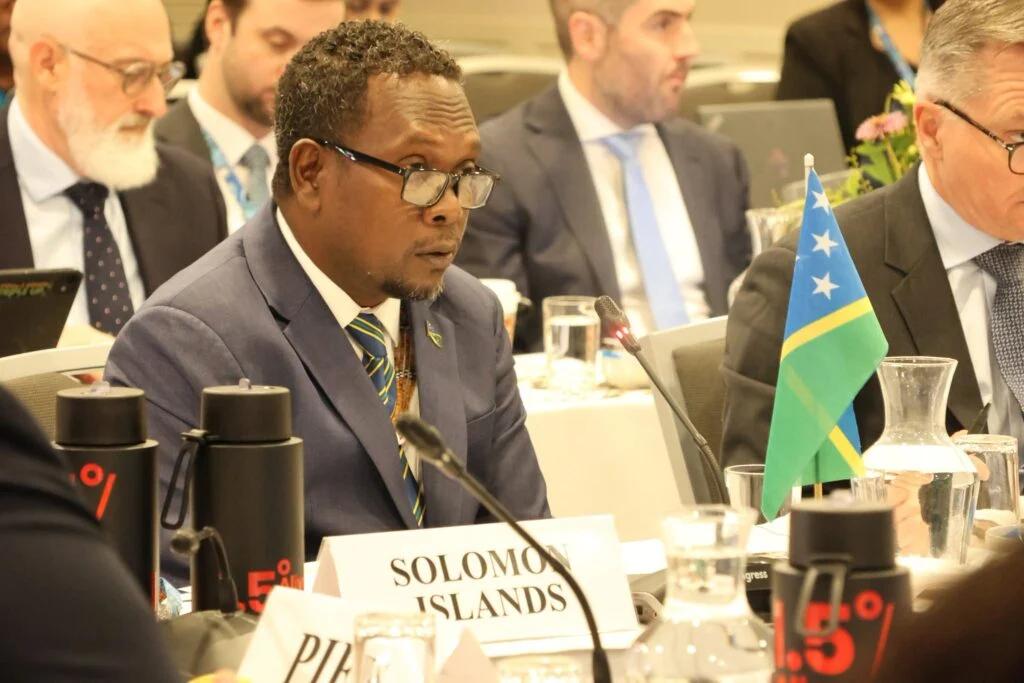
Solomon Islands Environment and Climate Change Minister Wayne Ghemu says Pacific unity is now a "strategic necessity" as countries prepare for major international climate talks later this year. Photo/Pacific Islands Forum
The meeting marks the beginning of an important few months for Pacific climate diplomacy.
Ministers are preparing common positions ahead of Pre-COP31 meetings in Fiji and Tuvalu where international delegates are expected to see first-hand the impacts of climate change on one of the world's lowest-lying nations before regional leaders gather at the Pacific Islands Forum Leaders Meeting in Palau in late August.
Those discussions will help shape the Pacific's negotiating position before countries meet at COP31 in Türkiye.
Ghemu said Pacific countries achieve more when they negotiate together.
"Through the Pacific Islands Forum and the COP31 Pacific Partnership, we have shown that when we speak with one voice, we amplify our influence, strengthen our negotiating position and present solutions that are greater than the sum of our individual efforts.
"In an increasingly uncertain world, our regional solidarity is not simply a matter of convenience, it is a strategic necessity."
Climate finance remains one of the region's biggest priorities.
The region continues to argue that communities on the frontline of climate change need faster and easier access to funding to strengthen coastlines, improve water security, build resilient infrastructure and recover from increasingly severe disasters.
Pacific officials said the negotiations are taking place against an increasingly difficult international backdrop.
From rising seas to stronger storms and coastal erosion, Pacific communities remain on the frontline of climate change as regional leaders push for stronger global action ahead of COP31. Photo/PIFS
Pacific Islands Forum Deputy Secretary General - Governance, Desna Solofa, warned officials were already preparing for a far more difficult global negotiating environment.
"While progressing this work, Senior Officials and the COP31 Secretariat are also very mindful of the current geopolitics and the impacts it will have in how we move forward.
"Amid current geopolitical uncertainties, alarms have been raised on the potential of an overshoot in the global average temperature, a strong push-back on the centrality of science, a shrinking climate financial landscape, and concerns over the inadequacy of multilateral processes and their ability to respond at the speed needed to address the climate crisis."
She said Pacific countries would need to remain flexible and united as preparations for COP31 continued.
"It is therefore very critical that we are agile and remain ahead of these issues particularly in how we implement the COP31 Pacific Partnership."
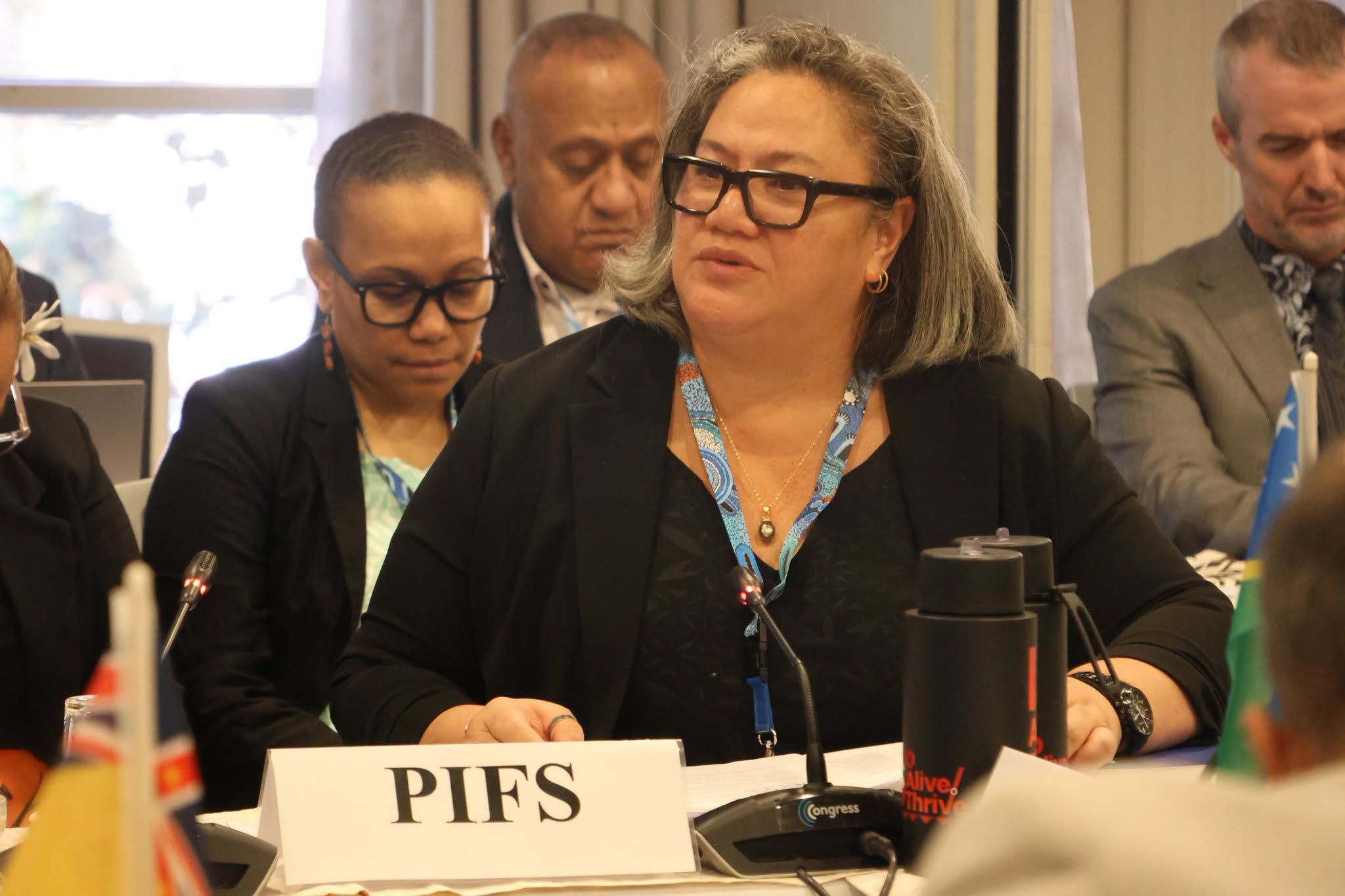
Pacific Islands Forum Deputy Secretary General Desna Solofa warns growing geopolitical tensions, shrinking climate finance and pressure on multilateral institutions are creating new challenges for Pacific climate diplomacy. Photo/PIFS
Ministers also reaffirmed support for stronger international action on loss and damage, saying countries most responsible for global emissions must continue helping vulnerable nations cope with climate impacts they did little to cause.
The meeting also reinforced the Pacific's long-standing position that climate change remains the region's greatest security challenge.
For many Pacific countries, rising seas, stronger cyclones and changing weather patterns continue to threaten homes, food security, freshwater supplies and livelihoods.
Australia's Climate Change Minister Chris Bowen said the Talanoa showed the strength of the Pacific-Australia partnership as both sides prepared for the next round of global climate negotiations.
SPREP Director General Sefanaia Nawadra said the focus remained on Pacific people living with climate change every day.
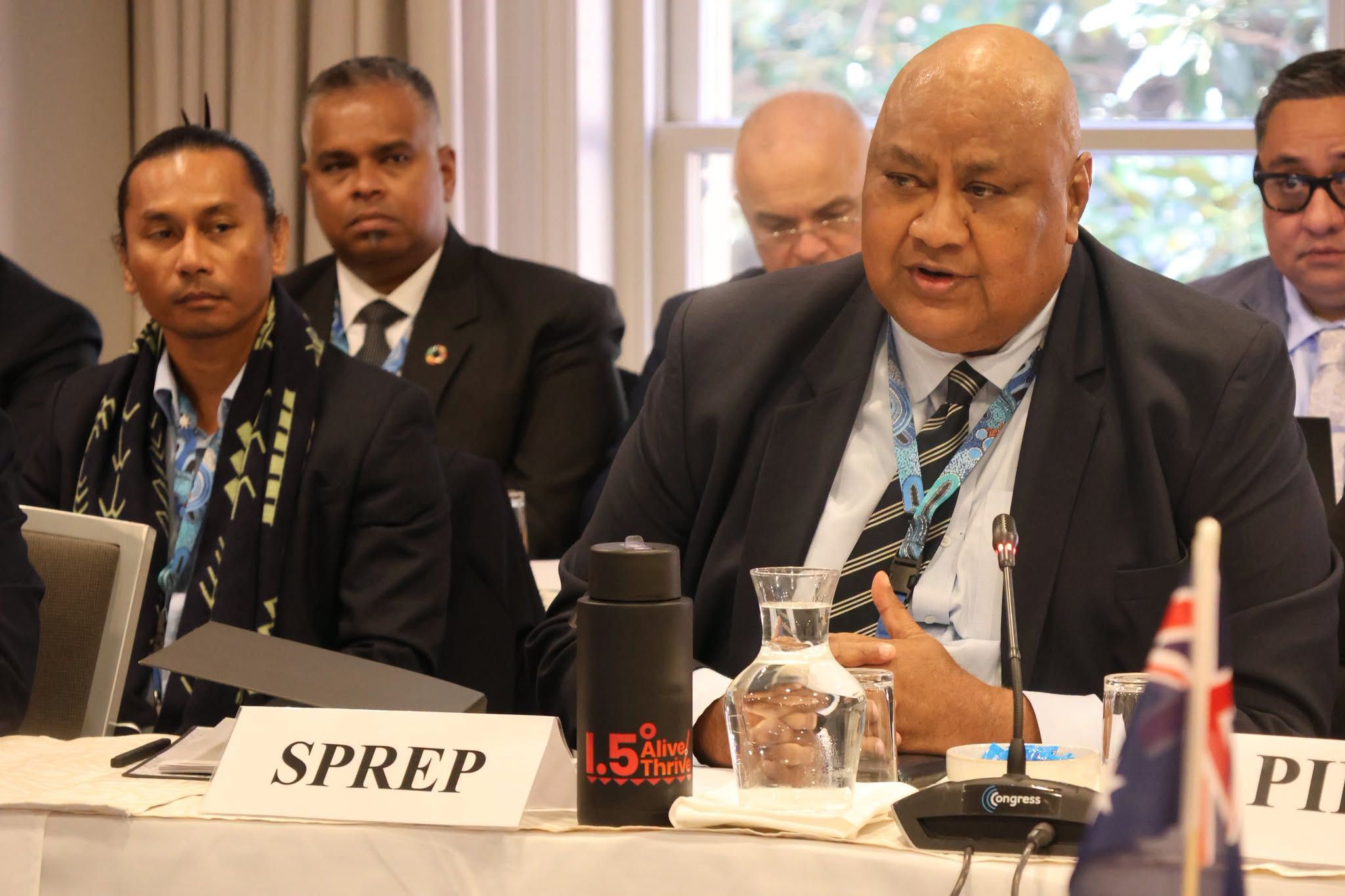
SPREP Director General Sefanaia Nawadra says Pacific communities are living with the impacts of climate change every day and their priorities must remain at the centre of global climate negotiations. Photo/Pacific Academy of Sciences
"Our Pacific Islands communities feel the impacts of climate change in their daily lives, so it is imperative that we do everything within our collective power to address this issue.
"Together, we have a responsibility to ensure Pacific priorities are amplified in the global negotiations that will shape our future."
The ministers also discussed preparations for Fiji to host key Pre-COP31 meetings later this year, before leaders travel to Tuvalu, where international delegates will see first-hand the impacts climate change is having on one of the world's lowest-lying nations.
Pacific leaders hope those visits will strengthen international support ahead of formal negotiations at COP31.
For the region, the coming months are about more than another international summit.
Watch Emma Sale, PhD candidate, University of Canterbury, Christchurch, talk about her work in the climate change space.
Pacific governments want to arrive at COP31 with a united position on climate finance, adaptation, loss and damage, and protecting the Blue Pacific, believing their collective voice carries far greater weight than countries negotiating alone.
COP31, the 2026 UN Climate Change Conference, will take place in Antalya, Türkiye, from 9 to 20 November 2026.