World Vision warns children will pay for aid cuts beyond the Pacific
Thomas Tarurongo WynneMon, 12 Oct
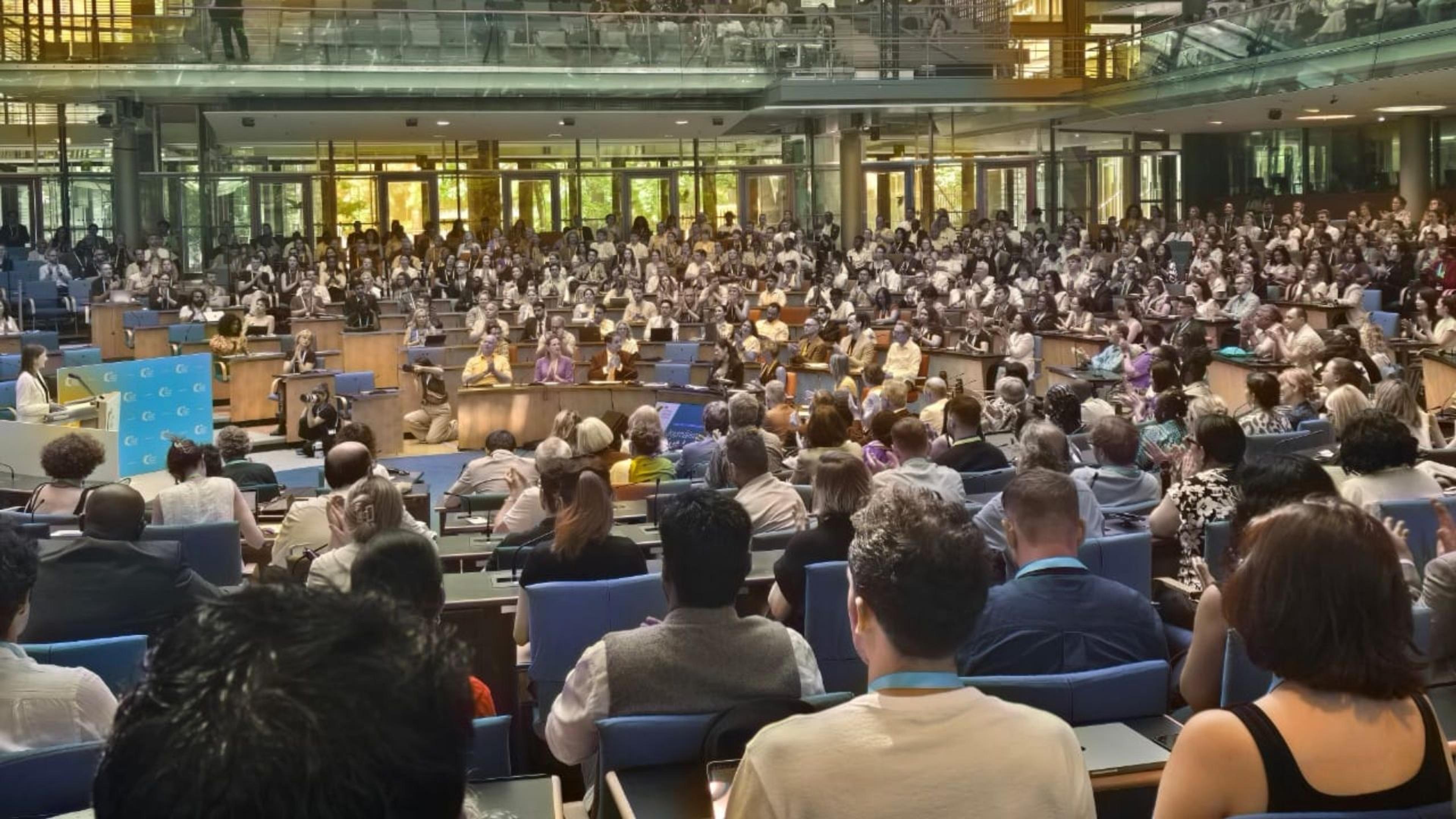
More than 1500 journalists, editors, academics, policymakers and civil society leaders from over 100 countries gathered in Bonn, Germany, for the 2026 Global Media Forum, where Indigenous journalists called for stronger partnerships with international media and more inclusive storytelling.
Photo/Supplied
Pacific Media Network's Christine Rovoi says Indigenous journalists must be treated as partners, not emergency contacts.


International media organisations need to stop treating Indigenous journalists as emergency contacts and start working with them as genuine partners, a Pacific media representative has told one of the world's leading journalism forums.
The message came from Pacific Media Network's senior reporter Christine Rovoi during a panel discussion at the Global Media Forum in Bonn, Germany, on Wednesday (NZT).
More than 1500 journalists, editors, academics, policymakers and civil society leaders from over 100 countries have gathered at the World Conference Centre Bonn (WCCB) to discuss the future of journalism.
The panel titled “Listening to the Earth”: Indigenous Journalists on the Frontlines of Environmental Reporting" brought Rovoi, a Fiji-born Rotuman journalist, and Shaldon Ferris, a South African broadcaster with Cultural Survival, to explore how Indigenous perspectives are shaping frontline environmental journalism and accountability.
The panel marked the first time the forum has hosted an Indigenous-focused session, bringing their voices into the centre of global environmental journalism discussions.
Rovoi, who was invited to speak at the Deutsche Welle event, said too much international reporting still turns to Indigenous journalists only when disaster strikes.
"Too often, the relationship begins when a crisis happens. A cyclone strikes. Political tensions rise. A major international story breaks.
"Suddenly, local journalists receive calls asking for contacts, translation, context and access. Then the story moves on."
Her comments struck at a long-running frustration among many Indigenous journalists who say their communities are often seen through the lens of crisis rather than as places with knowledge, expertise and solutions of their own.
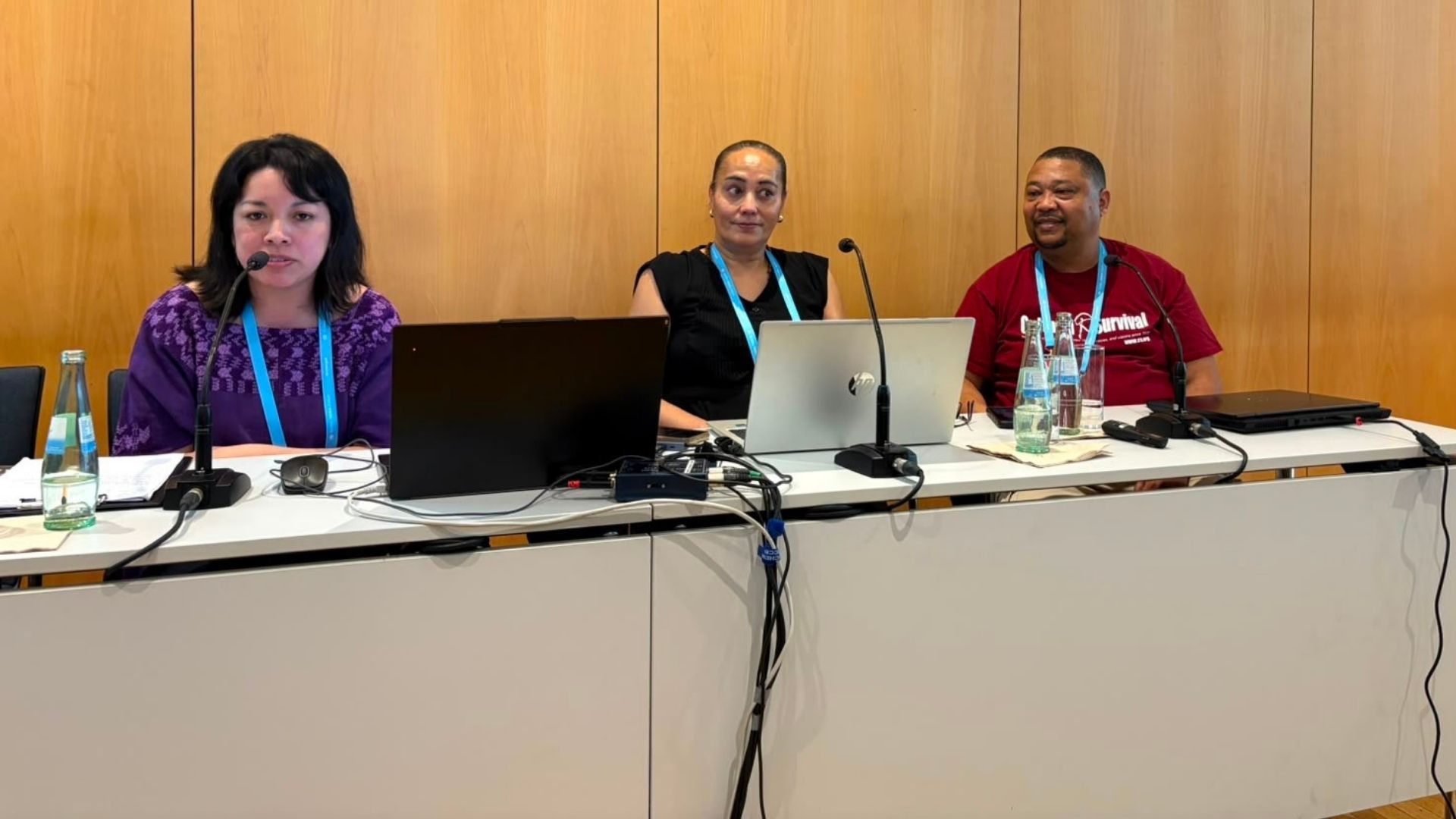
Pacific Media Network senior reporter Christine Rovoi, middle, urged international news organisations to treat Indigenous journalists as partners rather than turning to them only during times of crisis. Photo/Supplied
"The strongest journalism happens when international and local newsrooms work together, each bringing different strengths to the story," Rovoi said.
The discussion formed part of the Global Media Forum's theme, "Journalism Out Loud!", which focuses on the challenges facing the industry in an era of misinformation, declining trust in institutions and rapid technological change.
Rovoi said one of the biggest issues is how the Pacific continues to be framed by outsiders.
"For too long, much of the world's coverage of the Pacific has been shaped by people looking in from the outside. Too often, our islands are framed as places of crisis, vulnerability or strategic competition. But that's not how we see ourselves."
Drawing on her reporting on climate change, natural disasters and environmental issues, Rovoi said Pacific journalists often bring a different perspective because they understand the lived reality behind technical policy discussions.
Watch Dr Sinda Sharma's address to a press conference in Bonn below.
She pointed to comments made by Dr Sindra Sharma, International Policy Lead for the Pacific Islands Climate Action Network (PICAN), during last week's climate negotiations.
"For us, overshoot is not a pathway; it is a harm event," Sharma told a press conference.
Rovoi said Sharma's comments resonated because they translated a technical climate term into something Pacific communities immediately understand.
"When climate negotiators talk about 'overshoot', they are usually referring to a scenario where the world temporarily exceeds the 1.5°C warming limit before bringing temperatures back down later," she told the forum.
"But for Pacific communities, it means homes flooding from higher seas, coral reefs dying, stronger cyclones, crops failing, families being displaced and cultural connections to land being lost."
The message was reinforced by Ferris, who argued that Indigenous communities are often the first to see environmental changes because of their close relationship with the natural world.
"Who better to report on climate change, who else is out there every day?" Ferris told the forum.
He said Indigenous knowledge built over generations should be recognised alongside scientific evidence when reporting on climate change.
Ferris said Indigenous communities often observe changes in nature long before they become part of scientific reports or political debates.
"It is only frontline indigenous journalists who will feed mainstream media with the latest on what is happening in the world of fauna and flora.
"Sometimes we as an indigenous peoples hear reports from our relatives who behave a certain way when disaster is about to strike.
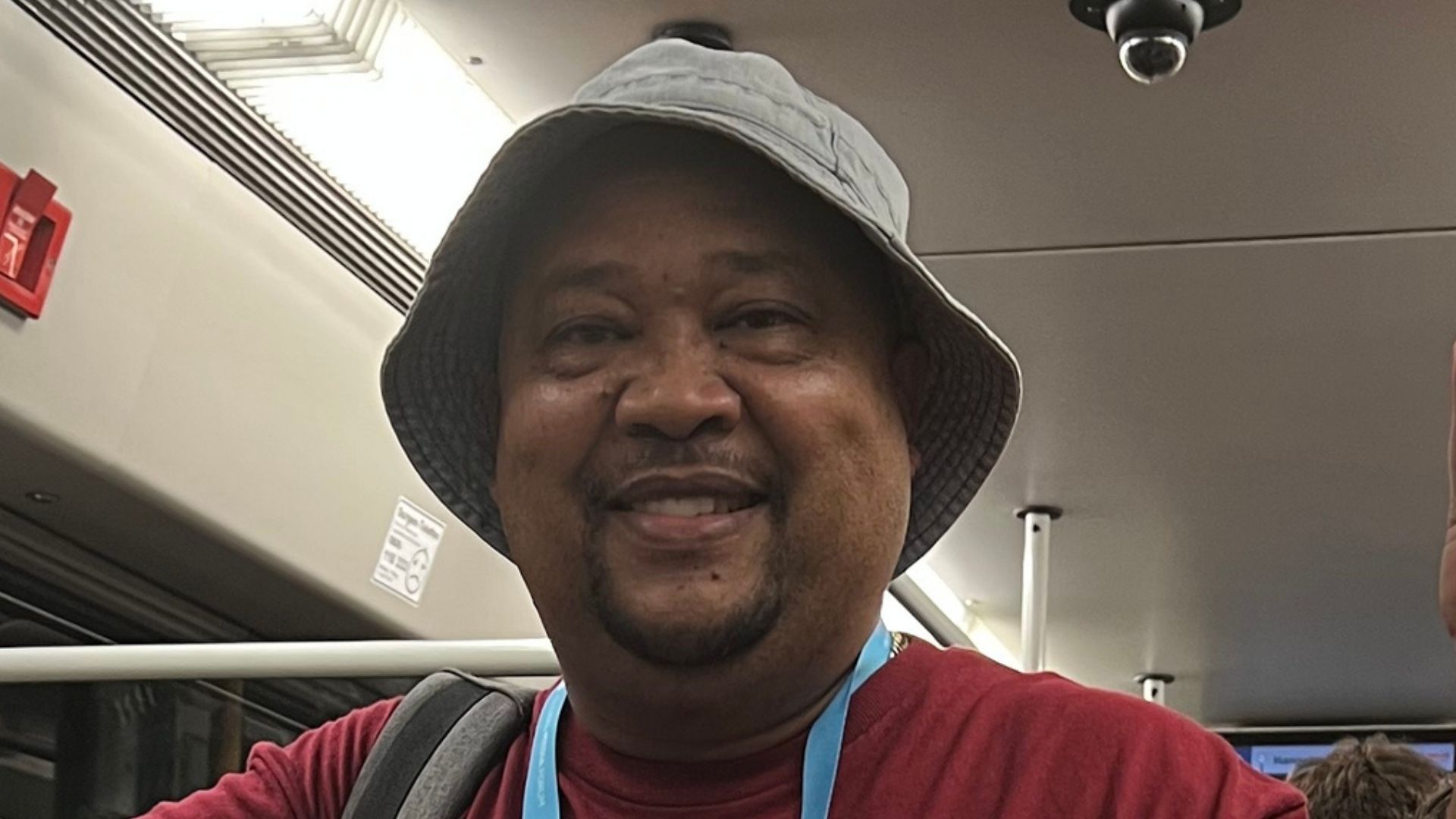
Cultural Survival broadcaster Shaldon Ferris says Indigenous communities are often the first to witness environmental change and that traditional knowledge should be valued alongside scientific evidence in climate reporting. Photo/Supplied
"We pay attention to animals, and we pay attention to the earth, in a non scientific way, this is just the way it has always been," Ferris said.
His comments resonated strongly with Pacific experiences where traditional knowledge has long played a role in understanding weather patterns, ocean conditions and environmental change.
Rovoi said Indigenous journalism is not about seeking special treatment but about producing more accurate and complete reporting.
She said Pacific journalists play an important role in connecting communities across the islands and the diaspora while providing the cultural and historical context often missing from international coverage.
The discussion also touched on editorial independence in publicly funded media.
Rovoi said public funding allows organisations such as PMN to serve communities that are often overlooked by commercial media but does not influence editorial decisions.
She said the goal for Indigenous journalists was simple.
"Our audience expects accurate, fair and independent reporting. If we lose their trust, we've failed in our mission regardless of who funds us.
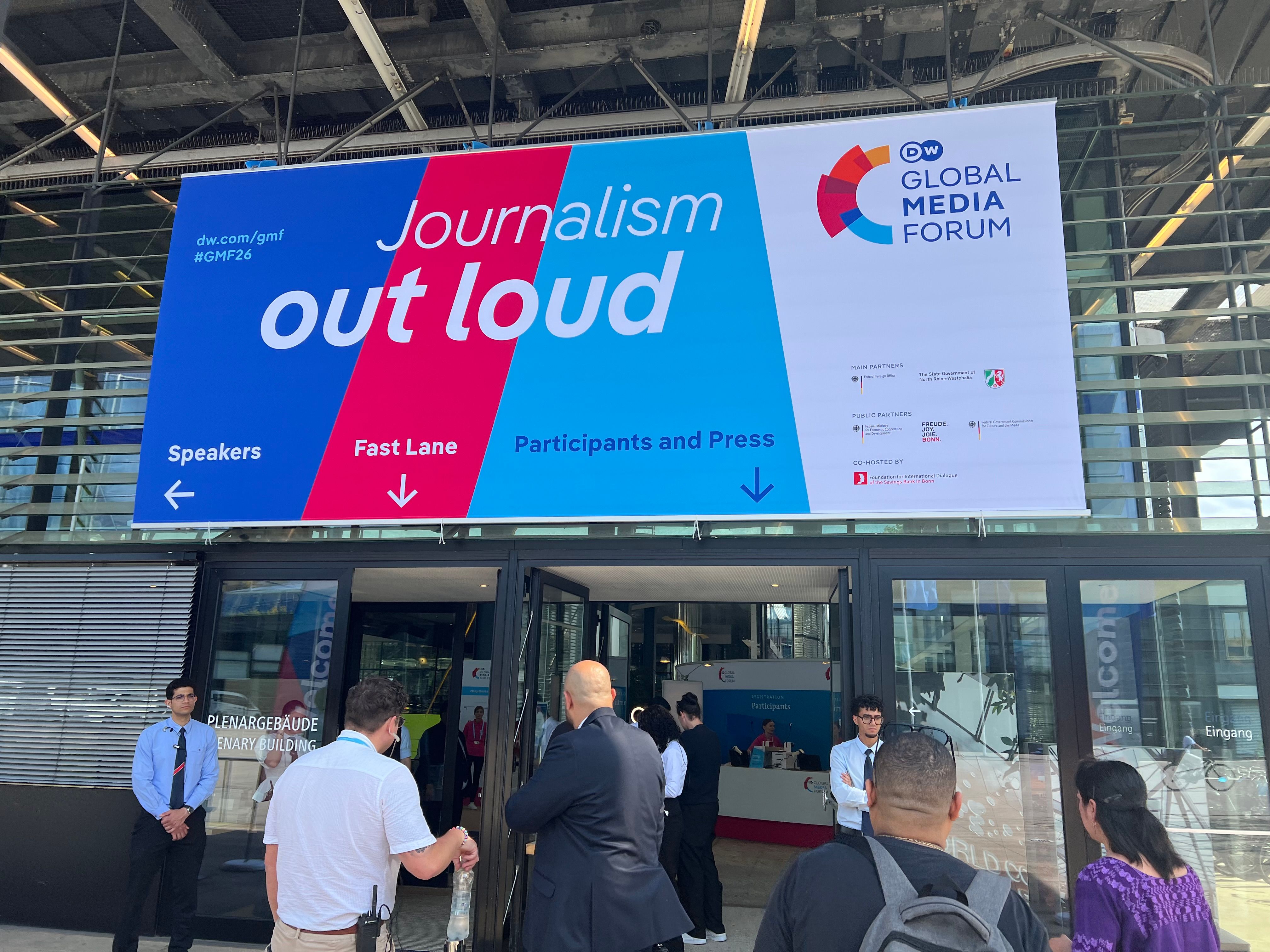
Participants from more than 100 countries attend a session at the 2026 Global Media Forum in Bonn. Discussions focused on the future of journalism, press freedom, artificial intelligence, public trust and the role of Indigenous voices in global media. Photo/Supplied
"When Indigenous voices are included early, when local knowledge is valued and when relationships are built over time, coverage becomes more accurate, more nuanced and ultimately more useful for audiences.
"That benefits everyone," Rovoi said.
The two-day Global Media Forum 2026 ends on Thursday (NZT).