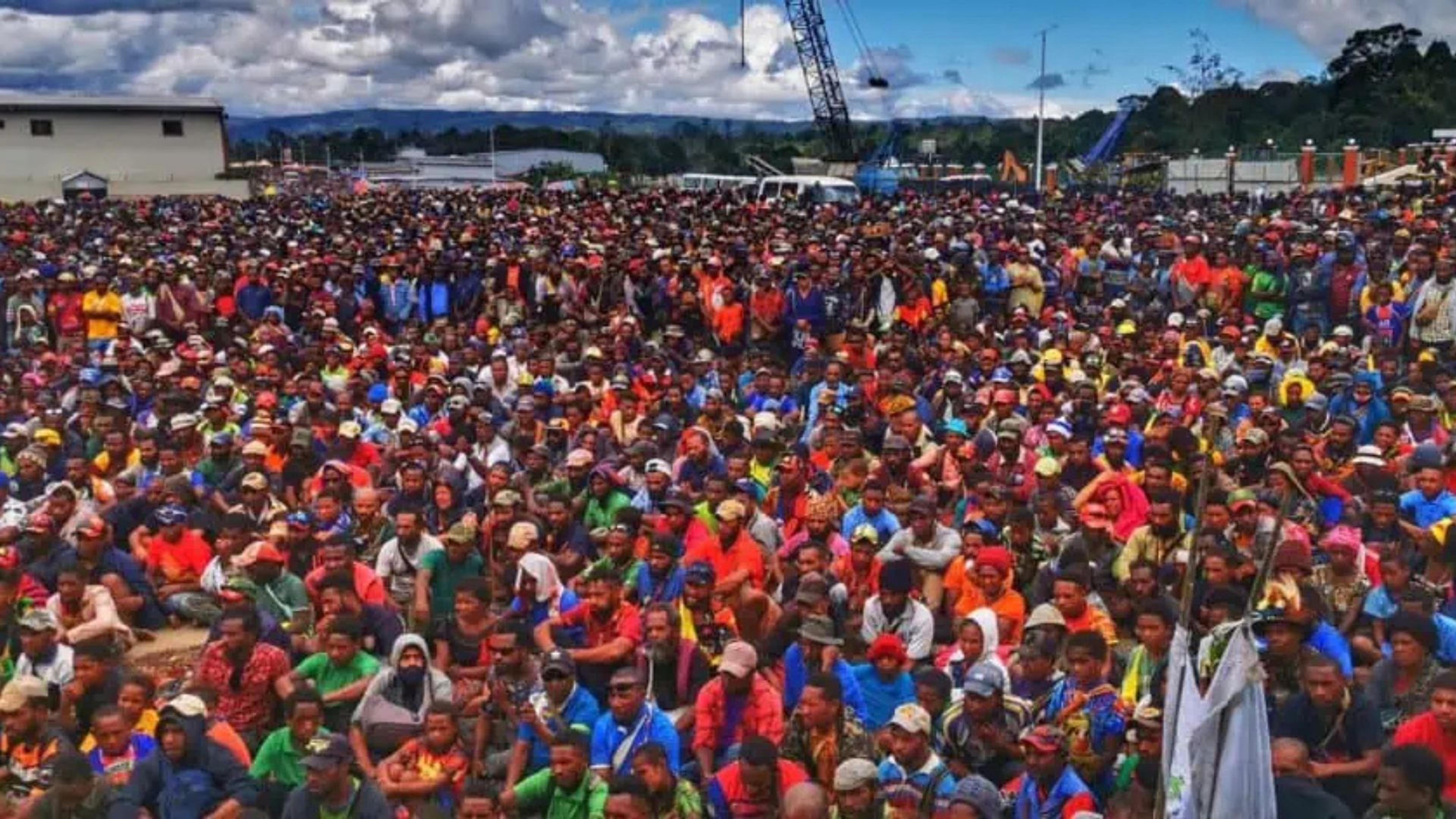
PNG's govt moves to limit family size as the country's population tops 10 million people
Christine RovoiTue, 10 Nov
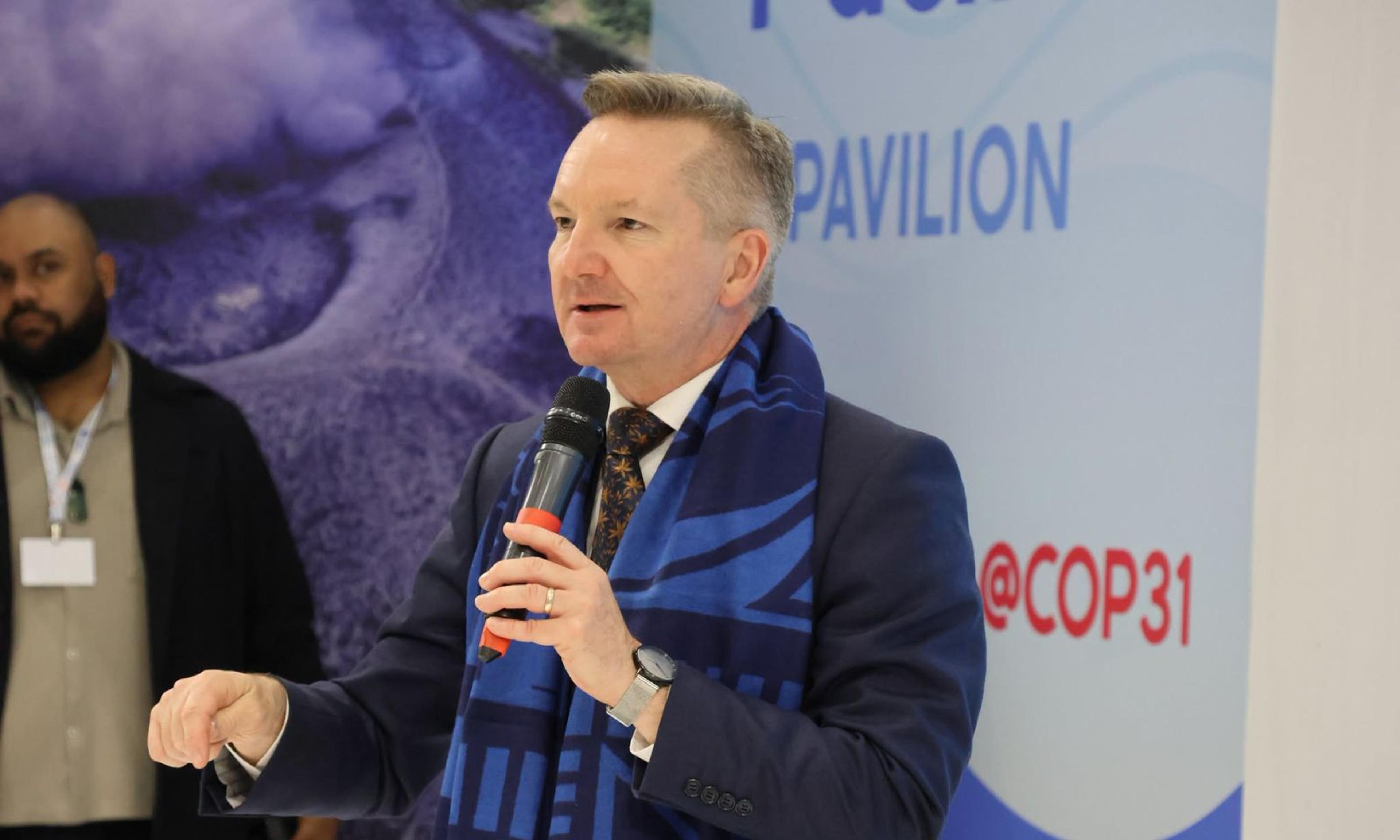
Australian Minister for Climate Change and Energy, Chris Bowen, reaffirms Australia’s support, stating that the Pacific has been instrumental in securing the inclusion of the 1.5°C temperature limit in the Paris Agreement.
Photo/SPREP
Moana Pavilion opens at the UN climate change conference as Australia and Fiji’s climate change ministers call for oceans and fairer climate finance to be priorities for small island states.




Australia’s climate change minister Chris Bowen has promised Pacific nations a central role in this year’s UN climate negotiations, as the region opens its shared Moana Pavilion at COP31 in Antalya, Türkiye.
Bowen leads the talks as president of negotiations while Türkiye hosts the conference.
Speaking at the opening of the Pavillion, he says he could not predict what discussions among the more than 190 countries at the COP meeting would produce.
“Getting consensus across more than 190 countries is not easy, and I can’t promise you exactly what the outcome will be. But I can promise you this: the Pacific will be right there with us at the heart of the negotiations, every single day.”
He recalls the Pacific pushing the 1.5°C limit for climate warming on the agenda in Paris in 2025 saying the commitment to that threshold must be reinforced.
“This is your chance to tell our story as a Pacific family. Let’s tell it loud, let’s tell it proud, and let’s tell it consistently over the next fortnight.”

Christ Bowen was speaking at the opening of the Moana Blue Pacific Pavillion, which will host a two-week programme of side events, talanoa sessions and exhibitions. Photo/SPREP
Bowen adds COP31 must direct greater focus to oceans and correct the funding disparity.
“Oceans, the world’s largest climate regulator, have not received enough attention at COP. That changes here at COP31, and it’s not good enough that 0.2 per cent of the world’s climate finance goes to small island developing states for adaptation. That has to change.”
Fiji’s minister for climate change Lynda Tabuya, who also chairs the Pacific Small Island Developing States group, says the Moana Pavilion is as much a statement as a venue adding the region’s strength lies in what it carries into the halls.

Fiji's Climate Change Minister and PSIDS Chair Lynda Tabuya has called on the Pacific to stand united and speak with one voice at COP31. Photo/SPREP
“I believe that hearts can change here. We will bring the Moana, the Waitui, the Wansolwara - that is the heart of the Pacific, the ocean.”
Tabuya shares the same sentiments as Bowen regarding oceans, saying the issue is still struggling to reach the formal agenda.
“We see the glaciers and the forests now have made it, so where is the ocean? We need to fight for the ocean. Let’s do this for the Pacific. Let’s do this together.”
The Pavilion is located at the centre of the COP31 venue, and close to the pavilions of the COP31 Presidency, Türkiye, and the President of Negotiations, Australia.
With the support from the Australia and New Zealand Governments and managed by the Secretariat of the Pacific Regional Environment Programme (SPREP), the Pavilion will host a two-week programme of side events, talanoa sessions and exhibitions.
SPREP Director General Sefanaia Nawadra highlights that the Pavilion will be a platform to unite regional voices and build partnerships adding there is a collective determination to ensure the ocean receives the attention it deserves.
Watch Lynda Tabuya's full speech below.
“The Pacific is now seeking a similar breakthrough for the ocean, calling for it to be formally recognised as an agenda item in the UN climate negotiations.”
COP31 got underway this week and will run until 20 November, with the summit focusing on translating past climate pledges into concrete action.
Key priorities include expanding renewable electrification to 35 per cent by 2035, accelerating methane and zero-waste initiatives, and breaking deadlocks over climate adaptation finance for vulnerable developing nations.
Despite major geopolitical tensions and the United States' absence, delegates from over 190 nations are working to chart pathways away from fossil fuels.