

James Nokise, Josie Pagani and Richard Pamatatau spoke to PMN's Pacific Mornings about the findings of the new PMN News–Horizon Research Pacific Issues Election Survey.
Photo/PMN Composite
Election
Labour leads Pacific vote but political commentators warn support must be earned
A new PMN Horizon Research survey shows Labour remains the preferred party among Pasifika but cost of living, trust and low youth turnout mean no one can afford to take the Pacific support for granted.

Andre Fa'aoso
Published
14 July 2026, 12:59pm
Share
Copy Link



Labour remains the preferred party among Pacific voters ahead of this year’s general election.
But political commentators say that support will count for little unless parties deliver on the issues that matter most.
The PMN News-Horizon Research Pacific Issues Election Survey, released on Tuesday, found Labour was the first choice for 50 per cent of respondents, well ahead of other parties.
But the survey also shows Pacific voters are more focused on the rising cost of living, jobs, health and housing.
Nine in 10 respondents said the cost of living would influence how they vote, making it the biggest election issue for Pacific communities. Jobs and wages followed at 75 per cent, ahead of health (66 per cent) and housing (65 per cent).
Speaking with William Terite on Pacific Mornings, Josie Pagani said the findings should be a warning to every political party.

The survey also shows Pacific voters are more focused on party loyalty than on the rising cost of living, jobs, health and housing. Photo/PMN Composite
"They need parties to be talking about cost of living and coming up with plans about what to do about it," Pagani said.
Although Labour continues to enjoy strong support among Pacific voters, Pagani said the party could not rely on its traditional base.
"There's been the tendency, and we all know this, for Labour to take that Pacific vote for granted."
Watch Josie Pagani and Richard Pamatatau's full interview below.
She said smaller parties could benefit if the major parties failed to connect with Pacific communities.
"The smaller parties might sweep up a little bit more of that Pacific vote if the big parties don't really excite them, or the leaders don't really excite them."
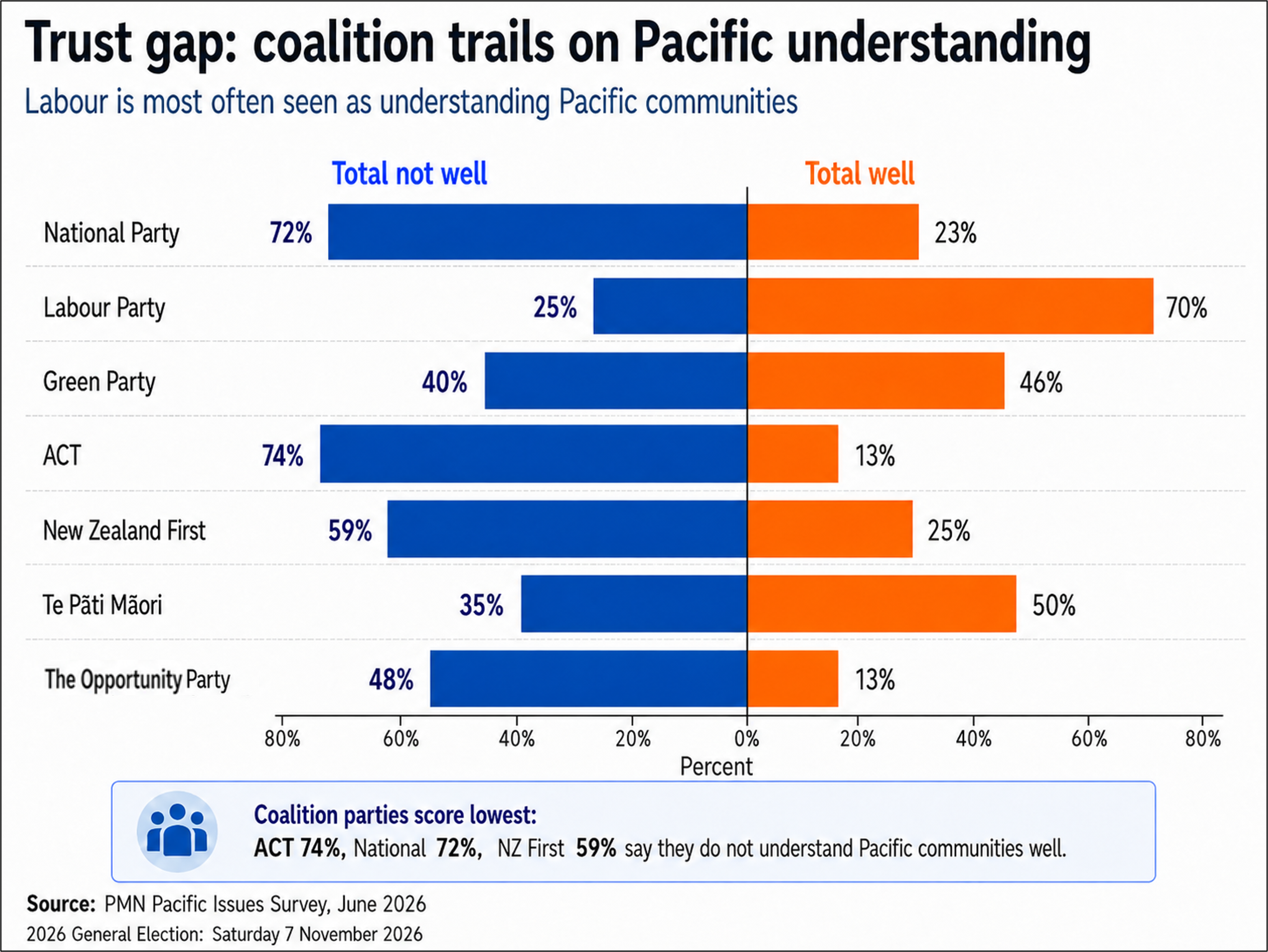
The survey also found many Pacific voters remain unconvinced that the current coalition parties understand their communities.
Among respondents, 72 per cent said National did not understand Pacific communities well, while 74 per cent said the same about ACT and 59 per cent about New Zealand First.
Political commentator Richard Pamatatau said the survey showed Pacific voters shared many of the same concerns as other New Zealanders.
"There are no surprises in the data, and that says that the Pacific population, however it's defined, is the same as every other voter in the country at the moment," he told Terite.
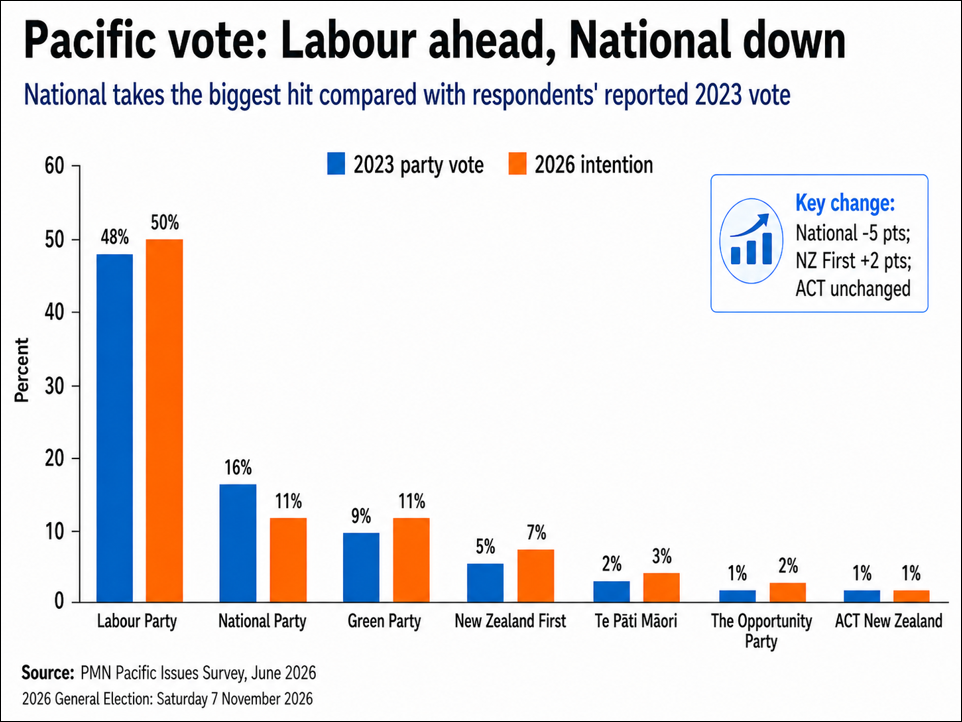
Photo/Supplied
But he said one result stood out. Only 66 per cent of Pacific people aged 18 to 24 said they were enrolled to vote, and of those, just one in three said they were certain to cast a ballot.
Pamatatau said that reflected growing frustration among younger Pacific voters.
"There is a sense that nothing's going to change. So why should I bother?”
Political commentator James Nokise said the findings showed many young Pacific people felt disconnected from politics.
"What the younger Pacific community are saying to the rest of us is they don't feel there's an avenue for their voice being heard,” Nokise told Terite.
He said many families were too focused on getting through the pressures of everyday life to think about politics.
Watch James Nokise's full interview below.
"Here and now, the way people are really struggling in the middle of winter, that's what's at the heart of what Pacific people are asking for from the government."
Pamatatau says the message for political parties is clear.
"Turnout is going to be a big issue, and that is something that if Labour wants to retain its strength in this particular section of the population... it needs to ensure that turnout is really strong,” he said.
The online Horizon Research survey of 293 Pacific respondents was conducted between 23 June and 7 July. It has a margin of error of plus or minus 5.7 percentage points.
Photo/Supplied