
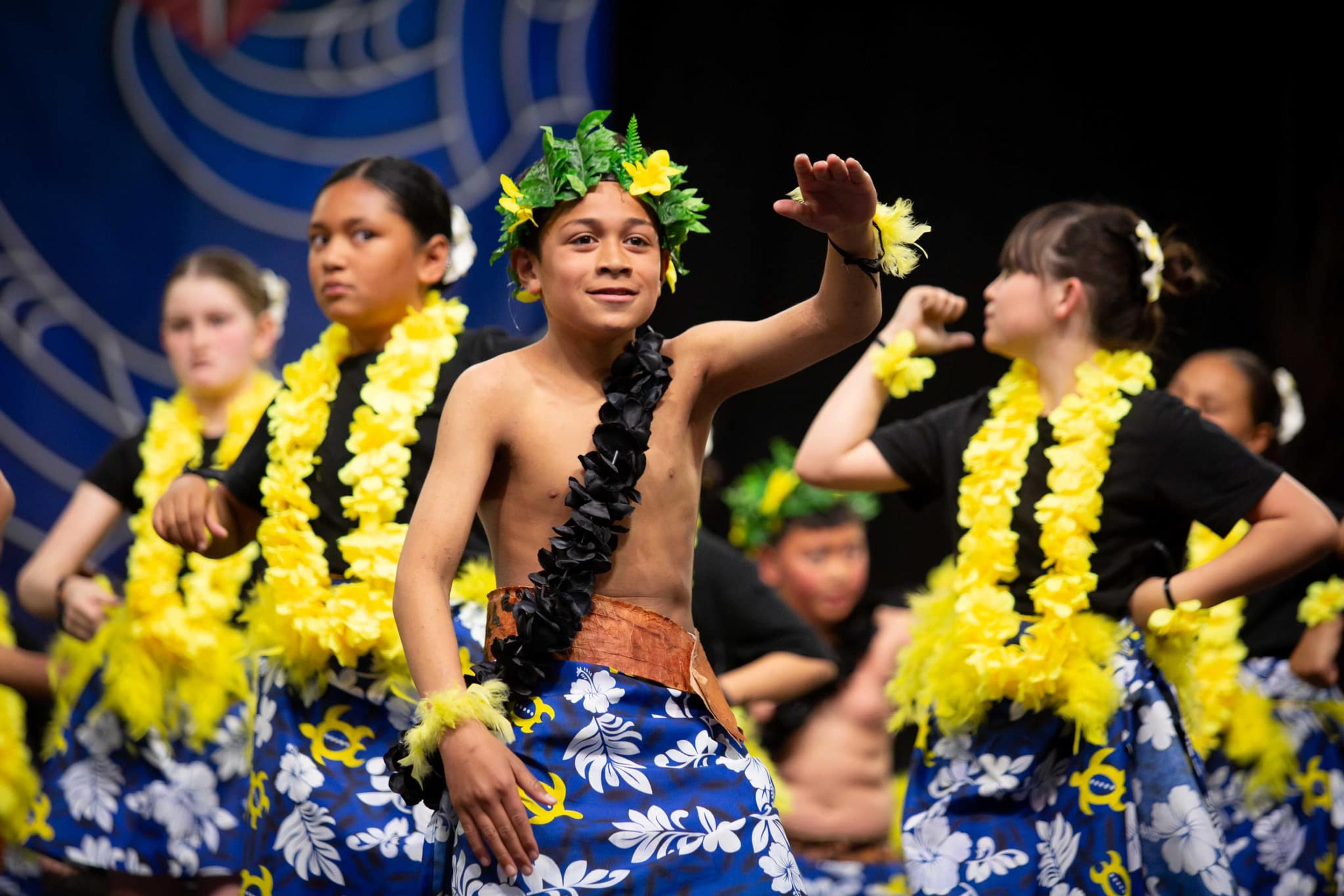
Young performers take the stage at Otago Polyfest, which brings together thousands of tamariki and rangatahi each year.
Photo/File.
Local Democracy Reporting
'We're one of the heartbeats in this community': Otago Polyfest misses out
Organisers say the decision creates uncertainty for the 33-year-old festival and raises questions about how regional communities are recognised in arts funding.

Taelegalolo'u Mary Afemata
Published
11 August 2026, 4:00pm
Share
Copy Link
Otago's annual Māori and Pacific cultural festival is facing an uncertain future after the 33-year-old festival missed out on multi-year Government funding.
Creative New Zealand, the Government's arts development agency, has acknowledged its national funding model cannot always respond as effectively as it would like to regional communities, in the wake of its decision to deny Otago Polyfest funding in its latest grant cycle.
Festival organisers say the decision raises questions about how cultural and social value is considered when arts funding is distributed.
Te Mana Āhua Ake Charitable Trust, which runs Otago Polyfest, was unsuccessful in its application to Creative New Zealand's Arts Organisations and Groups Fund.
Otago Polyfest co-chair Ange Kiore said there was "a level of uncertainty going forward", but the festival would continue.
"We will still continue, but things will be very tight, and it increases the level of stress for the team and for the communities that we give service to," Kiore told Local Democracy Reporting.
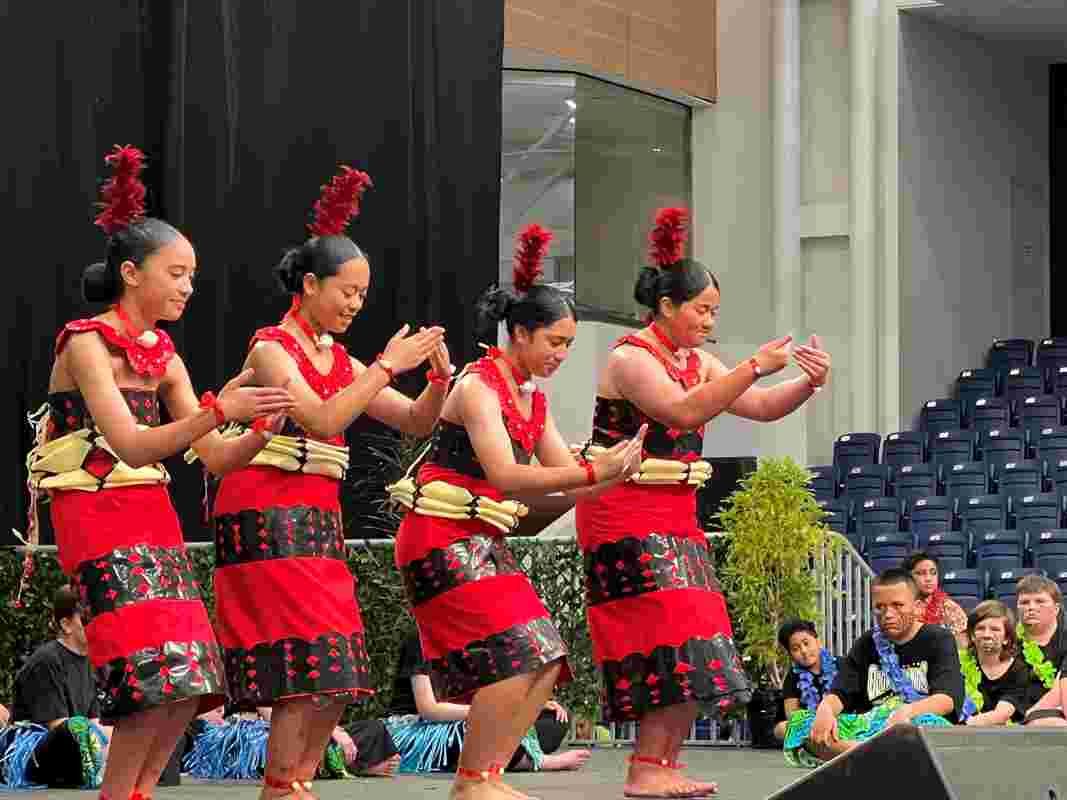
Performers take part in Otago Polyfest in September 2023. Photo/File.
Dunedin city councillor Marie Laufiso said she was disappointed by the funding outcome for Otago Polyfest and other local arts events, describing the festival as "one of the greatest examples of nation building".
Laufiso said it was an example of tauiwi, tangata whenua and Pasifika working together creatively to celebrate their different ethnicities while acknowledging they were in Aotearoa.
"It's just so sad that Creative New Zealand is bowing to this crap about cost of living costs and having to cut, cut, cut," she said.
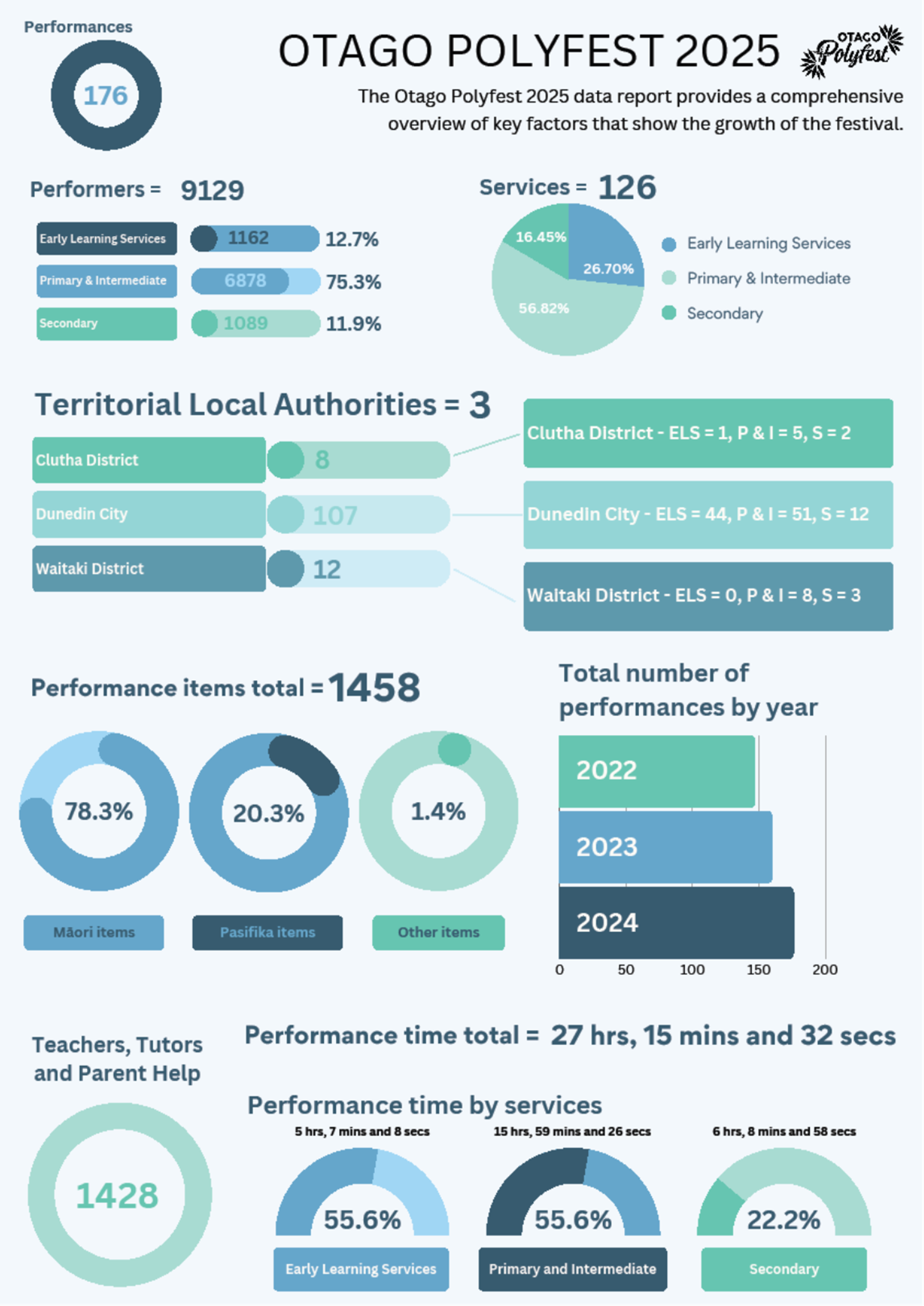
Otago Polyfest's 2025 data shows more than 9100 performers from 126 education services took part in the festival. Photo/supplied.
The five-day festival in Ōtepoti Dunedin brings together Māori, Pacific and other communities from across Otago.
About 9500 tamariki and rangatahi perform each year, supported by around 1500 tutors, teachers, kaiako and parents.
Kiore said the festival's significance went beyond the performances.
"It's not just about the festival, it's about the whole ecosystem of coming together so that our young people can hear their languages, so that they can work, they can show what they've worked towards over the term and over the year."
General manager Pip Laufiso told Pacific Mornings the organisation had applied for three years of funding, starting at $125,000 in the first year and $200,000 in the second, with a higher amount sought for the third.
Laufiso said the organisation understood the pressure on arts funding but wanted the overall pool increased.
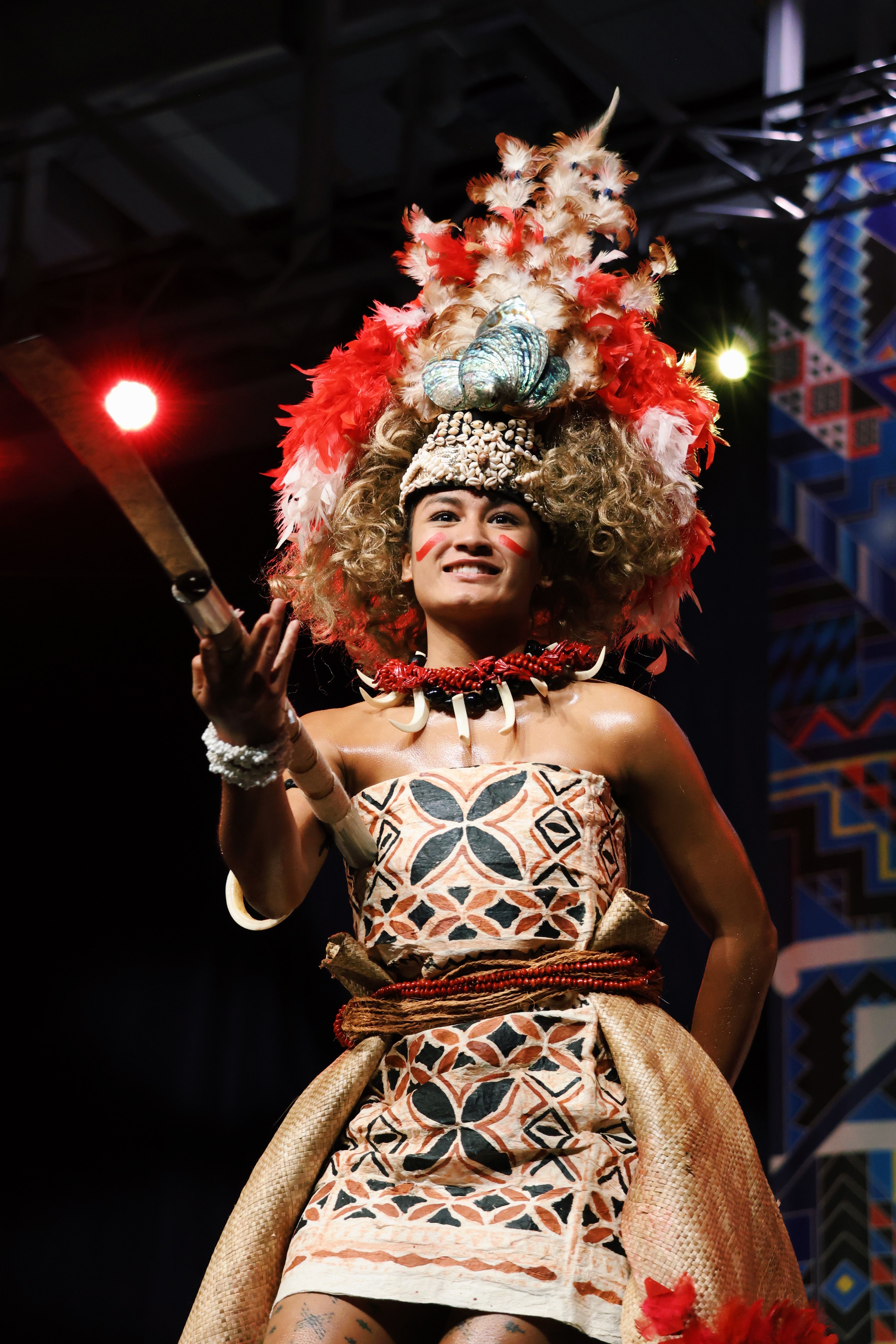
A performer takes to the stage at Otago Polyfest. Photo/Rosie Roache.
"Our thing is really about how this funding pool is increased, rather than having to keep chopping up a smaller pie into smaller pieces. How do we increase that?"
She questioned whether festivals largely involving young performers were seen as less important than other arts events.
"Is there an assumption that it's less important than some of the other festivals?" Laufiso said.
"We just want to make sure that people understand the value of such a festival, what it contributes to, where it leads to."
Creative New Zealand said it does not generally comment publicly on individual funding decisions, but said the round was highly competitive and it could not support every application that demonstrated merit.
The agency said it had met with the trust to discuss the decision and was talking with unsuccessful applicants about other funding opportunities and options.
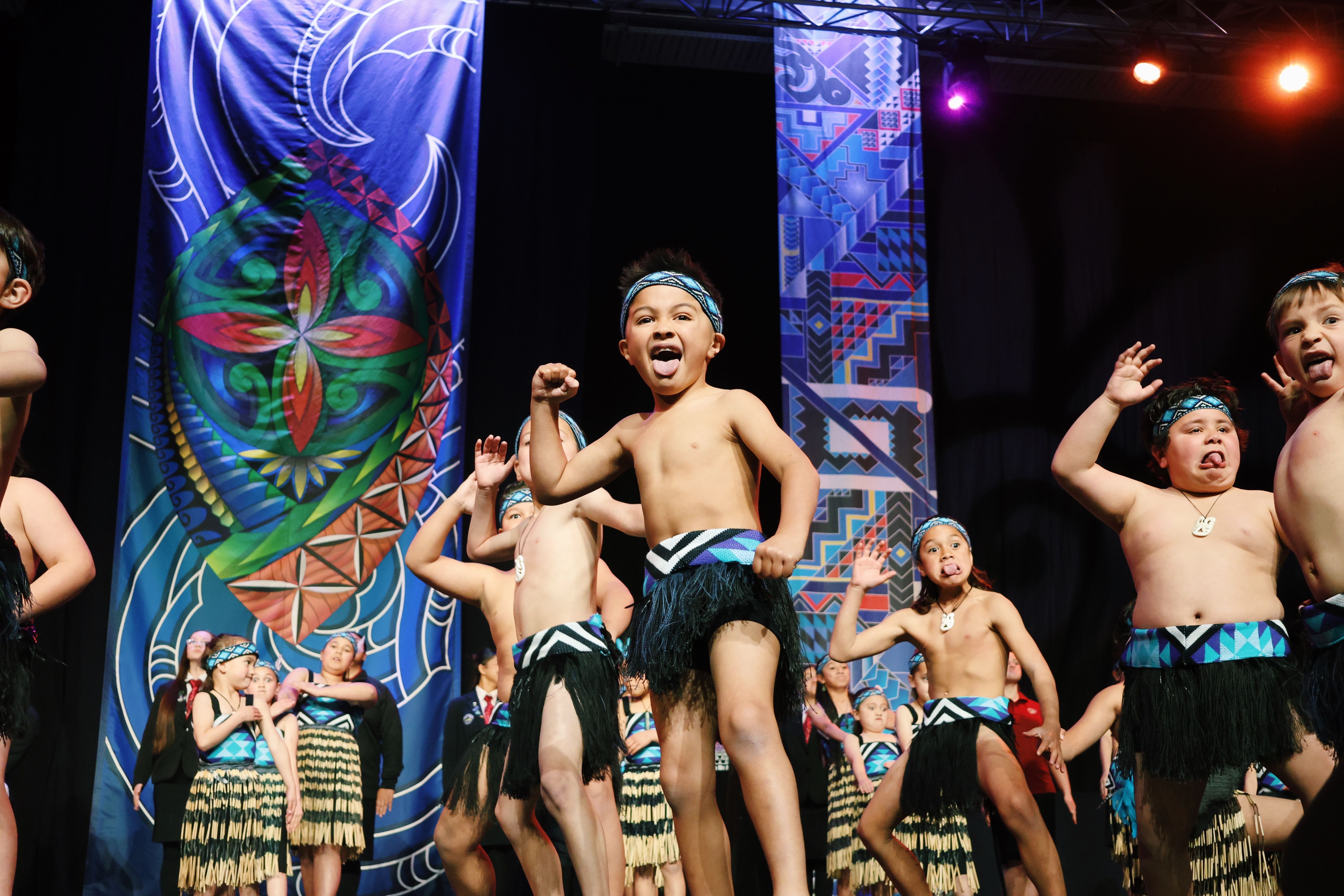
Tamariki perform on stage at Otago Polyfest 2025. Photo/Rosie Roache.
"We also recognise that a nationally administered, competitive funding model cannot always respond as effectively as we would like to the different needs, strengths and priorities of individual regions and communities," Creative New Zealand said.
From 2027, Creative New Zealand will begin working with regional providers to distribute resources and support arts development locally, allowing regional priorities and aspirations to play a greater role in investment decisions.
The agency said the changes would not remove the wider challenge of limited resources.
Organisations sought more than $201 million from the agency over three years through funding Tiers 3 and 4 – for projects costing from $125,000 to more than $500,000 per year – while more than $104m was offered to 94 organisations, including 11 Pacific-led organisations.
Kiore said Otago Polyfest did not intend to ask Creative New Zealand to reconsider this application, but wanted an opportunity to discuss how funding decisions were made.
"We'd definitely like an opportunity to discuss the way decisions are made, both socially and culturally around the country."
Watch Pip Laufiso's full interview below.
Throughout its 33-year history, Otago Polyfest has run every year apart from one during Covid-19.
Creative New Zealand said regional arts and cultural festivals made an important contribution to their communities through participation, connection, cultural expression and opportunities for local artists.
The agency acknowledged available funding did not meet the full level of need or ambition across the sector.
"Funding outcomes are not a reflection of the value, quality or impact of an organisation's work."
Despite the funding uncertainty, Kiore said Otago Polyfest would continue.
"We truly believe that we're one of the heartbeats in this community for our Māori and our Pacific families."
LDR is local body journalism co-funded by RNZ and NZ On Air.