Vanuatu is among the most disaster-prone countries in the world, regularly hit by cyclones, earthquakes, floods and volcanic activity, all of which disrupt schooling.
Photo/Ministry of Education and Training, Vanuatu
Education
Vanuatu launches container classroom trial to keep learning going after disasters
A new disaster-resilient classroom built from shipping containers has opened at a school in Vanuatu, giving students a safer and faster way back to learning after cyclones and earthquakes.
Renate Rivers
Published
29 April 2026, 10:46am
Share
Copy Link
Top stories
World Vision warns children will pay for aid cuts beyond the Pacific
Thomas Tarurongo WynneMon, 12 Oct
Mate Ma’a Tonga’s 40-year legacy lives on through generations
Elton Lonaratha JnrMon, 12 Oct
Top stories
World Vision warns children will pay for aid cuts beyond the Pacific
Thomas Tarurongo WynneMon, 12 Oct
Mate Ma’a Tonga’s 40-year legacy lives on through generations
Elton Lonaratha JnrMon, 12 Oct
A new container-based classroom in Vanuatu is being trialled as a faster and more affordable way to keep children in school after natural disasters.
The disaster-resilient classroom, which was completed on 24 April, opened at Suango School near Port Vila on Monday.
Students had been learning in a tent after their original classroom was damaged in the 2024 earthquake.
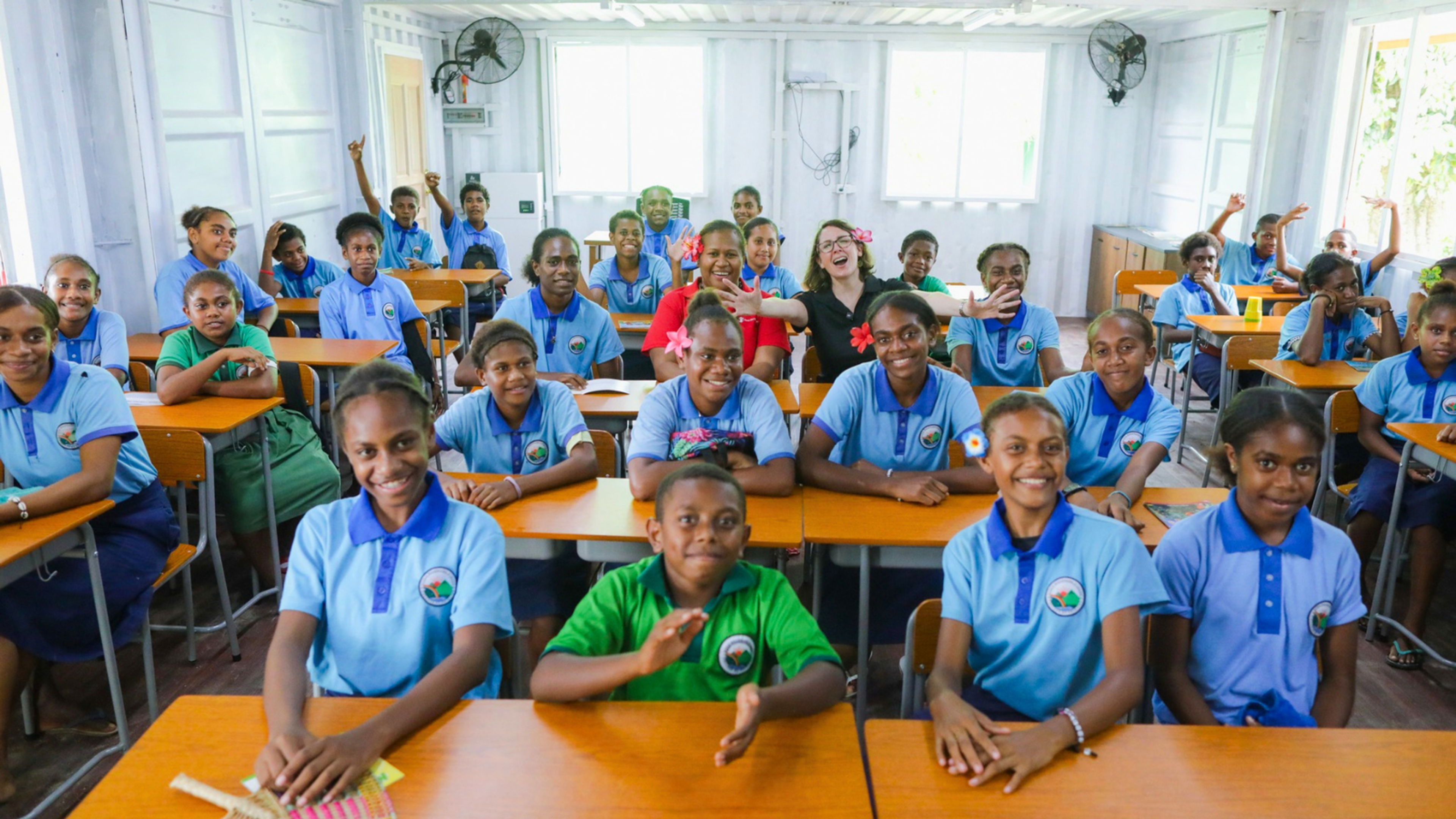
The new building, made from four modified shipping containers, is designed to withstand extreme weather and can be relocated if needed.
Speaking on Pacific Mornings, Huw Kingston, a Save the Children ambassador, said the idea came from the growing damage caused by cyclones and earthquakes across Vanuatu.
“Education is such an important thing, and with Vanuatu being hit by ever more powerful cyclones and the earthquake which destroyed 100 or more classrooms, it was a no-brainer,” Kingston said.
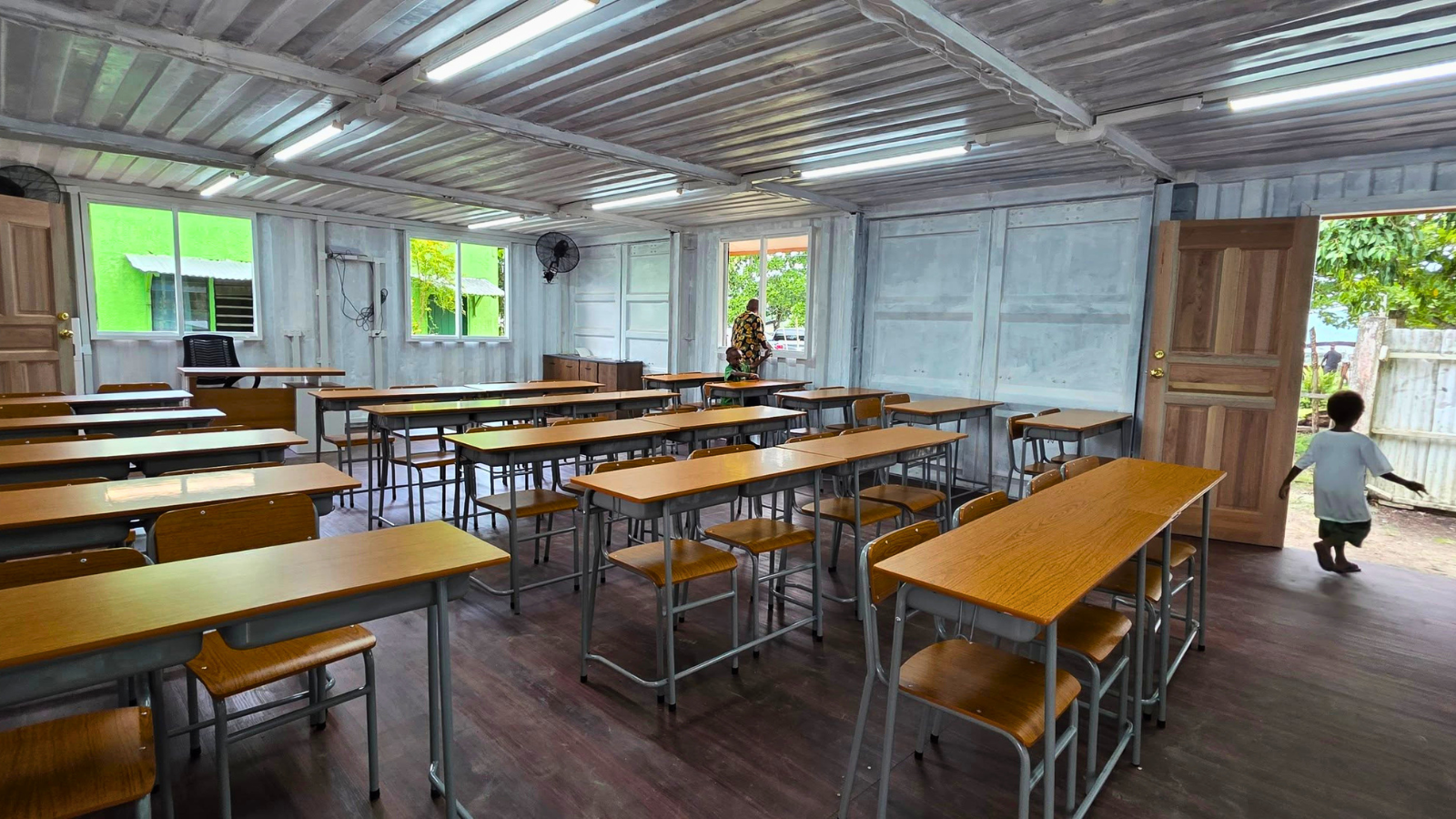
Interior of the container classroom with seating for 40 students. Photo/Ministry of Education and Training, Vanuatu.
At Suango School, a kindergarten class is now moving into the new space this week after months in a United Nations Children’s Fund (UNICEF) tent.
The project was funded through a 4500-kilometre fundraising expedition across Aotearoa, with Kingston and his team travelling 96 days by bike, ski, and foot.
Relvie Matariki Save the Children Vanuatu country director, said the need for quicker solutions is urgent.
“We always face natural disasters every year,” Matariki told Pacific Mornings. “Kids are still using tents as classrooms.
“It takes a very long time for students to come up from tents and move into additional concrete classrooms.”
She said repeated disasters, including the 2024 earthquake, had forced students to learn in temporary spaces for months at a time.
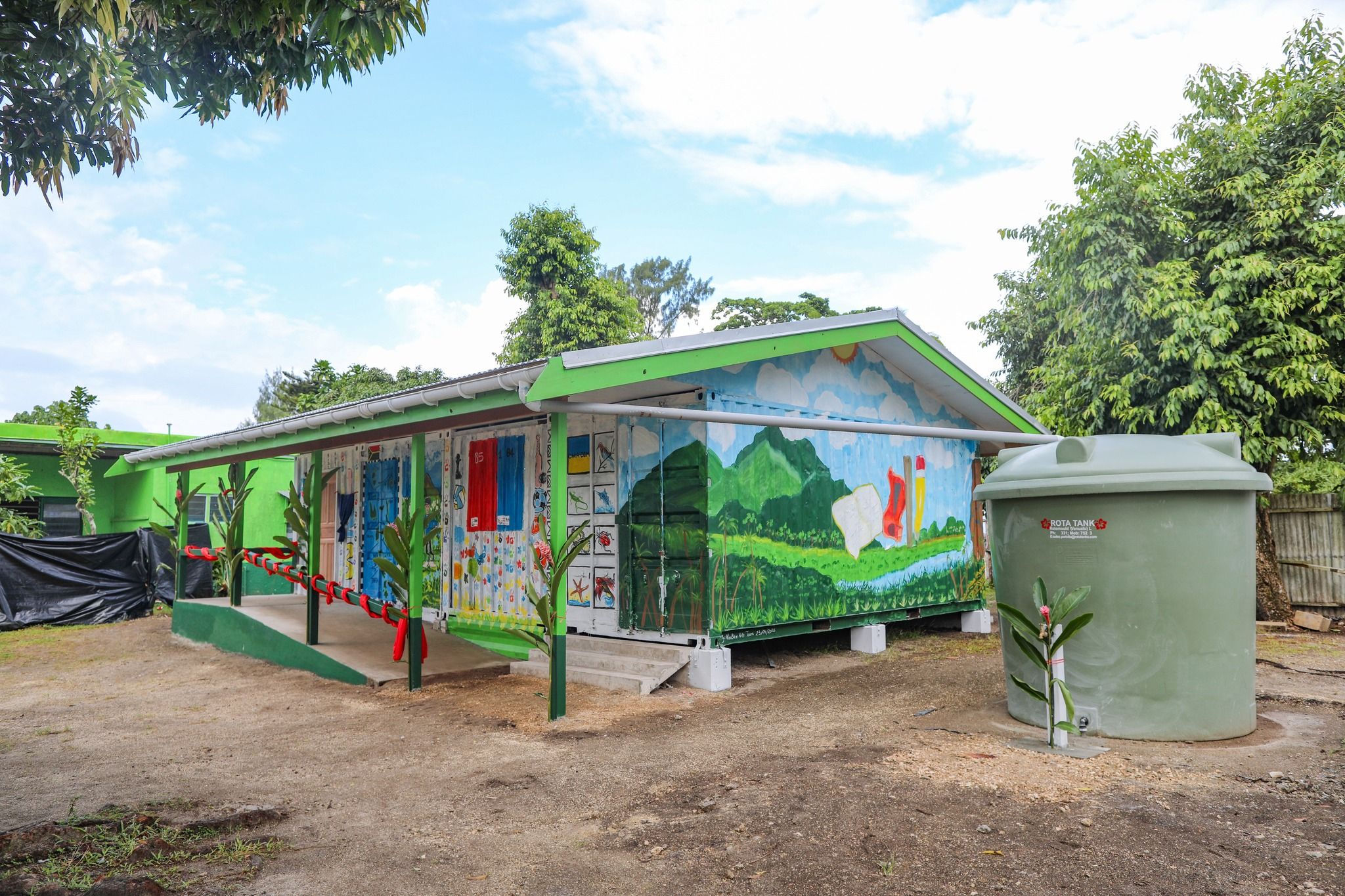
The disaster-resilient classroom was completed on 24 April and opened at Suango School near Port Vila on Monday. Photo/Save the Children Vanuatu
The container classroom was built in about 27 days once materials arrived, although project partners said weather delays meant construction took around six weeks in total.
Matariki said the model is designed to reduce the time children spend out of proper classrooms.
“Traditional builds take at least 90 days, often longer,” she said.
The structure is elevated and built to meet standards required to withstand Category 5 cyclones and earthquakes.
It has also been reviewed by local and international engineers and is approved under the Ministry of Education and Training requirements.
Speed and cost are central to the design. The classrooms can cost about VUV$7 million (around NZ$100,000), or up to VUV$10 million (NZ$143,000) with solar power and internet, less than half the cost of a traditional classroom.
Watch Huw Kingston and Relvie Matariki's interview below.
Kingston said the aim is for the model to be rolled out more widely if it proves successful.
“As we can hopefully scale this up across Vanuatu and maybe further in the Pacific, the whole package, everything from desks to solar power, can be shipped in and set up quickly where it’s needed,” he said.
The pilot has been handed over to the Vanuatu government, with interest in expanding the model to other schools.
At the unveiling, Prime Minister Jotham Napat urged communities to play a role in maintaining the facilities.
“Projects like this are not just for the government. We all have a responsibility to take care of these classrooms,” Napat said.
Vanuatu is among the most disaster-prone countries in the world, regularly hit by cyclones, earthquakes, floods and volcanic activity, all of which disrupt schooling.
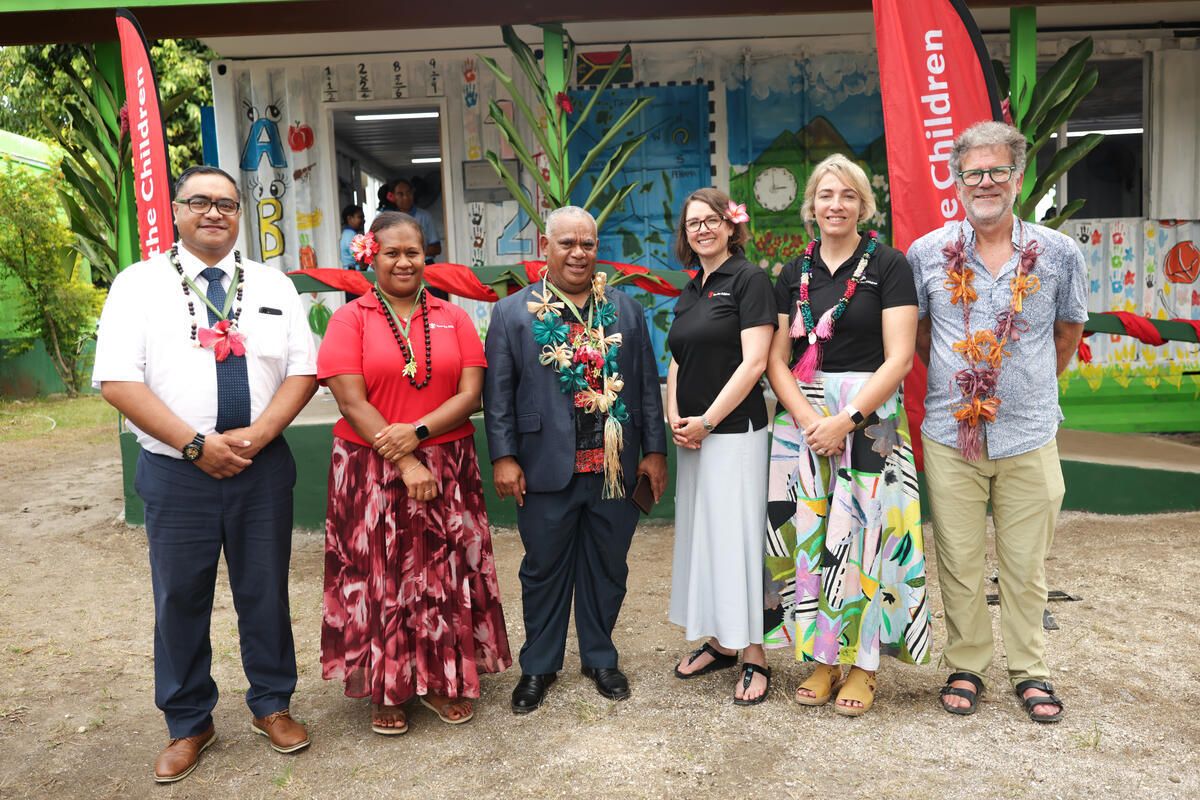
(L-R) Taulia Tafiti (Area Humanitarian Manager, Welfare and Self-Reliance Manager – Pacific Area, The Church of Jesus Christ of Latter-day Saints), Save the Children Vanuatu Country Director Relvie Matariki, Prime Minister Honourable Jotham Napat, Save the Children NZ CEO Heather Campbell, former Vanuatu Country Director Polly Banks and Huw Kingston. Photo/Save the Children New Zealand
Officials say maintaining steady school attendance remains a challenge, with disasters and other disruptions affecting learning across the country.
For Matariki, the goal is getting children back into safe classrooms as quickly as possible after disaster strikes.
“Education should continue, even after emergencies,” she said. “This gives us an option to bring children back into safe learning spaces much faster.”
If scaled, the model could reduce the time students spend out of classrooms after future disasters across Vanuatu and potentially the wider Pacific.