
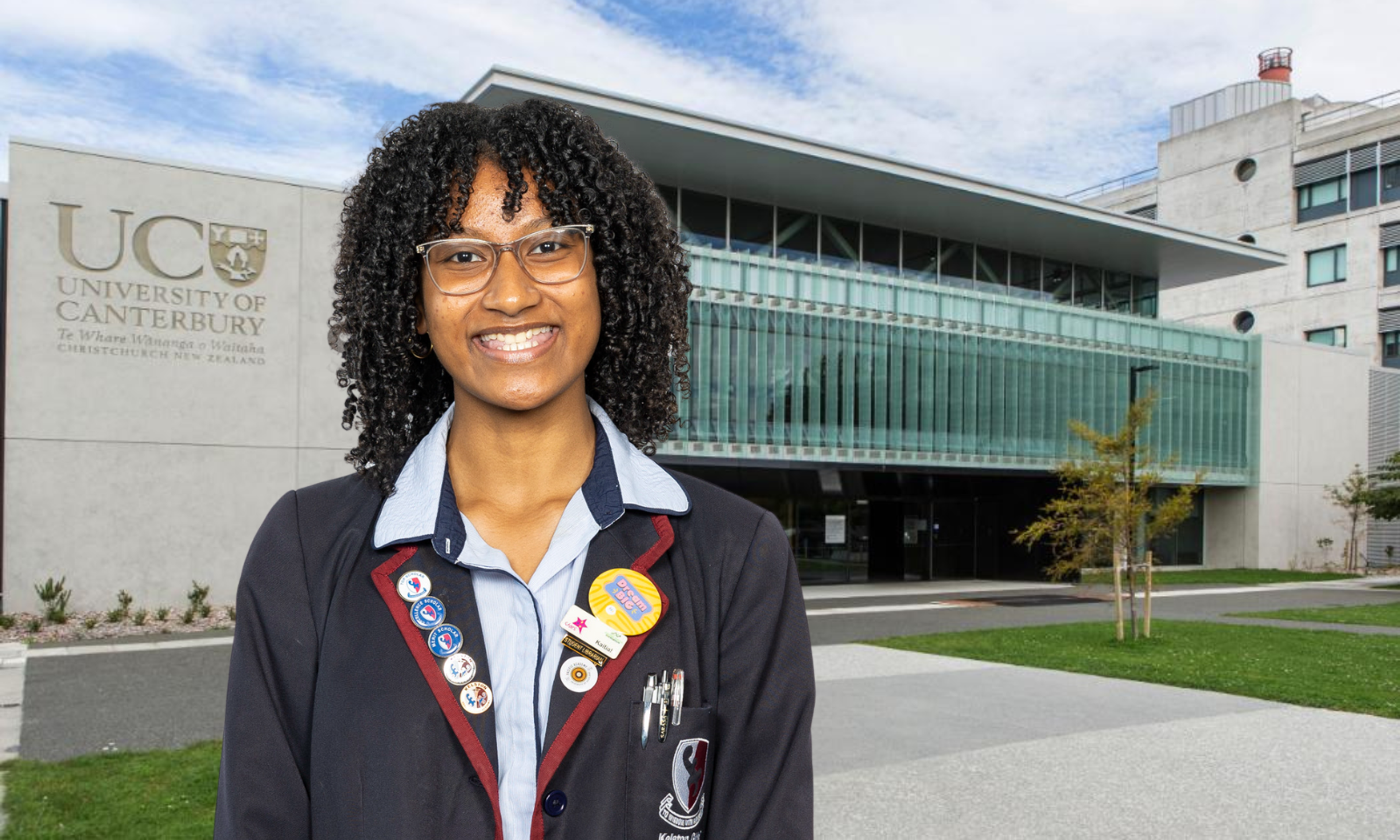
Grace Motusaga is one of 18 recipients of the Milford Foundation scholarship.
Photo/Supplied/File
Education
From Kelston to Canterbury: Pasifika engineering student awarded scholarship
Engineering student Grace Motusaga says the support lifts financial pressure off her family and strengthens her goal to serve Pacific communities through renewable energy.

Khalia Strong
Published
27 February 2026, 1:26pm
Share
Copy Link
Top stories

Savea joins Blues for ‘last dance’ after Super Rugby's tug-of-war
Patrick McKendry, RNZFri, 02 Oct
'Our stories have mana': Fijian academic urges Pacific people to record their own storytelling
Elenoa TuragaiviuThu, 01 Oct

New Zealand's climate promises face trade test, says law expert
PMN NewsFri, 02 Oct
Top stories
Savea joins Blues for ‘last dance’ after Super Rugby's tug-of-war
Patrick McKendry, RNZFri, 02 Oct
'Our stories have mana': Fijian academic urges Pacific people to record their own storytelling
Elenoa TuragaiviuThu, 01 Oct
New Zealand's climate promises face trade test, says law expert
PMN NewsFri, 02 Oct
A former Kelston Girls’ College Student from West Auckland says a major university scholarship has lifted financial pressure from her family. The 17-year-old says it has strengthened her confidence as she begins her engineering journey.
Milford Foundation has awarded Grace Motusaga $10,000 for each year of her undergraduate degree, along with mentoring and career support.
Motusaga is one of 18 students selected this year, and says the scholarship brings a sense of security for her and her family.
“Without this scholarship, my parents would struggle. Some of the financial pressure is being lifted off their shoulders,” she says in a statement.
The eldest of four, Motusaga traces her roots to Saleilua and Salani in Sāmoa and spent her childhood across Sāmoa, Australia and Fiji.
Studying towards a Bachelor of Engineering at the University of Canterbury, Motusaga says she is driven by a desire to represent her Pasifika heritage in the renewable energy sector.
“I aspire to be a beaker of hope,” she says, putting a scientific twist on a common phrase.
Representation in a male-dominated sector
Motusaga’s ambitions sit within a wider challenge of representation in engineering.
Figures from Hanga Aro Rau, the Workforce Development Council, show Pacific people made up 5.3 per cent of the engineering workforce in 2018.
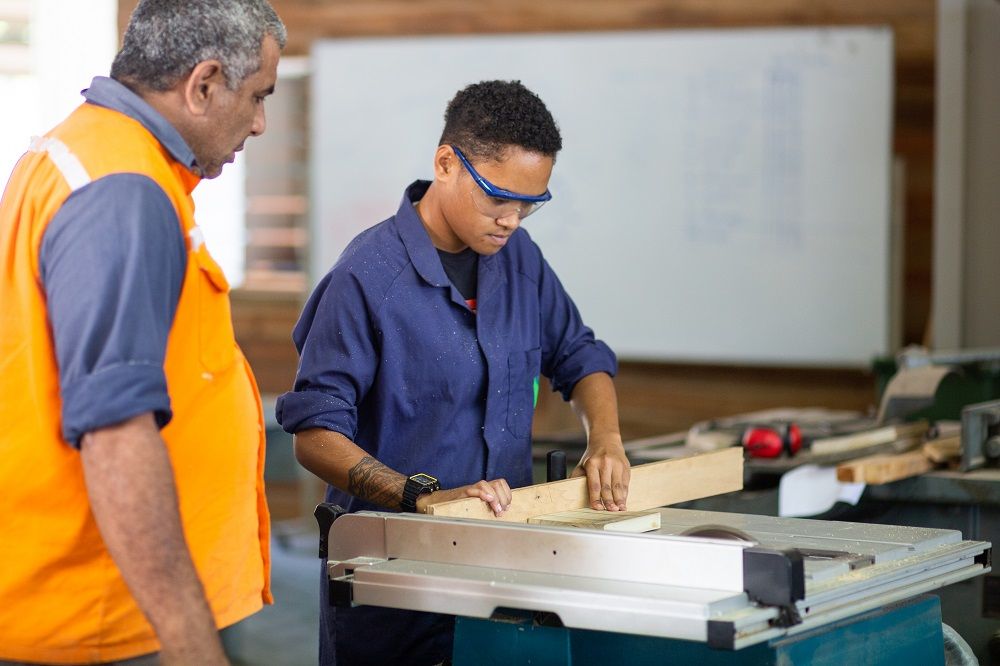
Engineering has a history of being male-dominated. Photo/File
While there are no figures for Pacific women, a report from Engineering New Zealand notes women made up around 14 per cent of the profession, stating: “We still have more work to do, until the profession is representative of the communities it serves. A diverse and equitable engineering profession benefits everyone.”
Pacific women are beginning to shift that imbalance. Last year, Tahitian twins Hukerenui and Ohinerau Bonnet graduated with doctorates in engineering from the University of Auckland.
In a joint statement, they said having more Pacific women in the field is critical. “There is a lack of representation for our people. This is an area where Pacific women can be the best and thrive,” they said.
Motusaga plans to pursue a degree that allows her to “use my hands,” aiming to work with power grids and sustainable energy solutions. She hopes to “find alternative ways to effectively use electricity and power sources” to slow the effects of climate change.
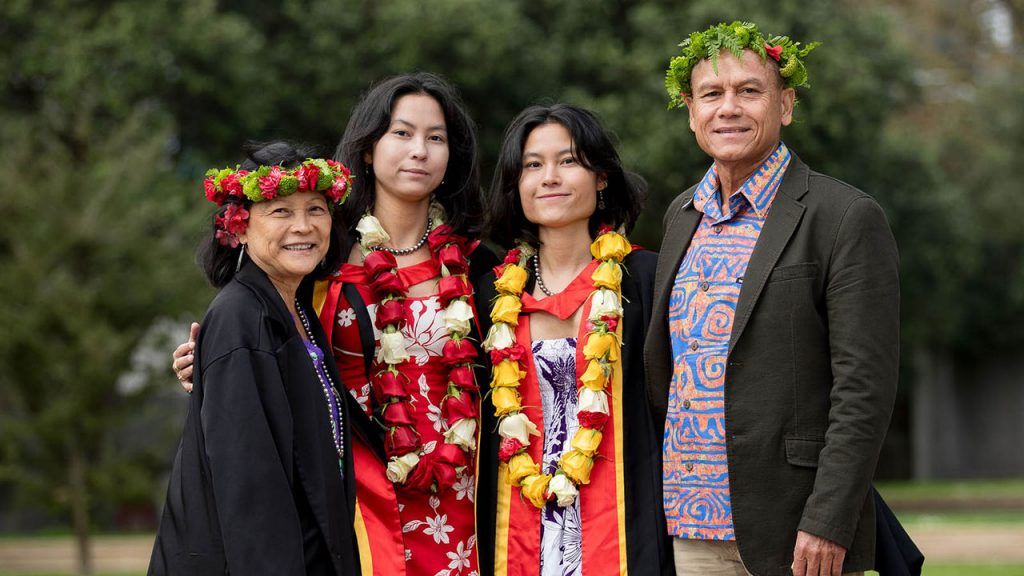
Engineering doctoral graduates Hukerenui and Ohinerau Bonnet, and their parents Carmen and Ronald Bonnet. Photo/Chris Loufte
The Milford Foundation Scholarship programme was launched in 2022 to reduce inequity in tertiary education. It provides $10,000 per annum for each year of undergraduate study and has committed more than $550 000 in funding, supporting 55 students nationwide.
This year also marks a milestone, with the first five scholars graduating in 2026 after completing three-year degrees in fields ranging from international business to criminology.
Lucy Doyle, General Manager of the foundation, says the scholarships are about removing barriers and backing potential. “These students represent the next generation of contributors and leaders in Aotearoa New Zealand. They have the drive and the ability. What they need is the support to focus fully on their studies,” she says.
For Motusaga, the support is also about honouring her mother’s sacrifices and giving back to her community, bringing her own lived experiences to an industry where representation is lacking.