
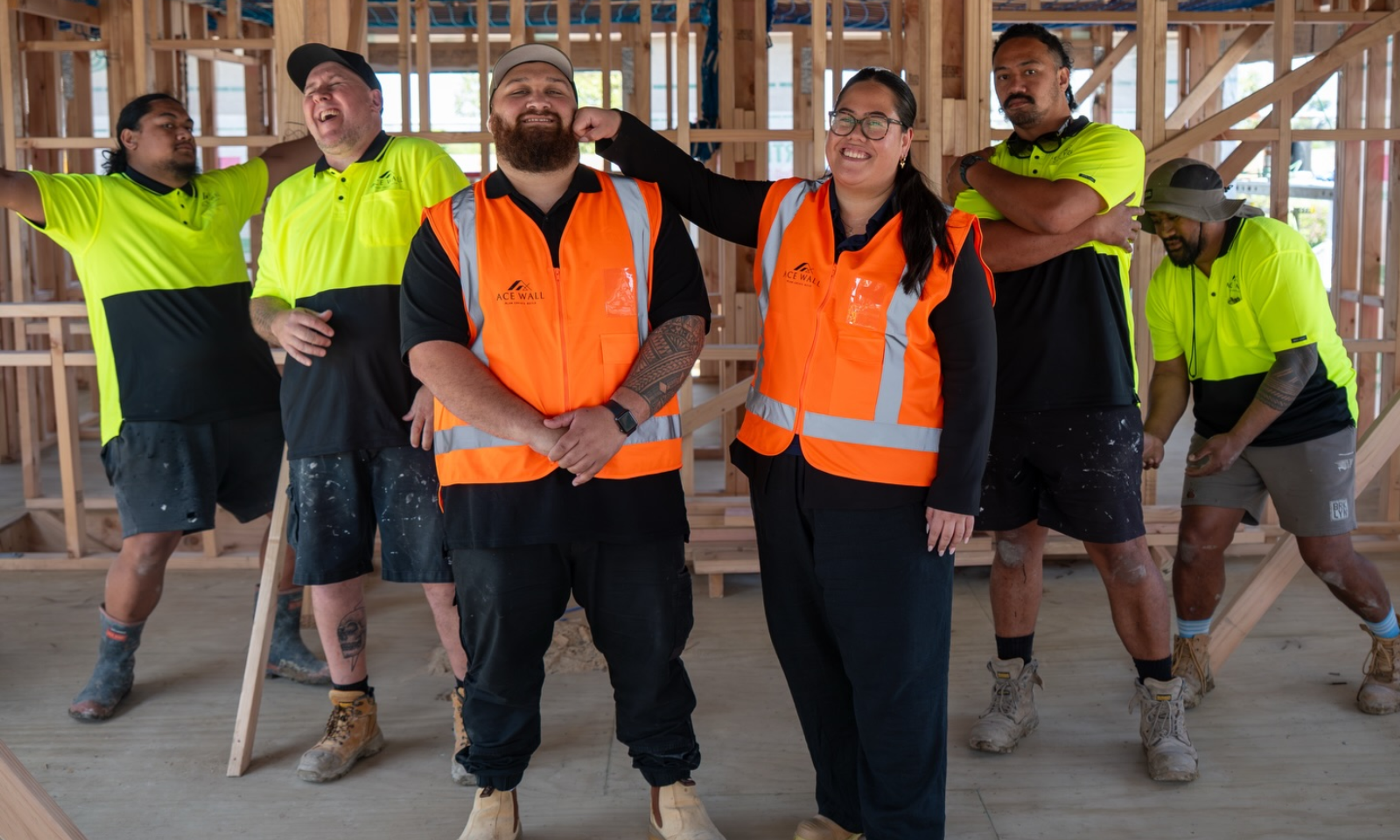
Brendan Wallace and Naomi Chew-Lit (orange hi-vis vests) are the co-founders of Ace Wall Building.
Photo/Facebook
Business
Pacific-led building company redesigning the intergenerational housing deficit in NZ
While new data shows systemic failure for Māori and Pasifika, Ace Wall Building is bringing communal design solutions.

Atutahi Potaka-Dewes
Published
02 March 2026, 3:37pm
Share
Copy Link
Top stories

Sāmoa Ombudsman raises concerns over local news reporting of siblings’ deaths
Renate RiversFri, 18 Sep
Top stories
Sāmoa Ombudsman raises concerns over local news reporting of siblings’ deaths
Renate RiversFri, 18 Sep
For many Pacific and Māori families living in Aotearoa New Zealand, the family home is a generational anchor.
According to data from the University of Auckland’s Māori and Pacific Housing Research Centre, (MĀPIHI) in 2023, homeownership rates for Pacific (16.8 per cent) and Māori (27.5 per cent) lagged significantly behind the national average of 66 per cent.
Enter Ace Wall builders. Founded five years ago by Brendan Wallace and Naomi Chew-Lit, the company is bridging the gap between systemic housing failure and the cultural need for communal living.
Speaking with PMN Tonga, Wallace and Chew-Lit say they are committed to reshaping the narrative and agency around Pacific homeownership.
“I’ve never had a Tongan come and ask me, ‘I want a butler’s pantry’,” Wallace says. “It’s always, ‘I want a bigger lounge room for all the grandkids, and a bigger kitchen.”
Chew-Lit says that by understanding the cultural and communal nuances of Pacific housing they can ensure the architecture reflects reality.
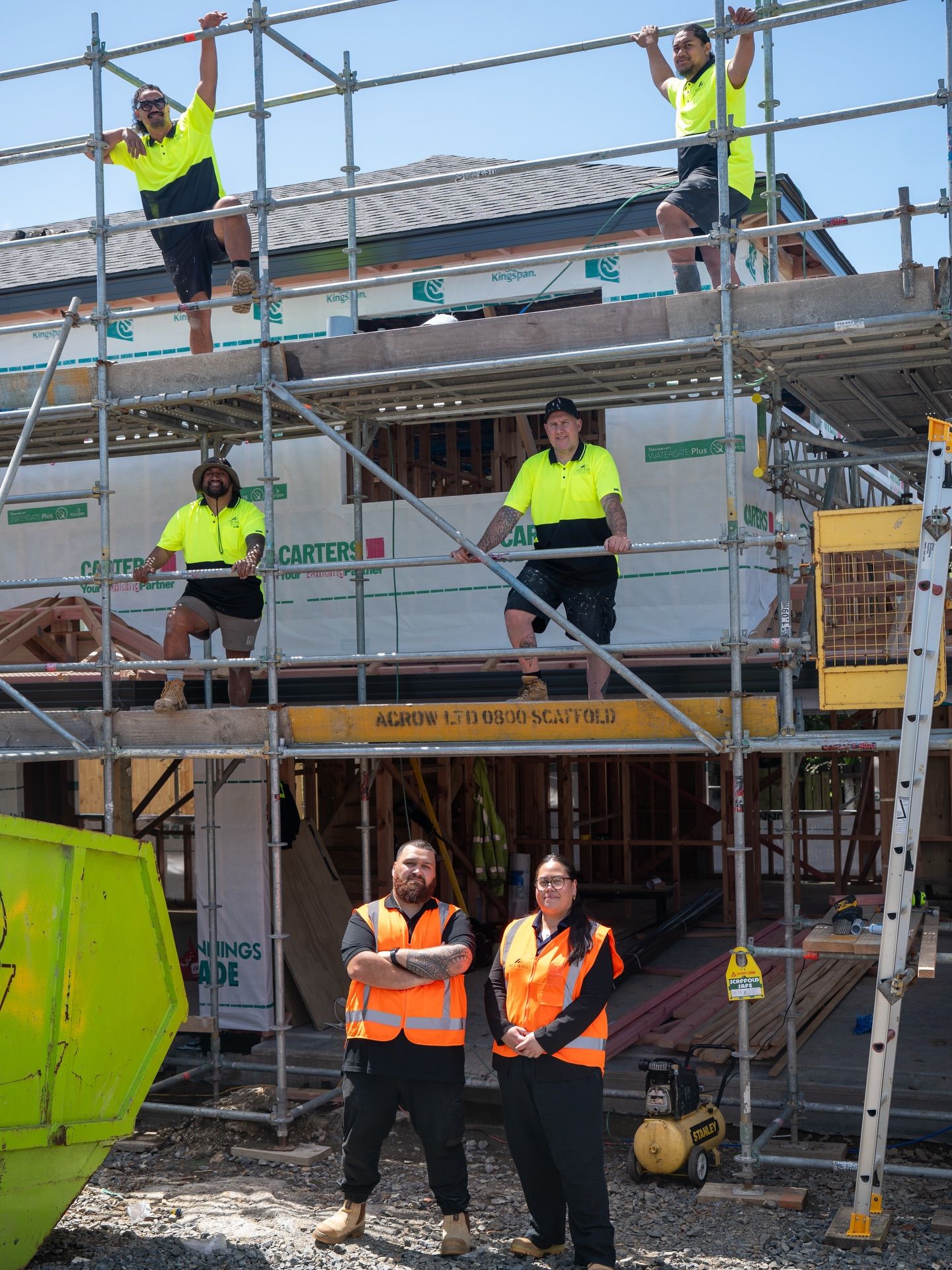
Ace Wall Builders. Photo/Facebook
Ace Wall's co-founders note that many clients face financial anxiety, trauma from substandard work, and vulnerability stemming from a lack of knowledge during the home ownership process.
To help demystify the process, Ace Wall integrates mortgage brokers, architects, insurance advisors, and New Zealand certified builders into every conversation with the client.
“We’ve really bedded down our processes to make sure that we’re delivering the best outcome and also being really transparent,” Chew-Lit explains.
Watch Brendan Wallace and Naomi Chew-Lit's full interview below.
Wallace adds the handover “is the best part of the job”.
“Seeing their faces, from what it was to what it is now. It'll be nice to sort of flip the house without them seeing the whole lot and doing that ‘move that bus moment’. But any chance a client gets, any stage of progress, they're in there having a look.”
University of Auckland academics note that the housing market is failing the needs of Pasifika and Māori, as most houses in the country are modelled on the small, nuclear family, leaving larger, multi-generational whānau struggling to find space to thrive.
“The majority of the housing stock isn’t designed to enable and empower intergenerational living,” Dr Karamia Müller says in a statement.
“Much more flexible houses are required,” Professor Deirdre Brown adds. “The houses we have don’t accommodate larger families - they don’t have options like two kitchens, they don’t allow for people to come and stay for longer periods.”
The future for Ace Wall is to host webinars and facilitate talanoa sessions to encourage financial literacy that has historically sidelined Māori and Pacific homeowners.
This operational shift addresses the need for “flexible housing” stock that accommodates intergenerational living - a fundamental gap identified by the MĀPIHI research.
Chew-Lit says alongside some charitable outreach work they offer, they hope to grow informed and resilient communities to build tailor-made sustainable futures.