Future generations law must put Pacific health at the centre - advocate
Christine RovoiFri, 21 Aug
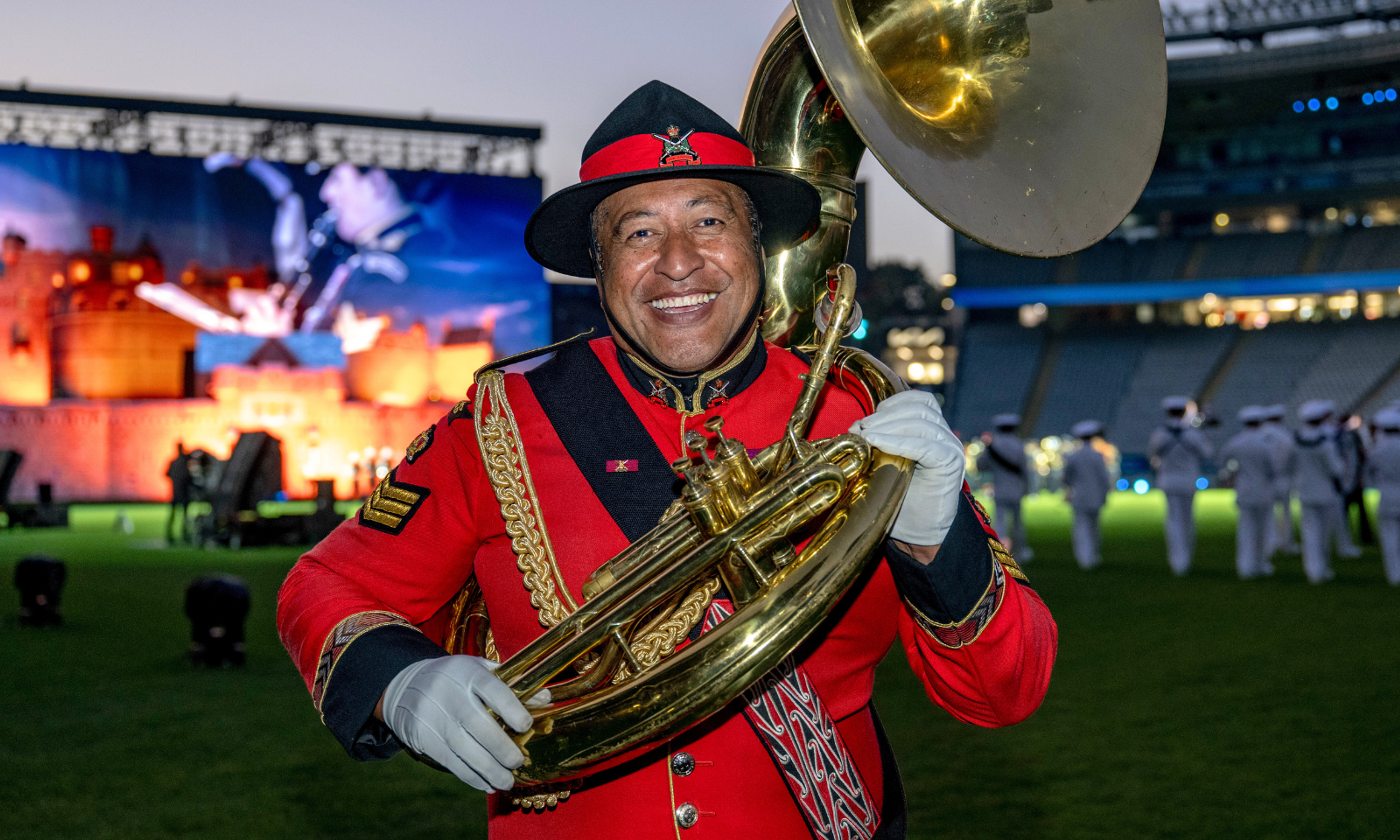
David Fiu played the sousaphone for the New Zealand Army Band at the Royal Edinburgh Military Tattoo.
Photo/NZDF
When British bagpipes played Pōkarekare Ana and Tongan soldiers performed Tū Tira Mai, it wasn’t just a spectacle, it was a powerful moment of cultural recognition for Staff Sergeant David Fiu.

The skirl of bagpipes has echoed through Edinburgh in Scotland for decades.
But in Auckland over the weekend, those pipes carried something deeply personal, the sound of home.
For Staff Sergeant David Fiu of the New Zealand Army Band, hearing British and Tongan military bands perform Māori waiata and Tonga classics at the Royal Edinburgh Military Tattoo was more than impressive. It was emotional.
“Some of the British bands played on their pipes Pōkarekare Ana, which was outstanding,” Fiu, who is of Ngāti Porou and Sāmoan (Salelologa) descent, told William Terite on Pacific Mornings.
“We even had Tū Tira Mai being performed by His Majesty's Armed Forces from Tonga, which we took real pleasure in listening to and supporting them as well.”
In that moment, the global spectacle became unmistakably Pacific. The 75th anniversary show, The Heroes Who Made Us, brought together 1000 performers from 30 groups around the world for the Tattoo’s Auckland event.
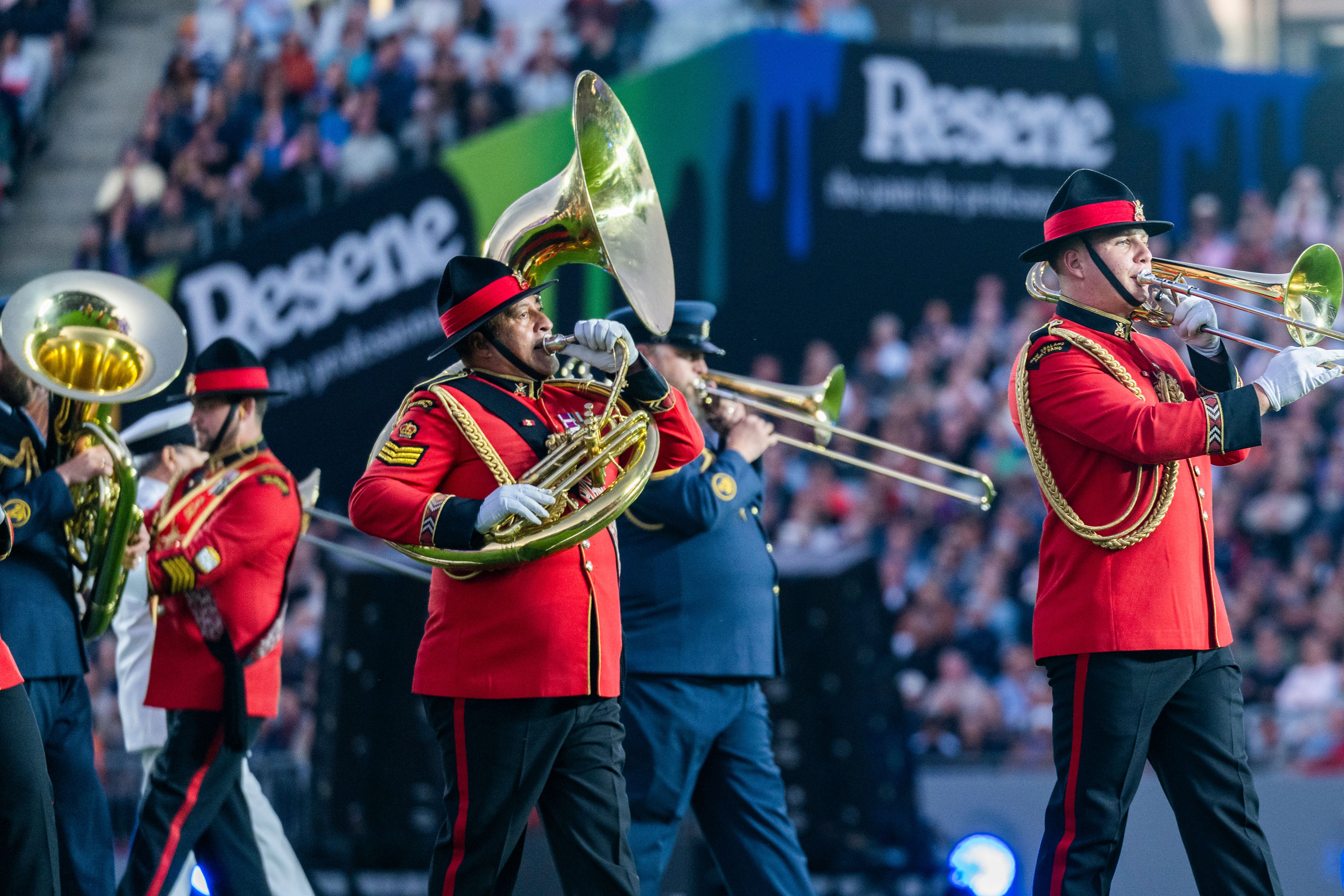
David Fiu marching in step with the New Zealand Army Band at Eden Park. Photo/NZDF
Among them was the Tongan group, who performed Nepituno, a beloved classic by the late Queen Salote Tupou III, accompanied by male dancers wearing manafau (grass skirts) and women adorned in tapa and tekiteki (hairpieces).
For Pacific audiences, it was a proud display of identity on one of the world’s most iconic stages.
For Fiu, a veteran of seven overseas Edinburgh Military Tattoos, the Auckland show was also a chance to guide younger band members through the high-pressure production.
Having performed in Brisbane the week before, the New Zealand Army Band arrived sharp and show-ready, but adapting to different venues required some innovation.
“We had FM radios providing click tracks and music so we wouldn’t disturb the residents,” Fiu said. “That was new for us. In Scotland, it doesn’t matter.”
“By the time we came over here and performed, it was humming. It is great to spread the kaupapa in terms of music being a real game changer in bringing people together and to be able to have that Aotearoa flavour down this way.”
A musical journey
Fiu’s own journey reflects that same spirit of connection. A multi-instrumentalist who plays trumpet, trombone, sousaphone, bass guitar, keyboard, and sings, he was once part of the reggae band, South Side of Bombay, playing the catchy trumpet lines to their hit What’s the Time Mr Wolf.
Fiu joined the New Zealand Army Band 25 years ago after spotting them in action while playing for the Air Force Band in Wellington.
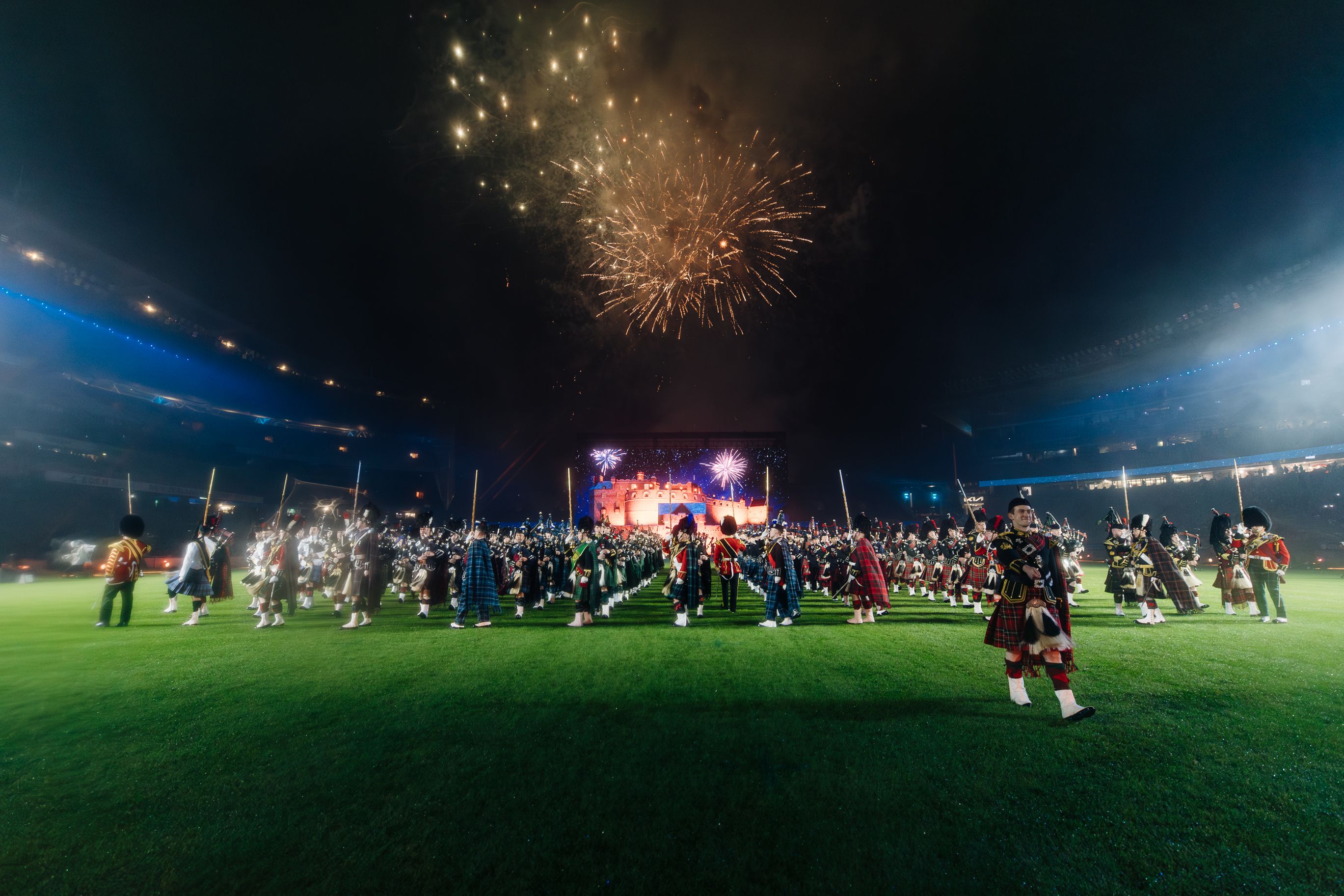
The Auckland performance was an extravaganza with fireworks. Photo/Jared Tinetti
“I thought, OK, this does give me the opportunity to fulfil my musical ambitions during the day and then be a family man in the evenings,” he said. “And 25 years later, it’s become very much part of my being”
For young Māori and Pacific musicians, Fiu sees the Defence Force as more than a job, it’s a pathway. “It’s given me the chance to express myself not only musically, but, coming from a Sāmoan-Māori background, it does open opportunities to discuss with young people the career possibilities, not just in music, but also as chefs, dentists, what we call ‘grunts’ in the infantry.”
At its heart, the Tattoo in Auckland was not just about military precision or pageantry. It was about cultures meeting with respect. About Pacific stories carried on global winds. About hearing your language, your songs, your ancestors’ melodies played back to you from the other side of the world.
From Scotland to Aotearoa, the message was clear: our music travels and when it returns, it carries pride with it.
Watch David Fiu's full interview below.