
PNG's govt moves to limit family size as the country's population tops 10 million people
Christine RovoiTue, 10 Nov
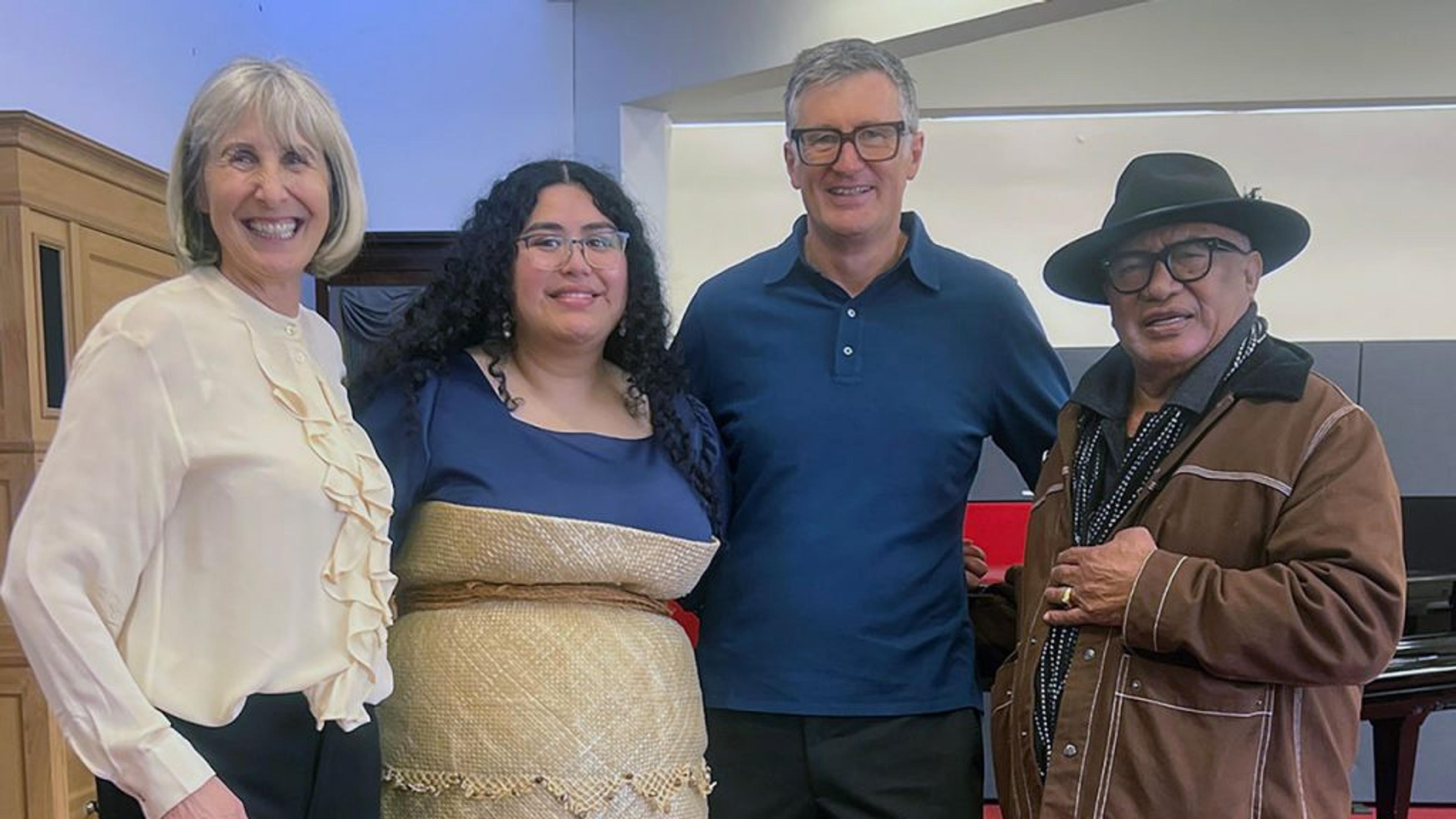
Helen Pahulu, second from left, with award sponsors Felicity Barnes and Michael Whitehead and artist Fatu Feu'u.
Photo/University of Auckland
Raised on family prayers and South Auckland brass bands, the award-winning Tongan scholar says her creative roots took hold long before entering the classroom.




A Pacific jazz musician and vocal tutor says her musical journey started well before stepping into a lecture hall, rooted in the hymns, communal prayers and family harmonies of South Auckland.
Helen Pahulu, a specialist in jazz at the University of Auckland, is celebrating after receiving the prestigious Fatu Feu'u Pacific Arts Prize.
The university honoured the recent Master of Music graduate last month, recognising her creative discipline, academic excellence and meaningful advocacy for Pacific culture in higher learning.
Raised in South Auckland’s Māngere, Pahulu maintains close ties to her ancestral homeland through the four Tongan villages of Folaha, Mango, Nomuka and Kanokupolu.
She views her family environment, Christian faith and parish fellowship as the foundations of her passion for sound.
"Looking back, I realise that my musical education began long before I entered a formal classroom.
"It began at home, surrounded by family, faith and community. Music has never been something separate from everyday life; it is simply part of who we are."
Her musical development grew in evening devotions and brass lesson on the euphonium.
During her schooling at Sancta Maria College, she broadened her artistic palette by participating in choirs, kapa haka, jazz groups and symphonic orchestras.
Unlike church hymns and community brass bands, jazz was not part of Pahulu’s early life.
Her first real exposure came through cinema, where brassy arrangements in movies like The Incredibles revealed how instrumental harmony can convey dramatic narratives.
Helen Pahulu with her mother Ana and brother Viko. Photo/University of Auckland/Billy Wong
That curiosity soon blossomed into a vocation, focusing her on the expressive depth of jazz performance.
While she initially planned to study law, Pahulu changed paths after watching a jazz ensemble from the university perform live.
The concert motivated her to complete undergraduate and honours qualifications before completing a master's degree.Winning the prize has offered timely encouragement following months of exhausting commitments across research, teaching and intensive study.
"I was so burnt out by that point of the year. But then I received the award and I was like, wow, this is amazing. I feel like I can do everything at once now."
Pahulu says the honour has renewed her creative spark to arrange music and revisit projects paused during her studies.
She underscores that the accolade carries wider meaning for Māori and Pacific visibility.
"For me, 'smashing the brown ceiling' is not simply about being present in spaces where Māori and Pacific people have historically been underrepresented. It is also about creating opportunities for our perspectives, experiences and knowledge to be recognised and valued."
She hopes her achievements open doors for younger Pacific students who aspire to become performers, composers, educators and scholars.
"Ultimately, I want our young people to know that there is room for them in these spaces, and that their cultural backgrounds and experiences are not limitations to overcome, but strengths they can bring with them."
Alongside her teaching duties, Pahulu is composing modern Tongan music and exploring doctoral study abroad to champion Indigenous knowledge internationally.