
Fiji reviews suspected cyber breach at Suva regional organisation
Christine RovoiThu, 15 Oct
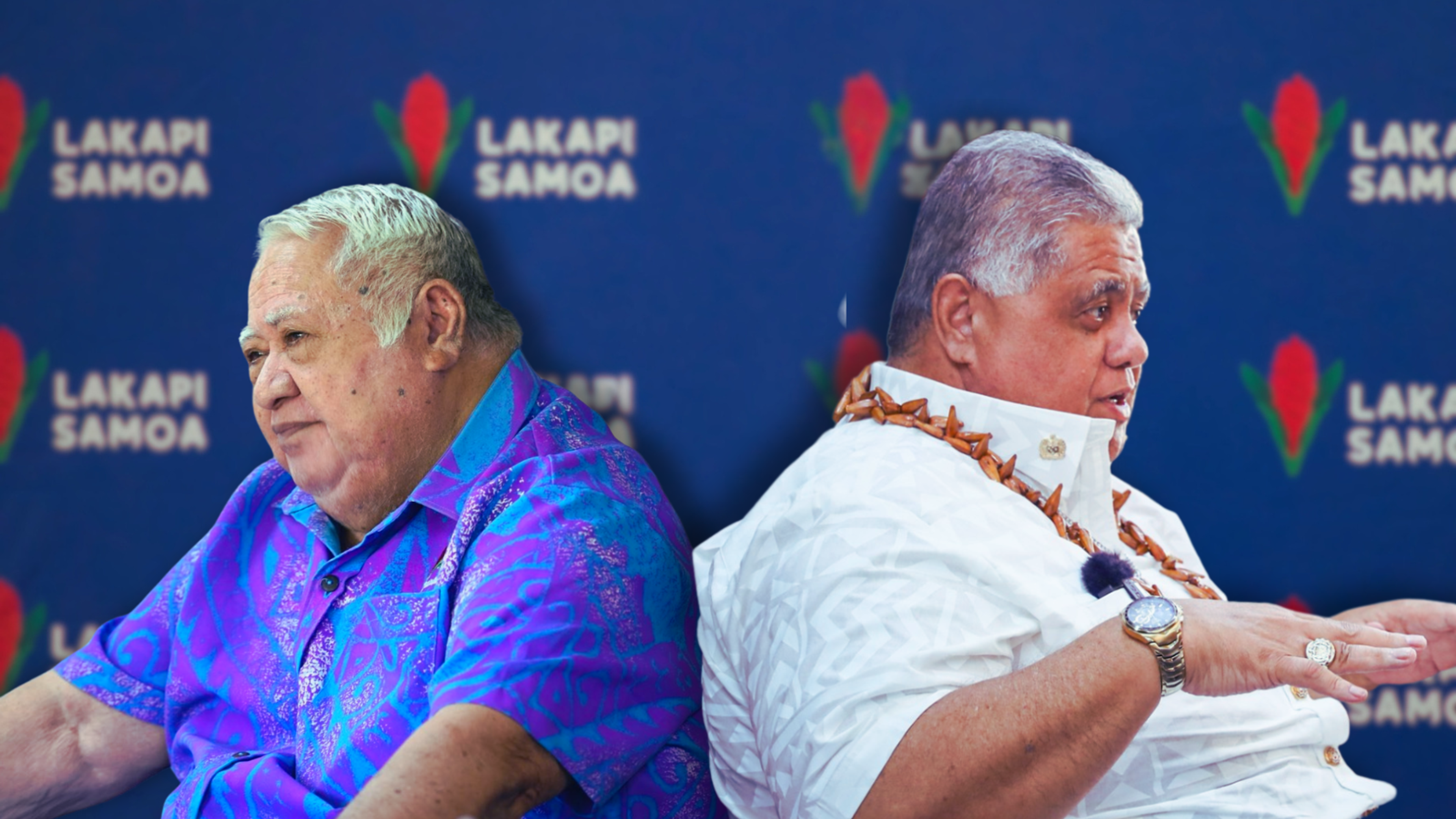
Moves to reform rugby in Sāmoa are highlighting deep divisions, with the rugby body working to address government's concerns over rugby governance. (L-R) Outgoing Lakapi Samoa Chairman Tuilaepa Sailele Malielegaoi and Prime Minister Laaulialemalietoa Leuatea Polataivao Schmidt.
Photo/Lakapi Sāmoa/Government of Sāmoa/Composite image by Renate Rivers
Leaders say change is needed but warn political pressure and rushed reforms could harm the game.
A growing push to reform rugby in Sāmoa is exposing deep divisions, with senior figures warning that political pressure and rushed changes could damage the game’s future.
Concerns about leadership, poor results, and declining public trust have fuelled calls for change. But there is little agreement on how that should happen.
Prime Minister Laaulialemalietoa Leuatea Polataivao Schmidt has stepped up pressure on the national rugby union. He says politics within its leadership has hurt the sport and, he claims, eroded public support.
He told local media that smaller unions have repeatedly approached him with concerns.
He claims the national team is being managed according to political affiliations, apportioning blame for “dismal” rugby results to what he described as “political gangs” in Lakapi Sāmoa.
“Government’s view is that if there’s no change to the entire leadership, to remove politics from the union, our rugby will never be successful again.
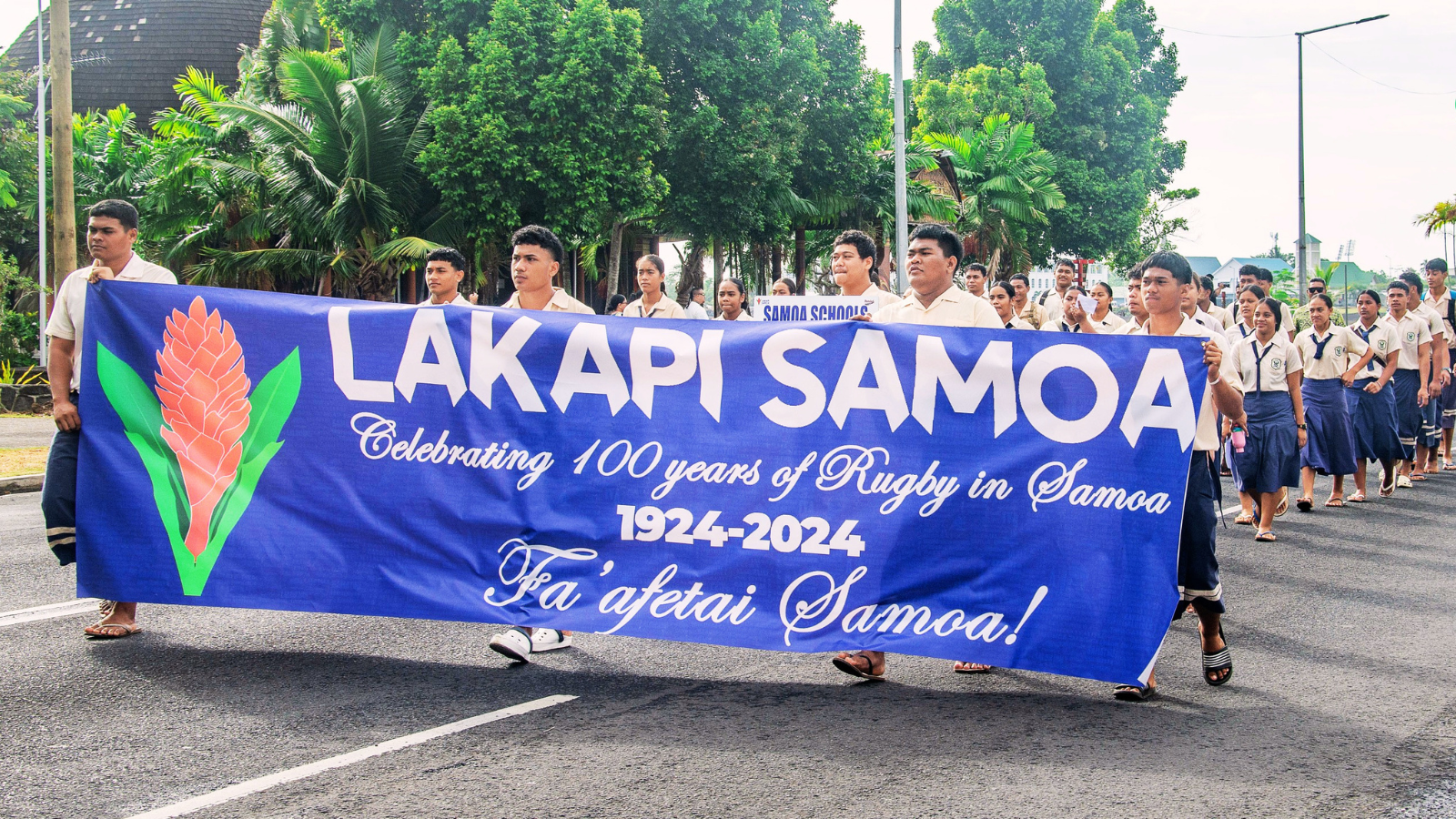
Rugby has been played in Sāmoa for over a century. Pictured are students participating in a 2024 parade to mark the centennial celebrations. Photo/Government of Sāmoa
“It’s the whole country that wants a change,” he said, insisting the game must be “cleaned up” and returned to those best placed to run it.
Laaulialemalietoa initially refused to approve a major regional funding agreement until leadership changes were made, and has signalled the government is prepared to support a new national rugby body if the current Lakapi Sāmoa leadership does not step aside.
“If those I have asked to leave… refuse to leave, then we have no choice,” the Prime Minister said, adding he would call on local unions and clubs to form an alternative structure.
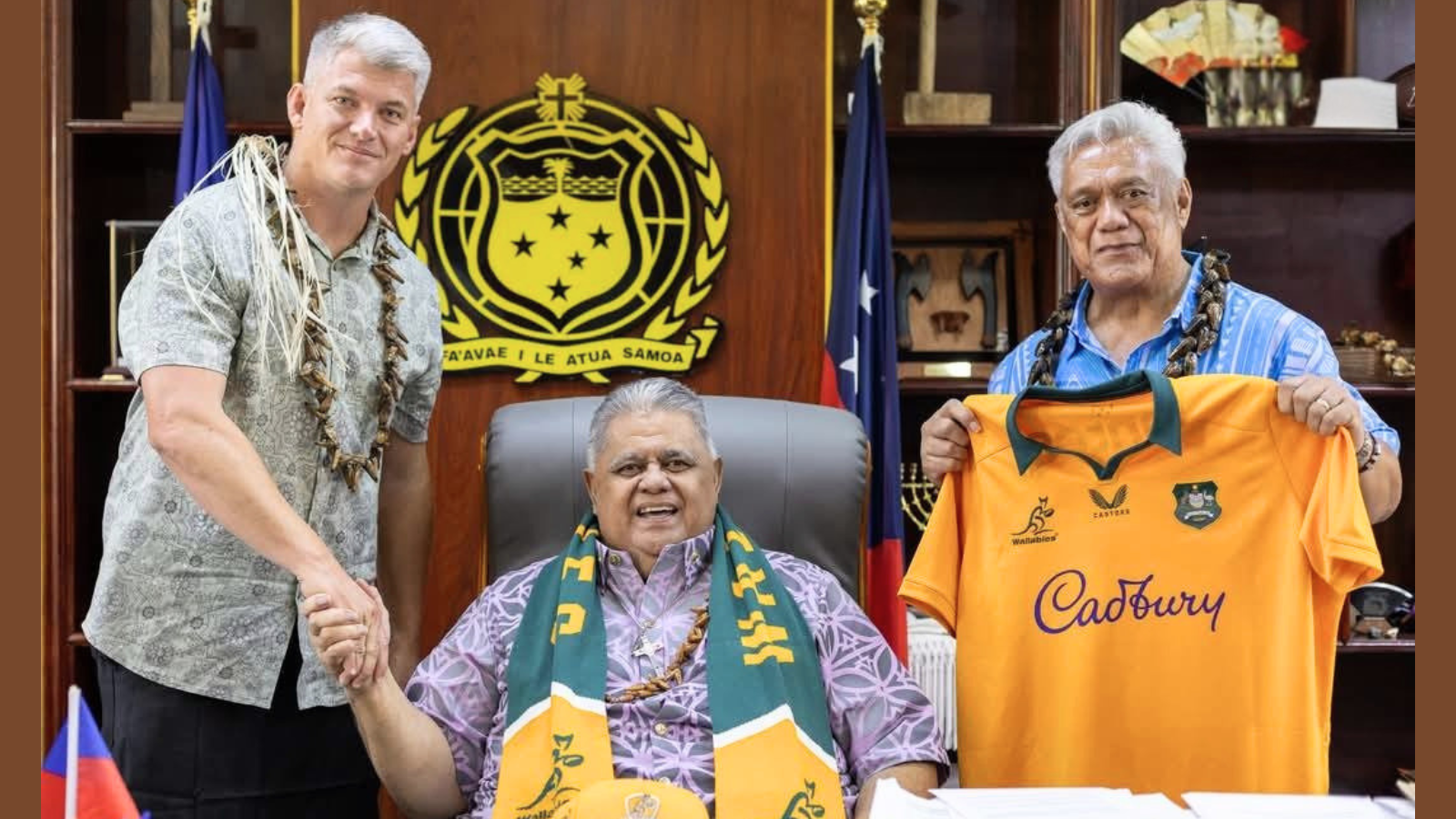
In early March, PM Laaulialemalietoa met with Rugby Australia's GM of Government Relations and Pacific Partnerships, Daniel Mills, and Cultural Liaison Officer Mr Fa’alafi Pa Enari.
While he has since allowed the funding process to move forward, he said the money will be held by the government until governance issues are resolved.
The funding is part of the proposed Veimoana partnership, a multi-million-dollar, Australian-backed investment involving Sāmoa, Tonga, and Fiji.
It is being pursued through a government-to-government model, raising questions about how much control governments could have over rugby in the region.
Despite the pressure, there is broad agreement within rugby circles that change is needed. But concern about how it is being handled.
Former Manu Sāmoa captain and head coach Vaovasamanaia Seilala Mapusua said the situation reflects deeper frustrations, but warned against quick fixes.
“I understand the why, why it’s happening, but that doesn’t make it any better,” he told PMN News. “I think it is a quick solution. I don’t think it’s sustainable.”
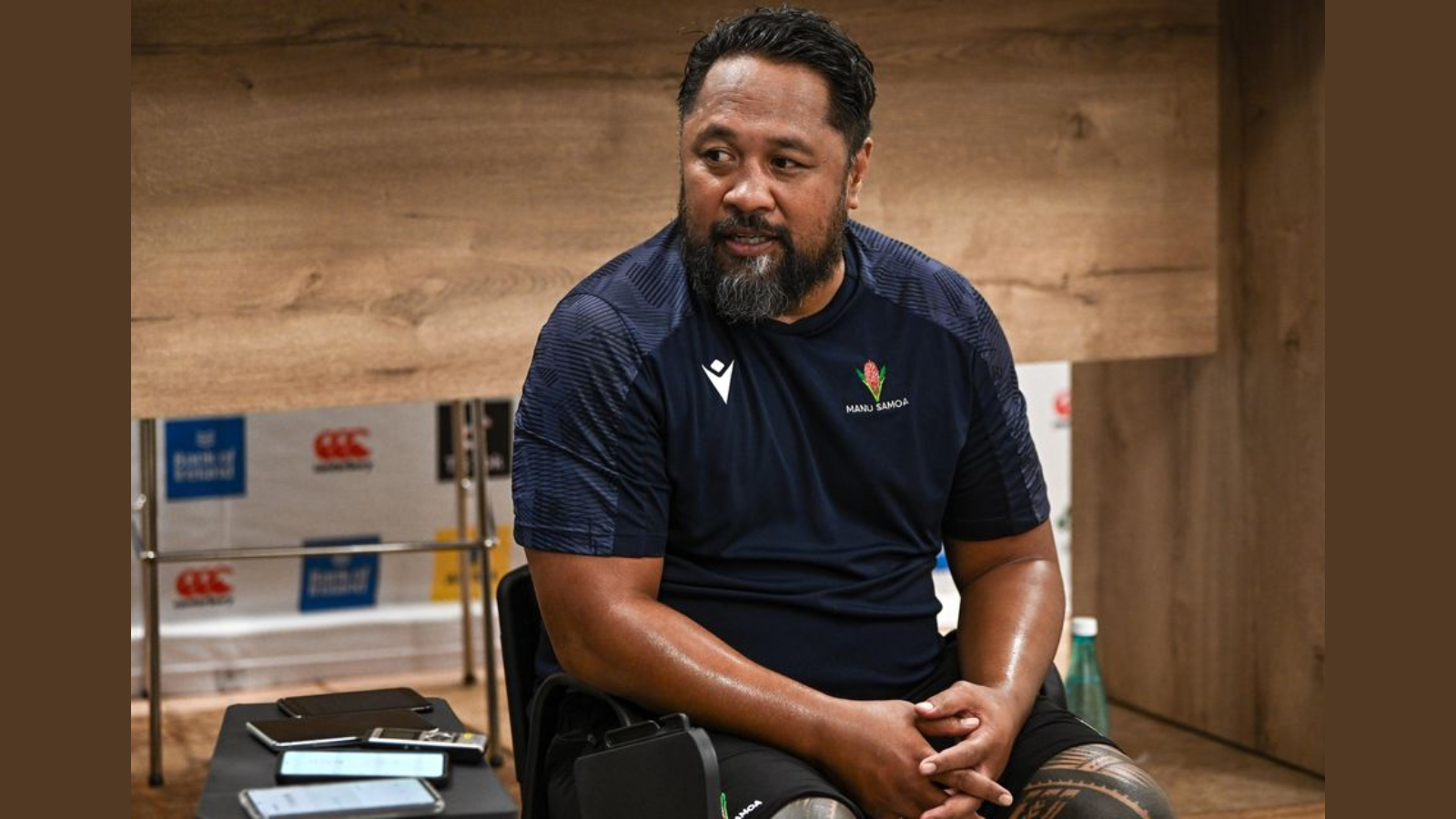
Former Manu Sāmoa coach Vaovasamanaia Seilala Mapusua says strengthening systems and having the right people in place is key to long-term growth. Photo/Sportslife
He said off-field conflict inevitably affects the national team. “If the home of Sāmoa rugby is not harmonious… then the outward-facing part of Sāmoa rugby, which is our national team, they’re always going to struggle.”
Vaovasamanaia said that in a small country like Sāmoa, the overlap between politics and rugby is often unavoidable. “They kind of go hand in hand,” he said.
“I think it’s really important to get the right people in those positions, and sometimes the best people for those governance roles happen to be politicians as well... as long as they’re taking off one hat before they put the other one on.”
Lakapi Sāmoa chief executive Seumanu Douglas Ngau Chun told PMN News the union had formally responded to the Prime Minister’s concerns and was seeking dialogue.
He said Lakapi Sāmoa operates under its own constitution and has functioned independently for decades.
“We acknowledge and respect the concerns raised,” Seumanu said, adding that Lakapi Sāmoa has presented solutions to Laaulialemalietoa, while affirming the need for compliance with legal requirements. He said any removal of board members must follow legal provisions under the rugby body's constitution.
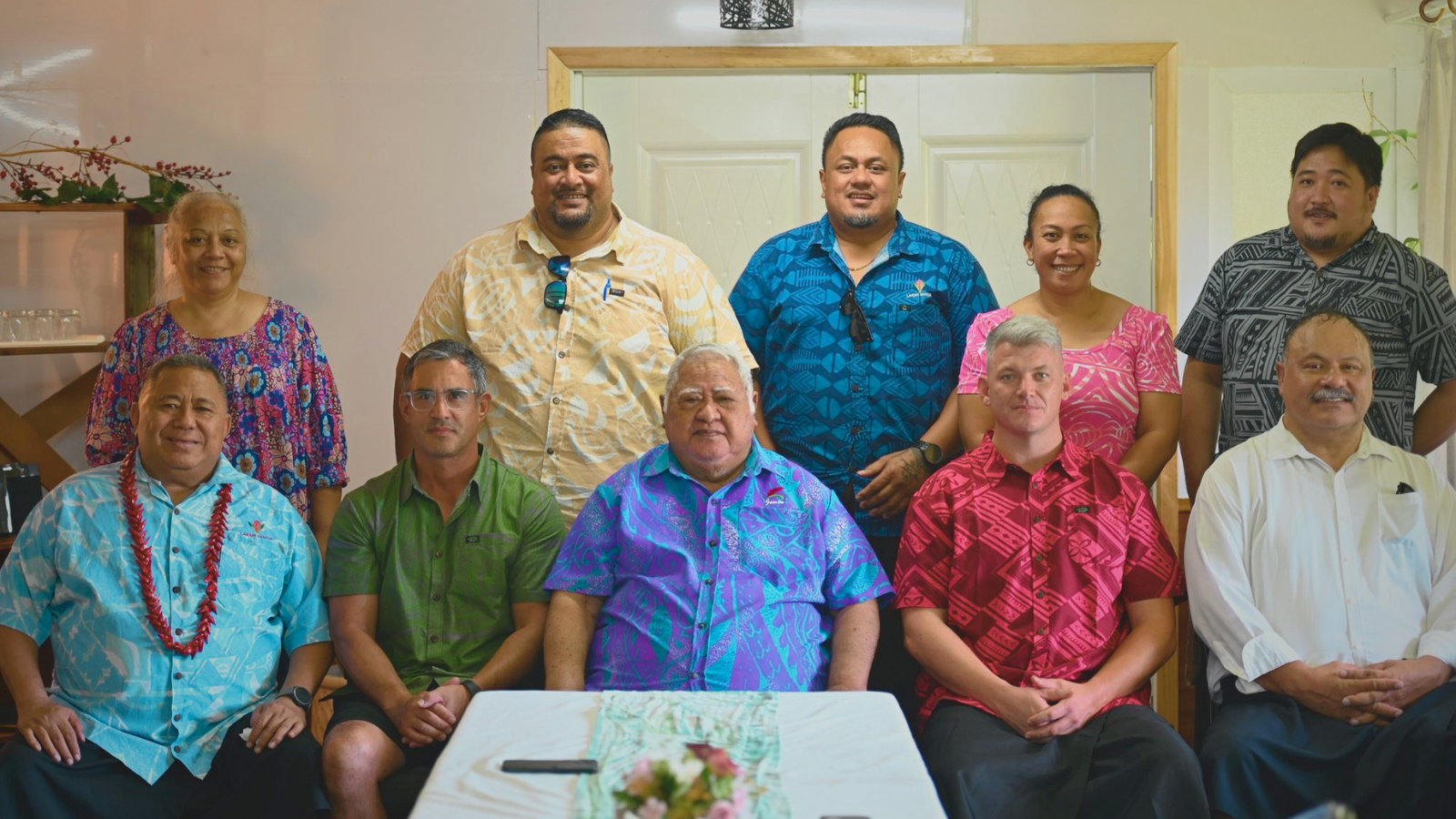
CEO of Lakapi Sāmoa (back row, second from left) Seumanu Douglas Ngau Chun, said the rugby body has presented solutions to the Prime Minister and they now await his response. Pictured at centre is outgoing Chairman Tuilaepa Sailele Malielegaoi, flanked by (L) David Gibson of World Rugby, and (R) Daniel Mills of Rugby Australia. Photo/Lakapi Sāmoa
Seumanu rejected claims that political influence defined the union’s leadership. “They are on the board on the merits that they are rugby administrators… not because they are politicians.”
Outgoing chairman Tuilaepa Sailele Malielegaoi warned that creating a rival body could put Sāmoa’s place in international rugby at risk.
“There cannot be two rugby bodies in a country,” he told PMN News. “If that happens, then the Manu Sāmoa will be taken out and won’t be a part of World Rugby anymore. His [Laaulialemalietoa] idea is very foolish.”
Any new body would face a long path to recognition. Under World Rugby rules, unions must meet strict governance and competition requirements and complete a multi-year process before gaining full membership.
Vaovasamanaia says the focus should be on building strong systems, not chasing quick wins. He added that strong systems and skilled leadership are key to running the game well.
“We’re seeing teams who haven’t traditionally been strong, coming through... we lost to Chile last year, we couldn’t beat Belgium. These teams are now catching up.
“The talent is always there, but it's nurturing and developing that talent to compete at the highest level. That’s the challenge.”
He warned progress would take time, adding that money alone would not deliver quick results.
Lasting change, Vaovasamanaia says, depends on the right people and systems, not quick fixes.