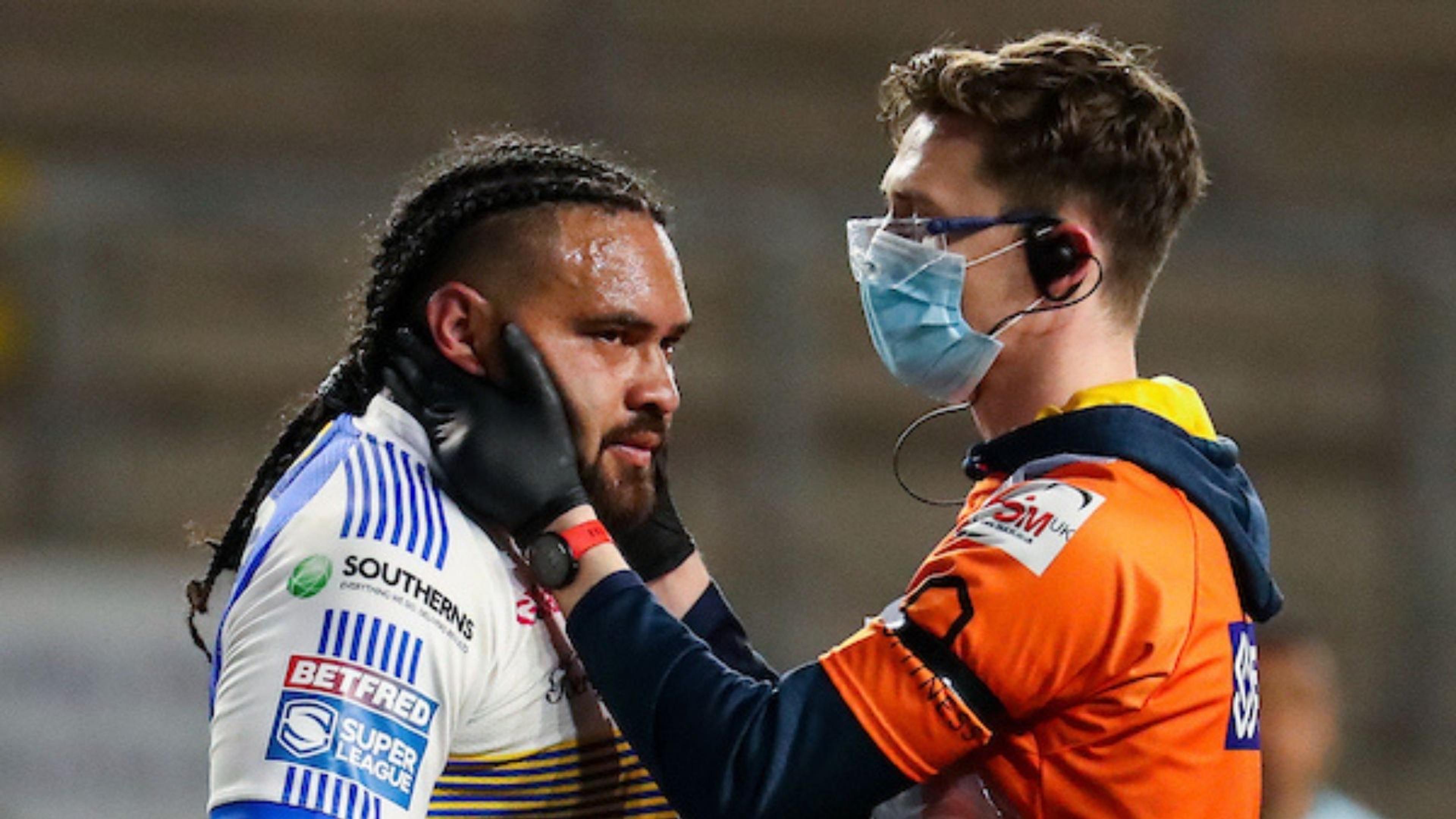
Former Warriors forward Konrad Hurrell, of Leeds Rhinos, receives a concussion assessment during the 2021 Super League match against Wakefield Trinity at Emerald Headingley Stadium in Leeds, England.
Photo/SWpix.com/Photosport/Alex Whitehead
Sports
Concussion lawsuits can continue, court rules, as player safety remains under scrutiny
Over 500 former rugby players can continue their legal fight over long-term brain injuries while Pacific experts warn the risks of concussion cannot end when players leave the field.

Christine Rovoi
Published
02 September 2026, 10:00am
Share
Copy Link
Top stories
From Ōtara, NZ to Los Angeles: David Liti lifts up the next generation
Elton Lonaratha JnrMon, 19 Oct
Washington warnings mount as four Pacific nations risk loss of US aid
Christine RovoiTue, 20 Oct
'Watch out': Silver Ferns issue clear warning to Diamonds ahead of Christchurch clash
Brooke FonotiMon, 19 Oct
Top stories
From Ōtara, NZ to Los Angeles: David Liti lifts up the next generation
Elton Lonaratha JnrMon, 19 Oct
Washington warnings mount as four Pacific nations risk loss of US aid
Christine RovoiTue, 20 Oct
'Watch out': Silver Ferns issue clear warning to Diamonds ahead of Christchurch clash
Brooke FonotiMon, 19 Oct
More than 500 former rugby league and union players can continue their legal fight over long-term brain injuries after a court in the United Kingdom rejected an attempt by rugby governing bodies to have the cases thrown out.
The London High Court ruled last week that the lawsuits can continue but the claimants’ lawyers must still provide missing medical records.
The ruling keeps open a major legal case over whether rugby authorities did enough to protect players from the risks of repeated concussions and head knocks.
Judge Jeremy Cook said the “individual claimants are blameless” in relation to the disclosure problems.
The cases involve former rugby union and rugby league players who say repeated concussive and sub-concussive blows left them with serious neurological conditions.
They allege governing bodies failed in their duty to protect players from those risks.
The case is also raising questions for Pacific rugby, where players are heavily represented in elite competitions but research into the long-term effects of concussion on Pacific athletes remains limited.
Dr Chris Puli’uvea, of Auckland University of Technology, led research into concussion among Pacific and Māori athletes and has said that Pacific people are well represented in sport but remain under-represented in concussion research.
“We’re well represented in sports, but we’re probably overrepresented in concussions as well, so we want to try and reach out to them,” Puli’uvea told John Pulu on PMN Tonga.
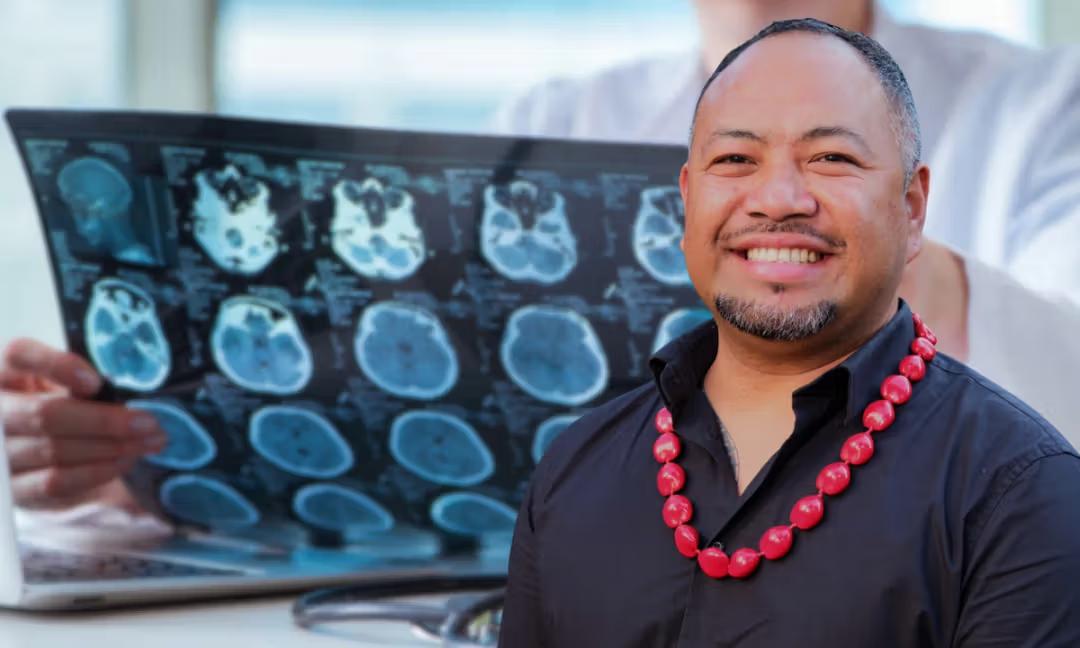
Dr Chris Puli’uvea has been leading research into concussion among Pacific and Māori athletes, highlighting the need for more research into the impact of head injuries on Pacific players. Photo/AUT/PMN News composite
He says the research is important because concussion can affect more than an athlete’s ability to play.
“A lot of the work that we’re doing here is around concussion, or like a little knock to the brain, and causing this other mild traumatic brain injury.
"That can have impacts on just your cognitive symptoms, mood, and other things as well,” Puli'uvea said.
Dr Stephen Kara, a head-injury specialist, has previously said that recognising concussion cannot be left to the player, coach or doctor alone.
“I think there's more we can do around the educational space. I don’t think it’s a coach problem, I think concussion is a societal problem,” Kara told PMN News.
He says anyone who sees a player showing signs of a head injury has a responsibility to act.
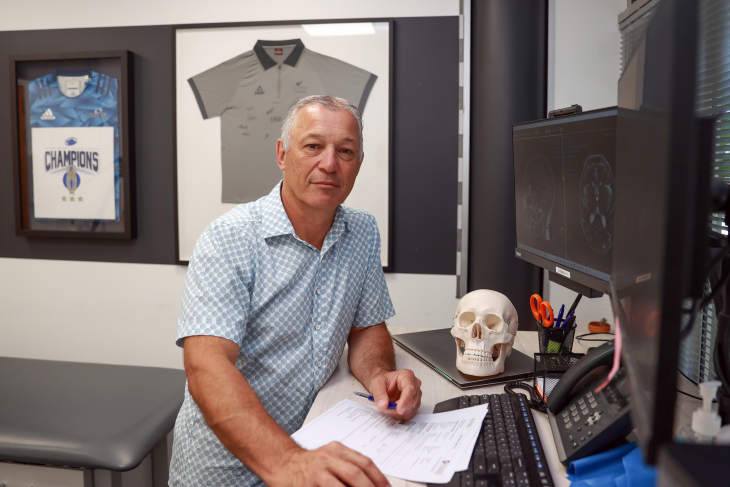
Head-injury specialist Dr Stephen Kara says concussion needs to be treated as a wider community issue, with everyone around a player having a role in recognising and responding to possible head injuries. Photo/acc.co.nz
“If I recognise it, I remove the person. If I get it wrong, then okay, but I might have looked after their brain. Until someone has promptly assessed their brain.”
The concerns are not abstract for Pacific teams.
Last year, Tongan international Eliesa Katoa suffered a serious brain injury during a Test against New Zealand, prompting an NRL investigation into how his injuries were handled.
Four Tonga XIII officials were later issued breach notices, with three receiving bans of at least 24 months.
The NRL said its investigation found concerns about a possible breakdown in communication between medical and health professionals, including information it said was vital to Katoa’s safety.
Katoa’s Storm team-mate and former Fiji Bati captain Tui Kamikamica, who was also concussed during the 2025 Pacific Championships, announced his retirement from rugby league last week on medical advice after suffering a stroke earlier this year.
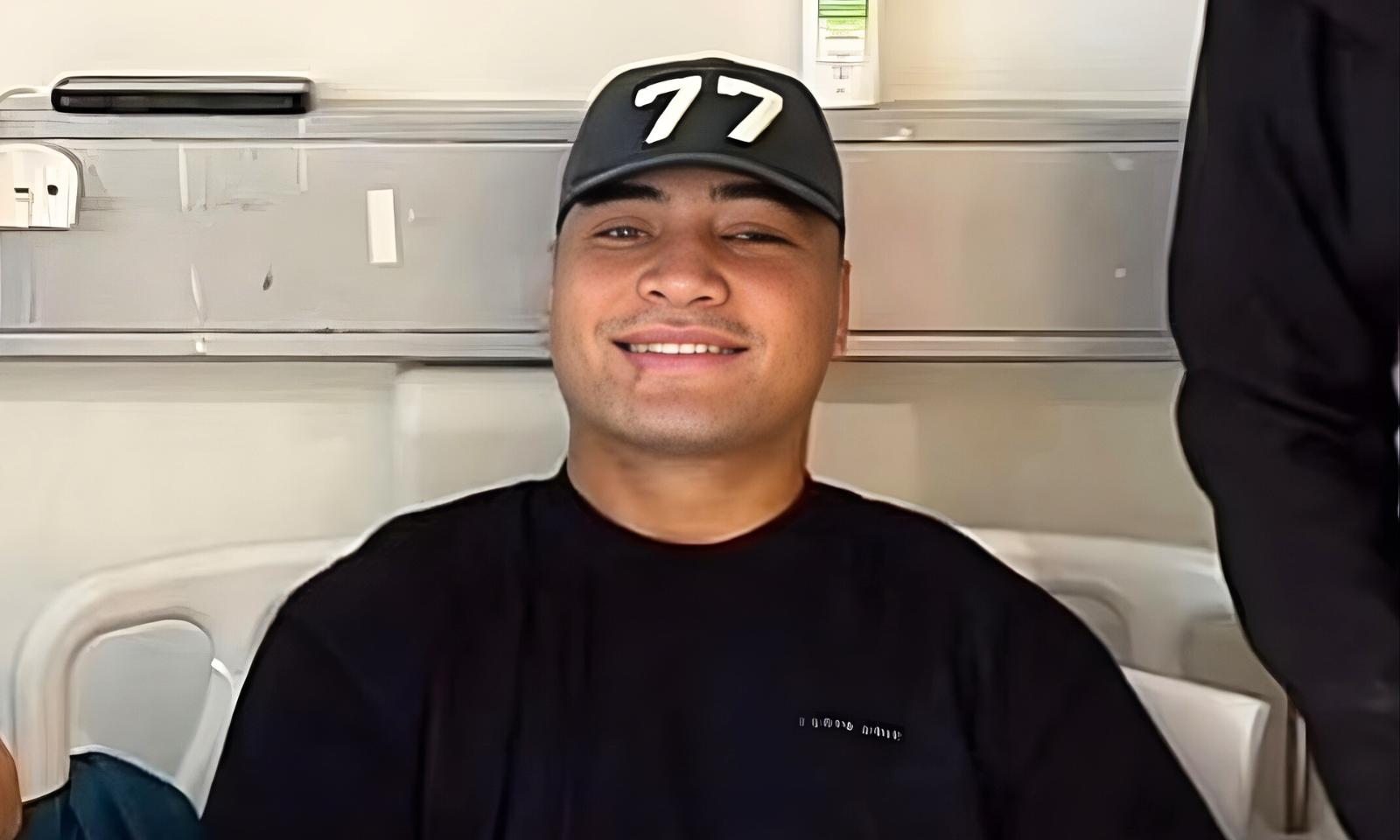
Former Fiji Bati captain Tui Kamikamica has retired from rugby league on medical grounds after suffering a stroke earlier this year. The Melbourne Storm forward was also ruled out with a category-one concussion during the 2025 Pacific Championships. Photo/Supplied
Following the London court ruling, the rugby bodies have disputed the players' claims, including whether they owed players a duty of care that covered the long-term risk of serious neurological conditions.
World Rugby has also argued in its defence that injuries are an “inherent risk” in rugby.
Almost 800 former rugby union players are suing World Rugby, the Rugby Football Union and the Welsh Rugby Union. More than 300 former rugby league players are also taking legal action.
The legal battle is closely watched across the rugby world, including in the Pacific, where players from Fiji, Sāmoa and Tonga have long featured heavily in professional rugby in Europe and the southern hemisphere.
Player welfare and concussion management have also become a growing issue for Pacific teams, with head injuries affecting players during international and regional competitions.
Sāmoa coach Steve Jackson previously highlighted the impact of concussion on his side after three front-row players were forced from a match against Georgia following head injuries.
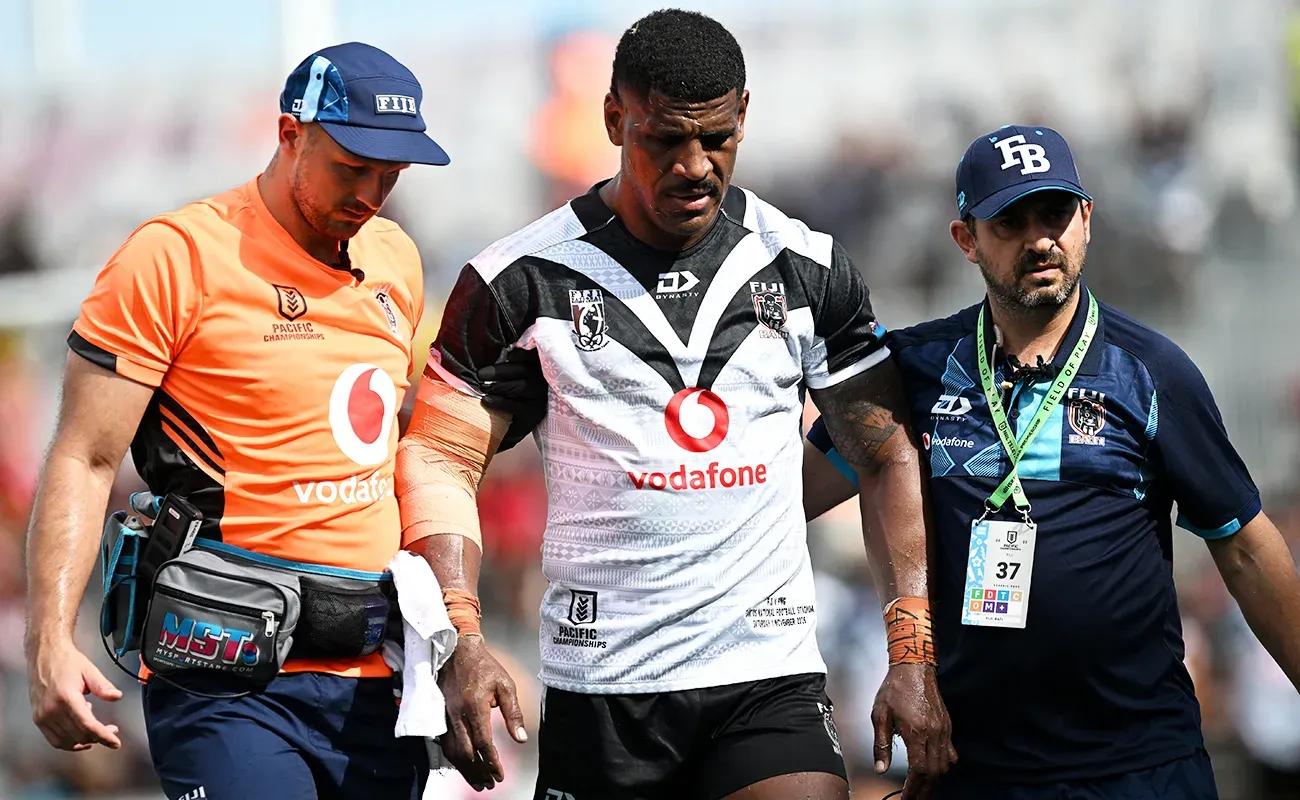
Former Fiji Bati captain Tui Kamikamica has retired from rugby league on medical grounds after suffering a stroke earlier this year. The Melbourne Storm forward was also ruled out with a category-one concussion during the 2025 Pacific Championships. Photo/NRL
“We were really confident. We knew Georgia were going to come out firing and we expected that. Unfortunately we lost Motu Matu'u and Paul Alo-Emile, who were doing so well in the front row in the first half, to concussion,” Jackson said.
“They got their Head Injury Assessments (HIA) and they weren't able to come out at half-time, and Logovi'i Mulipola, our other prop, started to cramp up.”
Former players involved in the UK cases say the repeated head impacts they suffered during their careers have contributed to serious neurological problems.
The rugby bodies have challenged the claims but last week's ruling means the legal arguments can now continue.
The case began in 2022 and has faced repeated delays over the disclosure of medical evidence.
For Pacific players, the issue also raises questions about what support is available after playing careers end, particularly for those who spent years playing overseas.
The London High Court decision does not determine whether the rugby authorities are liable for the players’ injuries.
It means the former players can continue their legal claims and the wider arguments over player safety and long-term brain health will now be heard.
For rugby-playing nations across the Pacific, the case adds to a growing focus on how the game protects players not only during their careersbut in the years after they retire.