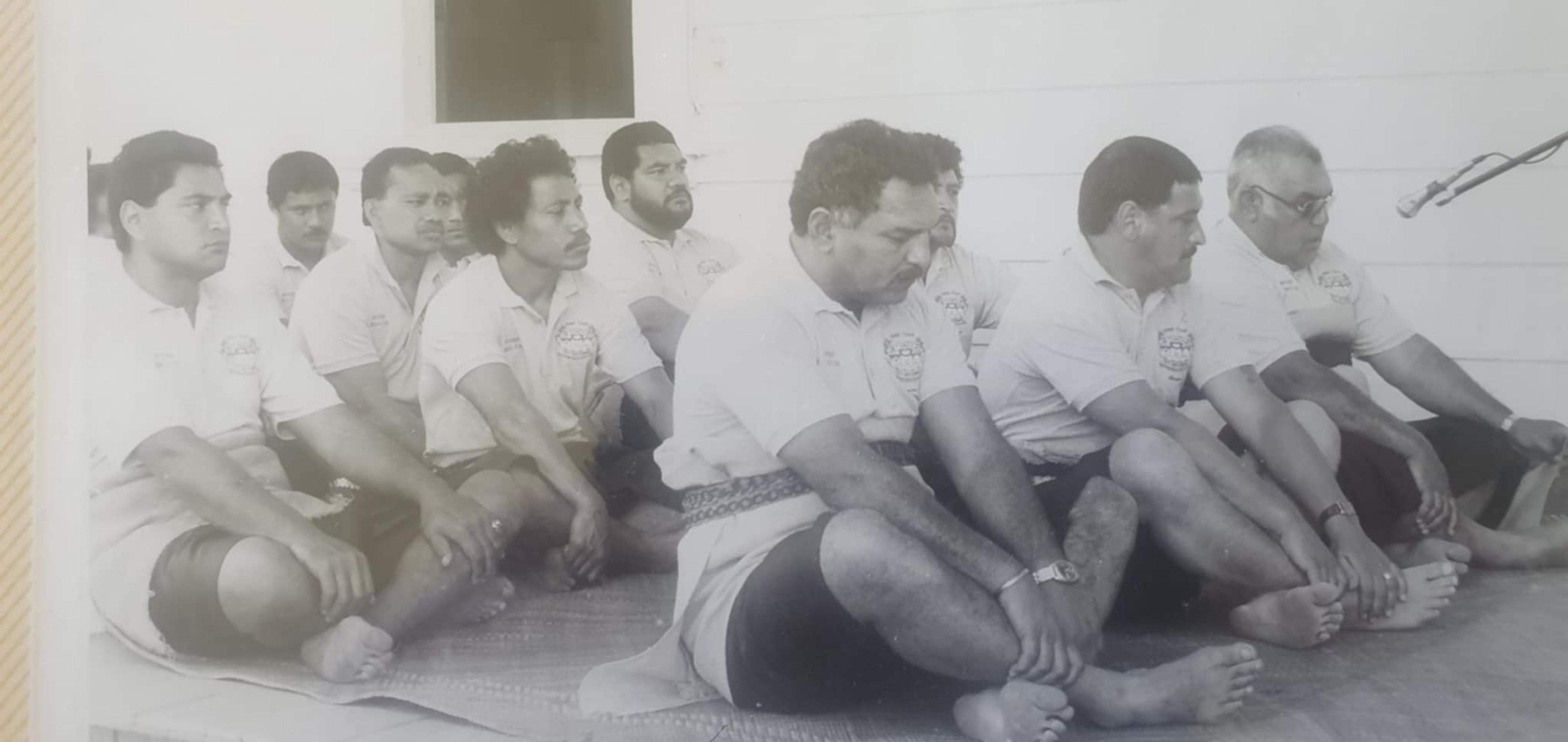
Members of the original Mate Maʻa Tonga team sit during a visit to King Tupou IV at the Royal Palace in Nukuʻalofa, Tonga, in 1986. At front right is founding figure George Mann Snr, with Don Mann Snr seated front left. The visit marked an early moment in the history of the Tongan national rugby league movement.
Photo/Supplied
Opinion
Tangata Whenua, Tagata Moana: The Sovereignty of Service
On Waitangi Day, PMN Chief Executive Don Mann reflects on what it means to stand as both tangata whenua and tagata moana.

Don Mann
Published
06 February 2026, 5:27am
Share
Copy Link
Top stories
PNG Chiefs win first round against New Zealand Rugby
Christine RovoiSat, 17 Oct
Pacific families must work four days to afford basic food: World Vision
Thomas Tarurongo WynneFri, 16 Oct
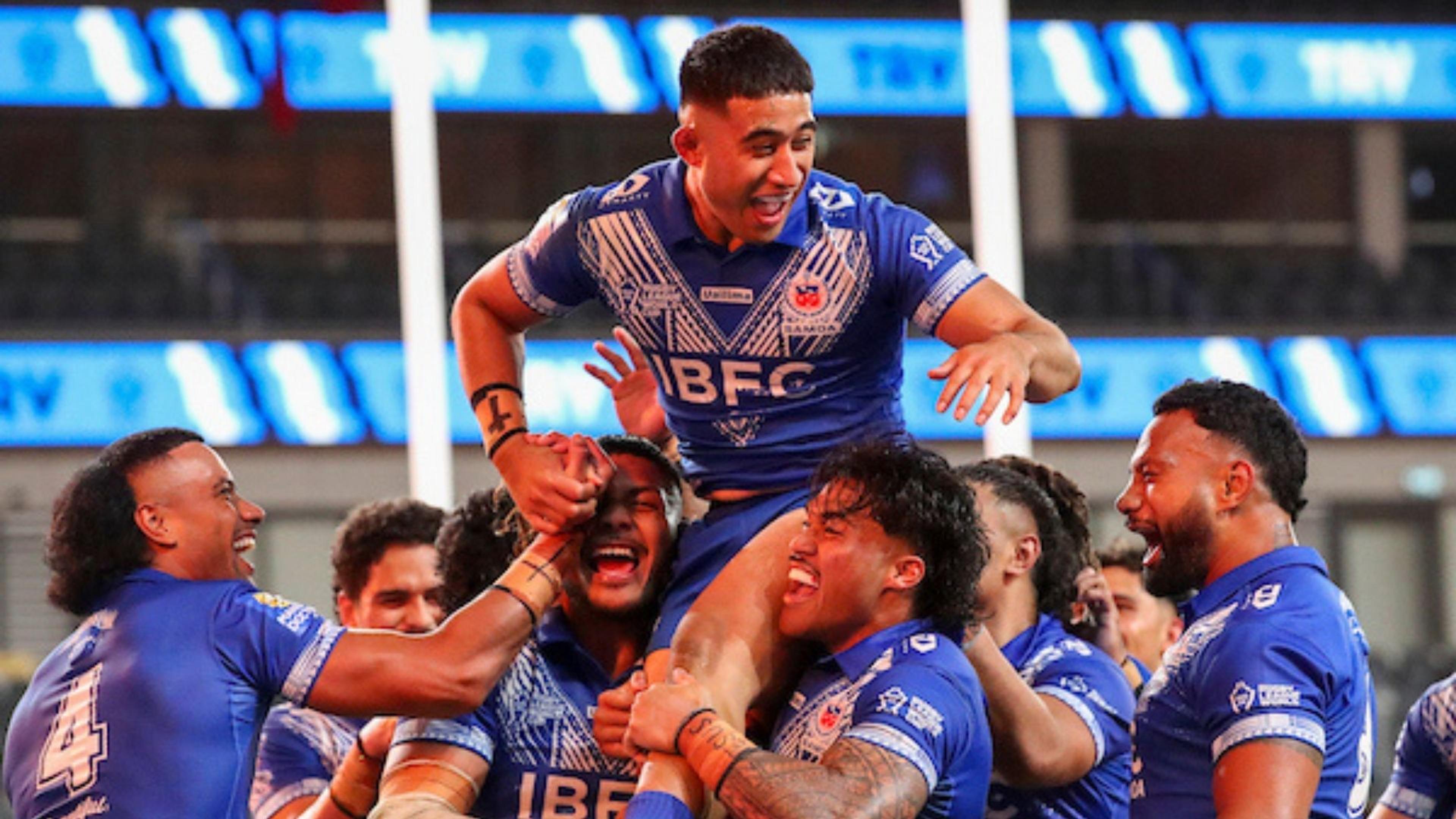
Sāmoa demolish France in record-breaking 78-4 RL World Cup opener
Christine RovoiFri, 16 Oct
Top stories
PNG Chiefs win first round against New Zealand Rugby
Christine RovoiSat, 17 Oct
Pacific families must work four days to afford basic food: World Vision
Thomas Tarurongo WynneFri, 16 Oct
Sāmoa demolish France in record-breaking 78-4 RL World Cup opener
Christine RovoiFri, 16 Oct
To carry the blood of Tūhoe and Ngāti Kahungunu alongside my Tongan ancestry is to walk in worlds that are, in spirit, one. It is to be tangata whenua and tagata moana.
On Waitangi Day, I reflect on what a Treaty partnership looks like in Aotearoa.
Forty years ago, in 1986, George Mann Snr founded Mate Ma’a Tonga. Supported by my father Don (Snr), and others, they planted a seed for a movement, likely never imagining what we witness today.
When Tonga played the Kiwis at Eden Park in November last year, it was, in my view a manifestation of the ultimate Treaty partnership.
To be with 30,000 Tongan kinfolk in an outpouring of patriotism and passion is a powerful thing central to Tongan values.
To hear those same voices sing the national anthem of Aotearoa in two languages, to see the haka cheered with respect, was to witness a profound moment: it is possible to acknowledge the land and the host without losing one’s own identity.
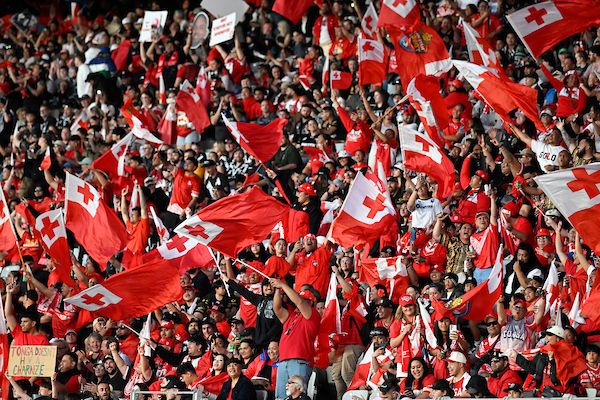
Tongan supporters fill Eden Park in a display of collective pride and belonging - a living expression of tagata moana standing confidently with tangata whenua. Photo/Photosport/Andrew Cornaga
In that moment, my breath was taken away because both lineages rose up simultaneously. It was a moment of being proud to be tangata whenua, proud to be Tongan, and humbled to witness a migrant community that I am part of showing the ultimate act of being a Treaty partner.
The obligation is inscribed in Tongan history. The motto Ko e 'Otua mo Tonga ko hoku tofi'a reminds us that Tongan sovereignty, declared by King George Tupou I at Pouono, Vava’u in 1839, was submitted to a higher purpose. My ancestor, Siofilisi Kaianuanu, stood witness that day.
In the Bay of Islands, only 12 months before the Pouono proclamation, Kahungunu rangatira Te Hāpuku signed He Whakaputanga in 1838. A similar act was manifested by the Tūhoe prophet Rua Kēnana. At Maungapōhatu, the establishment of a community founded on sovereignty, like Pouono, was accountable to God and dedicated to the preservation of his people.
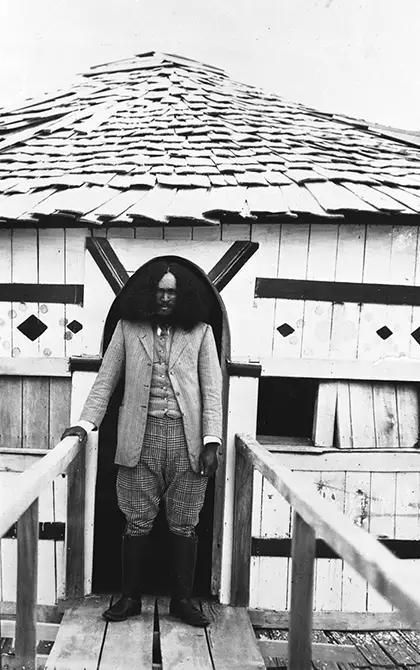
Rua Kēnana at Maungapōhatu - a prophet, leader, and visionary, who established a sovereign community grounded in faith, collective responsibility, and the preservation of Tūhoe autonomy, asserting tino rangatiratanga in practice rather than rhetoric. Photo/Auckland War Memorial Museum/Tāmaki Paenga Hira
Descending from these multiple lines where tino rangatiratanga is a fundamental non-negotiable pillar, how does one express leadership in a colonised land while holding these truths?
It requires a "sovereign mind," but not the self-serving kind found in modern "sovereign citizen" ideology. That is the antithesis of Te Ao Māori and indigenous Tongan values. Sovereignty must be an action, a notion of service. It is about being gifted to God as a Tongan mokopuna and serving the collective.
There is a peace that comes from knowing your whakapapa and who you belong to. Knowing the proclamations our ancestors made, in my case, from Pouono to Pēwhairangi to Maungapōhatu to the rugby league fields of the 1980s. We need not be anxious about the uncomfortable truths of power, and the inconvenient truth that on this land, Māori did not cede sovereignty.
Carrying dual ethnicity can be an uncomfortable construct for those asserting control, where a reliance on binary order is required to maintain power.
With statistics suggesting that 20 per cent of our Pasifika population share both Māori and Pacific whakapapa, the implications are significant. There is a battle for data because whoever controls and owns the data determines where resources are allocated.
But we are not people of halves. The late Moana Jackson said, "You can’t be half a mokopuna." We must refuse to speak of the Pacific as "other" or Māori as "other." To do so is to "other" our own mokopuna.
I often think about the Ngāti Kahungunu whakataukī that is inscribed on the gate of our whānau marae in Rangiāhua: Ka uhia te Rangi, ka rere ai te Manu. (As the sky is covered, the bird flies).
I view this as a challenge to create the right environment for our people to soar. By honouring both sides of Te Tiriti o Waitangi by embracing the "whole parts" of dual heritage, we provide the korowai that allows the next generation to fly.
That was the vision for my father and his older brother 40 years ago, and it stands true today.
Don Mann descends from Ngāi Tūhoe, Ngāti Ruapani ki Waikaremoana, Ngāti Kahungunu, Ngāi Tamaterangi and the Tupou Fulivai clan of Hunga Vava’u, Kingdom of Tonga.