From cleaning a home to the Kiwis: Laban’s World Cup call-up
Christine RovoiSat, 10 Oct
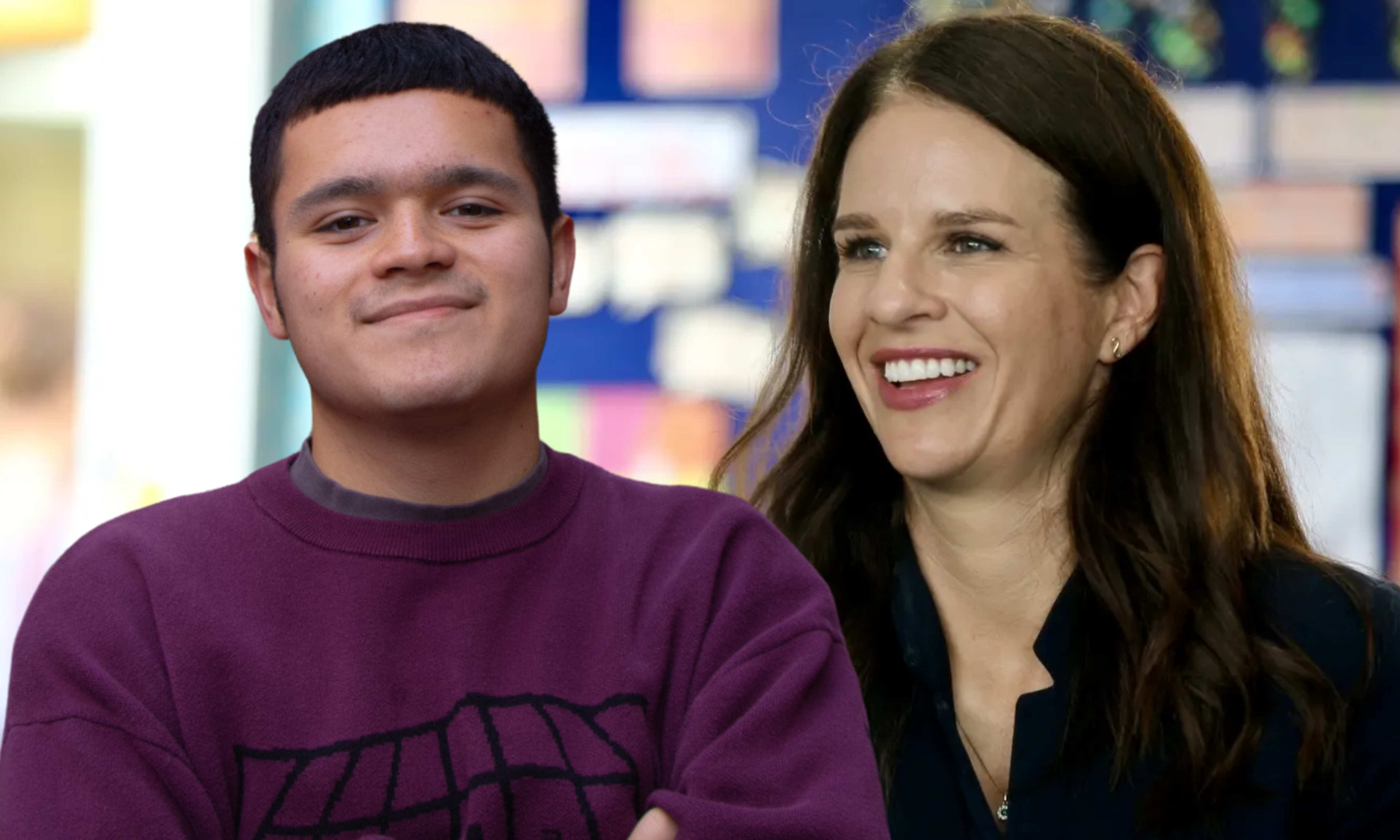
Education Minister Erica Stanford has reached out to the Labour Party to support the under-16 social media ban, but Andre Fa'aoso questions the efficacy of the proposed legislation.
Photo/PMN Composite/RNZ
The EU forced Apple to adopt USB-C. Andre Fa'aoso says the same lesson applies to social media: countries working together have far more power.

There's a push in Parliament to ban under-16s from social media, and National now wants Labour's help to pass it before the election.
I get the intention, but I don't think it works.
My view is this: no form of domestic policy aimed at individual usage actually moves the needle. You can ban, restrict, age-verify all you like, but a single country legislating on its own has almost no leverage over the companies.
Young people find the workarounds, the platforms carry on, and we're left feeling like we've done something without actually making anyone safer.
If we really want social media companies to change, we have to change the maths for them.
And to prove my point, let me take you back to 2022, when the EU did exactly what I'm talking about with device chargers.
They legislated that every device sold in their market had to use a common port, USB-C, or it couldn't be sold there at all. Apple, a company famous for doing things its own way, had no choice. It dropped its proprietary port and switched the iPhone to USB-C, same as everyone else.
Watch My Perspective below.
Why? Because the EU was a big enough part of Apple's market that walking away would've hurt the bottom line more than complying.
That's the lesson. When a group of nations come together and legislate consistently, they don't ask big companies to change, they make it the only commercially sensible option.
So why can't we do that for online safety?
Look at the other nations that have considered social media bans: Australia, Canada and the UK. That's more than 140 million people, and I'm sure, an outsize proportion of revenue and profits from these developed markets.
Imagine a cross-country agreement where companies either had to act for the good of us all or walk away from those markets.. Faced with that maths, they'd have little choice but to act. That's the kind of leverage that actually protects kids.
But that's far from where we are.
Instead, what's on the table is a domestic ban with mixed results at best, one that leaves many young people worse off, especially those who already struggle to navigate online spaces. Cut them off without teaching them, without resourcing their families, without the wider system behind them, and you don't remove the risk. You just remove the oversight.
Our kids deserve better than a policy that looks tough and changes nothing. They deserve leaders willing to do the harder, slower work of getting other countries on board, so that when we ask these platforms to protect our young people, they actually have to listen.