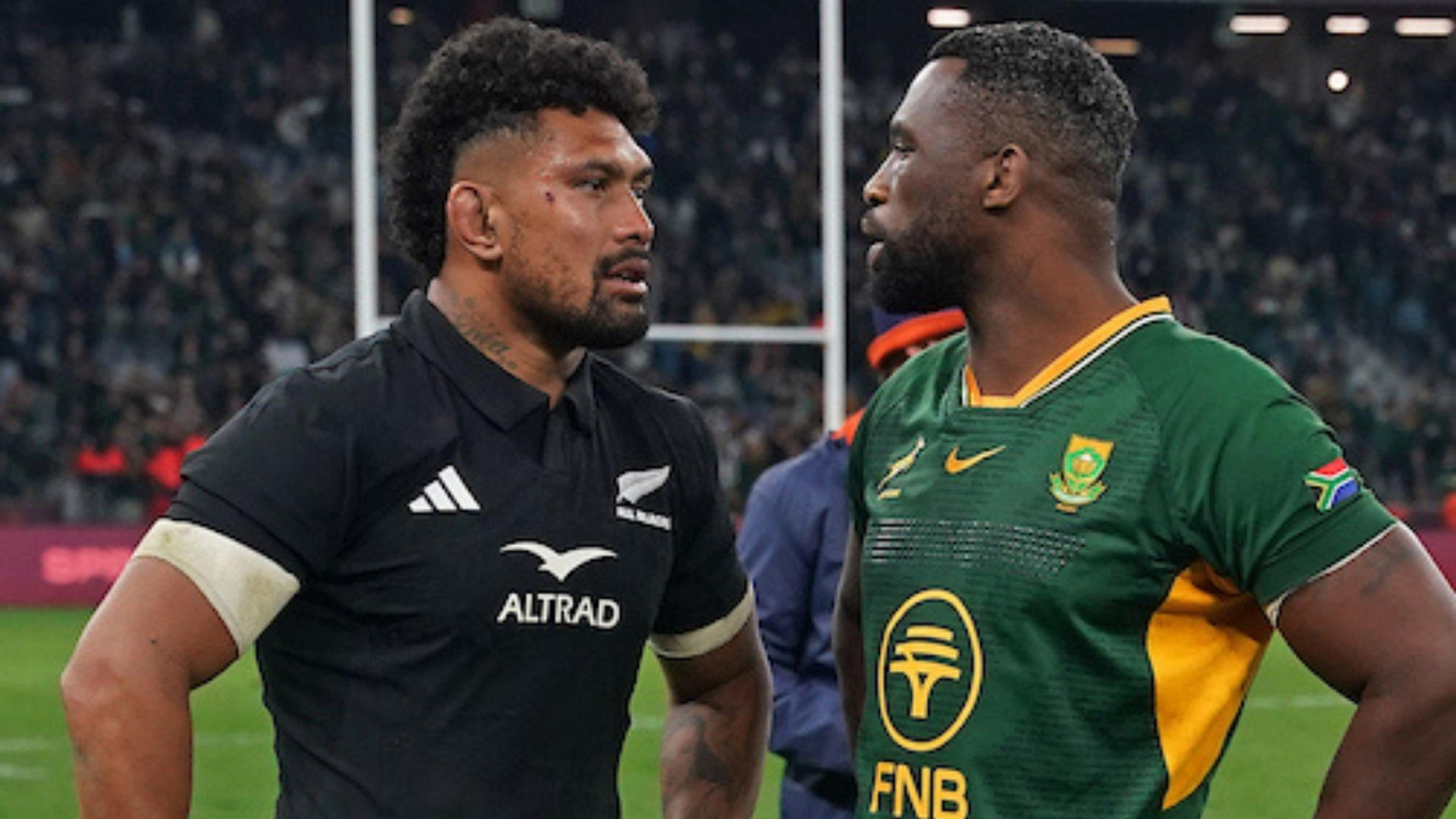
Ardie Savea and Siya Kolisi: The All Blacks were beaten 33-26 by the Springboks in Cape Town, leaving the four-Test Rugby’s Greatest Rivalry series locked at 1-1.
Photo/Backpage/Photosport/Ryan Wilkisky
Opinion
The All Blacks were warned. Now they need to respond in Rugby's Greatest Rivalry tour
South Africa brought the physicality and pressure NZ knew was coming in Cape Town. With the series locked at 1-1, the All Blacks have two Tests left to show they can live with the world champions.

Christine Rovoi
Published
31 August 2026, 9:43am
Share
Copy Link
Top stories


Tonga community partnership wins global environmental award
Khalia StrongFri, 09 Oct

From cleaning a home to the Kiwis: Laban’s World Cup call-up
Christine RovoiSat, 10 Oct
Top stories
Tonga community partnership wins global environmental award
Khalia StrongFri, 09 Oct
From cleaning a home to the Kiwis: Laban’s World Cup call-up
Christine RovoiSat, 10 Oct
The All Blacks knew what was coming.
After last week’s 33-16 win at Ellis Park in Johannesburg, New Zealand knew the back-to-back world champions would come out swinging in Cape Town.
They knew South Africa would bring the power. They knew Siya Kolisi would return to lead from the front. They knew the Springboks would make the Test a battle for every metre.
And yet, for long periods, the All Blacks looked like they were still trying to find answers.
South Africa won 33-26 on Sunday (NZT) to level the four-Test Rugby’s Greatest Rivalry series at 1-1, handing Dave Rennie his first defeat as All Blacks head coach.
The result was not a disaster. In fact, New Zealand scored four tries to South Africa’s three and were still within seven points late in the match.
But that is exactly why this loss should sting.
The All Blacks created enough chances to win. They just did not take them often enough.
Their lineout was shaky, they made costly errors and South Africa’s pressure at the set piece and breakdown kept New Zealand from building the control they enjoyed in Johannesburg.
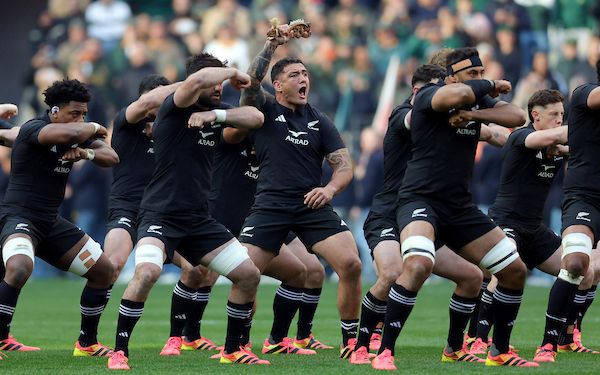
The All Blacks battled back after South Africa took control early but the Springboks held firm under late pressure to secure the win. Photo/BackpagePix/Photosport/Samuel Shivambu
The Springboks were also far more clinical.
Kolisi, back from injury, scored a crucial try and brought the energy South Africa needed.
Cheslin Kolbe then punished New Zealand from the tee, kicking 18 points as the hosts turned pressure into a seven-point win.
But there was another side to the All Blacks’ performance that should not be overlooked.
There were periods when their defence stood firm under serious Springbok pressure, forcing South Africa to work through multiple phases without finding a way over the line.
That resilience helped keep New Zealand in the contest and gave them the chance to launch their late fightback.
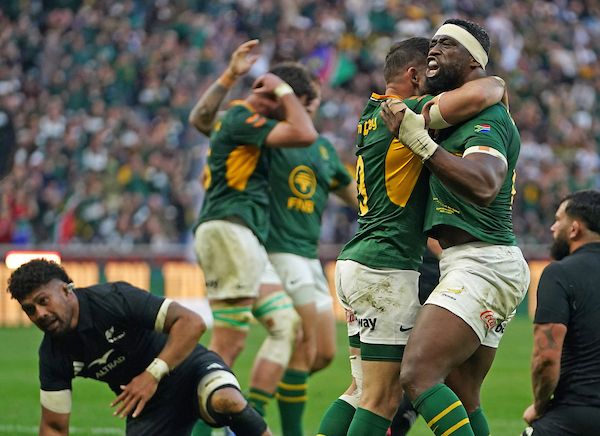
All Blacks captain Ardie Savea, left, and prop Tyrel Lomax look on as the Springboks celebrate captain Siya Kolisi's try. Photo/BackpagePix/Photosport/Ryan Wilkisky
That is the lesson for Rennie.
You cannot expect to beat South Africa by simply surviving their physicality. You have to meet it.
The loss also came with a reminder of how quickly the rankings can change.
The All Blacks have dropped back to No.2 in the world, with the Springboks reclaiming top spot after the Cape Town win.
New Zealand’s return to No.1 lasted just one week following their first-Test victory.
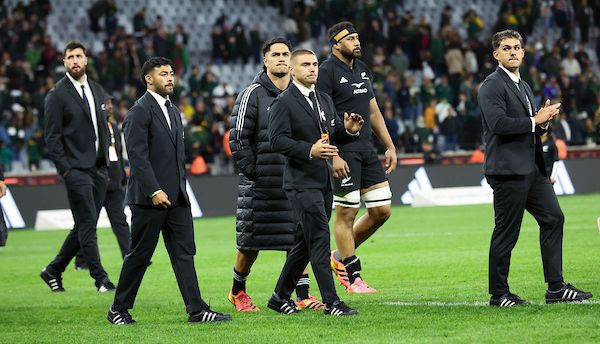
There was not much to smile about after the Cape Town defeat. Photo/Photosport/Ron Gaunt
For PMN News, there was plenty to like in the performances of the Pacific players in black.
Ardie Savea 8/10: The captain, of Sāmoan heritage, again looked like the heartbeat of this All Blacks side.
He worked relentlessly in defence, carried hard around the ruck and scored the late try that brought New Zealand back within seven.
His break before Damian McKenzie’s try was another reminder of how much attacking threat he brings from No.8.
George Bower 7/10: The Fijian started at loosehead and had a tough job against a powerful Springbok pack.
He deserves credit for fronting up in a Test where South Africa put huge pressure on the All Blacks forwards.
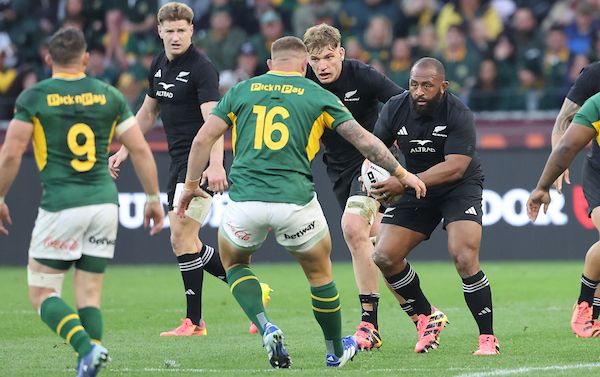
All Black prop George Bower takes on the Springboks defence as New Zealand battled to stay in the contest in Cape Town. Photo/Photosport/Ron Gaunt
Tupou Vaa’i 6.5/10: The Tongan lock brought plenty of work around the park but will know he left points on the table, including an unnecessary penalty that gave South Africa three points.
He needs to be more accurate when the pressure rises.
Patrick Tuipulotu 7/10: The Sāmoan lock's impact was important late in the match. He helped drive Savea over for the try that gave New Zealand a chance of snatching the match.
Asafo Aumua 7/10: The Sāmoan hooker brought his usual punch when he came on and helped lift the All Blacks’ physical effort late.
But the lineout problems will be one area the coaching staff cannot ignore.
Xavier Numia 6.5/10: The Sāmoan prop came on in the second half for Bower in a difficult forward battle and helped provide fresh legs, even if he did not have a huge impact.
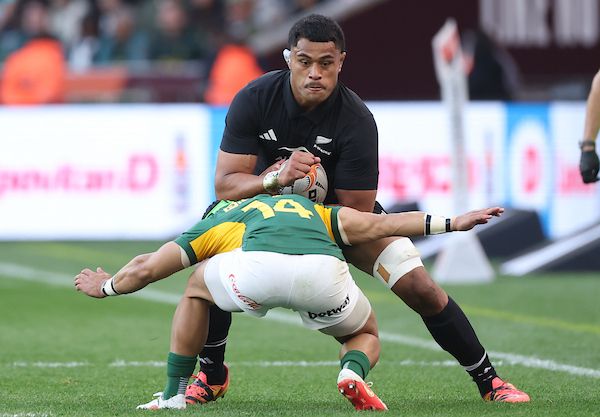
All Blacks lock Tupou Vaa’i takes on the Springboks as New Zealand battled to stay in touch in Cape Town. Photo/Photosport/Ron Gaunt
Peter Lakai 6.5/10: The Tongan-Ghanian was another player brought into the fight late.
His involvement is worth noting because these are exactly the pressure games where the next generation has to learn to perform.
The bigger question is whether the All Blacks should lean even more into this Pacific strength.
Savea’s ability to break the line, Aumua’s power and Vaa’i’s physical presence give New Zealand tools that can stand up to South Africa.
They need to be used with more purpose.
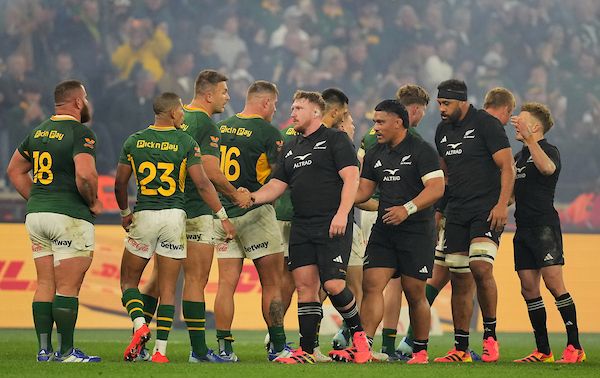
All Blacks players from left, Fletcher Newell, Xavier Numia, Patrick Tuipulotu and Damian McKenzie after the loss in Cape Town. Photo/BackpagePix/Ryan Wilkisky
Two Tests to fix it
The series now moves to Johannesburg, with the third Test at FNB Stadium on 6 September (NZT) before the final match in Baltimore, United States, on 13 September.
There is no need for panic. But there is plenty to fix.
The All Blacks need a cleaner lineout, better discipline, and a stronger first 20 minutes.
They also need to be more ruthless when opportunities come.
Most importantly, they need to stop allowing South Africa to decide what kind of game is being played.
The Springboks showed why they remain the benchmark. New Zealand showed it can hurt them.
Now the All Blacks have two Tests to prove they can do it for 80 minutes.
For more details on Rugby's Greatest Rivalry tour, click here.