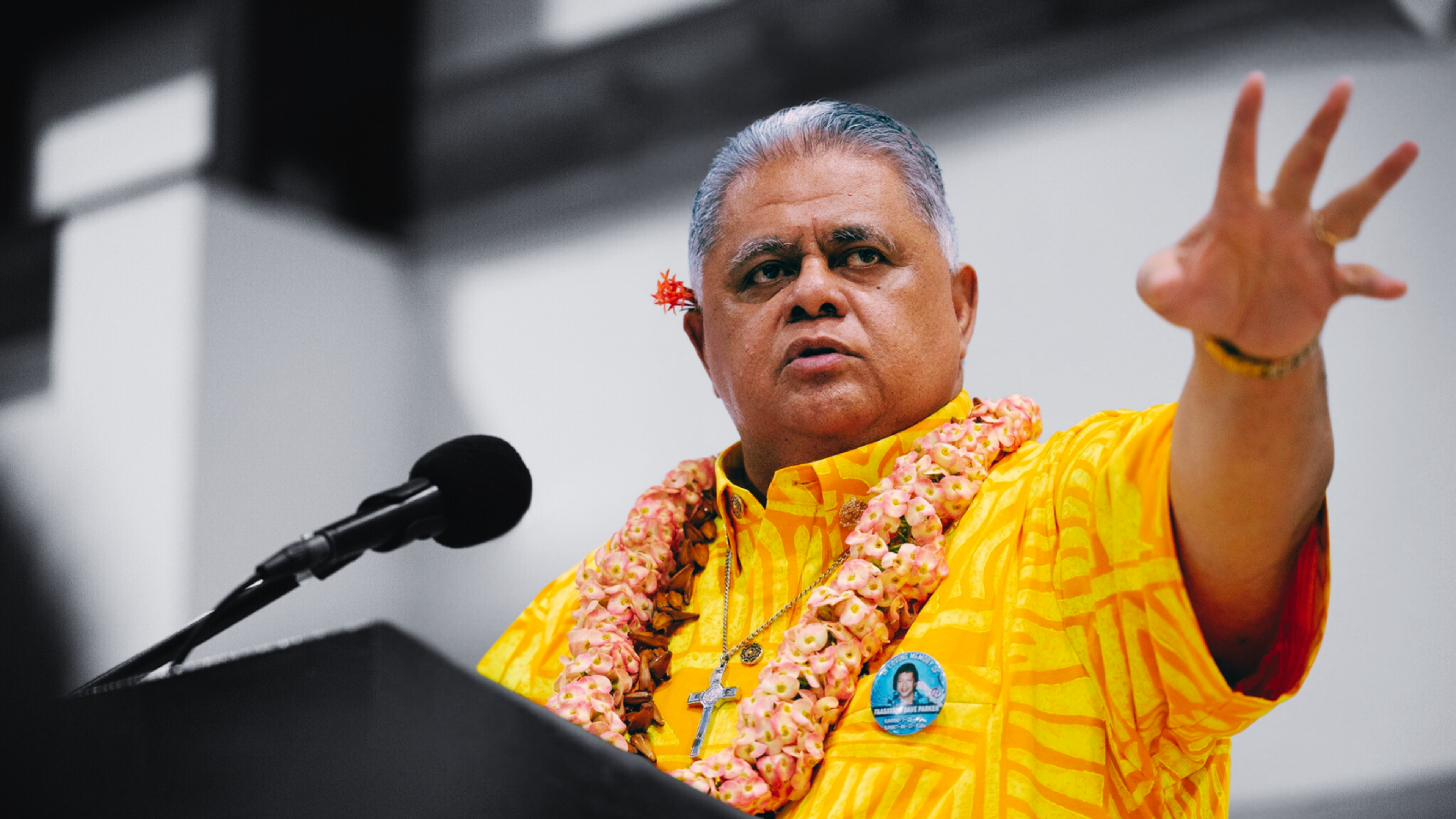
PM Laaulialemalietoa said the government plans to introduce new rules to curb what it describes as disrespectful and defamatory remarks, calling some actions “treasonous”.
Photo/Government of Sāmoa
Politics
Press freedom under pressure in Sāmoa as Prime Minister ramps up crackdown rhetoric
The journalists’ association distances itself from access decisions after Observer reporters were blocked during NZ Prime Minister Christopher Luxon’s visit, raising fresh media freedom concerns.
Renate Rivers
Published
23 March 2026, 6:36pm
Share
Copy Link
Top stories

Auckland teen turns a trip to Fiji into a mission to fight period poverty
Elenoa TuragaiviuThu, 15 Oct
Top stories
Auckland teen turns a trip to Fiji into a mission to fight period poverty
Elenoa TuragaiviuThu, 15 Oct
Concerns about media access in Sāmoa have grown after Sāmoa Observer journalists were denied entry to parts of New Zealand Prime Minister Christopher Luxon’s official visit to Apia last week.
The situation remains under close watch as questions mount over media freedom and government restrictions.
The Journalists Association of Sāmoa (JAWS) says control over accreditation and access rests with Prime Minister Laaulialemalietoa Leuatea Polataivao Schmidt’s office.
“Such decisions fall within the remit of the Prime Minister’s Office,” JAWS said in response to questions from PMN News, adding it “did not play any direct role in determining accreditation or access”.
JAWS confirmed it had raised concerns with officials, including ahead of the visit, and continues to advocate for “fair, reasonable, and non-discriminatory access for all bona fide media organisations”.
The restrictions come amid an escalation in rhetoric from Laaulialemalietoa.
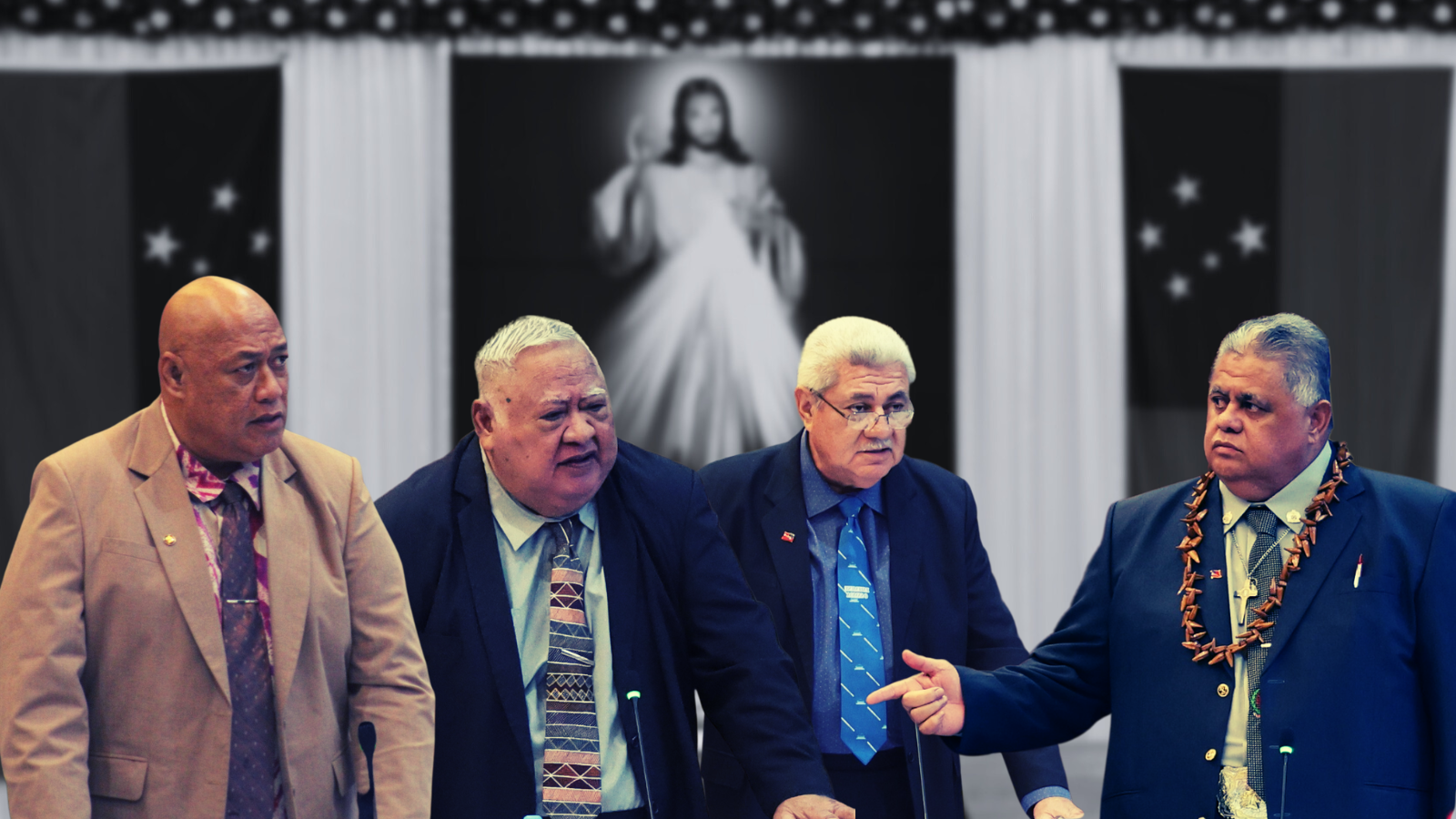
PM Laaulialemalietoa has called remarks by some opposition MPs and eight unnamed media organisations "treasonous". Photo/Parliament of Sāmoa/Composite image by Renate Rivers
In a statement to Parliament on 12 March, Laaulialemalietoa said the government plans to introduce new rules to curb what it describes as disrespectful and defamatory remarks, calling some actions “treasonous”.
He also moved a motion for a special parliamentary investigation into opposition MPs and eight media organisations, but declined to name them.
Laaulialemalietoa has also warned of legal action against critics overseas, saying he has gathered more than 200 “clips” of people who have “thrown stones” at the government.
“Wait until the law is applied to find out who they are,” he told local media last week.
Watch (Sāmoan) Laaulialemalietoa's press conference with local media on 18 March:
Under the Crimes Act, treason generally applies to serious acts against the state, such as attempting to overthrow the government or assist an enemy, and carries a maximum penalty of life imprisonment.
Other laws cover false statements that harm a person’s reputation, with much lower penalties.
The developments follow an ongoing dispute between the government and the Observer.
The newspaper was suspended from the Prime Minister’s weekly press conferences in November last year after a confrontation at his home, where he accused its journalists of disrespectful behaviour.
At the time, Laaulialemalietoa cited concerns about accuracy, fairness, and the newspaper’s failure to correct disputed reports.
The Observer says it sought clarification and invited officials to identify inaccuracies, but received no response and maintains no formal correction request was ever made.
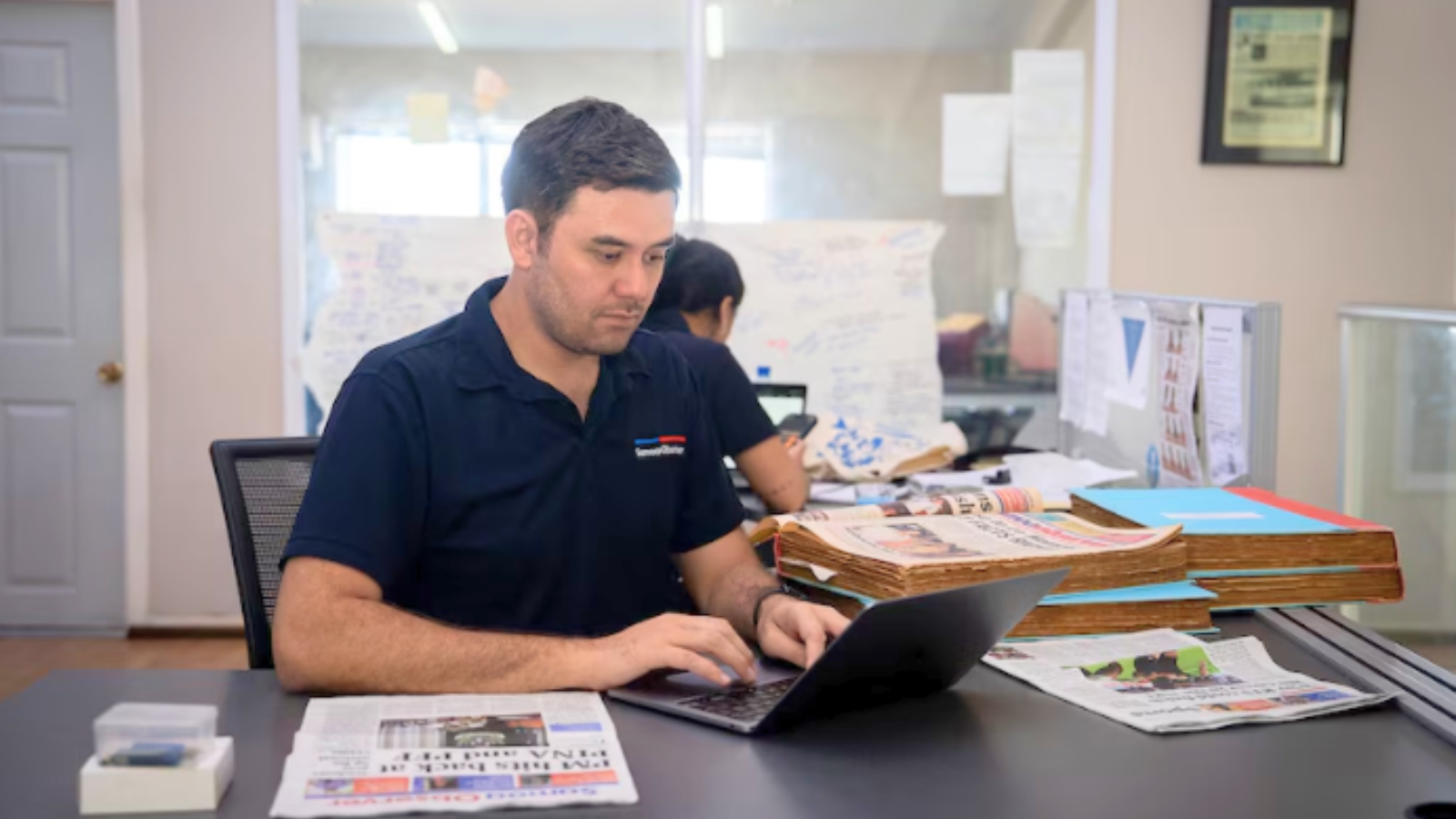
Jarrett Malifa says the Sāmoa Observer has reported on six administrations under six prime ministers, and the 'campaign' by the current government appears aimed at silencing any form of scrutiny. Photo/Sāmoa Observer
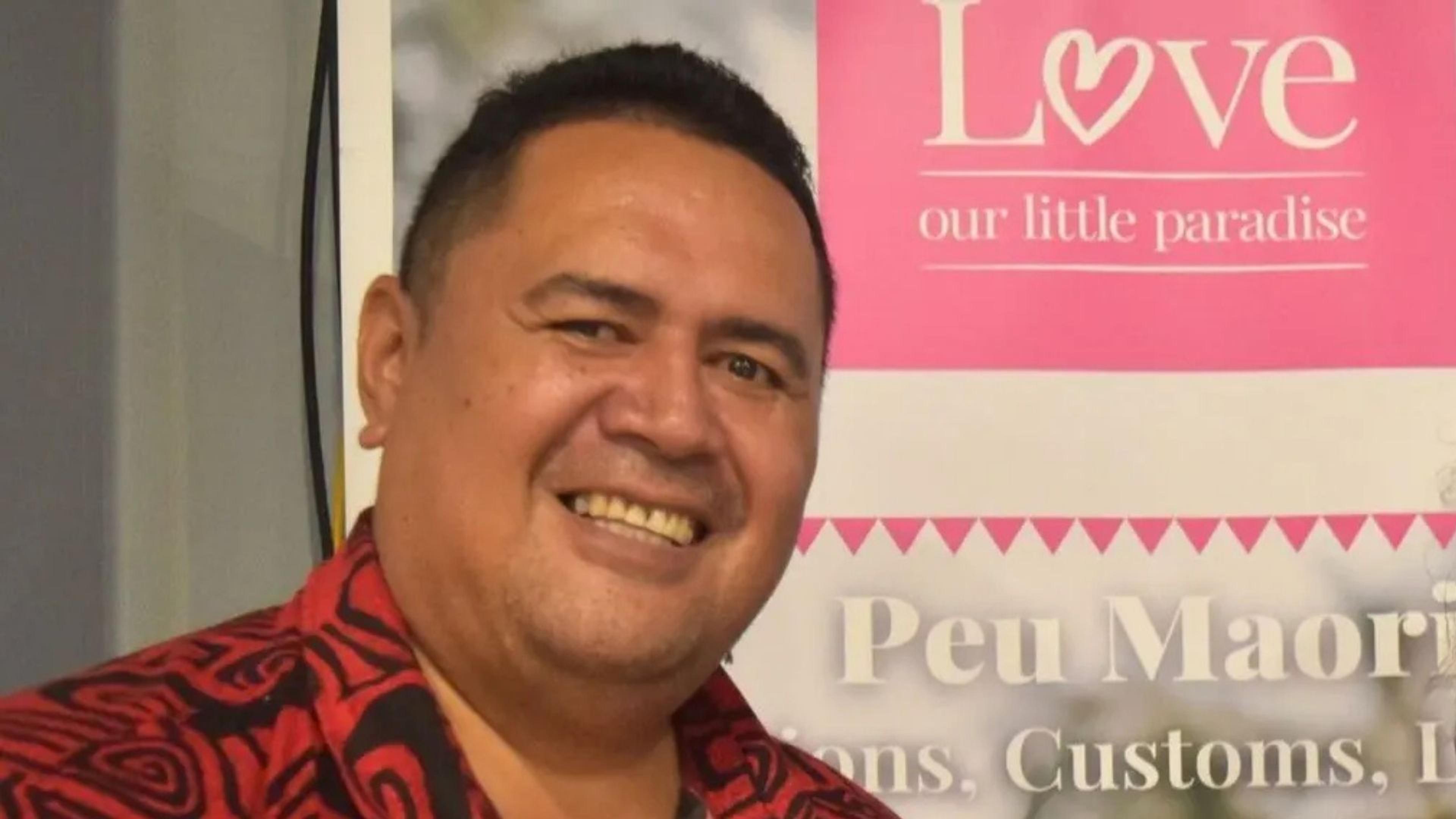
Jarrett Malifa, the Observer’s Editorial Board spokesperson, told PMN News that the newspaper’s policy allows corrections when concerns are clearly raised. But in this case, no such process was initiated by officials.
He said the denial of access during the Luxon visit raised broader concerns about media freedom and could affect other newsrooms.
“It is largely targeted at the Sāmoa Observer, but other media who question the Prime Minister may also be affected,” Malifa said. “While not necessarily facing a ban, the campaign appears aimed at silencing any form of scrutiny.”
The opposition HRPP deputy leader and senior lawyer, Fonotoe Lauofo Pierre Meredith, said via livestream that the threshold for treason is high, typically referring to serious threats to state security rather than political speech or criticism.
Opposition leader Tuilaepa Sailele Malielegaoi has criticised the situation, calling it “laughable” that Laaulialemalietoa would speak about the importance of media in democracy during Luxon’s visit.
“I laughed at that,” he said in a livestream. “The New Zealand media understood what is happening in Sāmoa with the ban on the Sāmoa Observer. And yet he continues to speak these lies.”
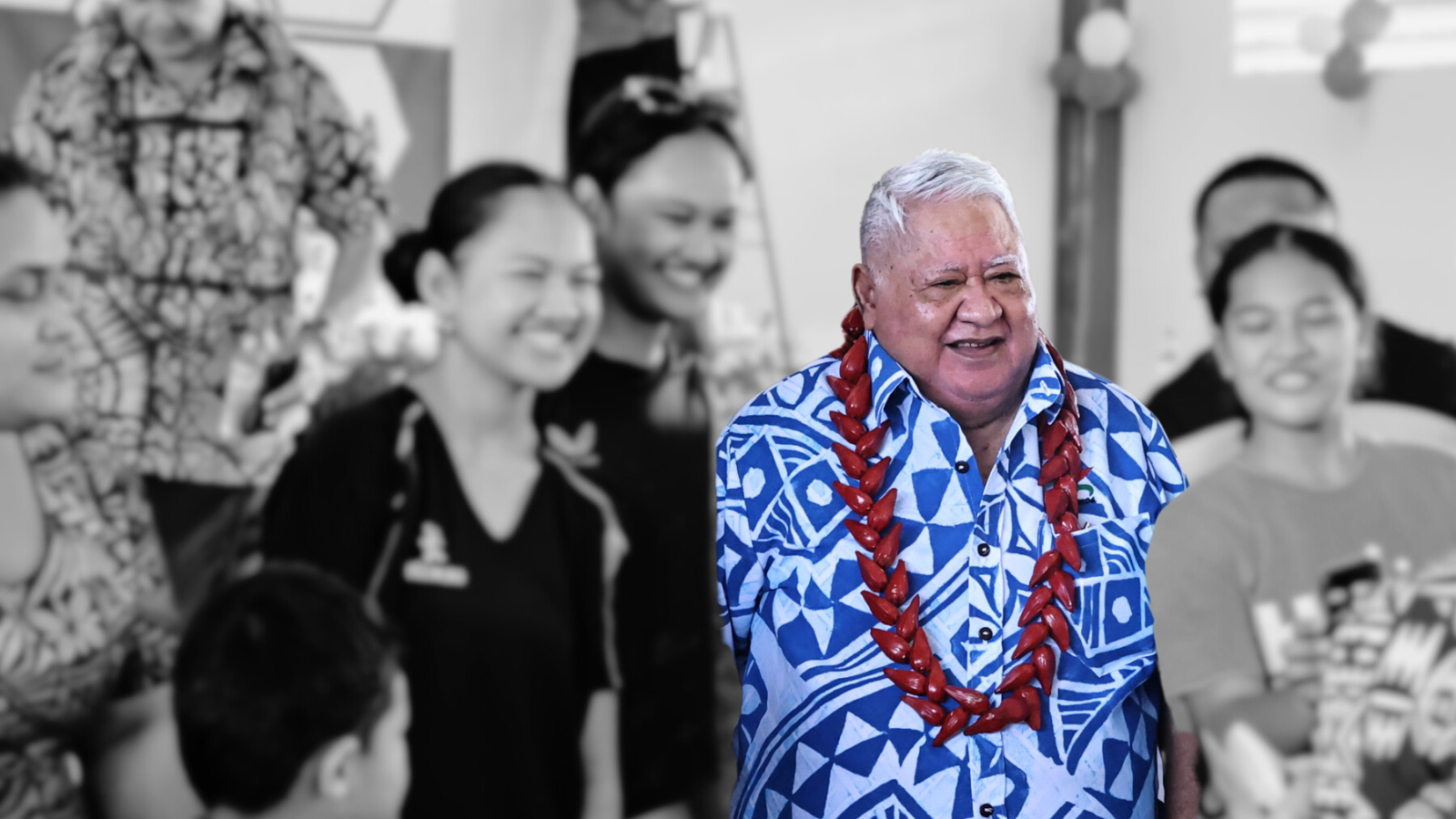
Former prime minister, Tuilaepa Sailele Malielegaoi. Photo/HRPP
JAWS has also highlighted a broader structural issue: Sāmoa’s Media Council, intended to resolve media-government disputes, is not fully operational.
“The current situation gives rise to legitimate concerns regarding the effectiveness of existing mechanisms,” JAWS said.
Without a fully operational complaints process, JAWS says concerns over media conduct can instead be submitted to the association’s executive committee.
Malifa says the Observer has never supported a media council given existing criminal libel laws, and that the journalism association has been “compromised” in its ability to hold power to account.
“The Sāmoa Observer has reported on six administrations under six prime ministers, each with its own challenges, and the current one brings its own,” Malifa said.
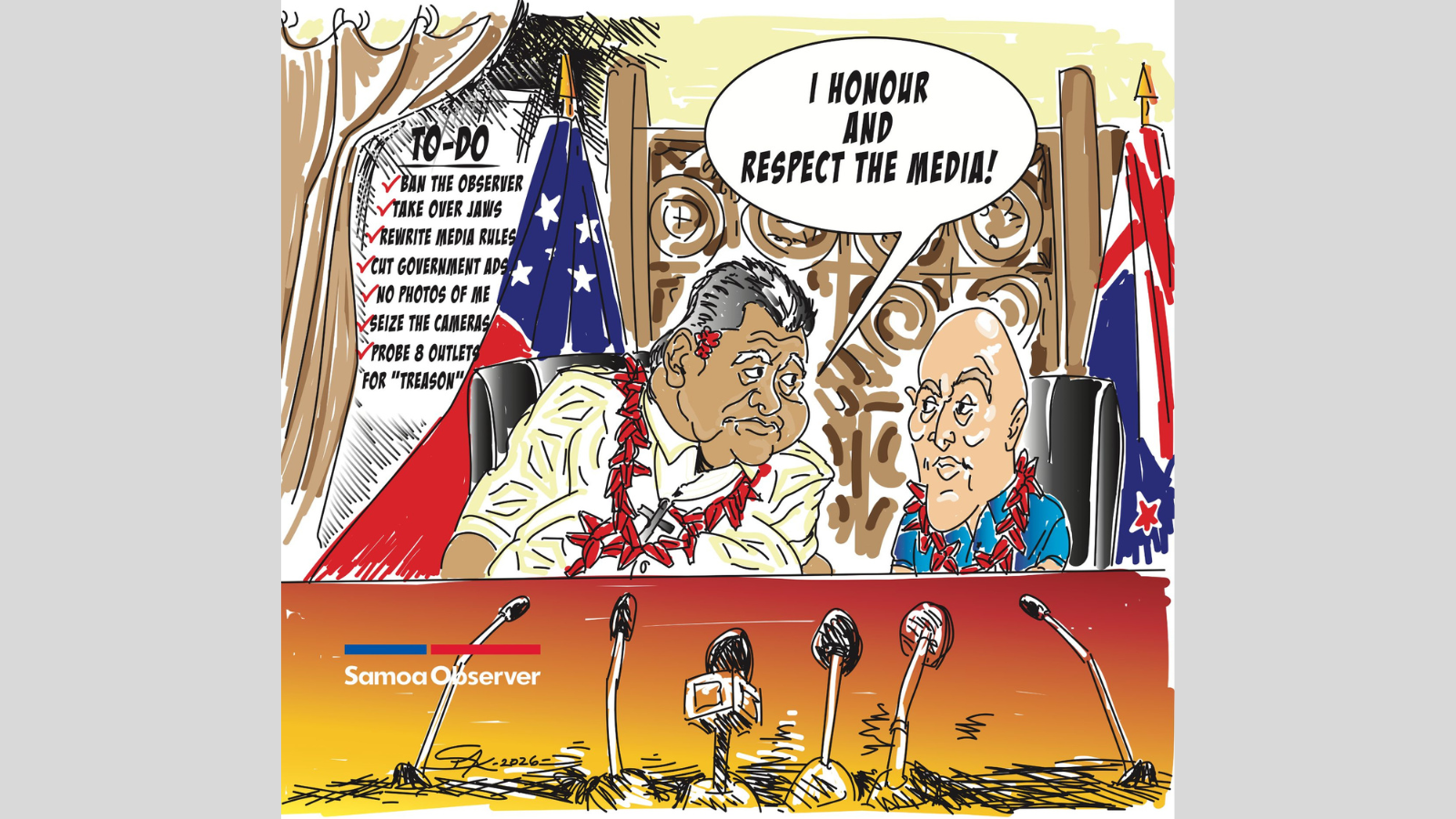
Sāmoa Observer says denial of access during the Luxon visit raised broader concerns about media freedom and could affect other newsrooms. Pictured is the newspaper's cartoon published 17 March. Photo/Sāmoa Observer
The dispute reflects a long history of tension between the Observer and successive governments, including lawsuits, advertising bans, and political pressure spanning decades.
PMN News has sought comment from the Sāmoa Police, the Attorney-General, the Clerk of the Legislative Assembly, and the Government Press Secretariat.