
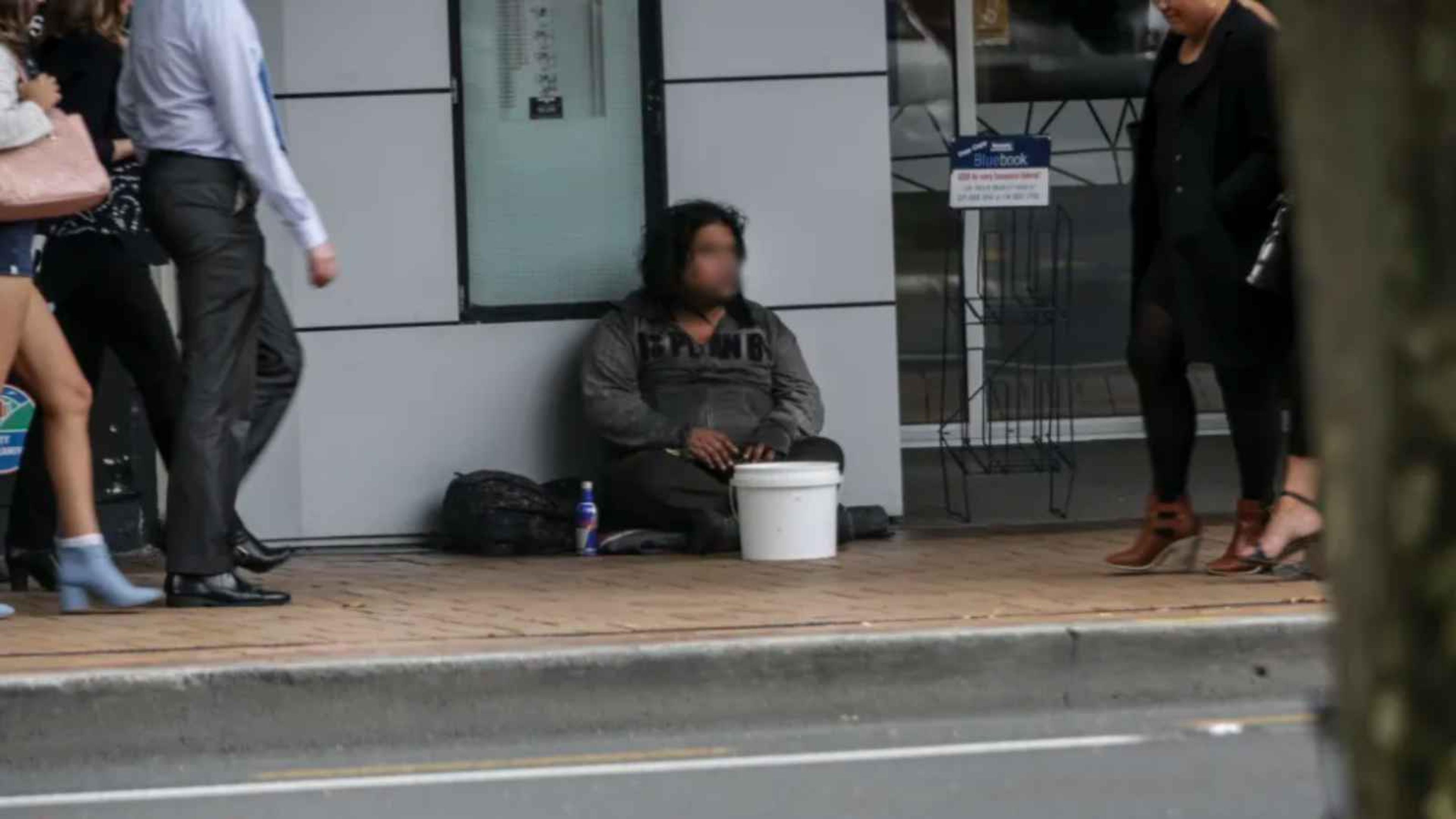
The move-on powers announced in February will mean police can move on rough sleepers or people displaying disorderly behaviour as young as 14-years-old.
Photo/Supplied/RNZ/Richard Tindiller
Politics
Pasifika nearly quarter of NZ's homeless so where do they go under new police powers?
Pacific communities are already over-represented in homelessness in Aotearoa. An expert says new move-on powers risk pushing people on without addressing where they can safely go.

'Alakihihifo Vailala
Published
30 March 2026, 3:28pm
Share
Copy Link
Top stories

Red Dawn: Historic Tongan rugby league victory sends statement through World Cup
Christine RovoiSun, 18 Oct

Bledisloe Masterclass: Pacific powerhouses lead All Blacks’ blitz against the Wallabies
Christine RovoiSat, 17 Oct
Top stories
Red Dawn: Historic Tongan rugby league victory sends statement through World Cup
Christine RovoiSun, 18 Oct
Bledisloe Masterclass: Pacific powerhouses lead All Blacks’ blitz against the Wallabies
Christine RovoiSat, 17 Oct
Pacific communities are at the centre of concerns over proposed move-on powers, with advocates warning the policy risks deepening existing inequalities.
A criminal defence lawyer says Māori and Pacific people are already being disproportionately caught up in enforcement linked to homelessness.
Speaking with William Terite on Pacific Mornings, barrister Danielle LeGallais says this is what she sees every week.
“Our people are disproportionately represented in the food insecurity space,” LeGallais says. The Pacific Islanders are actually the most food insecure demographic in Aotearoa New Zealand.”
Her comments come as hundreds protest at Wellington’s St Paul Cathedral opposing the government’s plans to introduce move-on orders.
Under the proposal, police would be able to direct people to leave an area if they believe it is “reasonable”.
Listen to Danielle LeGallais' full interview below.
But key details remain unclear around how those decisions willl be made and what protections exist for vulnerable people such as families, those with disabilities, or people with mental health needs.
It is also not clear whether people would have a formal way to challenge a move-on notice.
“Where are we meant to go?” one woman told RNZ. "They can try and move us on but there's other ways around it, because we're still able to be here, we still have nowhere else to go,”

Breaching a move-on order - which would require someone to leave an area for up to 24 hours - risked a fine of up to $2000 or a three month jail term. Photo/Supplied
According to the Ministry for Housing and Urban Development, Pacific people make up 22.6 per cent of those experiencing homelessness in New Zealand. This is despite being only eight to nine per cent of the population.
More than 100,000 people are estimated to be living without stable housing: from sleeping rough to living in overcrowded or unsafe homes and the highest numbers are in cities like Auckland.
Research by Terence Jiang shows Māori and Pacific people are more likely to experience homelessness than other groups.
Pacific people also face the highest unemployment rate in Aotearoa, more than double the national average.
The government says the changes are needed to improve safety in public spaces.
In a statement, the Justice Minister Paul Goldsmith says the powers will give police a practical tool to respond to disruptive behaviour that doesn’t meet the threshold for an offence.

Police Minister Mark Mitchell (left) and Justice Minister Paul Goldsmith (right). Photo/Supplied
“Our main streets and town centres have been blighted by disruption and disturbance. Businesses are declining as some bad behaviour goes unchecked. It needs to stop,” Goldsmith says.
Police Minister Mark Mitchell says officers will continue working with social and housing services where support is needed.
“I expect Police will work closely with these providers as they develop their operational guidance for the frontline,” Mitchell said in a statement.
But those working on the ground say the bigger issue is a lack of housing and support.
Reverend Anna Fletcher, who helped organise the vigil in Wellington, says services are already stretched.
“I commend the government for actually backing housing first, but we actually don't have the housing to be able to move people into that,” Fletcher told Terite.
Listen to Reverend Anna Fletcher's full interview below.
She says barriers across health and social services are compounding the problem.
“Then the decrease in mental health services, inaccessible health services, inaccessible addiction services, all compounding the circumstances that people are facing that really inhibit them from being able to live in safe, stable, secure housing.”
Her message to the government is simple: “Don’t go ahead with the move-on orders.
“Don’t criminalise people just for their existence and for the fact they are in poverty and have no other choice.”