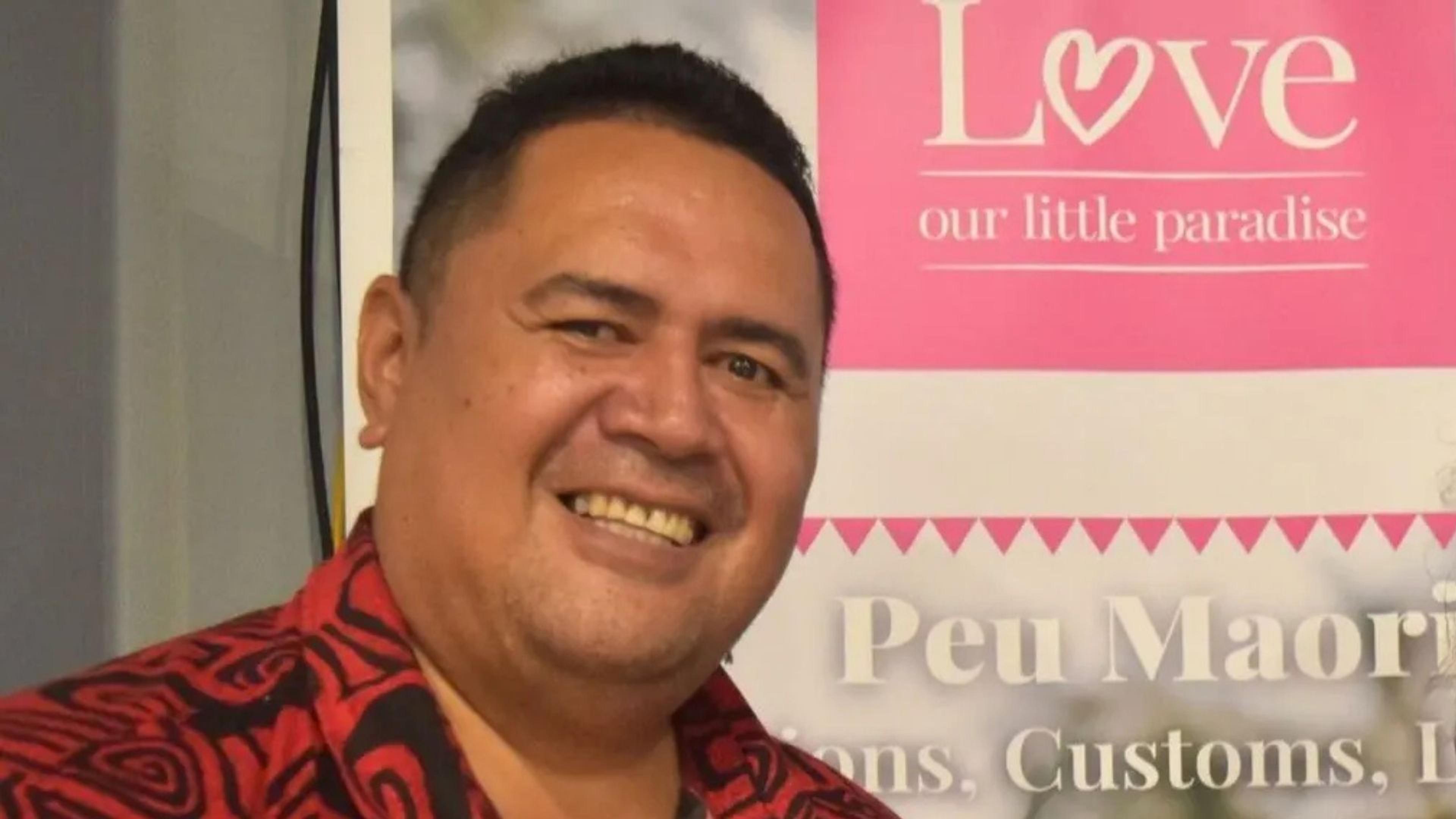

Labour MP Dan Rosewarne, left, and Green MP Teanau Tuiono.
Photo/PMN composite
Politics
Pacific leaders warn Aotearoa's nuclear free stance must not be compromised
Opposition MPs say New Zealand must resist defence pressure from larger partners and keep conflict out of the Pacific.

PMN News
Published
03 June 2026, 12:00pm
Share
Copy Link
Top stories


Auckland teen turns a trip to Fiji into a mission to fight period poverty
Elenoa TuragaiviuThu, 15 Oct
Top stories
Auckland teen turns a trip to Fiji into a mission to fight period poverty
Elenoa TuragaiviuThu, 15 Oct
Pacific MPs say New Zealand must maintain its nuclear-free stance while resisting pressure to draw the region deeper into defence tensions.
The comments follow Defence Minister Chris Penk saying at a security forum in Singapore that it could be “helpful” for New Zealand to have a conversation about its anti-nuclear stance.
Prime Minister Christopher Luxon quickly ruled out any change to the country’s nuclear-free position.
Speaking with William Terite on Pacific Mornings, Green MP Teanau Tuiono suggested Penk’s comments demonstrated a lack of judgement.
“Clearly Minister Penk is showing inexperience on the international stage,” Tuiono says.
“I think the call [by the Prime Minister] to walk back those comments around our nuclear-free status was the right one to make. It’s part of who we are. It’s our identity. We are proud of our nuclear-free status.
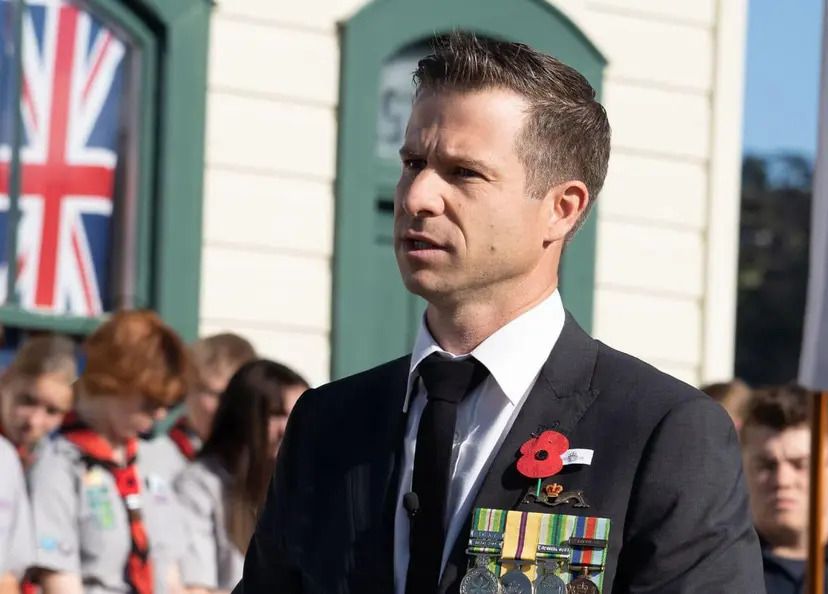
Defence Minister Chris Penk told a security forum in Singapore that it could be “helpful” for New Zealand to have a conversation about its anti-nuclear stance. Photo/National Party.
“It’s important to remember the importance of being and living in a nuclear-free and independent Pacific.”
Labour MP Dan Rosewarne, a former Defence Force member, says any uncertainty around New Zealand’s nuclear-free policy is concerning.
“Our nuclear-free policy is not up for negotiation. It’s part of who we are as a country, and it is genuinely worrying to hear comments that suggest the Defence Minister doesn’t fully appreciate that,” Rosewarne says.
Listen to Teanau Tuiono's full interview below.
“Under Labour, New Zealand will remain nuclear free. That position is clear, it’s consistent, and it reflects what New Zealanders expect of us.”
Rosewarne says even hinting at a shift in New Zealand’s long-standing position risks creating expectations overseas and placing unnecessary pressure on the country.
“At a time when nuclear-armed states are modernising and expanding their arsenals, it’s more important than ever that countries like New Zealand stand firm,” he says.
“We’ve got a proud history of leadership on this issue, and we should continue to use our voice.”
Both MPs also pushed back against the idea that New Zealand’s stance is outdated because of changing defence and energy debates, including Australia’s involvement in the AUKUS (Australia, United Kingdom and United States) nuclear submarine agreement.
Tuiono says AUKUS risks increasing the militarisation of the Pacific.
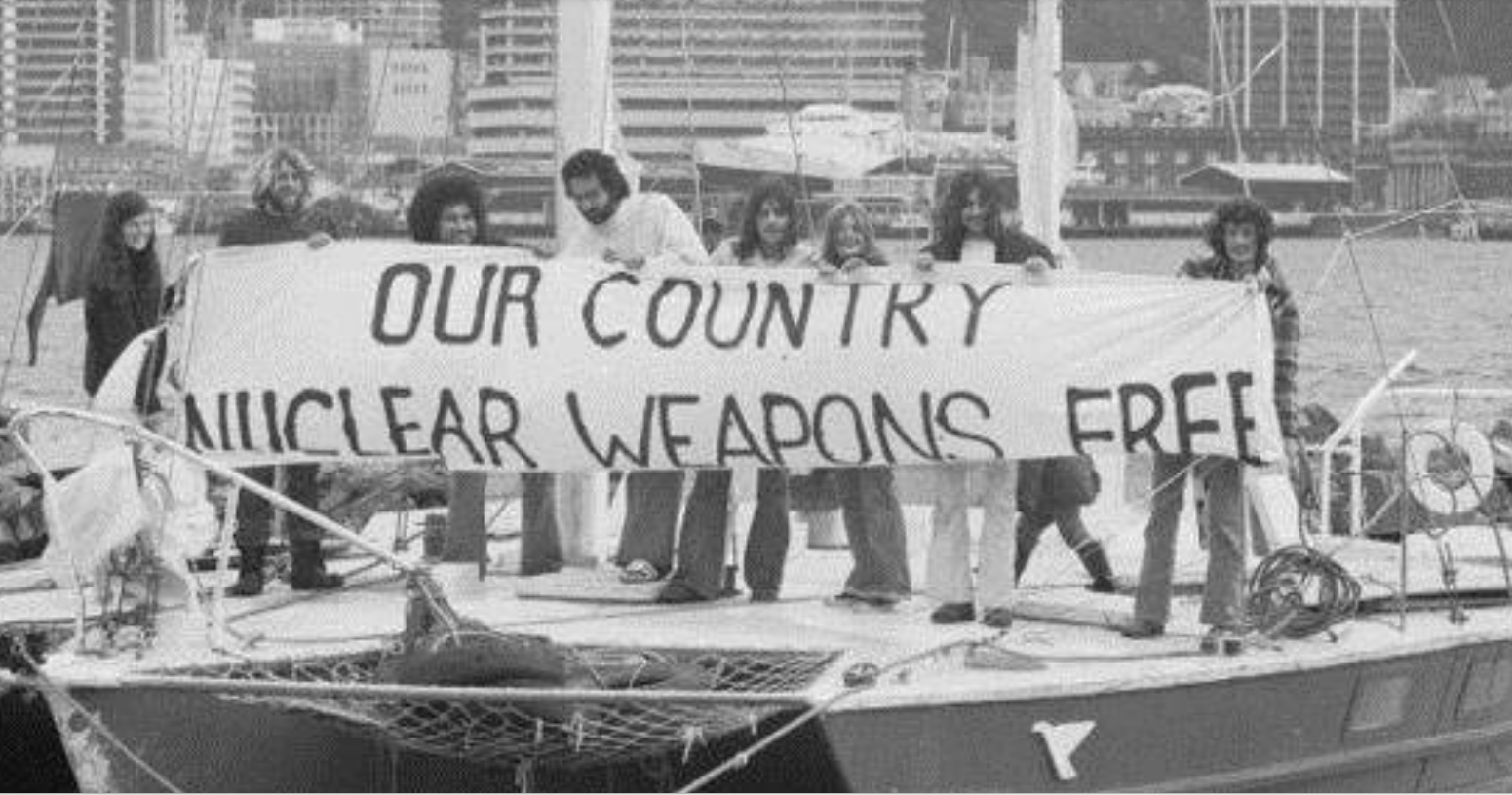
CANWAR protesters on a yacht in Wellington Harbour, protesting against the entrance of American nuclear warships into Wellington. Photo/National Library.
“When you go around the Pacific, people want to make sure that there’s support for climate change, and make sure you take care of the oceans.
“Nobody wants more guns in the Pacific. We should be actually working towards peace. And the AUKUS deal is the exact opposite of that.”
Rosewarne says the Pacific has felt the impact of nuclear testing more than most, and New Zealand has a responsibility to stand alongside smaller island nations.
“Throughout the Pacific, the Pacific has felt this more than anybody with nuclear testing throughout the last 50-odd years,” he says.
“So we need to stand up for those smaller Pacific Island nations just as much as we stand up for ourselves.”
The comments come after United States Defence Secretary Pete Hegseth criticised New Zealand’s level of defence spending, effectively accusing the country of freeloading.
Watch Dan Rosewarne's full interview below.
Rosewarne, who served twice in Afghanistan, says the criticism is offensive.
“I lost mates, and I know Kiwis who didn’t come home. So when I hear comments like that, I find them absolutely offensive,” he says.
“New Zealanders have stepped up when it’s mattered, not just in Afghanistan, but in many other conflicts too, and we have paid a high price, just like any other country.”
He says Labour supports increasing defence spending in a volatile global environment, but says it must be targeted and based on New Zealand’s needs.
“We shouldn’t be designing our Defence Force to fight other people’s wars.
“Our job is to protect New Zealand’s interests, support our region, and play a part in a way that makes sense for us.”
Tuiono says some areas of defence spending are justified, including investment in Defence housing and climate disaster response.
But he says the Government’s broader defence priorities are wrong when families and public services are facing cuts.
“Making sure that there’s the capability to deal with climate disasters, disaster aid, those things are important,” he says.
“But when you come down to the other end, where they’re spending things on like Javelin missiles of the tune of $400,000 a pop, that’s expensive.
“And then also gear, which is costing them millions and billions of dollars, while at the same time telling people to tighten their belts. That’s not fair.”
Tuiono says that despite the behaviour of United States President Donald Trump, New Zealand should maintain diplomatic relationships with the US but take care to keep conflict out of the Pacific.
“You can’t avoid the Americans. They’re the most powerful nation on the planet and diplomatic relationships are always important. But we need to be a lot more careful with them.
“I think the way that Trump’s behaving in the world is dangerous. And we need to be mindful in terms of our interactions and making sure that we can do what we can do to make sure that that conflict stays out of the Pacific.”
The International Institute for Strategic Studies (IISS): Shangri-la Dialogue that Minister Penk attended was held from 29-31 May in Singapore.