

Galumalemana Stella Muller (left) and Masoe Justis Kamu.
Photo/LinkedIn/Awhi Group/PMN Composite
Politics
Pacific voters are listening but parties aren’t connecting, experts warn
Pacific communities are not hard to reach, they are simply waiting for political parties to speak to them in ways that feel real, two communications experts say.

Aui'a Vaimaila Leatinu'u
Published
17 July 2026, 3:25pm
Share
Copy Link
Top stories
Fiji children make up all High Court rape victims recorded in 2025 - govt
Christine RovoiThu, 10 Sep
Residents of flood-damaged Māngere to help allocate $300,000 local recovery fund
Taelegalolo'u Mary AfemataThu, 10 Sep

$195m boost for Pacific women as the political leadership gap remains
Thomas Tarurongo WynneFri, 11 Sep
Top stories
Fiji children make up all High Court rape victims recorded in 2025 - govt
Christine RovoiThu, 10 Sep
Residents of flood-damaged Māngere to help allocate $300,000 local recovery fund
Taelegalolo'u Mary AfemataThu, 10 Sep
$195m boost for Pacific women as the political leadership gap remains
Thomas Tarurongo WynneFri, 11 Sep
Political parties hoping to win Pacific votes at this year’s election need to change more than their campaign slogans.
They need to connect with families facing real pressures, two communications experts say.
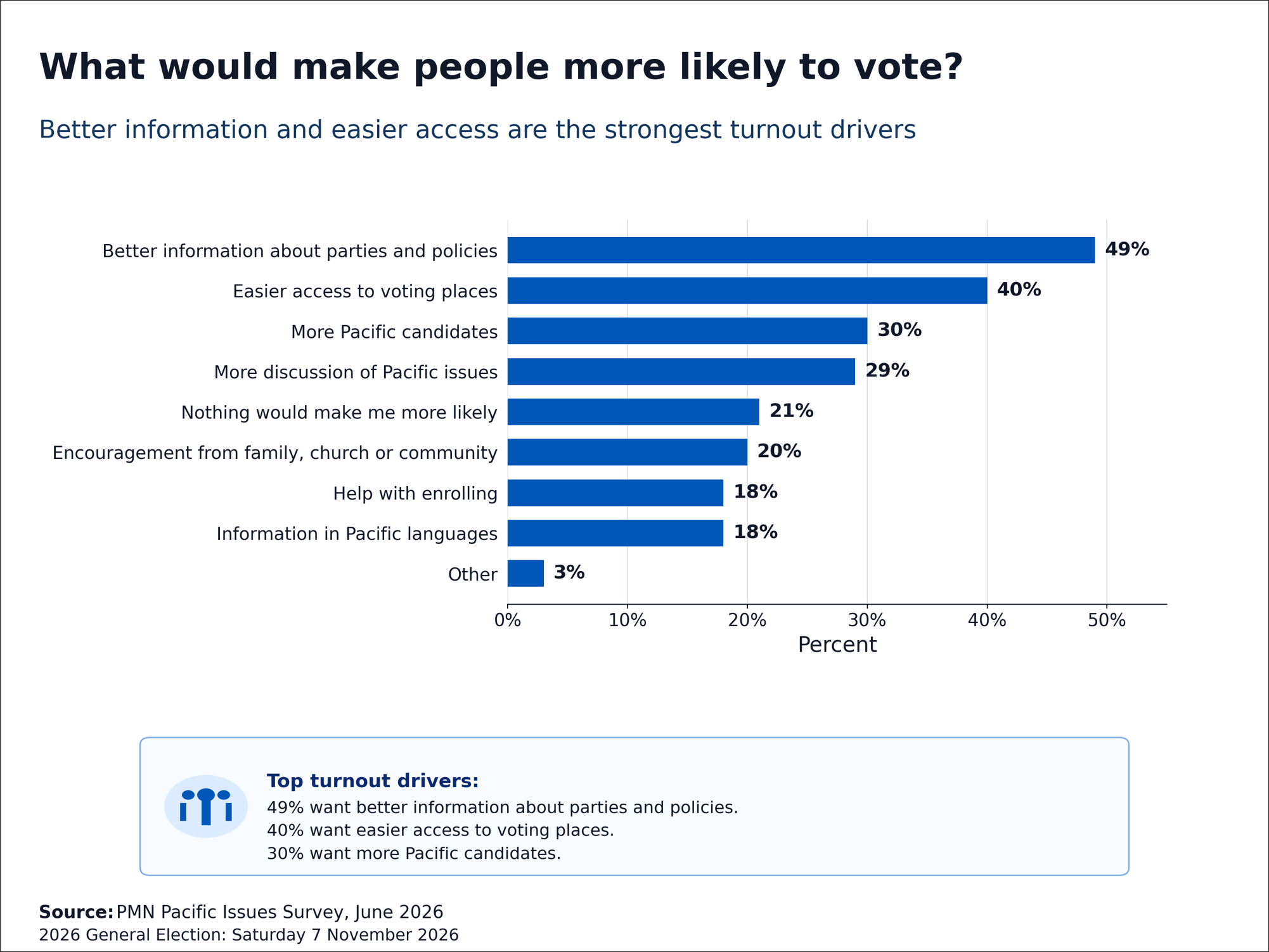
The recent PMN News-Horizon Research Pacific Issues Election Survey found 50 per cent of Pacific respondents say better information about party policies would encourage them to vote.
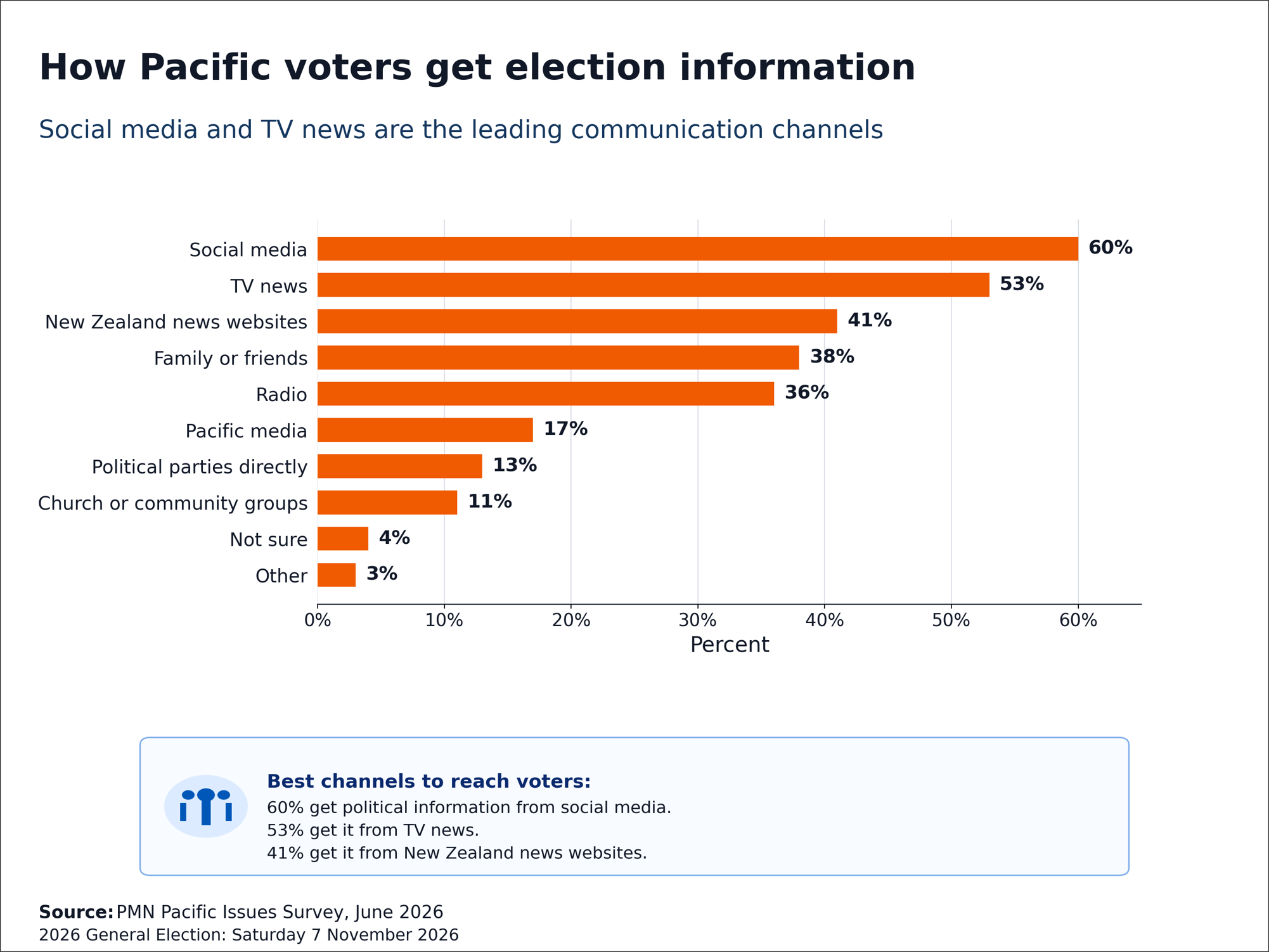
It also found 60 per cent now turn to social media for political information, while only 11 per cent rely on churches.
The findings suggest Pacific voters are engaged but many do not feel political messages are reaching them.
Masoe Justis Kamu, a strategic communications expert, says the problem is not that Pacific communities are hard to reach.
“Our people aren’t hard to reach, they're just hard to connect with,” Masoe told William Terite on Pacific Mornings.
“Political parties have to do a better job of connecting with our people through their political messaging.
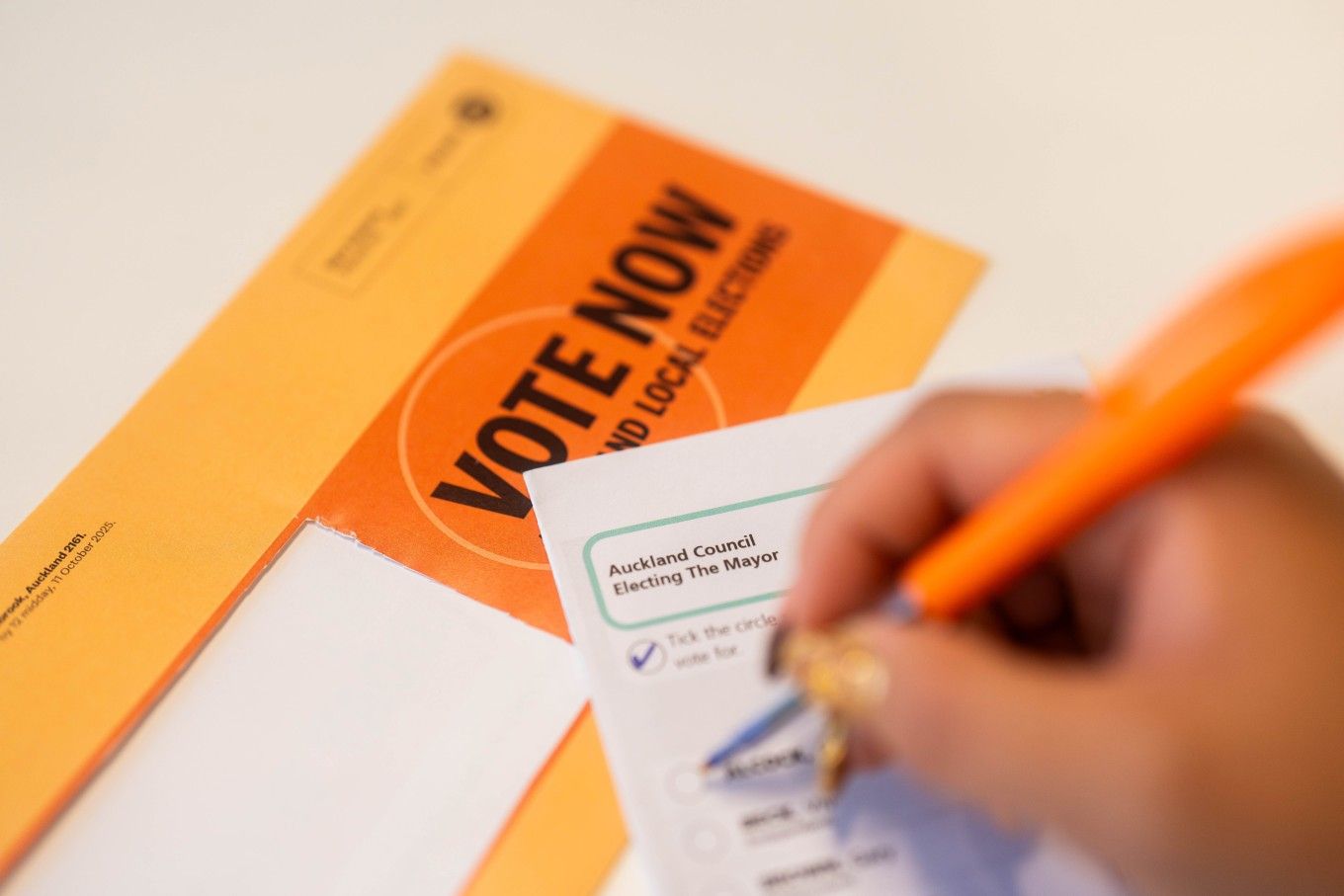
The 2026 general election will be held on Saturday, 7 November, with advance voting opening on Monday, 26 October. Photo/Auckland Council
“As the results also show, our people are utilising the same channels that other New Zealanders are utilising.
“It's the way that our political parties are connecting with our voters that isn't hitting the mark.”
While social media has become the main source of political information, Masoe says churches still play an important role in shaping community conversations and should not be overlooked.
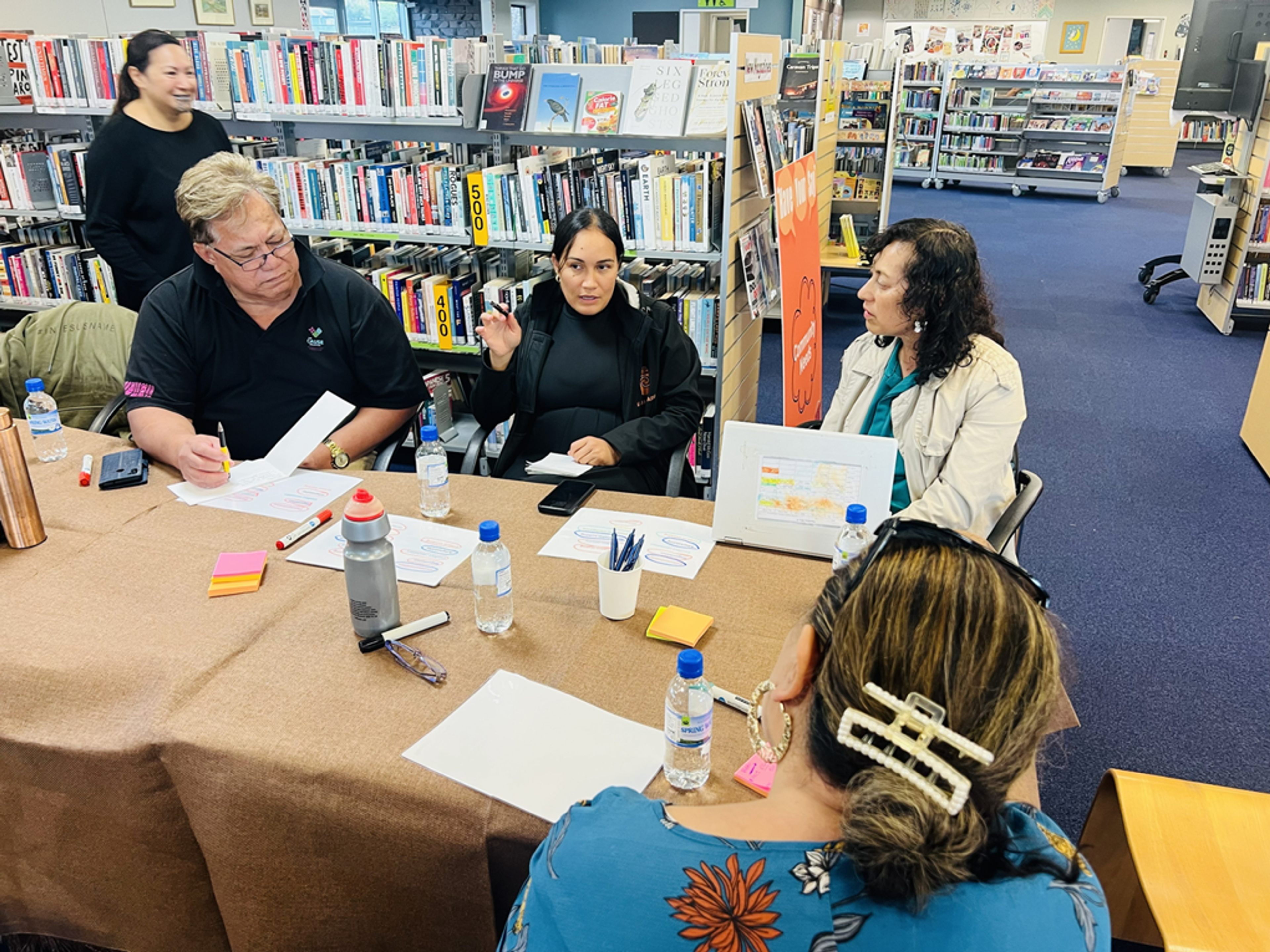
Galumalemana Stella Muller, the marketing strategist of Bright Sunday, says the challenge goes beyond where parties campaign. It is about what they are offering.
With nine in 10 Pacific voters saying the cost of living will influence how they vote, she tells Terite that families want more than election promises.
“I'm less concerned about the channels because I would agree with Masoe as well. The channels are the channels.
“It's going to come down to the value proposition and their ability to frame it and package this up creatively that really speaks to the core of us.”

The PMN News-Horizon Research Pacific Issues Election Survey found that 60 per cent of respondents turn to social media for answers on politics. Photo/Unsplash
She says younger Pacific voters are particularly difficult to win over because many no longer have the trust in the government that previous generations had.
“Gone are the days where we trusted government and would just therefore value it. I think back to my parents who were new to this country, who couldn't speak English yet,” she says.
Recalling her parents' experience after arriving in New Zealand, she said voting was once seen as both a privilege and a responsibility.
Watch Galumalemana Stella Muller and Masoe Justis Kamu’s full interview below.
“They got through all those barriers to get there and vote. Why? Because they had huge respect for government, leaders and authority and therefore they valued turning up to vote. Today, the picture is different.”
The survey found only one in three Pacific voters aged 18 to 24 say they are certain to vote, despite 58 per cent already being enrolled.
Galumalemana says parties also need to think about how information appears in artificial intelligence (AI) tools increasingly used by young people to search for answers.
The survey also found 72 per cent of Pacific respondents believe the National Party does not understand Pacific communities, while 74 per cent say the same about ACT New Zealand.
Masoe says restoring civic connection must also begin in the home, where families need to model the importance of democratic participation to younger generations.
Senior National Party leaders, including Prime Minister Christopher Luxon, have been invited to appear on Pacific Mornings to respond to the PMN-Horizon Research Pacific Issues Survey and discuss the issues raised by Pacific voters.
The invitations have not been accepted. PMN News continues to offer all major parties the opportunity to respond to the survey findings.
The 2026 general election will be held on Saturday, 7 November, with advance voting opening on Monday, 26 October. For more information, visit the Electoral Commission’s website.